Hello, and thank you for stopping by. My name is Elina and I teach Yoga and Mindfulness Techniques.
UPDATED 28th MARCH 2021.
Right now you can catch me for live classes via Zoom, the schedule and where/how to book details are below. Indoor group classes in England start the 17th May 2021 the earliest.
I have a YouTube Channel where I regularaly release new yoga videos every week. The yoga videos are about 20 minute long, and I have them both in English and in Finnish.
The platforms for my Zoom classes are YinYan and Vivaya Live. Both stream via Zoom and are super easy to use. Drop ins are welcomed, although you can of course make a monthly subscription to try a variety of classes at a very affortable price. The times indicated are BST (GMT + 1).
10 – 10:45 FREE Chair Yoga via Zoom. Please book your space here.
18:30 – 19:30 Dynamic Vinyasa Flow via Zoom. Book here.
FRIDAY
17:00 – 18:00 Restorative Yoga with Yoga Nidra, book here.
SUNDAY
10:30 – 11:30 Dynamic Morning Flow (Intermediate, some yoga experience is preferred), Please book here.
18:00 – 19:00 Restorative Yoga with Yoga Nidra, book here.
If you are interested in private online or in person yoga classes please do get in touch. If you income is severely affected by the current situation do not let that stop you from getting in touch – Yoga belongs to everybody, and I do not want financial concerns to be the obstacle to practise yoga.
My last “Sustainable Christmas Presents” post was written three years ago. Reading it now am struck by how much things have changed for the better, in terms of sustainable living and life choices being in the minds of every day consumer! Having the full information on how, where and by whom items are produced is so much easier. Those of us who will be in last minute rush will no longer need to opt for charity donations on behalf of somebody (although this is a great thing to do) but you can easily find sustainable alternatives for a range of gifts, regardless your budget!
So, in case you feel your nearest and dearest (or your boss) are not quite ready to hear you have sponsored goats/toilets/school uniforms on their behalf, here are some ideas of sustainable gifts. All of the products/companies below I am either a happy customer myself, or have heard great things of from trusted source.
Cosmetics That Are Good For the Skin and Planet
For cosmetics check out UpCircle Beauty, a company that takes used coffee grounds and turn them into beauty products such as scrubs. How genious is that? Everything is vegan, organic, sustainable, recyclable… For those small gifts and stocking fillers, check out their “under £10” section.
UpCycle Pamper Kit
In Finland, just head to Ruohonjuuri (or their website) for a wide selection of eco-friendly, cruelty free options. In Cyprus, my go-to shop (online and in Nicosia) is Eco Home Store.
Fairly and Sustainably Made Clothes
For sustainable clothing and accessories, I am loving how much more choice there is these days, for different types of activities. Also the quality of materials has improved so much. Personally I find my recycled plastic leggings these days far superior to the traditional poly-elastane mix leggings in comfort and in fit. As I have gone through a lot of leggings in my life, you can trust me on this one!
Weekendbeeis a Finnish online shop that only sells active wear from companies that have sustainability as their core value. Their mission is to make its products, manufacturing, and operations as sustainable as possible. As well as some of the better known brands, such as Patagonia and Jack Wolfskin, they also stock smaller and newer sustainable brands.
Finisterreis a British brand that designs functional and sustainable outdoor products. Their items range from wetsuits to coats to dresses and jumpsuits. They also have a repair service for their products, based in Cornwall.
Allbirds Footwear and Will’s Vegan shoes both have sustainability, ethics and fair wages in the forefront of their business model. I have also not met a single person who would not have been happy with their Allbirds and Will’s shoes so they are definitely something to check out.
Ninety Percent is a London based company sells the type of womens wear we all use: There are sweats, dresses, knitwear… They also share 90% of their distributed profits between five charitable causes. My next trackpants and basic T’s are coming from here for sure!
For leggings and yoga gear, FreeSpirit and Nitara are both UK based, female run and make leggings and tops out of recycled plastic and organic cotton. Designed for movement, these products do not start sliding or feeling otherwise awkward when in the middle of yoga class. N
Freespirit tops
If it is swim and surf wear you are after, The Seea makes amazingly elegant and highly functional products that last. I am still using pieces I bought 8 years ago! They also have an increasing collection of rashies, one pieces and bikinis made out of recycled materials.
Still using these TheSeea products, ordered in 2012…
Finally, Halla x Hallais a Finnish company whose swimwear fabric starts its journey as fishing nets, carpet flooring, and plastic from landfills and oceans all over the world. The products are manufactured in Bali, with the factory employees paid a fair living wage and good working conditions.
Other Sustainable Present Options
If candles are your thing, look out how they are made. For instance, candles made from soy wax usually burn cleaner and longer than paraffin candles, giving a more subtle fragrance. Another option is candles made of coconut wax that have a great scent throw and burns slowly. Beeswax candles are not vegan, but help purify the air as it burns and is often blended with other waxes as it has a scent of its own.
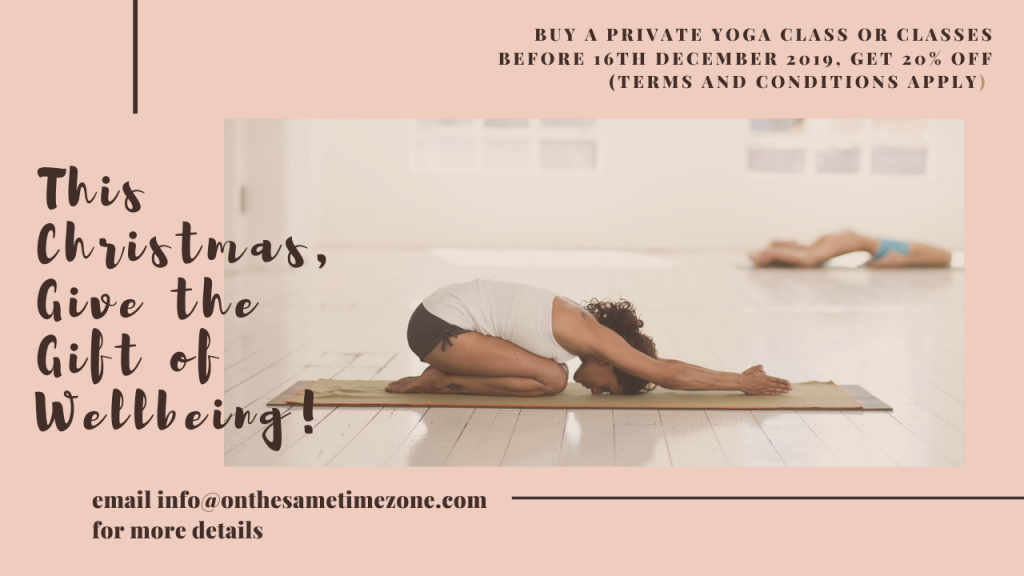
There are also many great option for non-material Sustainable Christmas Presents, one of them being one or a series of one-to-one (or small group) yoga classes. I am offering my private classes with -20% discount if purchased by Monday the 16th December. If this raises your curiosity, do not hesitate to get in touch !
What are your ideas for Sustainable Christmas Presents?
Yoga terminology can be very confusing. Hand up who does not remember being new to a yoga class and at least some point wondering what on earth the teacher is talking about?
As September is kind of like January when it comes to “new life, new hobbies” mindset, I thought it would be a good idea to run through few of the most common words, phrases and wordings that you may come across in your yoga class.
Kindly note that as yoga spreads in popularity there might be some variations to the interpretation of yoga terminology. In this article I have tried to look for the most authentic/widely used one but if you have any questions/comments, leave a comment and we continue the discussion.
Props/”Take any props you might need”
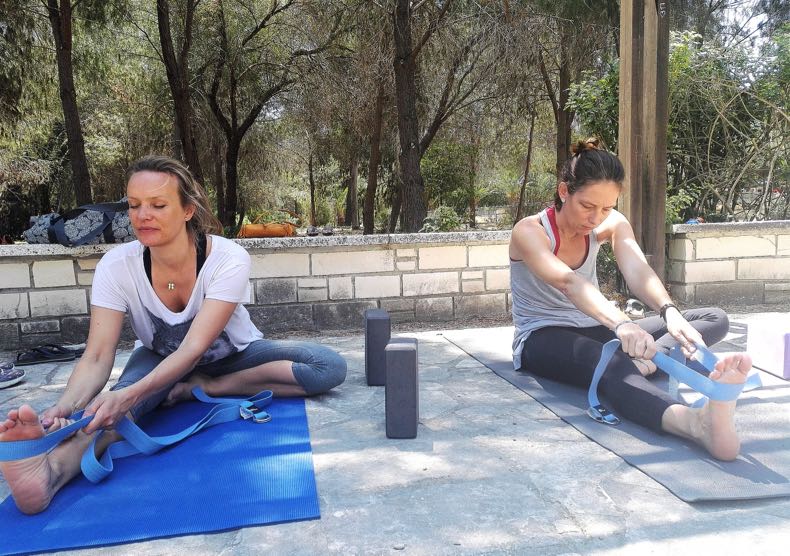
Yoga props refer to the various objects that can be used to help us to get better into a particular pose, or to simply gain a better awareness for the pose by making it more accessible with the help of props. These objects include straps, bolsters, yoga blocks and wheels, blankets, chairs…
Not all yoga classes need props or make use of them, but if you are really interested in of the many ways they can be used, head to a Iyengar class – You will be served (plus Iyengar yoga is a wonderful form of yoga in general, you can read more about it here.)
OM
OM is an ancient Sanskrit letter and a sacred syllable. It is often described as the Sound of the Universe, the most elemental of vibration, a sound that attunes to the our true nature.
You can hear “Om” chanted at the start or end of the class, sometimes once, sometimes several times. It is however not present in all classes as different teachers have different styles. I sometimes hear that people can find “OM-ing” it a bit intimitating at first but trust me, nobody comes to yoga class to check out or judge your chanting voice. Just give it a go, you might like it!
Grounding/Rooting Down Through Your Feet
A confession: Until few years ago I really did not get what “rooting” meant, as in, what it REALLY meant. Was standing on my feet normally not enough? What was there more to it?
Through exploring the mountain pose (i.e. tadasana) with experienced teachers I have learned so much about using the whole surface of the feet, through big toe to the little toe to the edges of your feet and the heel. Today I would describe “rooting down” as becoming aware of the distribution of the weight in your feet, together with the feeling of the ground (mat) underneath. At the end of the day, how we stand impacts our posture so much, which in turn impacts how we feel internally and how we present ourselves to the outside world.
Who would have thought there is so much to simple action of standing?
Abdominal Breathing/Focus on Your Breath
Yoga is all about breath and specifically, about abdominal breathing. This can also be referred as belly breathing or diaphragmatic breathing. It means that we breathe using all available lung capacity, inhaling so that we feel our stomach expanding. We want to keep the inhales and the exhales more or less the same length.
I find it useful to inhale counting quietly in my head to three or four (or whatever is the suitable length at a given time) and keeping the exhale the same length. The additional benefit of this is that you cannot think anything else whilst counting so ta-daa, your focus is squarely on the breath.
There is so much more to be said about breath that I will make a separate post about it – in the mean time, check out this belly breathing video.
Vinyasa/”Take a Vinyasa”
This is a phrase you can hear a lot in yoga classes and it can get confusing for a beginner watching other doing what seems a very quick – and complicated – flowing sequence.
Translated from Sanskrit, vinyasa means “to place in a special way.” Each movement is a gradual progression from one to the next, hence the term ”vinyasa flow.” You link you breath to the movement and with practise it indeed reminds a flow. Most of the time. Sometimes, even for the most experienced practitioner it might feel anything but a flow.
Vinyasa is also used to refer a particular type of dynamic yoga class, and as a noun to refer a sequence of asanas taken as a transition between poses or two sides of poses. A chart of Surya Namaskar A that is the best illustration of what your class “take a vinyasa” can be.
Picture from http://www.jasonyoga.com/2015/03/13/sun_salutations/
“Feel the Body Melting/Surrendering to the Mat”
The best way I can put this is “just feel it, don’t think about it.” Melting/surrendering to the mat it is an encouragement to try and relax the muscles a little bit more (and there is always that little bit more), letting the thoughts go (rather than thinking all the things you are going to do after the class) and just allow yourself to be still.
Savasana
Often referred as most people’s favourite part of the practise, savasana (or “dead man’s pose” as it is called in English) is the final relaxation that comes at the end of the asana practise. Usually it is done lying down on one’s back, but variations can be keeping knees bend or having legs slightly elevated – whatever allows the practitioner to feel completely relaxed and peaceful.
It is perfectly normal to feel fidgety during savanasa. In today’s world we are not always very comfortable staying still. However do try stay in the class for the savasana and to breath through the mental discomfort – after few times you will learn to love it.
Namaste
At the end of the yoga class (but can happen in other situations too) you might hear your teacher say “Namaste”. This is usually combined with bringing our hands together in front of the chest, in the prayer position (also called “Anjali mudra, read more about that here) and bowing your head. The literal translation of “Namaste” translates simply as “I bow to you.” The more spiritual translation of Namaste comes to “The light in me greets the light in you”, representing the belief that we all share the one and Same Divine Consciousness.
Some teachers use the term ”Namaskar” which can be understood in a similar way in the context of a yoga class.
Any other yoga terminology you want to ask about or share? Please do so in the comments!
When I started doing yoga more regularly about 12 years ago I never gave any thought to hands on adjustments. I don’t have any clear recollection to be 100% sure but I guess it is largely because in the classes I attended there were hardly any. In the classes I attended the instructions were given orally with the teachers demoing, to different degrees, the poses in front of the class.
As I started to practise more regularly and also to make a point of attending yoga classes in the places I got to travel to, I also got more acquainted with hands on adjustments. Usually they were perfectly pleasant and helped me to understand a particular point and to gain better awareness of the asana. But I also had different experiences. Once on a sports camp the instructor literally sat on my back during a forward fold. Sure I could go deeper but also I was not given any advance notice this might happen. I remember very clearly thinking, “I don’t like this.” This was both because it was physically uncomfortable (although not painful) and secondly, I just really did not appreciate somebody sitting on my back like that, in a pose that is supposed to be about internalising and calming down.
There have also been moments where I was given adjustments without any particular verbal cueing. I am of course sure the good intentions were there but if the teacher fails to verbally explain how and what a particular asana is about, it can be hard to grasp what the adjustments are trying to convey. Because it is not always about the physicality of the action not being welcomed, there is also the aspect of everybody learning things in a different manner.
Some years ago I was in a group of yoga teachers and we had an interesting conversation about hands on adjustments. We were in the presence of an international senior yoga teacher who advised us that when teaching a class, it is good policy to ask the students at the start of the class if they do not want any hands on adjustments, outlining few specific examples. This sparked a big (and very interesting) debate: Some of the group did not see the point of asking about adjustments. Their argument was that if you come to a yoga class, you should expect hands on adjustments. Some mentioned they rarely had any done so they had not given much thought about to the topic. Others pointed out that when you start a career as a yoga teacher you are likely to be focused on expressing your sequence the right way you would not even think about giving hands on fine tunings on the participants.
All the insights were very valuable and demonstrated how differently we can feel about a particular matter. What that conversation sparked for me was a deep consciousness of personal boundaries in the space of a yoga practise and the importance of respecting them.
We all come to our yoga practise from different backgrounds, with widely different experiences and expectations. What those experiences and expectations are, we do not know. But what we can do as yoga teachers is to give the practitioners the option of not to be touched. In the #MeToo era, knowing that the yoga world unfortunately has not been spared of its own incidents, this is even more important than ever.
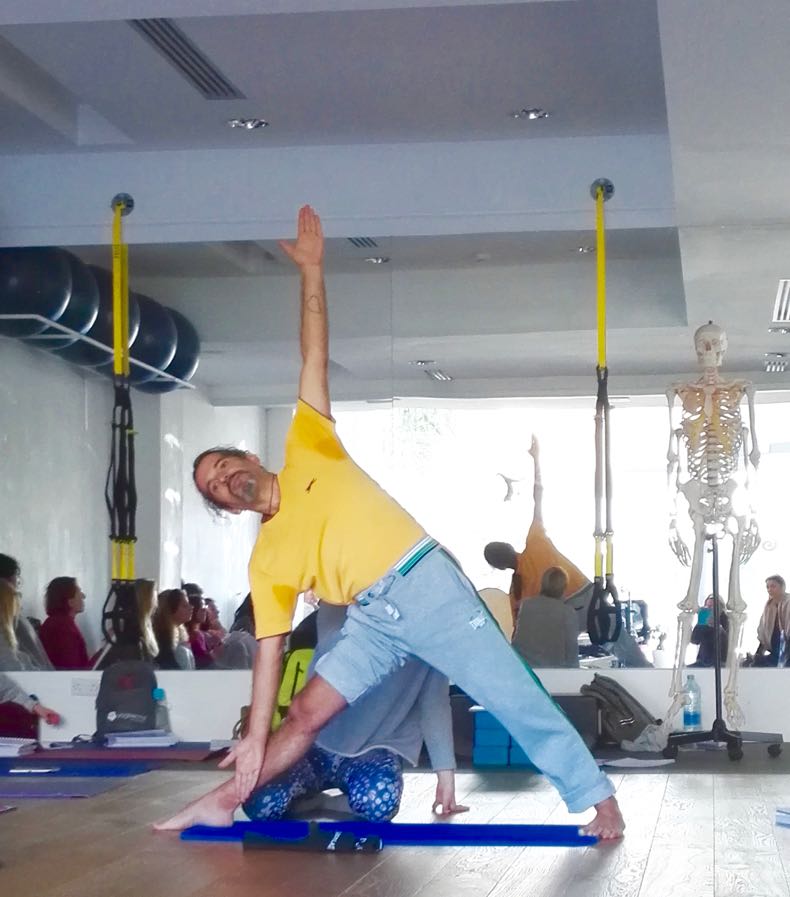
…or trikonasana
So how to go about this? Some teachers lay out in their studio profiles that hands on adjustments are to be expected – This is great but also requires that the profile is read. Some ask you to raise your hand if you don’t want any – but then again, not everybody is happy to speak up in front of others, especially if you are new to practise. There is also the option of the teacher asking you to fold a corner of the mat, or putting a prop in front of the mat. The idea is good in theory but in practise, especially as a teacher, I am always concerned I overlook THE one prop, or the corner of the mat comes undone.
Recently I have however seen few new innovative initiatives. Few days ago Pranama Studio in Stockholm, Sweden, posted on their Instagram page that they are now using “Consent Crystals” in their classes. Pranama Stockholm writes: “We respect and honor you, and it is totally your choice to be touched/assisted or not during a yoga class. It might even depend on the day […] When you take a Consent Crystal with you in the class, our teachers will know your wishes without asking. Just place it next to your mat and we know we have your consent. Without it, we respect your wish not to be touched at that time and that class.”
Another example I recently saw was an American lady who had come up with a small two-sided cards, one side saying “yes” to adjustments and the other “no.” You just place the card next to your mat and the teacher will know. Unfortunately I cannot remember where I saw this but if you recognise this initiative, let me know in the comments and I will edit this post with more detail about this.
I feel this topic is very much part of the inclusivity in the yoga community discussion that has been taking place for some time now. I would be interested to hear your thoughts about this topic: Are hands on adjustments something you like, you expect, or something you have not really given any thought about? Any ideas you would have or you have seen how to communicate about this, either as a student or as a practitioner? Let me hear your opinions in the comments section!
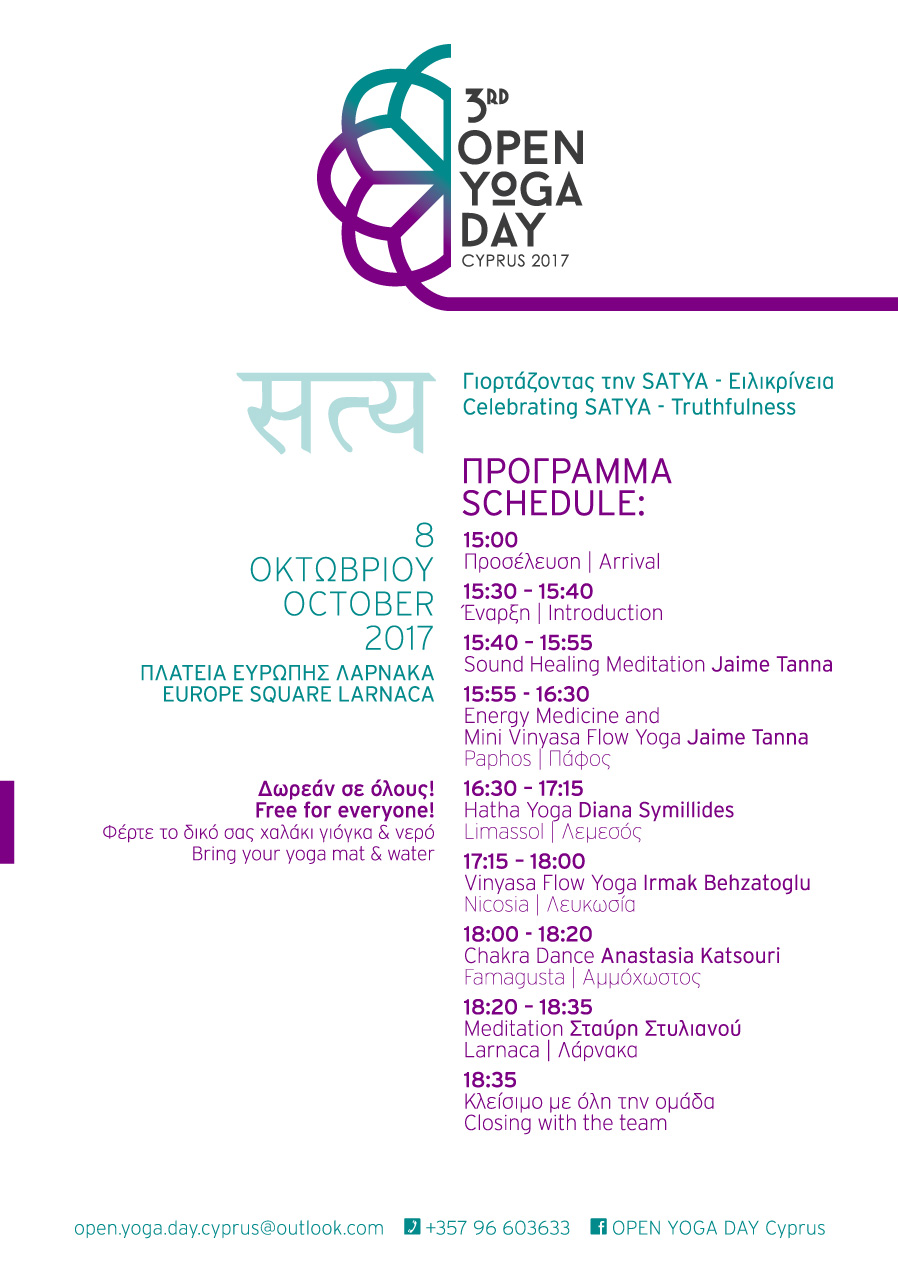
The Third Open Yoga Day Cyprus is coming up on the 8th October, hosted this time in Larnaca, under the theme of Satya, truthfulness. To learn more about this free & open for all event I sat down with two of the organisers, Mayka Sabova and Marilena Shyama Shakti, for a chat.
This is the third year this event is being held in Cyprus. Where did the initial idea for the Open Yoga Day Cyprus come from and who are the people behind it?
Inspired by similar events around the world, the Open Yoga Day Cyprus was founded by Marilena in 2015. There are many community events in other countries that offer various kinds of free services to citizens. The main principle of these types of events is to find enthusiastic and like-minded people who are willing to offer selflessly to others, without expecting a tangible reward in exchange.
These days it can be rare to find people who have the ability to offer selflessly, people who are committed, loyal and driven to dedicate their free time and energy for creating something for others. Yet these are the qualities of the people behind the OYDC. We share passion for yoga and we aim at bringing it to as many people as possible. Alongside our founder, we are a small group of volunteers (mostly yoga teachers and practitioners), who share the common vision and are willing to walk an extra mile for the benefits of others. We operate with the support of local municipalities and every year we have few private sponsors and supporters who offer financial or other assistance.
In addition to fostering a community spirit and sharing the passion for yoga, what is the main message you wish to promote with the Open Yoga Day Cyprus?
Our vision is to promote wellbeing through yoga, while contributing in building healthy communities. The more people practice yoga, the better our society can become. We want to offer an opportunity to everyone, regardless their level of physical fitness, age or familiarity with the practice, to try yoga, enjoy the outdoor group practice and cultivate the sense of belonging and unity. The world has become more and more selfish with people focused strictly on their own lives without considering the others. With this even we want to encourage people to interact. In this sense, we use yoga as a tool for social interaction, while spreading the message of selfless giving, togetherness, sharing, love and unity.
These are also the reasons why the event is organized every year in a different location across the island. This way, the people already familiar with the event mix with newcomers and the message can reach more people.
This is the third time the Open Yoga Day Cyprus is taking place. Have you noticed any changes in the yoga community in Cyprus during this time, and has that influenced how you are setting up the event this year?
We noticed that more and more people have started practicing yoga over the recent years, and more and more of them have become yoga instructors too. This has not influenced the way we planned our 3rd edition, but it will influence the future events to come. For instance, we would like to bring new instructors closer to the more experienced ones, as well as the new approaches of teaching yoga with traditional ones. In yoga we learn to go with the flow so we try to go with the flow of changes, the evolution of the yogi community and most importantly, with the flow of people so we can all open up, learn, feel and grow further.
How did you choose Satya, truthfulness, as the theme for this year?
Every edition of the event has a set intention. The power of collective intention is immense and when we do things, whatever they are, with an intention, we deepen the purpose of any activity. This year our intention is Satya, truthfulness. Satya was chosen by the founder of OYDC, Marilena Shyama Shakti, as the theme of this year’s event after she went through the gift of being pregnant and giving birth. For her, the experience of giving birth to a new life was so true and real and, of course, deeply personal, with truthfulness present in every moment. Whether it was the eye contact, reactions or the sounds of the baby, all of these profoundly impressed Marilena, as it made her realize that human beings are born so pure and it is our duty to preserve the ability to stay innocent and true to ourselves.
I don’t want to get ahead of things as this years’ event is still ahead of us, taking place on the 8th October, but can you already talk a little bit about your future plans?
We wish to bring yoga community in Cyprus closer together by encouraging those who share our values to offer their services and contribute in any way they can. For this purpose we would like to boost our reputation as a non-profit initiative through the annual event, and perhaps with even more events in the near future. We promote yoga, which indirectly benefits all yoga teachers across the island as we create potential audience for them. Therefore, we would like yoga teachers and instructors to bond and cooperate through our events in order to create an effective and efficient yoga hub.
We are also collecting data about yoga instructors and centres across the island, with a vision to create a central online yoga platform with directories and many other features. Everyone who wishes to give something back to the community and is ready to offer selflessly can reach out to us and contribute with their talent, skill or service.
Thank you very much for your time Marilena and Mayka – I am sure this years event in Larnaca will be even bigger than the events of the past two years. I’ll see you in Larnaca on the 8th October!
The first time I heard about Magnesia Festival, a two-day yoga and heartful living event taking place on a small island in front of Helsinki, was in May when a friend was visiting Cyprus for a weekend yoga-intensive with me. She had visited the inaugural event in 2016 and enjoyed it a lot. Whilst I am not really a camping-in-tent-festival type of person, I do enjoy the more urban type of happenings where you get sleep in a real bed at the end of the day. Magnesia offers this and combines a lot of things I enjoy: Summer in Finland, seaside, islands and ferry rides, yoga and a chilled atmosphere with smiley people not making too much noise.
August is also the main holiday month in Cyprus whereas in Finland it spells the start of return to normal life. Therefore it made perfect sense for this year to plan my visit to the Motherland a little later than usual, and combine it to visit the day one of Magnesia yesterday.
The programme the festival offers contains different type of yoga classes, discussions about relationships, ayuveda and nutrition, dance workshops, tea ceremonies and lot more. With my one-day ticket I could pre-book one workshop of my choice, in addition to which it was possible to queue to other ones to see if there was space. There was also non-bookable programme on the main stage outdoor where you could also buy food and just chill. The ticket also included the 10-minute ferry ride to and from the Lonna Island where the festival takes place. It probably does not surprise anybody that this being Finland everything was super organised, hassle free and any question you could think of was answered online before you could even think of them. Queuing was done in order with strangers happily chatting to each other and the natural personal space of about 3 metres all direction each was cheerfully sacrificed by all to accommodate as many people as possible to the workshops.
In the morning I took Marta Janeczek’s back- and forward bends workshop. Backbends and forward bends have opposing philosophy and benefits associated with them (physical and emotional opening, defiance in the face of vulnerability, stimulation of the nervous system vs. introversion, cooling down, soothing of the nervous system.) Whilst some yoga styles link strong backbends with forward bends closely in the same sequence, I have always been taught to (and it usually feels better for me personally) to at least have a slower transition and/or neutralising pose or two (such as downwards facing dog or a twist) in between them. I was really curious to see what kind of workshop was build around this concept and I was not left disappointed with this one.
I did not know Marta before hand (quite frankly I know very few Finland based yoga teachers by name, let alone have taken their classes) but just based on this one experience I would recommend to seek her out in her Helsinki based yoga studio. She has a really calm, humble yet fun vibe to her AND manages to fill the space she holds with that energy – a gift not given to many. Based on her bio she has an Iyengar influenced background and the class had a lot of detail about the anatomy of the asana we were given, always a winner with me. Marta’s workshop really refreshed my appreciation for and detailed knowledge of many “basic” asana such as the cat and cow poses and just for that, I am grateful.
My friend recommended an intuitive writing and yin-yoga workshop she had taken last year so we both had registered for that one. It was held in an old mine storehouse (in the olden days the Lonna island used to a mine clearing spot) with soft sunlight sweeping through the small windows in the sealing – and packed with people. I felt the class was maybe 10% writing and 90% yin but since you cannot really go wrong with yin, I was very happy to bliss out with the practise. I can always write at home but I cannot make that kind of unique setting with loads of people happen at a will.
The rest of the day we spent just bumming around the grounds, watching a flow yoga practise taking place at the central stage and enjoying the sun and soft sea breeze. The weather was absolutely gorgeous yesterday that was appreciated by everybody, as the summer in Finland has been extremely rainy. Big thanks for all the Magnesia crew for putting out such a beautiful event – I will definitely do my best to come back next year!
July in Cyprus has been insanely hot (as in, A LOT hotter than the average 36-37C degrees) and humid. I still keep my yoga classes going (with great attendance as well so big bravo for everybody showing great dedication) but I have slowed down the rhythm of them somewhat. Focus has been on breath, some more detailed yoga philosophy and anatomy conversation and revisiting the basic poses, really taking our time to explore them and what difference minor adjustments can do. When lying down makes you sweat there is no point to have a super strong practise.
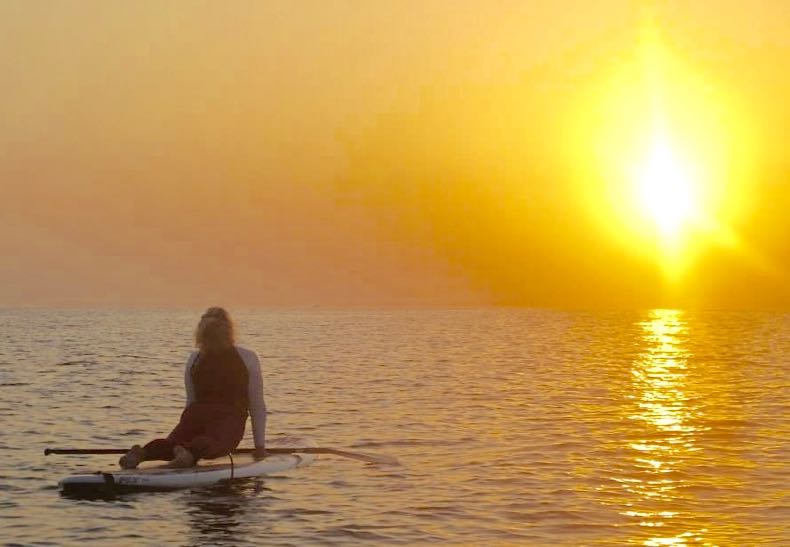
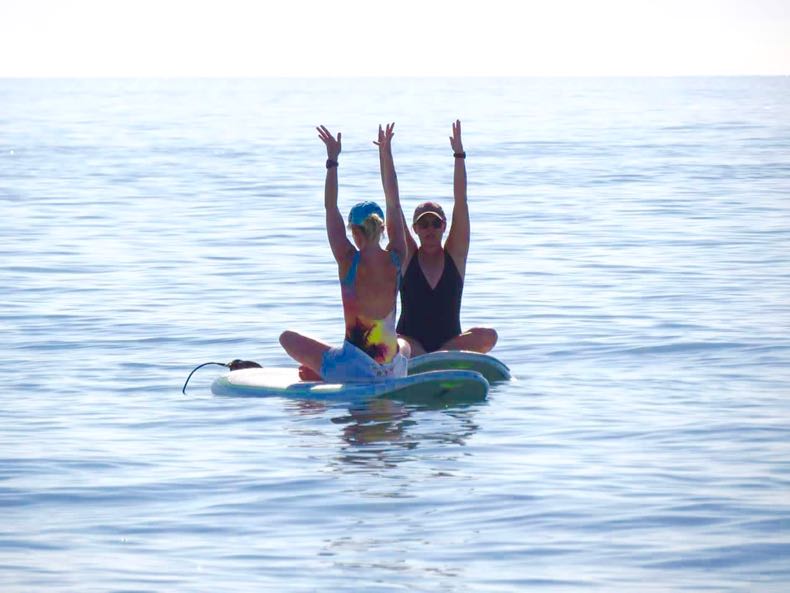
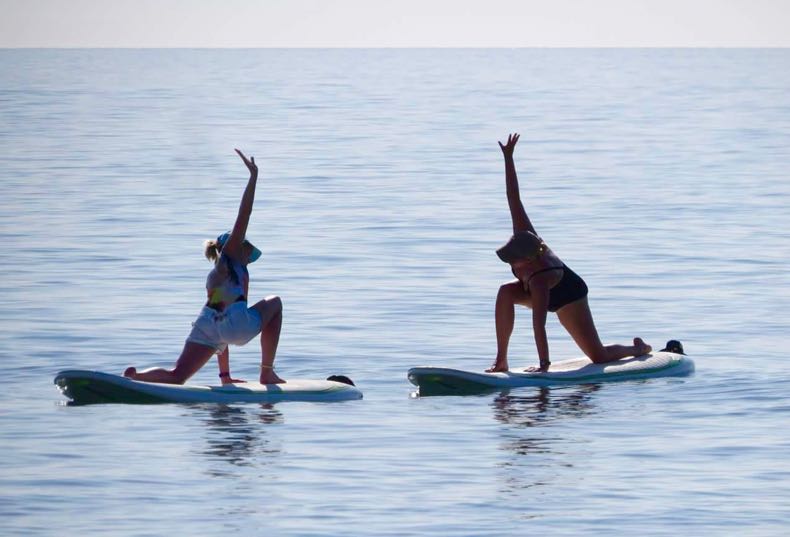
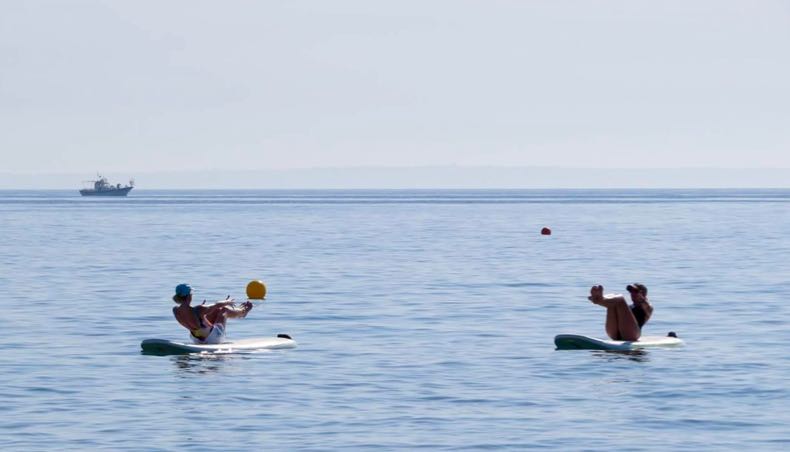
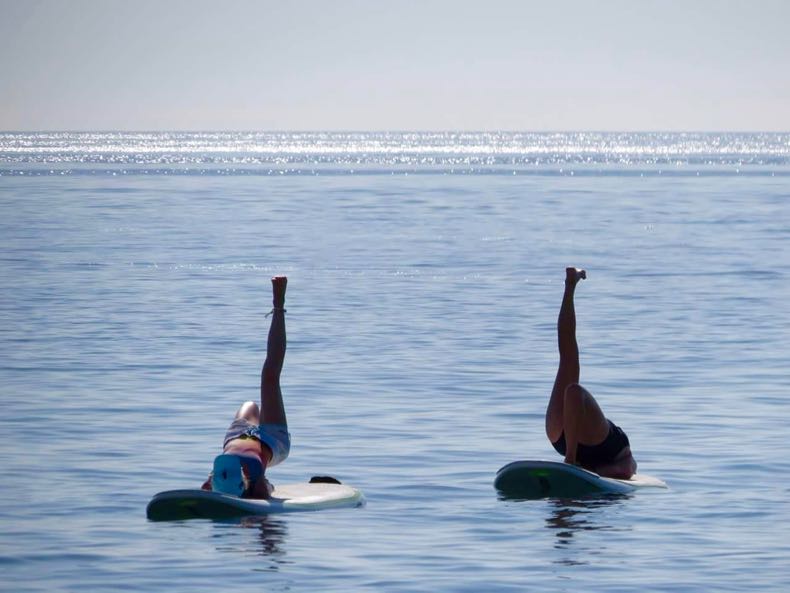
The one exception to this is the SUP yoga sessions I have been guiding on early Sunday mornings. It is the best time for the practise as the sun is high yet and the sea is little bit cooler. I’ve had many people coming to try SUP yoga (or “yoga inspired SUP fitness class” as I like to call it) for the first time, some of them yoga teachers themselves. I always tell them that they should not expect the practise on the board to be anything similar to their mat sessions. There is always some movement and current going on in the sea, none of which you can really predict. Although the boards used for SUP yoga are stable, they are still boards on the water and balance can be hard to maintain. Therefore warriors and lunges are done with a wider stance and you definitely get to work and feel your muscles in a different way. The SUP practise is also a good test on the state of ego: falling into the water happens easily but it is also part of the fun, as long as you let it be fun. At least the water is clear and warm, and you are guaranteed to wake up if there was no time for coffee in the morning.
Below are some pictures from my SUP yoga sessions this summer and during previous years. All of them are taken by the crew at WindsurfCityCyprus. To catch the next class I teach follow my Facebook page.
Kyproksella on ollut viikon kestävä helleaalto. Toisin kuin Suomessa, sana ”helleaalto” ei Kyproksella yleensä ilahduta kovin monia, onhan heinäkuun keskilämpötila jo valmiiksi aivan riittävät 36-37C astetta. Tänä vuonna sää kuitenkin on kuumin sitten 30 vuoteen ja sisämaassa Nikosiassa mitattiin muutama päivä sitten 45C lämpötila. Rannikolla on pyöritty neljässäkymmenessä asteessa ja merivesi on noin 27C asteista. Kun suihkustakaan ei tule kylmää vettä ennen lokakuuta niin miten täällä sitten eletään kesäkuukaudet?
Ilmastoinnin ja tuulettimien avulla tietenkin! Kyproksen lomakuu on elokuu joten vielä heinäkuun ajan ainakin onnekkaat toimistotyöntekijät pääsevät nauttimaan viilennetyistä sisätiloista. Ilmastointilaitteista otetaankin täällä kaikki irti ja varmaan jokaisesta toimistosta löytyy joku jolla on villatakki päällä ja huivi kaulassa tämän takia. Myös ostoskeskukset ovat kesäisin hyvä paikka viettää aikaa ja Nikosiassa on avattu joitain virallisia rakennuksia päivisin ihmisille jotka kaipaavat viileää tilaa. Lapsia, vanhuksia ja heikkokuntoisia kehotetaan pysymään sisällä ja juomaan tietenkin mahdollisimman paljon vettä. Tästä huolimatta helteet ovat jo vaatineet täällä muutaman kuolonuhrin.
Jos ilmastoitua tilaa ei ole käytössä on muitakin vaihtoehtoja. Itse herään koiran aloitteesta joka aamu puoli kuuden aikoihin jolloin lämpötila on reippaasti alle kolmekymmentä. Noin kymmeneen asti ilma on suhteellisen miellyttävä ja tällöin on hyvä hoitaa lenkit, uinnit, puutarhatyöt, siivoukset ja kaikki älyllistä toimintaa vaativa tekeminen. Alkuiltapäivästä auringon paistaessa korkeimmillaan nukutaan päiväunet ja ulos voi taas uskaltautua viiden jälkeen. Illalla valvon yleensä normaalia myöhempään ja viimeistelen aamulta jääneitä hommia. Ymmärrykseni Etelä-Euroopan maiden siestaa kohti on parantunut huomattavasti täällä asuessani.
Joogatunnit hoidan tietenkin normaalisti mutta ilman ollessa kuumimmillaan pidän tuntien kulun rauhallisena. Pysymme asanoissa hieman pidempään, ja voimakkaimmat harjoitukset ovat kesätauolla kun jo pelkkä paikallaan makaaminen saa hien virtaamaan.
SUP joogalle kesä on hyvää aikaa, veden lämpötila ei pelota ketään ja useat turistit haluavat mielellään kokeilla lomalla joitain uutta mitä ei välttämättä ole kotimaassa tarjolla. Larnakassa tuulee aina jonkun verran joten sen ja auringonpaisteen takia SUP joogatunnit pidetään aamuisin. Tämä on ehdottomasti yksi parhaista tavoista aloittaa aamu!
Alla muutamia kuvia aiemmin tällä viikolla pitämältäni yksityistunnilta. Seuraava SUP jooga tunti pidetään Larnakassa WindsurfCityCyprus’sen luona tulevana sunnuntaina (9. heinäkuuta) kello 8. Jos olet maisemissa varaa paikkasi tämän linkin takaa ja tule mukaan joogaamaan veden päällä!
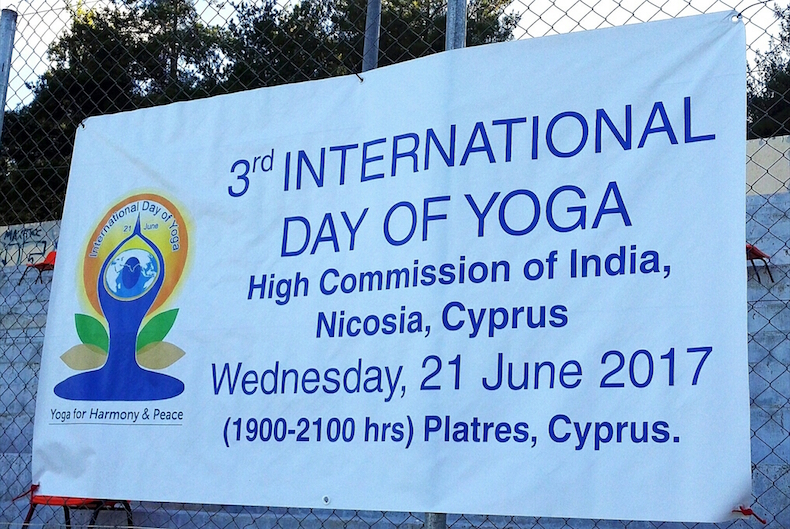
Since 2015 the 21st June has not only marked Summer Solistice but also the International Day of Yoga, as agreed (by an unprecedented consensus) by the United Nation’s General Assembly in December 2014. The idea to observe Yoga Day came from India’s Prime Minister Narenda Modi who at the time stated:
“For us in India, respect for nature is an integral part of spiritualism. We treat nature’s bounties as sacred. Yoga is an invaluable gift of India’s ancient tradition. Yoga embodies unity of mind and body; thought and action; restraint and fulfilment; harmony between man and nature; a holistic approach to health and well being. It is not about exercise but to discover the sense of oneness with yourself, the world and the nature. By changing our lifestyle and creating consciousness, it can help us deal with climate change and in bettering our well being. Let us work towards adopting an International Yoga Day.”
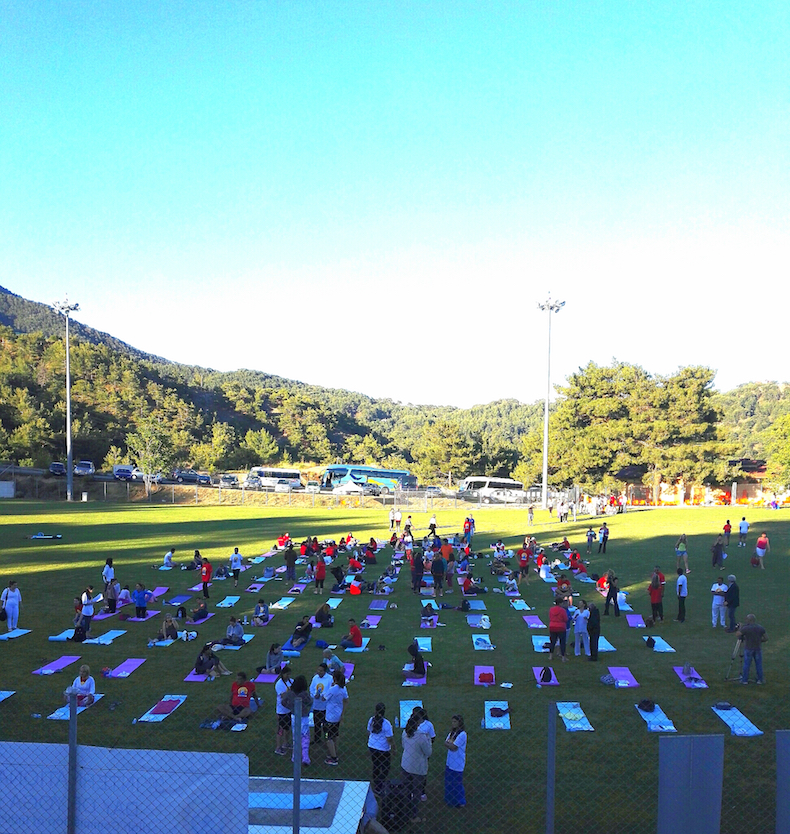
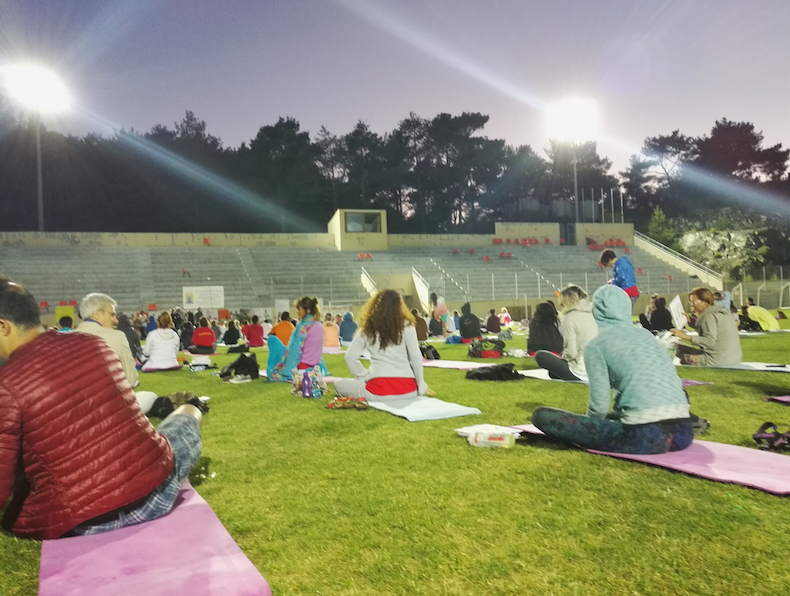
Ever since its conception Yoga Day has been embraced internationally with mass yoga sessions across the world, from Times Square in New York to events hosted in rural villages. The latter is exactly what took place in Cyprus this year. For the 3rd International Yoga Day the High Commission of India to Cyprus organised a sunset mass yoga practise in collaboration with the Community of Platres, a village situated some 1000 metres above the sea level in the Troodos Mountains. It was a beautiful event with great level of participation, definitely worth the drive up the mountains.
It can be just as daunting as it is exciting to start a new activity and yoga is no exception to that. Whether you start to practise in a fancy yoga studio or at a more down to earth community centre, here’s a list of few unwritten rules that most yogis around the word follow. The physical yoga practise is individual yet collectively done and observing the yoga etiquette ensures a pleasant and respectful experience for everybody involved. It might also ease any starter nerves there might be. Most of these rules are pretty common sense though so most importantly, remember to enjoy your yoga class!
Arrive on time and stay for the whole class
Punctuality is always appreciated, especially in a space where there is one class after another one. However, even in a more relaxed setting please show your appreciation for the practise and respect for other participants by arriving on time. You can always roll out your mat and lie down to steady your breath and to settle in before the class starts. If you happen to run late for some reason, please enter the class discretely (if it is still possible – some studios can refuse entry if you arrive late.) It is equally appreciated that you stay for the whole class rather than pack your stuff when the relaxation starts. If you for some reason absolutely cannot stay for savasana, please inform the teacher in advance and take your place near the door so you can quietly slip out without disturbing others before the relaxation starts.
Switch your phone off and appreciate the silence
When you arrive to your yoga class, remember to switch off your phones, tablets and anything else that might make a noise during the class. This includes taking off any noisy necklaces or bracelets. And for heaven’s sake, if your phone rings, do not waste any time checking who is calling or even worse, answer it. Just sayin’ as it has happened…
Yoga classes can be great places to meet like-minded people but reserve your chatting to the space outside the class as many people like to take the time before (and after) the class to meditate or to enjoy the relaxed feeling. Keeping noise and chatter to the minimum during the class is also a question of safety as people will need to be able to stay focused and concentrate on (and hear!) the instructions given. After all, you want to be respectful of the environment, the teacher and the people around you, as well as preserve the energy of the class.
Be aware of the space you take and of that around you
If there is enough room in the room your yoga class takes place it is common courtesy to stagger your mats so that people behind you can see the teacher. Check also that you are not likely to hit the person on your left and right if spreading your arms to your side. If the class is packed, make room to those joining the class after you by moving your mats closer to each other and be attentive with your asanas. Be also mindful of your steps: do your best to avoid walking on other people’s yoga mats. Finally, we all have good days and bad days. Do not throw your stuff around but equally, offer your quiet smile to those who seem to need it.
Keep it clean!
Yoga is practised barefoot although usually you are welcomed to put warm clothes on during savasana for comfort (and health!) However, the yoga etiquette would like you to leave your shoes outside the yoga space and remove your socks. Trust me, nobody cares about your feet as long as they are clean, just like the rest of you. If you are borrowing a mat please clean it if there is a product offered for that and take it (together with other props) to where they belong after the class is over. Also go easy on perfume, scented body lotions, make up etc. Sensitivity or even allergic reactions to strong scents are a real thing.
Listen (to your body), try modifications and focus on yourself
Whilst yoga can be massively helpful for one’s physical and mental health, it is not a miracle cure for anything and it is entirely possible to hurt oneself if not practising with care. Make sure you inform your teacher with any injuries you might have so s/he can offer suitable modifications. Also feel free to take a break during the practise (by staying on your mat) if anything gets too much. Your teacher can guide you but nobody can be inside your head so learn to listen what your body tells. If unsure about your health and yoga, please speak to your medical practitioner before starting.
Even without any injuries, let go of any expectations of what you think your practise should look like, and never compare yourself to the person next to you or whatever you saw on Instagram the other day. Rather concentrate on the feeling, try out modifications suggested and if your mind starts wondering, do your best to bring your focus back to the practise. These things do not come easy for the majority of us but being aware of them is a good place to start. After all, it is not called yoga PRACTISE for nothing.
Yoga is much more than the physical practise so be interested about how to integrate it to your daily life.
Sure enough not all yoga classes include any talk about the philosophy per se but all of the points mentioned about yoga etiquette are rooted in its philosphical principles. Curious to learn more? You can start by checking out my posts about Yamas and Niyamas.