Tag: yogabooks

  • 7 X Yoga Books I Like

    7 X Yoga Books I Like

    I had a chat about yoga books with a friend yesterday and this old post of mine came to mind. As nothing has changed since I first published this text, here you go again, for those who did not see this the first time around.

    Yoga books are nothing new. The first systematic presentation of yoga in a written form, the Yoga Sutras by Patjanhali is said to dated circa 400 CE (I am aware there is debate around this date but I am not going to dwell any deeper into it), whilst another renowned yogic scripture, the Bhagavad Gita dates an estimated 500 BCE.

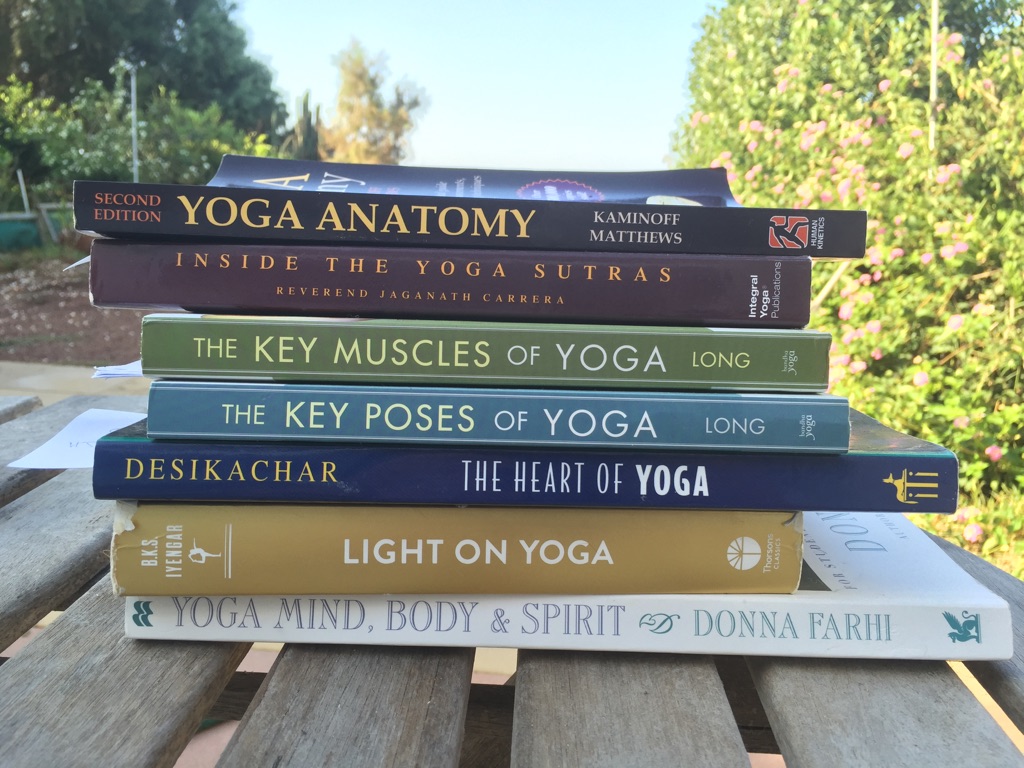
    There is a ton of yoga books around and it can be hard to pick just one or two. Here’s a list of some of my favourites. Some of these I read almost every day, some less so but they have all served a purpose of some sort in my yoga studies. If the list looks familiar it is because each one of the books is on the Amazon’s ”Top 15 or so Yoga books” list and many are teacher trainer reading staples. Hence expect nothing crazy original but if you are newer to yoga literature this might be helpful.

    A lot of people approach yoga through the physical practise. I would however encourage any student of yoga to have a look at what lies in the roots on the asana practise. A good place to start is the Yoga Sutras of Patanjali. These are the basic teachings of yoga are described in short verses called sutras, which are organised in four padas, or chapters. As reading a direct Sanskrit translation might seem a daunting task, there are luckily many textbooks offering an approachable commentary and interpretation of the sutras in a easy-to-digest form. The textbook I have is authored by Reverend Jaganath Carrera and it is called ”Inside The Yoga Sutras.”

    Several books combine philosophy, breathing technique and asana practise in one. A classic is B.S.K Iyengar’s ”Light on Yoga – The Definitive Guide to Yoga Practise.” The books have fantastic black and white photo illustration and the descriptions on how to get into each pose are very detailed. On a completely superficial level, the 2015 edition I have is also beautiful to look at. The only minus comes from it being a very heavy for a paperback so it is not the best travel read.
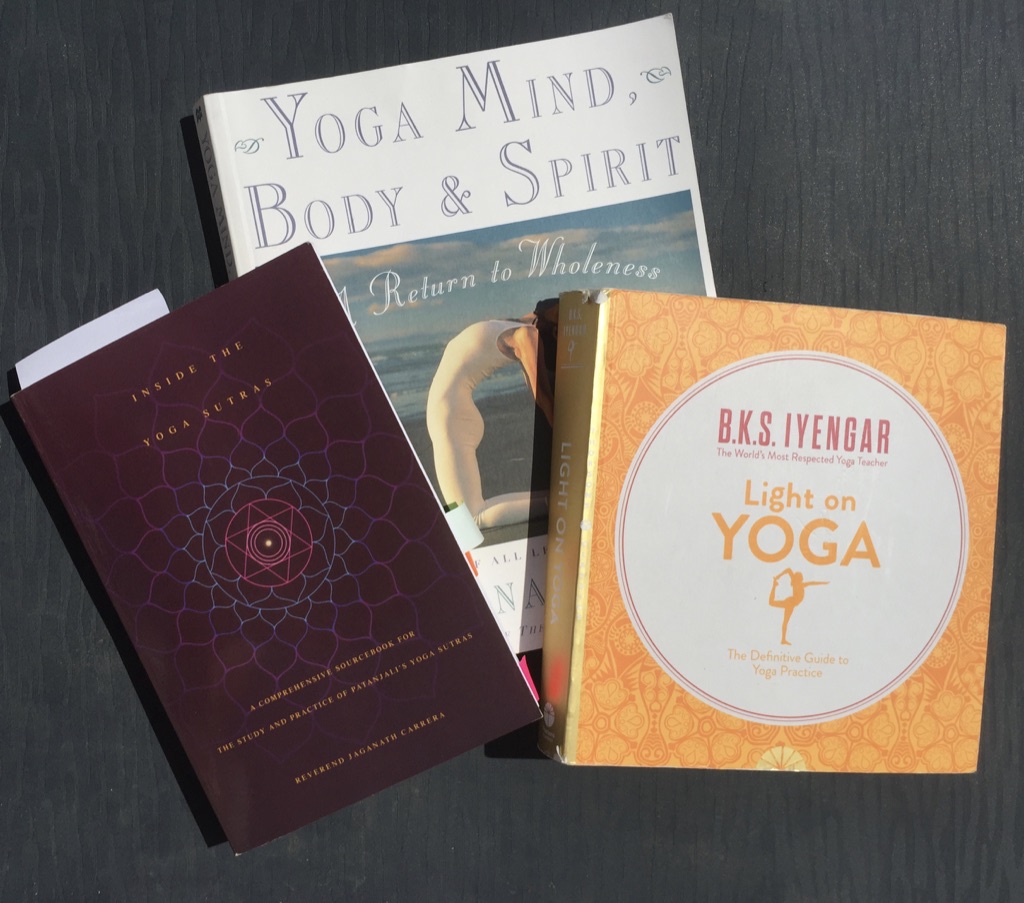
    Donna Farhi’s ”Yoga Mind, Body & Spirit – A Return to Wholeness” is another very complete book. In all honestly I found this one a bit hard going. However, the illustrations and photos are very clear and I like that the use of props, such as chairs, blankets and blocks, is incorporated to offer different types of modifications. It also has very wide margins for your own notes which is a plus.

    My favourite book on this list is probably T.K.V. Desikachar’s ”The Heart of Yoga – Developing a Personal Practise.” Written in a conversational manner (in fact, part of the book is in an interview Q & A format) the book is a practical approach to various elements of yoga: Asanas, breathing and meditation. It also has a chapter on the Yoga Sutra’s with Desikachar’s own translations and comments.

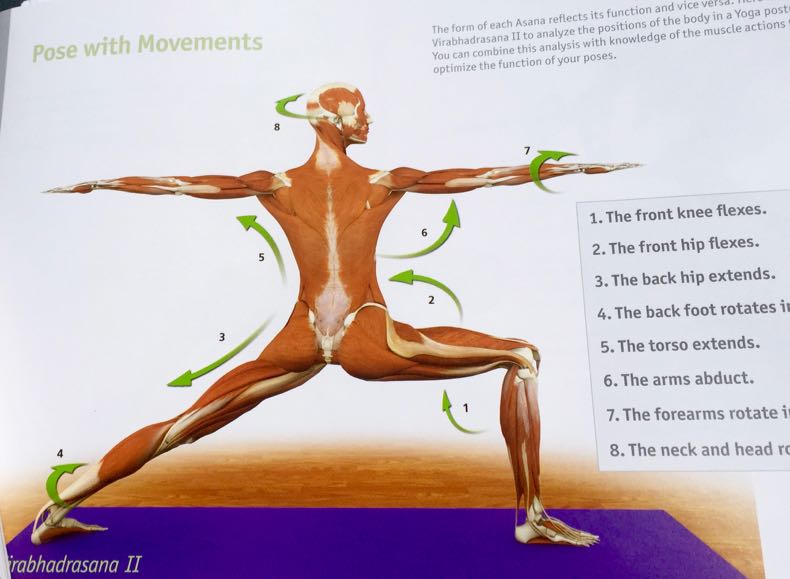
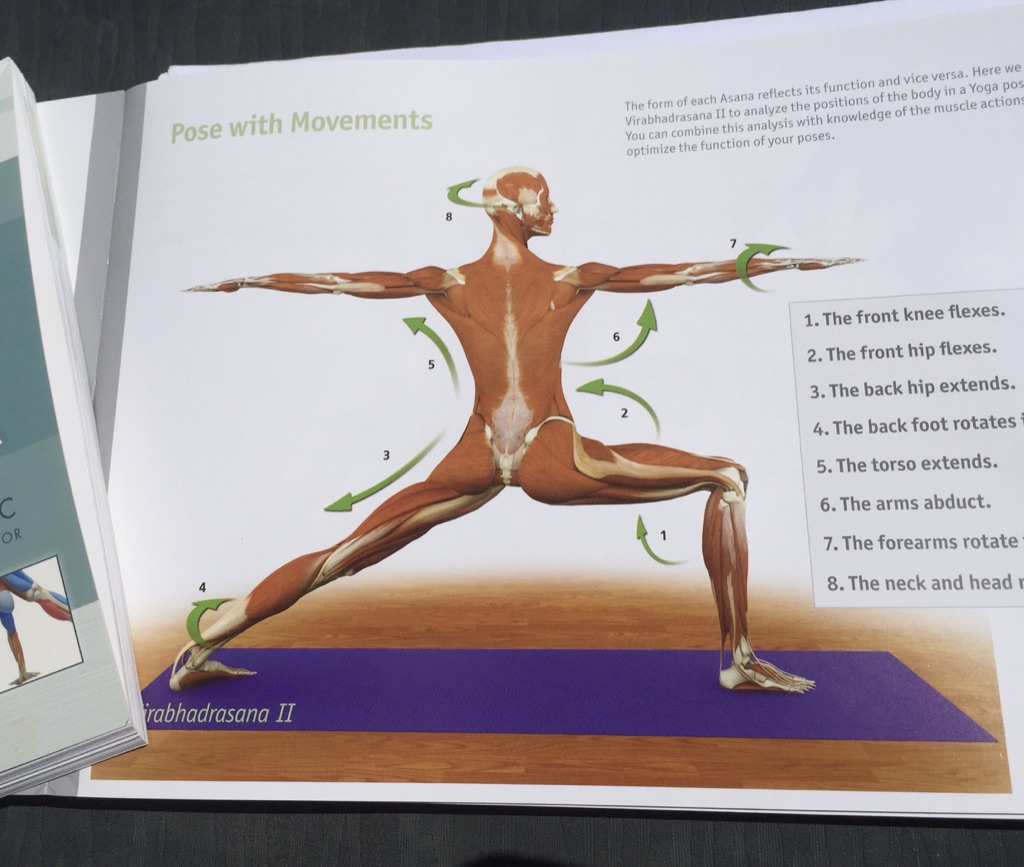
    There are of course plenty of books focusing solely on the anatomy side of yoga. Leslie Kaminoff & Amy Matthews’ ”Yoga Anatomy” (I have the second revised edition) is the one of the most recommended ones. In every page it offers a clear illustration of inside the asana (see the photo to get an idea), a classification, actions for joints and muscles, a word about the respiratory mechanism applicable to that pose and additional notes. A perfect go-to book when you want to check how your body works in a given asana, I use this book several times a week.

    I also have two books of Dr. Ray Long, ”The Key Muscles of Yoga” and ”The Key Poses of Yoga.” I must admit that I first got excited by these books due to the big illustrations that take up most of the pages. Anatomy can be difficult and the pictures make it more approachable! I find these books (unlike the ones listed before) are also usable during actual practise due to simple layout.
    What are the yoga related books you have read and would recommend?

  • 4 Locks, 4 Keys

    4 Locks, 4 Keys

    Patanjali’s Yoga Sutra 1.33 offers us an useful – but not always easy to follow – advise on how to cultivate a calm and clear mind, even in challenging situation. Sounds good right? This Sutra is often referred as ”four locks and four keys” Sutra, as 4 locks and 4 keys comes – you guessed it – with four points, or actions to practise.

    There are various translations of the sutra, but roughly speaking it goes like this: ”By cultivating the attitudes of friendliness toward the happy, compassion for the unhappy, delight in the virtuous and neutrality toward the nonvirtous, our state of mind retains its undisturbed calmness.”

    These four attitudes can be applied to both toward others and just as importantly to ourselves. Here’s a litte bit more how Patanjali advises this happens: 

    Lock 1 is Happiness, to which the key is genuine friendliness and kindness towards those who are happy, without any envy or jealousy attached to it. Simple enough.

    Lock 2 is Unhappiness that should be responded with compassion and support, a sort of a feeling of welfare for others that comes from a place of caring. This also includes being kind to ourselves at the time of sorrow, rather than succumbing to thoughts along the lines of ”why did I not know better” . ”how did I end up disappointed again” or even ”I am an idiot and only myself to blame for this.” I mean, would you speak to an unhappy friend like this?

    Lock 3 refers to Virtues, traits such as patience, courage and benevolence. They are best met with happiness and goodwill. It is not easy to always have positive thoughts, especially when we are having a crap day ourselves. However, feelings of inadequacy or jealousy rarely have brought anything good to anybody so trying to keep things positive and even joyful ultimately serve us better.

    Lock 4 is about Nonvirtues, or even wickedness. The key is to confront these with equanimity or neutrality. It is important to note that this does not mean that we have to approve of bad behaviour: Neutrality here is used with the purpose of calming the mind and finding inner peace. From this perspective it is easier to understand why disregarding non-virtous actions (rather than the people who commit them – an awful person is an awful person) is a better option than getting angry and frustrated over something we cannot have any control over.

    img_4140
    I’m outta here. Not.My.Drama!

    Personally I find that Sutra 1.33 both makes sense and always gives something to think of, no matter how many times I study it. Depending of the day I find it a gift that keeps on giving, or a through mindf**k. This post is just a brief introductory glimpse. If you want to read more, I find the below sources helpful (and written in a normal language, no philosophy degree required): This YogaInternational article, Swami Jnaneshvara’s excellent website, and this blog post from Urban Yoga Garden. And of course a copy of the actual Sutra’s and explanations, available translated by several indiduals. The copy I use can be found here.


  • Last Few Days in Pictures

    Last Few Days in Pictures

    Over the last weekend I attended a course on  yoga for pregnancy and birth. It was so interesting and I learned a lot that I can incorporate even to non-pregnancy classes. 9 hour study days meant that everything else was left aside though so now I am catching up with everything.

    Viime viikonloppuna osallistuin raskausajan jooga-kursille. Kurssia oltiin kehuttu minulle ja oikein hyvä se olikin. Sain 9 tunnin kurssipäivistä paljon ideoita joita voi käyttää myös ei-raskausajan joogatunneilla. Kaikki muut asiat ovatkin sitten viime päivinä jääneet taka-alalle, tietokoneen laturikin tilttasi ja uutta odotellaan… Onneksi aina voi siivota ja pyykätä.

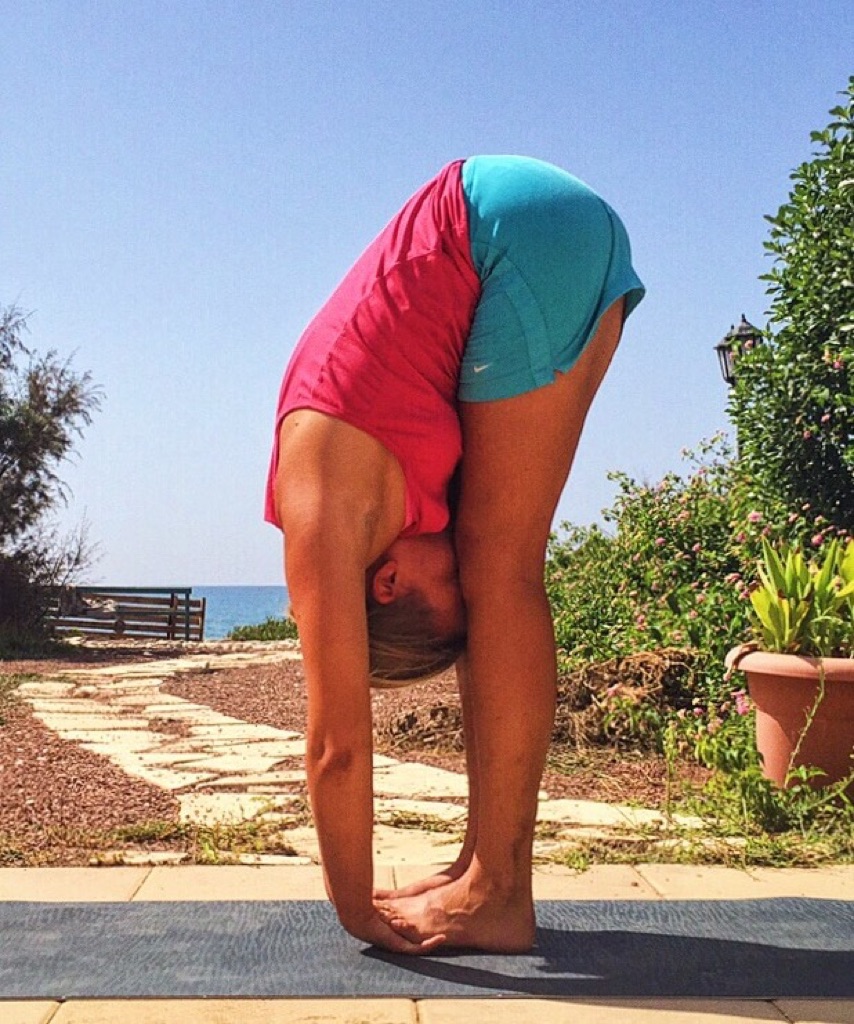
    Morning stretch // Aamuvenyttely


    My breakfast of almost every morning: frozen berries, squeezed grapefruit, fibre powder that also contains vegan (rice?) protein and organic ginger powder (fresh ginger is also good, it keeps well in the freezer.)

    Melkein joka aamuinen aamupala pakastinmarjoista, puserretusta greipistä, kuitusekoituksesta jossa on myös vegaaniproteiinia (riisi?) ja jauhetusta inkivääristä (tuoretta inkivääriä voi tietenkin myös käyttää, se säilyy hyvin pakastimessa.)

    Some new books… That Iyengar book had some pretty ambitious pictures though.  

    Uusia kirjoja… Iyengar-kirjan kuvat yllättivät haastavuudellaan.

    Sunset at home…

    Illaksi kotiin auringonlaskua katsomaan…

    …and a class of wine with friends.

    ja lasi viiniä.


    The dogs demonstrating deep state of relaxation.

    Koirat syvärentoutuneina.

    Photo by Heidi Marttinen

    Tallenna

    Tallenna

  • Yoga books I like

    Yoga books I like

    I had a chat about yoga books with a friend yesterday and this old post of mine came to mindf. As nothing has changed since I first published this text, here you go again: some of my favourite yoga books.

    Yoga books are nothing new. The first systematic presentation of yoga in a written form, the Yoga Sutras by Patjanhali is said to dated circa 400 CE (I am aware there is debate around this date but I am not going to dwell any deeper into it), whilst another renowed yogic scripture, the Bhagavad Gita dates an estimated 500 BCE.

    There is a ton of yoga books around and it can be hard to pick just one or two. Here’s a list of some of my favourites. Some of these I read almost every day, some less so but they have all served a purpose of some sort in my yoga studies. If the list looks familiar it is because each one of the books is on the Amazon’s ”Top 15 or so Yoga books” list and many are teacher trainer reading staples. Hence expect nothing crazy original but if you are newer to yoga literature this might be helpful.

    A lot of people approach yoga through the physical practise. I would however encourage any student of yoga to have a look at what lies in the roots on the asana practise. A good place to start is the Yoga Sutras of Patanjali. These are the basic teachings of yoga are described in short verses called sutras, which are organised in four padas, or chapters. As reading a direct Sanskrit translation might seem a daunting task, there are luckily many text books offering an approachable commentary and interpretation of the sutras in a easy-to-digest form. The text book I have is authored by Reverend Jaganath Carrera and it is called ”Inside The Yoga Sutras.”

    img_3115

    Several books combine philosphy, breathing technique and asana practise in one. A classic is B.S.K Iyengar’s ”Light on Yoga – The Definitive Guide to Yoga Practise.” The books has fantastic black and white photo illustration and the descriptions on how to get into each pose are very detailed. On a complitely superficial level, the 2015 edition I have is also beautiful to look at. The only minus comes from it being a very heavy for a paperback so it is not the best travel read.

    Donna Farhi’s ”Yoga Mind, Body & Spirit – A Return to Wholeness” is another very complete book. In all honestly I found this one a bit hard going BUT it offers very wide margins for your own notes as you go along. The illustrations and photos are very clear and I like that the use of props, such as chairs, blankets and blocks, is incorporated to offer different types of modifications.

    My favourite book on this list is probably T.K.V. Desikachar’s ”The Heart of Yoga – Developing a Personal Practise.” Written in a conversational manner (in fact, part of the book is in an interview Q & A format) the book is a practical approach to various elements of yoga: asanas, breathing and meditation. It also has a chapter on the Yoga Sutra’s with Desikachar’s own translations and comments.

    There are of course plenty of books focusing solely on the anatomy side of yoga. Leslie Kaminoff & Amy Matthews’ ”Yoga Anatomy” (I have the second revised edition) is the one of the most recommended ones. In every page it offers a clear illustration of inside the asana (see the photo to get an idea), a classification, actions for joints and muscules, a word about the respiratory mechanism applicable to that pose and additional notes. A perfect go-to book when you want to check how your body works in a given asana, I use this book several times a week.

    img_3120

    I also have two books of Dr. Ray Long, ”The Key Muscles of Yoga” and ”The Key Poses of Yoga.” I must admit that I first got excited by these books due to the big illustrations that take up most of the pages. Anatomy can be difficult and the pictures make it more approachable! I find these books (unlike the ones listed before) are also usable during actual practise due to simple layout.

    What are the yoga related books you have read and would recommend?

    Tallenna

    Tallenna

    Tallenna