Tag: Yoga

  • About Yoga Photos for Instagram…

    About Yoga Photos for Instagram…

    After all the talk about the Yoga Sutras I feel the need (maybe you do too) for some comic relief. So who else to turn to than JP Sears and his video about the importance of Yoga Photos for Instagram.

    My own yoga pictures do not ever rarely always turn out like I imagined them in my head. Here are few of them that I find quite funny, although not necessarily that informative or esthetically pleasing as I wanted them. Special note for the fact that the horizon is NEVER straight when I use the self-timer.

    Faceplant-asana. At least my elbows are by my body.

    img_4112

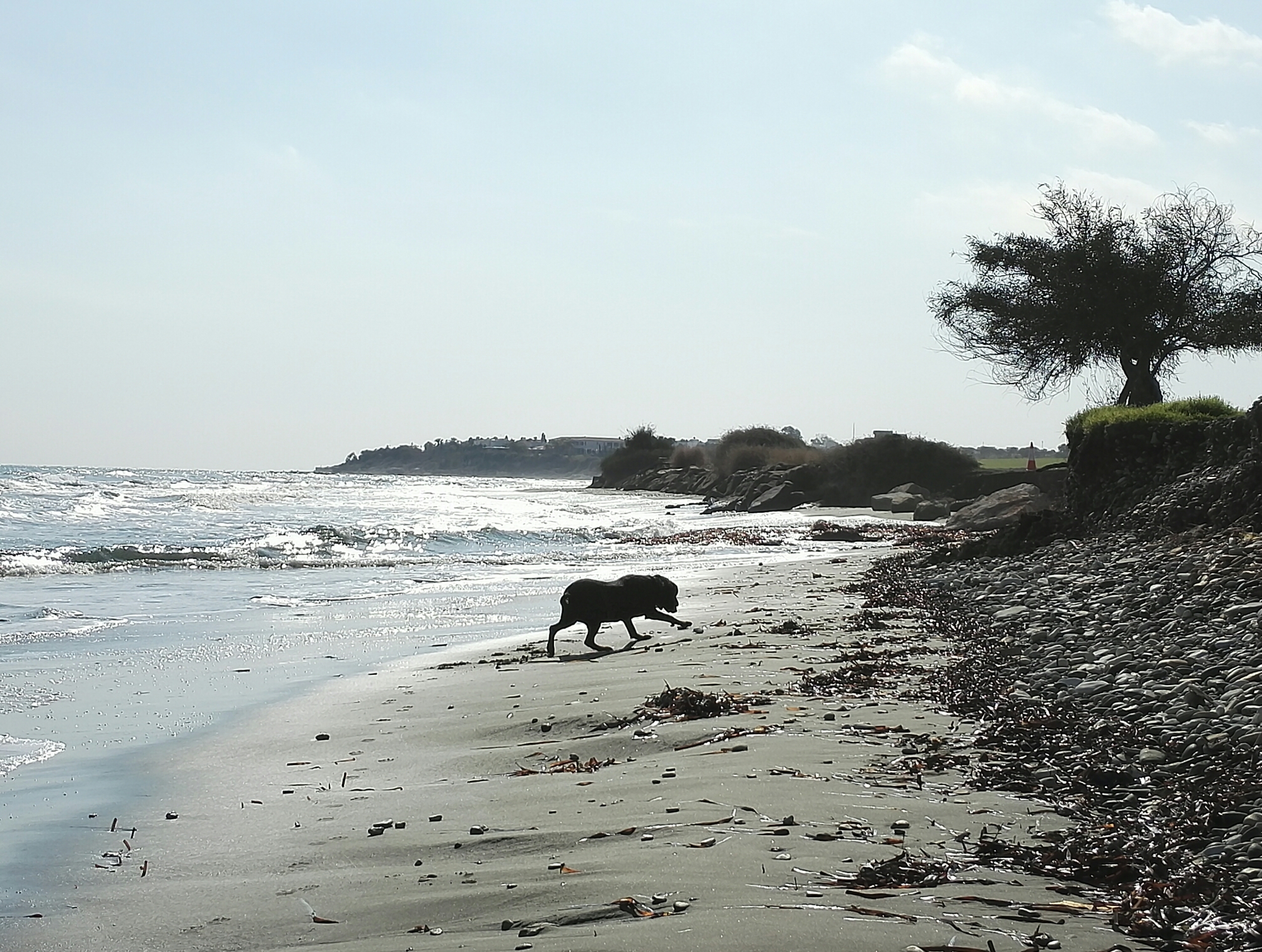
    “Escape, quick, before the human kicks!”

    img_8549

    Proof that animals learn quick. Set the camera – they are in the sea. And who needs a head in the picture anyway?

    img_1075

    Well, they are loyal too. “You need help Human? Looks like you are falling over?”

    img_3230

    Oh hello Kalimera, just streching and looking akward to start off the day.

    The last two photos are taken by Heidi Marttinen and the horizon is straight.


    Tallenna

    Tallenna

  • January Abstinence Yogi Style: The Niyamas

    January Abstinence Yogi Style: The Niyamas

    In the eight limb system of yoga outlined in the Yoga Sutras of Patanjali the the first limb, the yamas, are about our relationship with the outside. The second step, the niyamas, are more about the relationship we have with ourselves. You can view them as a form of a self-training to prepare mind, body and senses on the yogic path. They also offer great material for all of us to reflect upon as a type of lifestyle observances even if we are not necessarily aiming for enlightenment so lets have a closer look!

    Saucha

    Saucha refers to purity and purification (some also use the word hygiene) of both body and mind. The idea is that clean and uncluttered state, both physical and mental, is required to create the calm needed in attaining wisdom and spiritual liberation. Saucha does not however mean purity as in literal sterility. Orderliness and cleanliness are helpful but we should focus more on the bigger picture: the people we spend time with, how we entertain ourselves and of course the food and drink we consume. Saucha is one of the aspects behind the reason so many yogis are vegans.

    Sutra 2.40: “By purification, the body’s protective impulses are awakened, as well as a disinclination for detrimental contact with others.”

    Santosha

    Santosha means contentment and for explanation of it I first turned to a dictionary. There contentment is explained as follows: ”A state of happiness and satisfaction”, ”freedom from worry or restlessness” and ” peaceful satisfaction.” Sounds wonderful, right?

    The trouble is that our minds and Ego work the opposite way: it is very human to crave for something else, be it the ”perfect” yoga pose, career, relationships, success, stuff, more stuff… Yet contentment comes from accepting and being grateful of what we already have instead of running after something that we think – but do not know – will make us, well, more content.

    contentment

    Tapas

    Tapas has many translations, ranging from ascetism to self-discipline, effort, internal fire and ”purification through discipline.” It is the process of putting ourselves through something we do not necessarily want to do but we know is good for you. The idea is that through the effort – an inner fire pushing us – we also burn away impurities and strengthen ourselves. Tapas helps us to cultivate healthy habits and break away from unhealthy ones.

    For example, a daily work out or a yoga practise can be hard to maintain but we make ourselves to go through with it. After the exercise we feel better ourselves and may even be encouraged to have a healthier meal than usual to nourish ourselves.

    Svadhyaya

    Svadhyaya refers to self-study with the ultimate aim of getting in contact with divine nature. If this seems a bit over ambitious for now, no need to worry. Svadhyahya can be scaled down to more approachable levels by inquiring about ourselves: What are the things that push our buttons, good or bad? What are the patterns of behaviour we have and do they serve us well? How can we chance habits we wish not to keep?

    This type of self-observation, done with empathy and compassion, can then be combined with the study of spiritual texts of one’s choice (Yoga Sutras, Bible, pick your religion…) that are in the service of Svadhyaya. This helps to keep and give perspective and understand the universally shared feelings and questions that exist in the world, rather than making Svadhyaya all about the self, ”me.” With time this leads us towards a more stable and peaceful existence, both internally and externally.

    Sutra 2.44 “Through study comes communion with one’s chosen deity.”

    Ishvara Prandihana

    The big one, dedication of one’s practise to a higher power (whatever you choose to call yours.) In simple terms this means letting go of the ego and dedicating one’s practise, or the fruits of one’s labour, to something greater than us. The act of dedication in itself is a remainder of our connection to something higher and a sign of trusting that force to guide us towards the universal truth.

    And that’s the end of the short introduction to yamas and niyamas. There is obviously a lot more to read on the topic. For my own studies and as background for these articles I have used the following books and sites:

    img_20170120_182424.jpg

    Tallenna

    Tallenna

    Tallenna

  • Music during Yoga Class: Threat or Opportunity?

    Music during Yoga Class: Threat or Opportunity?

    In all honestly up until few years ago I did not realise playing music in yoga classes was something that a) happens and b) is a preference for some. Now, I don’t mind either way. I sometimes practise at home with music on the background, and I have been to great yoga classes accompanied with well thought through music (think drum’n’base during a strong Jivamukti class at 7 am – it does wake you up!) For now I however choose not to use music in my classes and here is why: 

    • It’s a distraction. I find it easier to guide thoughts internally and focus on listening my body when the main sound I can hear is my own breath.
    • There is already so much noise in this world and in our lives. Maybe this is a Finnish thing (we like our silence A LOT) but I really crave quiet time and want to offer that to the people who come to practise with me.
    • Curating soundtracks sounds like too much work. If I was to play music I’d like it to reflect the stages of the class: pranayama, creation of heat, peak pose… whatever the order of the day is. Which cannot always be dictaded in advance. And then what? Call me perfectionist, this just shows I DO take my music very (too?) seriously.
    • Music is a very emotive matter and you never know what memories a melody can bring up in people. The last thing you want is to play a tune that reminds somebody of their horrible break up or some other bad memory…

    Over to you: music or no music during yoga class. What’s your preference and why?

    img_4901
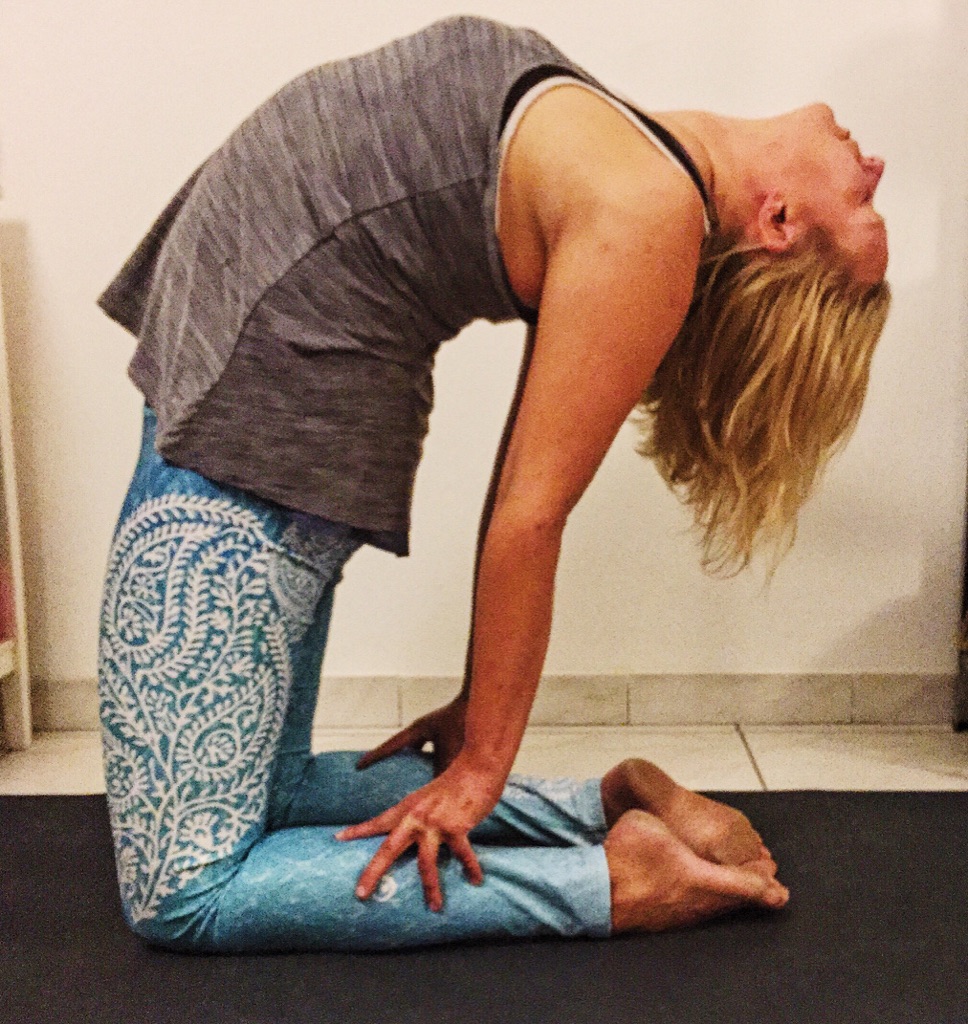
    A really grainy picture but it is the better one I have of ustrasana/camel pose // Suttunen kuva mutta tässä kameli-asanan (?) linjaukset on paremmassa kunnossa kun siinä priimakuvassa.

    Vielä muutama vuosi sitten en ajatellut että musiikki voisi olla joillekin tärkeä osa joogatuntia. Itseäni musiikki ei varsinaisesti haittaa (yleensä) ja kotona voi hyvinkin soida jotain taustalla harjoitellessani. Olen myös ollut tunneilla joissa musiikki on palvellut harjoitusta loistavasti: Drum’n’base kello seitsemältä aamulla voimakkaan Jivamukti-harjoituksen taustalla kyllä herättää päivään siinä missä pari kuppia kahviakin. Alla kuitenkin syitä miksi en tällä hetkellä soita musiikkia omilla tunneillani:

    • Se häiritsee keskittymistä. On helpompi hiljentyä ja keskittyä oman kehon tuntemuksiin kun isoin ääni salissa lähtee (ohjaajan lisäksi) omasta hengityksestä.
    • Elämä on jo muutenkin ääntä täynnä. Yleensä joka paikassa (jopa täällä maalla) on kaikenlaista taustamelua ihan tarpeeksi. Itse kaipaan usein hiljaisuutta ja haluan myös tarjota mahdollisimman hiljaisen ympäristön heille jotka tulevat harjoittelemaan kanssani.
    • Hyvän soundtrackin (puhumattakaan useamman) tekemiseen menisi varmaan hirveästi aikaa. Jos soittaisin musiikkia pitäisi sen sopia tempoltaan ja tunnelmaltaan tunnin eri osiin: Pranayama, lämmittely, pääasana… mitä sitten tunnilla tapahtuukaan. Jota ei voi aina etukäteen suunnitella. Ja mitäs sen musiikin kanssa sitten tekisi? Kuulostaa ehkä hieman täydellisyyden tavoittelulta mutta musiikki on vakava(hko) asia.
    • Musiikki on todella henkilökohtaista. Ikinä ei tiedä mitä assosioita ihmisille tulee mistäkin biisistä. Olisi kurjaa jos jostain kappaleesta tulisi jollekin mieleen ero tai joku muu ikävä muisto.

    Mitäs mieltä te olette: musiikkia joogan taustalla vai ei?

    img_4899
    Music during yoga class is a bit like wall stickers: Not everybody’s cup of tea. (I am still on the fence re: stickers. And did Mark Twain REALLY say those words in that order?) // Musiikki joogatunnilla on vähän kuin seinäkoristetarrat: kaikki ei tykkää. Itse en ole vielä päättänyt mitä mieltä olen tarroista, lähinnä tässä mietityttää että sanoiko Mark Twain todellakin juuri nuo sanat juuri tuossa järjestyksessä.


  • About Yoga Mats

    About Yoga Mats

    To practise yoga, you really do not need anything else but the willingness to be present in the now and the yoga mat as we know it is a rather new Western invention. However it can bring a new aspect to the practise by creating a space for your meditation and adding cushioning and stability for the asana.

    These days there is a wide range of mats available, and the price range can be big. Therefore I decided to write about the mats I have used in my practise so far. The things I took into consideration are their grip (or slippiness), general durability, weight (important to those who travel or carry the mats with them a lot), cushioning and eco-friendliness. All my mats have measured more or less 185 x 61 centimetres although there are longer and wider mats available too.

    The Basic Mat

    What I call the Basic Mat is the mat that is the usually the cheapest one you can find. They all have more or less the same specs: Made of PVC (sometimes EVA, which is a lighter material), 2-5 millimetres thick and usually having a foamy ”grid” type of surface. You might want to buy the basic mat if you are new to yoga and not sure yet how much you can to commit to it. On the plus side these type of mats usually offer reasonable cushioning (if you have sore knees for example, go for a thicker mat) and they are easy to clean as both PVC and EVA are waterproof materials. At the same time they not the most durable ones, and tend to start shedding small pieces of plastic with the friction/elements the more you use them. They can also get slippy quite easily, especially if go to sweaty classes.

    img_4601
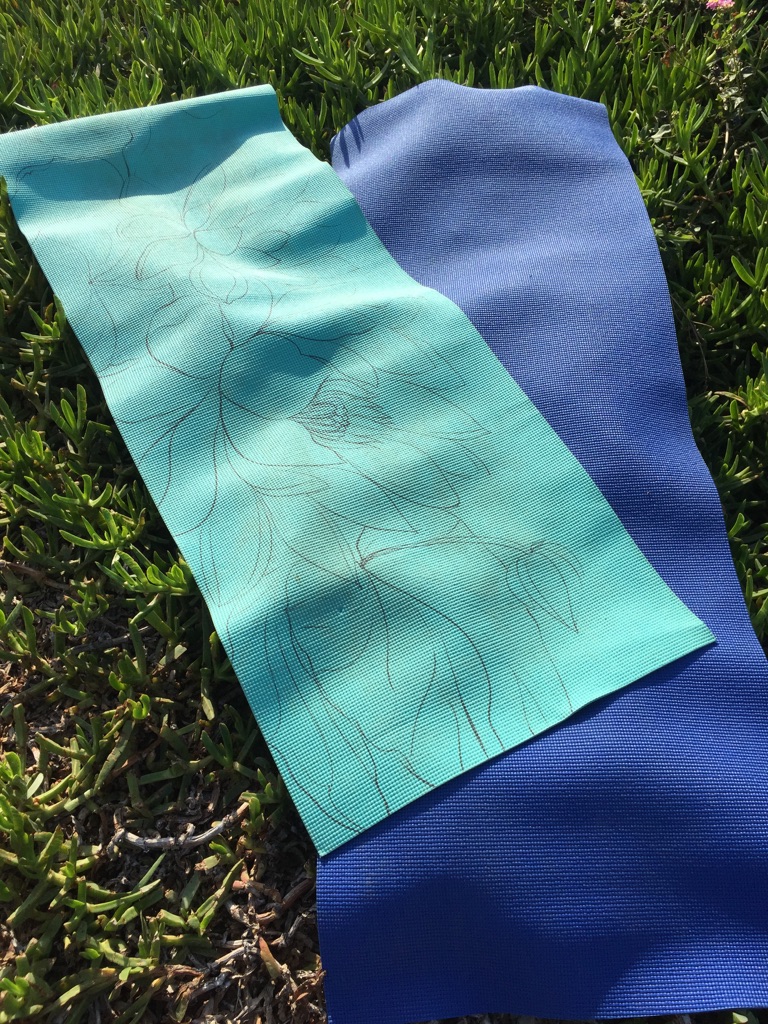
    The Basic Mat. You see what I mean with the “grid”? The green one is from Lidl, the blue one I do not know. I call it the generic mat.

    The price of the basic mat ranges usually from 10 to 30 euros, depending where you buy it and if it has some kind of brand label attached to it. I do not diss the basic mat as it will get you started just fine. If and when you have decided to commit to yoga more, here are some other mats I have used:

    Drop of Mindfulness

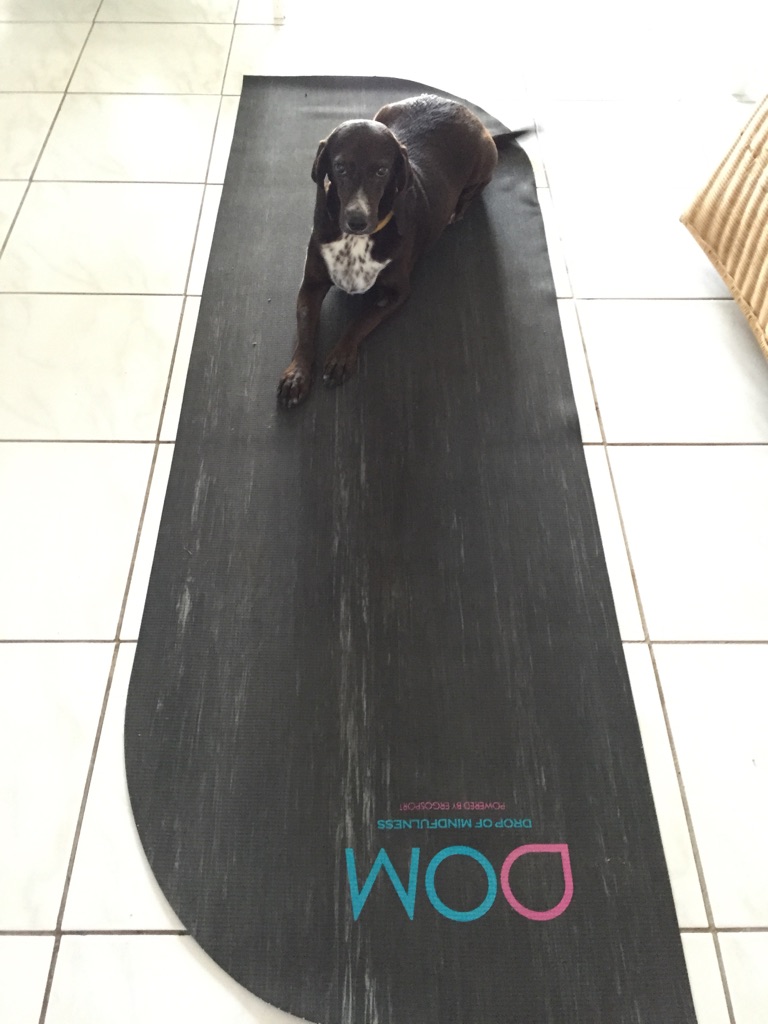
    DoM is a Swedish brand that making active wear suitable for yoga and also yoga mats. Unfortunately at the time of writing this text their website is under construction for Winter 2016 so I cannot tell if they still stock the mat I bought 4-5 years ago. This mat has however served me very well; it felt very grippy and sticky straight from the start and has kept these qualities to this day. The mat is on the thinner side (I’d guess 2-3 millimetres) so extra cushioning is sometimes needed for knees. The weight is reasonable at around 2 kilos. I recall reading that the mat is made of natural rubber but this needs to be confirmed once the website is out again, together with the retail price.

    img_7378
    “My Drop of Mindfulness mat. MINE!”

    MandukaEKO

    Manduka has a great reputation among yogis and they have several types of mats to choose from. I have the MandukaEKO (5 mm thick) which is extremely sturdy. When I stepped onto this mat after having used the DoP for years the difference was big: I need no extra cushioning needed for this mat and it does not fly away in the wind either (yes this can be an issue when teaching outside, hehe.) I have two cons for this mat though: It is heavy (over 3kg) so even if you travel with a proper suitcase, it does take a lot from the luggage allowance and it is definitely not a hand luggage item. The other thing is that it can get a little slippery, especially in sweaty conditions. The Manduka website says that this means the mat is not ”broken into” properly but I did not notice this in the beginning so not sure where the reason for this is. Nevertheless, this is a good mat and ecological choice as it is made of natural rubber with a zero waste manufacturing process. It is also 99% latex free.

    img_0137
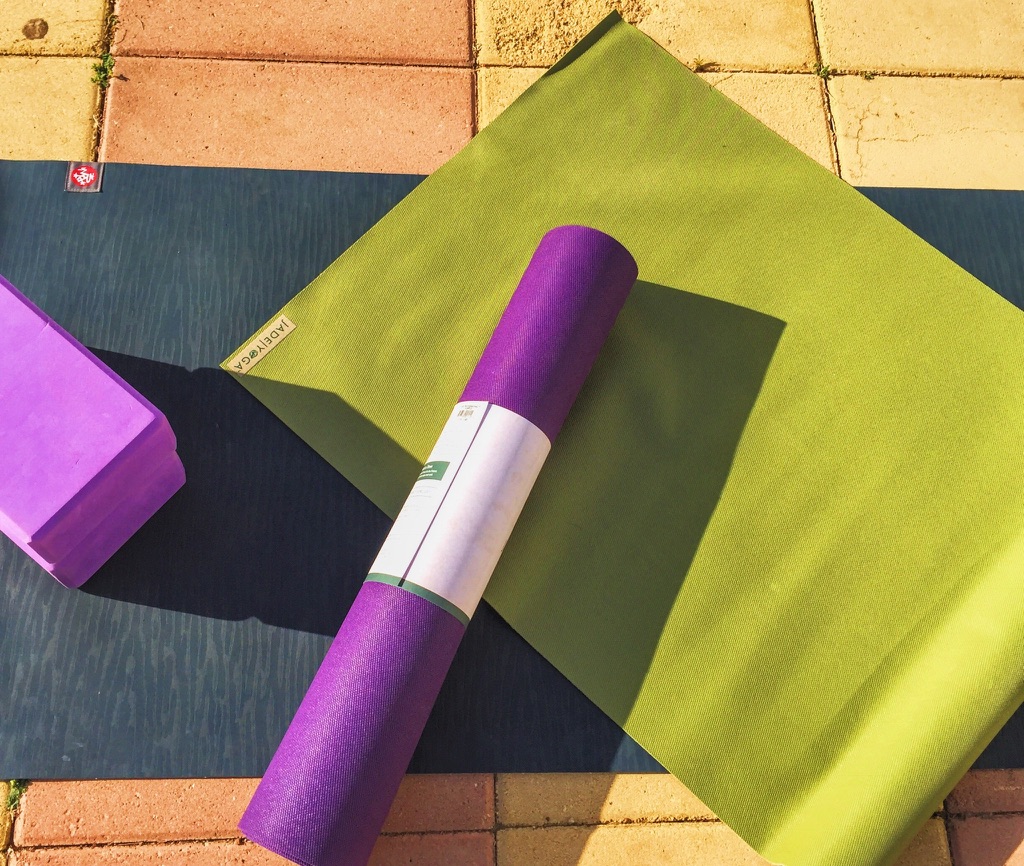
    The MandukaEKO is the blue one at the bottom, notice the different texture. The purple one is the JadeHarmony and the green is JadeVoyager. The yoga blocks are just blocks although I could say few things about those too… Maybe later.

    Jade Yoga Mats

    JadeVoyager is my latest mat. I bought it from the MindBodySpirit festival in Nicosia last weekend. I’d been looking for a travel mat for myself for ages (airline luggage restrictions again!) Also my mum had sent me a photo of an ecomat she had seen in a magazine with the comment ”they don’t tell where I can buy one!” When I bumped into the lovely ladies from the Simply Green shop in Athens and saw the JadeYoga mats it they had it was a no brainer. I got the JadeVoyager for myself: you can fold it (rather than roll, although this is preferable for maintenance) and it weights just over half a kilo. With this weight it obviously has got no cushioning but it can definitely keep your practise going on when traveling. Orm you can use it over another, less grippy mat. For my Mum I got the JadeHarmony (Merry Christmas Mum, thanks for the gift tip!) which is about the same thickness than the MandukaEko. From the first touch it feels a bit softer and a lot more stickier. This can also be due to the open cell natural rubber JadeMats use (Manduka uses closed cell natural rubber) which translates as more grip, these ones will be put to test to find out more! The JadeYoga company also has a very eco-concious production cycle and they plant a tree (over one million so far!) for every mat sold.

    img_4701
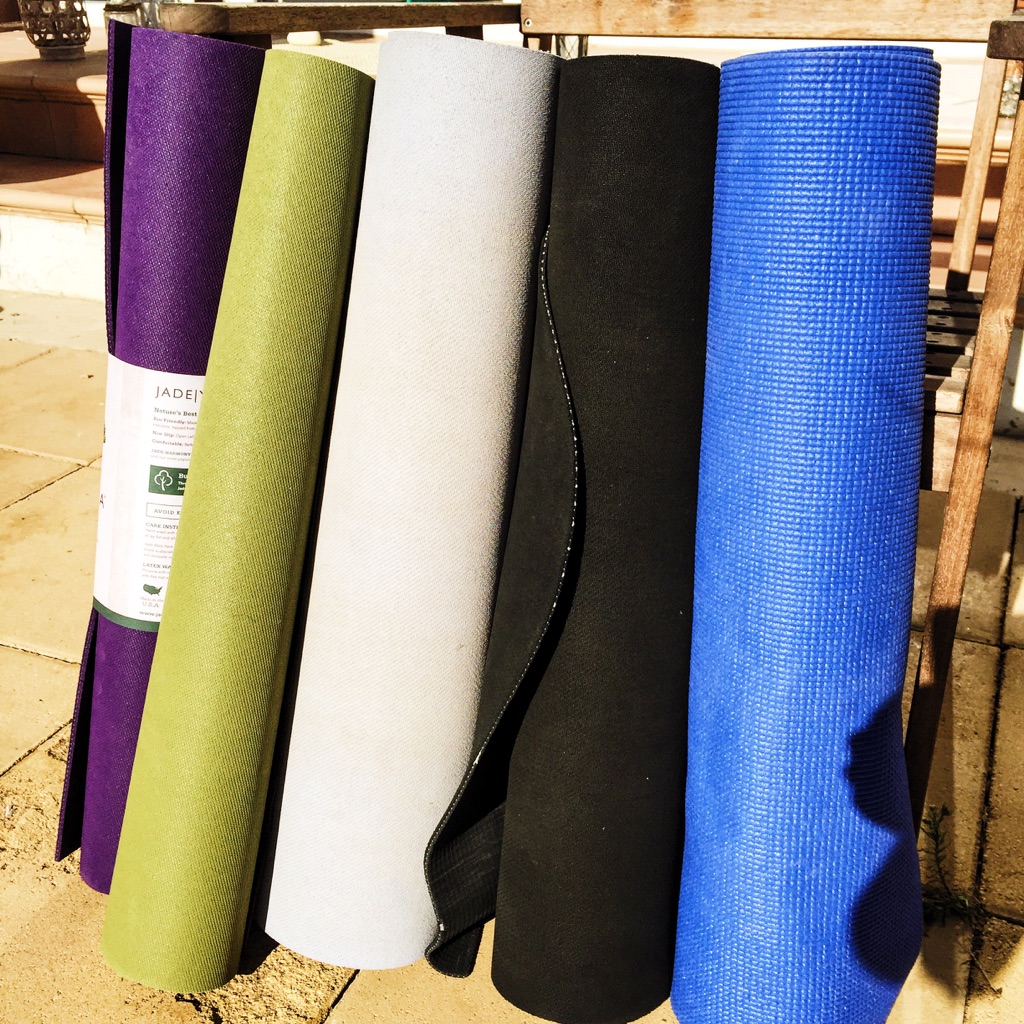
    From left to right: JadeHarmony, JadeVoyager,MandukaEko (mine is dark blue, you see the bottom side), Drop of Mindfulness and a Basic Mat in Blue.

    When talking to fellow yogis and reading reviews the JadeMats are always rated on the top with Manduka ones. They both have very similar retail prices ranging from 40 (the travel mat) to 92 (the pro and extra long mats) euros so ultimately it is up to personal preference between these two.

    Now, over to you: What is your favourite yoga mat?

    PS: If you want to read more about the history of the yoga mat check out this Yoga Journal article.

  • Good Yoga Reads Online

    Good Yoga Reads Online

    img_0736

    Here’s a round up of few yoga articles & sources I return quite often. Some of you have asked more information about the benefits of yoga and how does it compare to other physical activities so hopefully you’ll find these as useful as I have.

    On Philosophy:

    The Eight Limbs, The Core of Yoga” by William J.D. Doran. Probably a two-three pager if you were to print this out, this is an easily digestable summary of the eight limbs and how they can translate to real life.

    For an explanation and discussion about the Yoga Sutras I have not found any better than this website. There is actually a ton of material on this site even outside the sutras, AND a ”how to use this site” section. Much gratitude to Swami J for his site.

    img_5720
    I’m a tree… no, a pillar!

    On Yoga vs Other Types of Exercise

     There is a growing number of interest in scientifically proving the benefits of yoga, both mentally and physically. The main issue with these is that with so many different types of yoga styles the studies made can have very varied outcomes. Nevertheless, here are few articles that I have found pretty informative and/or interesting, keeping in mind that it is usually advisable to mix up your exercise routine and interested rather than relying on one thing only.

     Alisa Bauman wrote in 2007 about ”Is Yoga Enough to Keep you Fit?”

    If you are a runner, you might want to read this.

    And one about Bikram (hot yoga) and weight loss.

    About the Muscles Used

    Ok, some of these poses in this linke are not very accessible to even the most seasoned practiotioners but there are also some very common streches here. If you already have a practise, this might be interesting to see what musclegroups you strech. Just remember to incorporate your breath!

    Chaturanga (the pose that looks like a plank that you then lower to the ground, arms by your body) is one of the hardest things in a yoga class in my opinion. It is so hard to get it right and the more vinyasa-style class you have, the more you do them. And the more tired you get, the chances are the less mindful you become about it. Here is a good article about how to get comfortable with your chaturanga in your head and here is a video of the physical aspects of it.  You can always modify your chaturanga by placing your knees down on the ground.

    img_2460
    Never easy but at least my wrists in line with my elbows and shoulders.

    Tallenna

  • So what can yoga do for me?

    So what can yoga do for me?

    Last week I wrote a piece about what yoga is (or can be.) I promised a follow up post on the benefits as well so here we go. You will not see flexibility on the list because it seems to be part of any other list of benefits/yoga discussion and I wanted to give space to all the other good stuff.

    Before anything we have to do a small reality check: Yoga is not a miracle cure for anything. BUT, you can definitely start getting the benefits from the first class and a regular practise will help you to feel them on a deeper level. You will also not always eagerly skip and hop to every yoga class. Even long term practitioners have moments when they really have to drag themselves onto the mat. We want to be patient with yoga: it is as alive and evolving as everything else in life. But just consider this: Have you ever head anybody regretting going to yoga class?

    To the point though. What’s there to gain?

    1. Improved breath awarenes: We all know to how to breath, but there is a difference between breathing and breathing. In a yoga class you learn to focus on breathing with all your lungcapacity and lenghten your inhales and exhales. This in turn promotes the slowing of the heart rate, lowering of blood pressure and with this you get…
    2. lower stress levels!
    3. Yoga moves your whole body: some poses move many different muscle groups, some just parts of your body. A yoga class is likely to be a combination of these micromovements and bigger ones, all contributing towards a…
    4. Improved body awareness. And awareness in general. Remember, you have started your class with breathing, calmed your mind so you are also more receptive to what is going on in your body.
    5. Strenght building. This happens slowly but surely, as you work through the poses and hold them between 3-5 breaths.
    6. Increased blood flow: Yoga poses together with the breath makes blood circulate better, bringing oxyganated to the cells. This in turn alleviates symptoms caused by poor circulation such as body fluid retention and/or swelling.
    7. Improved immunity: Bluntly put, the breathing, twisting and getting in and out of poses you do in a class makes the fluids and organs inside us move, helping the lymphatic system to combat infections and to remove cellular waste.
    8. Clarity of the mind, focus and relaxation: By know you understand that there is a lot going on during a yoga class, mostly on a subtle level. Your instructor will guide you with your poses and breathing, and after the final relaxation at the end you will feel lighter and rested…
    9. Which means you will also enjoy a better sleep!

    The list could go on and on… You can read more about the benefits here.

    Let me know in the comments what benefits you have noticed coming up with your yoga practise?

    Tallenna

    Tallenna

  • What is Yoga?

    What is Yoga?

    I have been forcing kindly asking friends and family for some feedback on the blog. My cousin suggested I write about what yoga actually is and means, for those who see it as ”sitting on the floor in an uncomfortable position, being spiritual.” Which, of course, it should not be. So I took it upon myself to try and explain a bit what yoga is (or at least can be.) I do want to clarify the views are entirely mine and everybody is free to disagree with these – drop a comment below if you want

    1.  The word ”yoga”, in Sankrit (please do not stop reading yet! There will not be much Sanskrit!) means ”union” or ”connection.” In everyday terms we can interpret this as having a better awareness of ourselves in our lifes, be it by being more aware and in tune with our bodies and mind, or with our wider physical contect we live.

    2. Some say yoga is ”the science of being here and now.” Otherwise we know this as trying to focus on being in the present and not worrying about the past or future. These days this is also called as “mindfulness.”

    3. Yoga is also a journey. A journey to self-discovery, to learning patience, to (self-)acceptance. It is not a quick trip, it’s a ”process.” The good part is that doing yoga even once a week, or even 20 minutes at a time, will bring you benefits.

    4. In every day speak, when we say ”yoga” we usually refer to the physical practise, asana (or yoga poses if you preferer.) However yoga is more than just movement, you can check out the eight limbs here if you want to read more.

    5. There are many different types of yoga classes. Many focus only on the physical aspect and there no OM-ing or evident spirituality in sight. Some incorporate more philosophy, breathing practises and/or meditation.  If you are complitely new to the system try out a class that clearly says it is for beginners, or a hatha yoga class. These classes will be gentle, not too sweaty or uncomfortable, even if you have not moved in ages.

    6. You should not feel forced to do anything in a yoga class, even if you want to make an effort to the best of your abilities at that moment. We do not want is to get fixated in some end game or goal, but rather live and accept what is now. There is absolutely no need to be flexible in the body in any yoga class, but having a flexibility of the mind will help you.

    7. Yoga differs from your regular stretching with its emphasis to breath. Ultimately, we aim to move to the rhytm of our breath and getting to feel a mind-body connection. No need to worry too much about this either, even yoga instructors confuse our inhales and exhales from time to time. It’s ok, this teaches us the art of ”letting go” in its own way.

    8. Yoga is not a religion, it is a philosophy and a practise encompassing all aspects of life. You are not signing up to a cult by walking into a yoga class. Equally you do not need to be a vegetarian to do yoga. You are, however, better off not having a heavy meal right before a class, due to the twisting and bending that may take place – no different to any other exercise class.

    9. Some classes have chanting. Don’t fear it, just maybe try not to laugh. You absolutely do not have to join in. You are most likely to hear the mantra OM (repeated 3 times) and/or the saying ”namaste”, meaning “the light in me honours the light in you.”

    If this clarified some things about yoga, great. If not, ask. If still wondering, check out the post coming up early next week about the benefits of yoga.

    blogpost

    Tallenna

    Tallenna

    Tallenna

    Tallenna

  • Mitä jooga edes on?

    Mitä jooga edes on?

    Kysellessäni kavereilta ja sukulaisilta palautetta blogiteksteistä tähän asti serkkuni ehdotti että kirjoittaisin mitä jooga edes on. Hän perusteli tätä sanomalla että ”henkistyneenä oleminen epämukavassa asennossa ei nappaa” ja allekirjoitan tuon täysin. Yritän siis hieman selventää mitä jooga on, tai voi olla. Kirjoitus alla on täysin henkilökohtainen eikä mikään aukoton totuus joogasta joten listastani saa totta kai olla eri mieltä.

    1. Sana ”jooga” on sanskriittia ja tarkoittaa yhdistymistä tai yhteenliittymistä. Arkipäivän kielellä tämän voi tulkita itseymmärryksen kehittämistä, mielen ja kehon yhteyksien tutkimista sekä avoimempaa suhtautumista ympäristöömme ja asioiden vaikutuksista toisiinsa
    1. Jotkut sanovat että jooga on läsnäolemisen tiedettä. Itse tulkitsen tämän yritykseksi keskittyä yhteen asiaan kerrallaan ja yritykseksi (ja yritykseksi se usein valitettavasti jääkin) olla huolehtimatta menneestä tai nykyisyydestä. Näitä elämän helppoja asioita siis…
    1. Jooga on myös matka. Matka itsetuntemukseen, itsensä hyväksymiseen kaikilla tavoin, kärsivällisyyden oppimiseen… Huono puoli on että kyseessä ei ole mikään nopea reissu vaan joogaan kannattaa asennoitua ennemminkin koko elämän jatkuvana matkana. Hyvä uutinen on taas että joogaa voi harjoittaa monella eri tapaa (eikä siis pelkistään niillä epämukavilla asennoilla) tavoilla jotka sopivat tämän hetkiseen elämäntapaan.
    1. Länsimaisessa kielenkäytössä sanalla ”jooga” viitataan yleisesti asanoihin eli fyysisiin jooga-asentoihin. Joogaan kuuluu myös paljon muutakin ihmisen moraalisen, fyysisen, mentaalisen ja henkisen puolen kehittämiseen liittyvää. Voit lukea mitkä ovat joogan kahdeksan raajaa täältä.

    1. Joogatunteja löytyy joka lähtöön. Useat tunnit keskittyvät vain ja ainoastaan fyysiseen harjoitukseen ja henkistä puolta harjoituksesta ei välttämättä huomaa. Joillakin tunteilla harjoitukseen kuuluu filosofiaa, hengitysharjoituksia tai meditaatiota. On tunteja joilla yhdistetään yllämainittuja osioita. Jos jooga on täysin uutta kannattaa suosiolla mennä aloittelija- tai hatha-joogatunnille. Nämä tunneilla tahti on rauhallisempi ja antaa tilaa tarkkailla omaa hengitystä ja tuntemuksia vaikka asiat ovatkin uusia.
    1. Joogan ei koskaan pitäisi tuntua väkinäiseltä vaikka on tietenkin haluamme yrittää parastamme tunnilla tai kotona joogatessa. Joogan ei ole kuitenkaan tarkoitus näyttää tietynlaiselta fyysisesti, eikä joogassa tule koskaan valmiiksi. Tarkoitus on elää hetkessä ja hyväksyä se mikä on, vaikka se olisi sitten suurta turhaituneisuutta. Joogan aloittaakseen ei tarvitse olla notkea vaan harjoitukset tehdään omaa kehoa kuunnellen. Tietynlainen mielen notkeus tosin on varmasti avuksi.
    1. Jooga eroaa tavallisesta venyttelystä hengitykseen, mielenliikkeiden tarkkailuun ja hallintaan kiinnitettävän huomion takia. Tätä ei kuitenkaan kannata stressata liikaa, niin joogaopettajilla kuin pitkäaikaisilla joogaajillakin menee ulos- ja sisäänhengityksen välillä sekaisin ja kauppalistat voivat pyöriä päässä. Elämä on ja väkisin päähän tunkevat ajatukset opettavat meille ajatustemme hyväksymistä ja pois päästämistä.
    1. Jooga ei ole uskonto, se on filosofia ja käytännön harjoitus joka koskettaa kaikkia elämänaloja. Jos siis haluat. Jooga ei pakota itseään elämääsi ellet sitä itse halua. Kasvisyönti ei myöskään ole pakollista, tarpeellista eikä jooga sitä tuputa. Ennen harjoitusta ei tosin kannata syödä mitään raskasta koska tunnilla voidaan tehdä kiertoja ja taivutuksia jotka tuntuvat paremmilta tyhjemmällä vatsalla.
    1. Joillakin tunneilla on mantroja. Niitä ei tarvitse toistaa, eikä niissä ole mitään uskonnollista. Useimmiten kuultu mantra on ”OM” joka toistetaan kolme kertaa. Voit myös kuulla opettajan sanovan ”namaste” joka tarkoittaa jokaisessa ihmisessä olevaa henkistä valoa. Namaste on toisen sielun valon tunnistamista ja kunnioittamista.

    Jos tämä selvensi mitä jooga on, hyvä. Jos ei, kysy lisää. Ensi viikolla kirjoitan joogan monista eduista tarkemmin.

    blogpost

    Tallenna

    Tallenna

    Tallenna

    Tallenna

    Tallenna

  • Few words about… Yoga Injuries

    Few words about… Yoga Injuries

    When New York Times in January 2012 published an extract of William J. Broad’s upcoming book, titleing it ”How Yoga Can Wreck Your Body” it caused a big stir in the US. Although yoga injuries have always been around, until then they had remained unknown for the wider public yoga who associated practising yoga as something that heals and cures, not the opposite. The yoga community wrote several answers, most poking holes to Broad’s article and in defense of ”safety of yoga.”

    Fast forward to 2016, yoga continues to grow and the discussion about the potential risks of the physical aspects of yoga has also evolved. Whilst Instagram would like us to believe that asana practise is very much about throwing shapes (and adding the odd sutra, or sutra-sounding, wisdom to go with it), there is also a growing awareness that in yoga one size might not fit all: We all come to yoga from different places, with different body types and abilities which need to be respected. Even more, the physical asana practise is just one of the eight limbs of yoga, and not the end on itself.

     3

    I have experienced myself what can happen when you take the mindfulnes out of yoga and get carried away with what seems like the fancy stuff. Having been taught how to do a headstand not in a particularly correct way in a very general open-class I continued to practise it more than needed and not with sufficient warm ups and preparations. As a result I now have a multilevel degenerative disk disease (discovered via a trip A&E, X-rays, neurological investigations including electric shocks and an MRI) in my cervical spine (i.e. the neck.) Now the only headstand I can do is with having blocks under my shoulders so there is absolutely no pressure on the top of my head or my neck. It’s ok and I take full responsibility for my state: After all, many yoga injuries do not occur on the spot but rather as a result of practising with an incorrect aligment for some time, even years.

    img_3264
    My degenerated discs are somewhere here, between the C3 and C7. Photo by Heidi Marttinen.

    The consensus these days is that whilst yoga-as-asana practise is not inherently any more dangerous or risky than any other physical activity, it is still exactly that: A physical activity. Just as you can roll over your ankle whilst washing up the dishes, you can roll over your ankle when on a yoga mat, and just like running with bad shoes can give you trouble after some time, so can doing an asana and not paying attention to how it is supposed to work with your anatomy. To practise safely it is important that we look out for a class and a teacher that we feel comfortable with and that suits our abilities. Most importantly, we must have the wisdom to back off from poses that we are unsure of, have patience with our practise and ask questions from your teacher.

    A good link to read a bit more on the topic can be found in YogaJournal. I hope this text did not put off anybody from doing yoga as that was certainly not the intention. I do however feel this is a topic worthwhile acknowledging and having a think about. Practise safely and with a curious mind!

    asanacorrected

    New York Time julkaisi tammikuussa 2012 luvun William J. Broadin seuraavassa kuussa julkaistavasta kirjasta otsikolla ”How Yoga Can Wreck Your Body” (Tämän voisi vaikka kääntää “Kuinka jooga pilaa kehosi”.) Artikkeli aiheutti kovan keskustelun varsinkin USAssa. Vaikka joogan aiheuttamat fyysiset vauriota on aina tapahtunut, suuri yleisö oli kuitenkin niistä tietämätön. Joogan harjoittaminen yhdistettiin vahvasti parantumiseen ja hyvinvointiin, ei vahingoittumiseen. Joogayhteisö vastasikin Broadin artikkeliin sankoin joukoin, lähinnä puolustaen joogan asemaa turvallisena harjoituksena.

    Tähän päivään edetessämme joogan suosio on jatkanut kasvamistaan, mutta tietoisuus fyysisen harjoituksen mahdollisista riskeistä on myös laajentunut. Pikainen katsaus Instagramiin saa meidät helposti uskomaan asanan tarkoittavan lähinnä akrobaattisista asentoja joista suurin osa suoritetaan ylösalaisin ja joihin liitetään henkiseltä kuulostava sitaatti perään. Samaan aikaan käydään kuitenkin keskustelua kuinka ei ole vain yhtä ainoaa joogaa joka sopii kaikille yhtä hyvin: Me tulemme kaikki kuitenkin eri taustoista ja meillä on kaikilla erilaiset vartalot ja kyvyt joita on tärkeä kunnioittaa. Asana-harjoitus on myös vain yksi osa joogan kahdeksasta haarasta eikä siihen edes itsessään kuulu mitään “lopputulosta” johon tähdätä.

    joogan-kahdeksan-haaraa

    Olen myös itse oppinut kantapään kautta miten voi käydä jos fyysistä joogaa harjoittaa ajatukset harhaillen ja tekniikkaan keskittymättä. Minulla opetettiin päälläseisonnan tekniikka surffitunnin jälkeisellä kaikille tasoille avoimella joogatunnilla. Siitä innostuneena harjoitin sirsana- eli päälläseisonta-asanaa usein, myös ilman ehdottomasti tarpeellista lämmittelyä ja valmistavia asanoita. Tämän ”harjoittelun” tuloksena oli hitaasti alkanut mutta päivien sisällä täysin lamaannuttaneeksi vetänyt kipu joka ensiapuaseman, röntgenkuvien, neurologisten tutkimusten (ne sähköiskut…) ja magneettikuvauksen jälkeen paljastui niskan alueella olevaksi välilevyn rappeutumaksi. Nykyään minulle ainoa mahdollinen tapa suorittaa päälläseisontaa on pistää kolme joogablokkia kummallekin puolia hartioita niin, että päälakeni ei edes kosketa lattiaa. Kivut pysyvät hyvin poissa kunhan en tee ”vääriä” liikkeitä. Haluan painottaa että otan täyden vastuun omasta ajattelemattomasta harjoittelusta. Totuus on kuitenkin että monet joogavaurioista tapahtuvat pitkällä aikavälillä tapahtuvan harjoittelun seurauksena, ei yhden kerran tuloksena. Tämä tarkoittaa myös siis monia mahdollisuuksia tarkistaa että harjoitukset tehdään omalle vartalolle sopivassa linjauksessa, turvallisesti.

    img_2559
    Tässä taas harjoitellaan olkapääleikkauksen jäljiltä, liikkuvuus oli vasemmassa kädessä todella huono melkein vuoden ajan. Jooga auttoi parantumisprosessissa fysioterapian lisäksi. Asanan nimi on kolmejalkainen alaspäin katsova koira, oikeassa asennossa molempien käsien pitäisi olla siis samassa linjassa edessä.

    Tänä päivänä ollaankin laajasti sitä mieltä että asana-harjoitus ei itsessään yhtään sen vaarallisempaa kuin moni muukaan liikunta ja urheilu. Joogaaminen on kuitenkin liikuntaa jonka vuoksi sitä ei kuitenkaan pidä pitää itsessään riskittömänä. Turvallisen harjoittelun perustana onkin löytää itsellensä sopiva ja mukavalta tuntuva tunti ja opettaja joka osaa kiinnittää joogaajiin huomiota myös yksilöinä. Ehkäpä tärkeintä on kuitenkin tuntea itsemme ja omat rajamme: jos asana ei tunnu hyvältä on tärkeää uskoa omaa tuntemustaan ja olla tekemättä sitä, tai kysyä tunnin vetäjältä millaisia muunnoksia asanasta on tarjolla juuri sinulle. Jooga ei ole laji jossa pitää puskea harjoituksen lävitse hampaat irvessä tai pelokkaana.

    Helsingin Sanomat kirjoitti joogassa tapahtuneista loukkantumisista hyvän artikkelin muutama vuosi taaksepäin, se löytyy täältä. Hyvä lyhyt englanninkielinen artikkeli aiheesta on taas täällä. Toivon että tämä teksti ei estä ihmisiä nauttimasta joogatunneistaan tai herätä turhaa pelkoa sillä se ei tietenkään ole tarkoitus. Koen asiasta kirjoittamisen kuitenkin tärkeäksi ja ajattelemisen arvoiseksi: Turvallinen ja kärsivällinen harjoittelu tuo joogasta ne parhaat puolet esille!

    img_3283
    A chill image of the East Med to relax to // Rentouttava kuva kotinurkilta.

    Tallenna

    Tallenna
  • Yoga books I like

    Yoga books I like

    I had a chat about yoga books with a friend yesterday and this old post of mine came to mindf. As nothing has changed since I first published this text, here you go again: some of my favourite yoga books.

    Yoga books are nothing new. The first systematic presentation of yoga in a written form, the Yoga Sutras by Patjanhali is said to dated circa 400 CE (I am aware there is debate around this date but I am not going to dwell any deeper into it), whilst another renowed yogic scripture, the Bhagavad Gita dates an estimated 500 BCE.

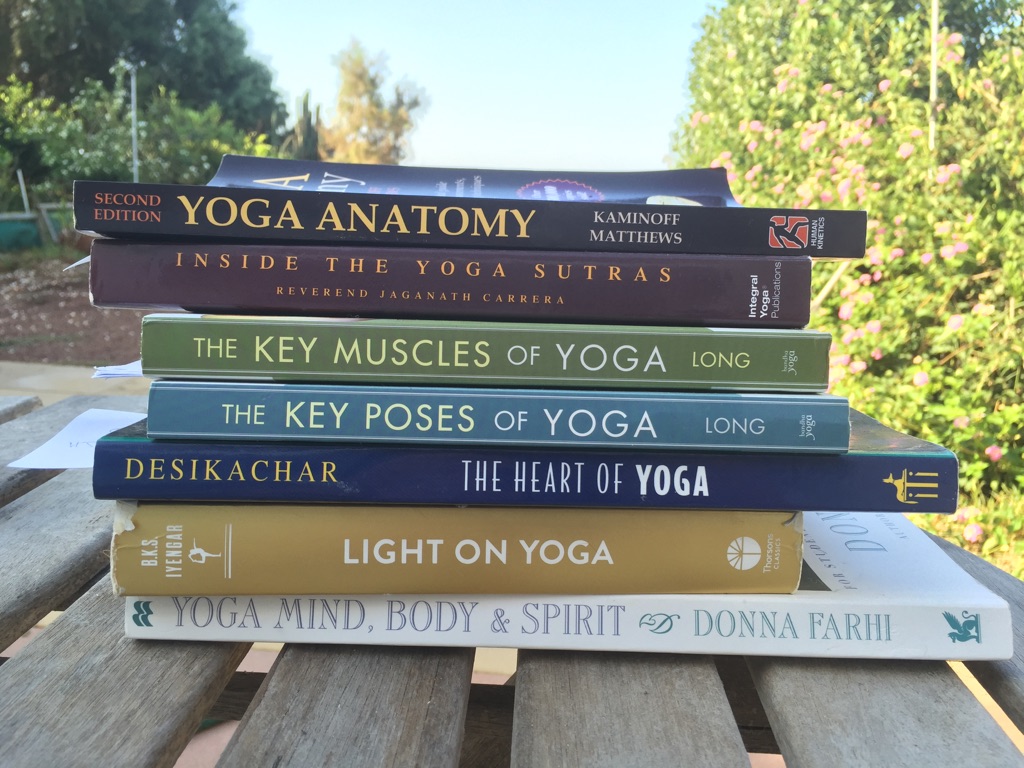
    There is a ton of yoga books around and it can be hard to pick just one or two. Here’s a list of some of my favourites. Some of these I read almost every day, some less so but they have all served a purpose of some sort in my yoga studies. If the list looks familiar it is because each one of the books is on the Amazon’s ”Top 15 or so Yoga books” list and many are teacher trainer reading staples. Hence expect nothing crazy original but if you are newer to yoga literature this might be helpful.

    A lot of people approach yoga through the physical practise. I would however encourage any student of yoga to have a look at what lies in the roots on the asana practise. A good place to start is the Yoga Sutras of Patanjali. These are the basic teachings of yoga are described in short verses called sutras, which are organised in four padas, or chapters. As reading a direct Sanskrit translation might seem a daunting task, there are luckily many text books offering an approachable commentary and interpretation of the sutras in a easy-to-digest form. The text book I have is authored by Reverend Jaganath Carrera and it is called ”Inside The Yoga Sutras.”

    img_3115

    Several books combine philosphy, breathing technique and asana practise in one. A classic is B.S.K Iyengar’s ”Light on Yoga – The Definitive Guide to Yoga Practise.” The books has fantastic black and white photo illustration and the descriptions on how to get into each pose are very detailed. On a complitely superficial level, the 2015 edition I have is also beautiful to look at. The only minus comes from it being a very heavy for a paperback so it is not the best travel read.

    Donna Farhi’s ”Yoga Mind, Body & Spirit – A Return to Wholeness” is another very complete book. In all honestly I found this one a bit hard going BUT it offers very wide margins for your own notes as you go along. The illustrations and photos are very clear and I like that the use of props, such as chairs, blankets and blocks, is incorporated to offer different types of modifications.

    My favourite book on this list is probably T.K.V. Desikachar’s ”The Heart of Yoga – Developing a Personal Practise.” Written in a conversational manner (in fact, part of the book is in an interview Q & A format) the book is a practical approach to various elements of yoga: asanas, breathing and meditation. It also has a chapter on the Yoga Sutra’s with Desikachar’s own translations and comments.

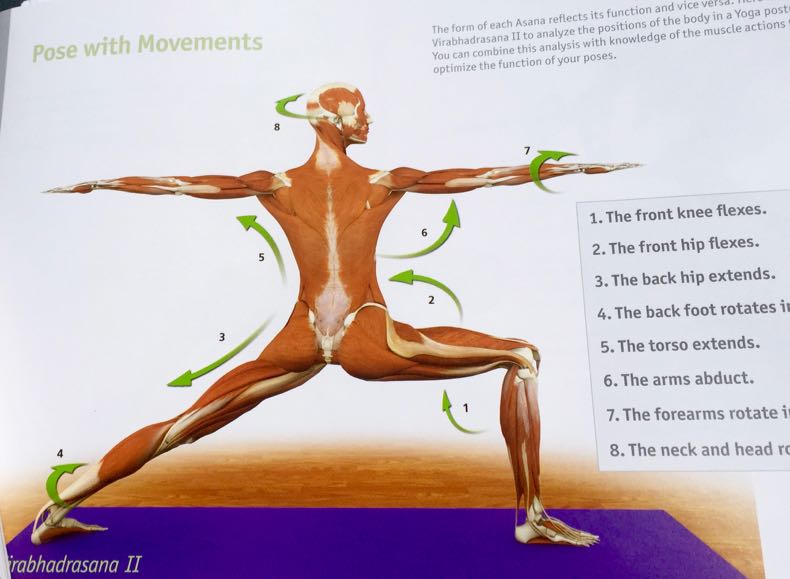
    There are of course plenty of books focusing solely on the anatomy side of yoga. Leslie Kaminoff & Amy Matthews’ ”Yoga Anatomy” (I have the second revised edition) is the one of the most recommended ones. In every page it offers a clear illustration of inside the asana (see the photo to get an idea), a classification, actions for joints and muscules, a word about the respiratory mechanism applicable to that pose and additional notes. A perfect go-to book when you want to check how your body works in a given asana, I use this book several times a week.

    img_3120

    I also have two books of Dr. Ray Long, ”The Key Muscles of Yoga” and ”The Key Poses of Yoga.” I must admit that I first got excited by these books due to the big illustrations that take up most of the pages. Anatomy can be difficult and the pictures make it more approachable! I find these books (unlike the ones listed before) are also usable during actual practise due to simple layout.

    What are the yoga related books you have read and would recommend?

    Tallenna

    Tallenna

    Tallenna