A bit over a week ago I made my way to my second OM Yoga Show in London, one of the biggest yoga events in Europe. I was curious to see what is happening in the front of sustainably made yoga apparel, listen to some talks, meet friends old and new and also practise a bit of yoga.
Alexandra Palace in North London is an amazing venue itself. The show, as last years, was almost a bit overwhelming. So much so see and do! I’ll let the pictures to do most of the talking.
Big thanks to Nubyen Active Wear for my ticket to the show. I forgot to take a picture of their stand becaise we were chatting too much so here is another one of their beautiful yoga clothes!
I had a chat about yoga books with a friend yesterday and this old post of mine came to mind. As nothing has changed since I first published this text, here you go again, for those who did not see this the first time around.
Yoga books are nothing new. The first systematic presentation of yoga in a written form, the Yoga Sutras by Patjanhali is said to dated circa 400 CE (I am aware there is debate around this date but I am not going to dwell any deeper into it), whilst another renowned yogic scripture, the Bhagavad Gita dates an estimated 500 BCE.
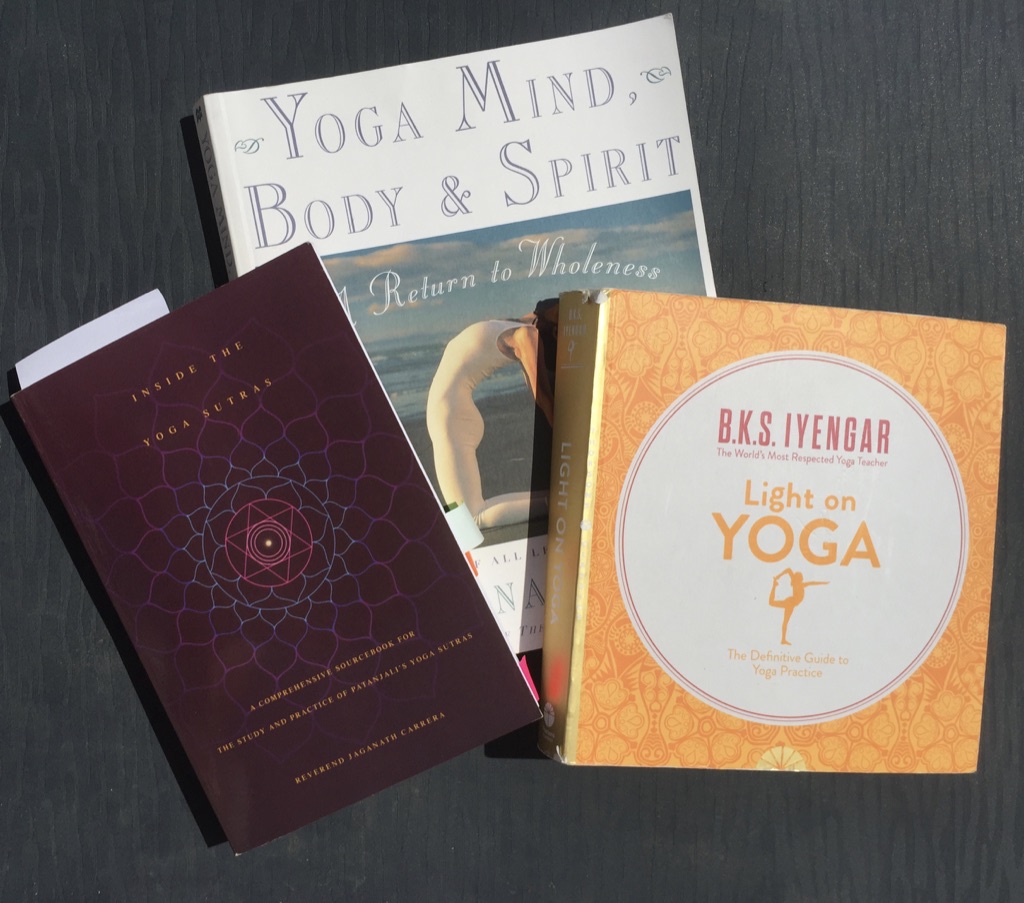
There is a ton of yoga books around and it can be hard to pick just one or two. Here’s a list of some of my favourites. Some of these I read almost every day, some less so but they have all served a purpose of some sort in my yoga studies. If the list looks familiar it is because each one of the books is on the Amazon’s ”Top 15 or so Yoga books” list and many are teacher trainer reading staples. Hence expect nothing crazy original but if you are newer to yoga literature this might be helpful.
A lot of people approach yoga through the physical practise. I would however encourage any student of yoga to have a look at what lies in the roots on the asana practise. A good place to start is the Yoga Sutras of Patanjali. These are the basic teachings of yoga are described in short verses called sutras, which are organised in four padas, or chapters. As reading a direct Sanskrit translation might seem a daunting task, there are luckily many textbooks offering an approachable commentary and interpretation of the sutras in a easy-to-digest form. The textbook I have is authored by Reverend Jaganath Carrera and it is called ”Inside The Yoga Sutras.”
Several books combine philosophy, breathing technique and asana practise in one. A classic is B.S.K Iyengar’s ”Light on Yoga – The Definitive Guide to Yoga Practise.” The books have fantastic black and white photo illustration and the descriptions on how to get into each pose are very detailed. On a completely superficial level, the 2015 edition I have is also beautiful to look at. The only minus comes from it being a very heavy for a paperback so it is not the best travel read.
Donna Farhi’s ”Yoga Mind, Body & Spirit – A Return to Wholeness” is another very complete book. In all honestly I found this one a bit hard going. However, the illustrations and photos are very clear and I like that the use of props, such as chairs, blankets and blocks, is incorporated to offer different types of modifications. It also has very wide margins for your own notes which is a plus.
My favourite book on this list is probably T.K.V. Desikachar’s ”The Heart of Yoga – Developing a Personal Practise.” Written in a conversational manner (in fact, part of the book is in an interview Q & A format) the book is a practical approach to various elements of yoga: Asanas, breathing and meditation. It also has a chapter on the Yoga Sutra’s with Desikachar’s own translations and comments.
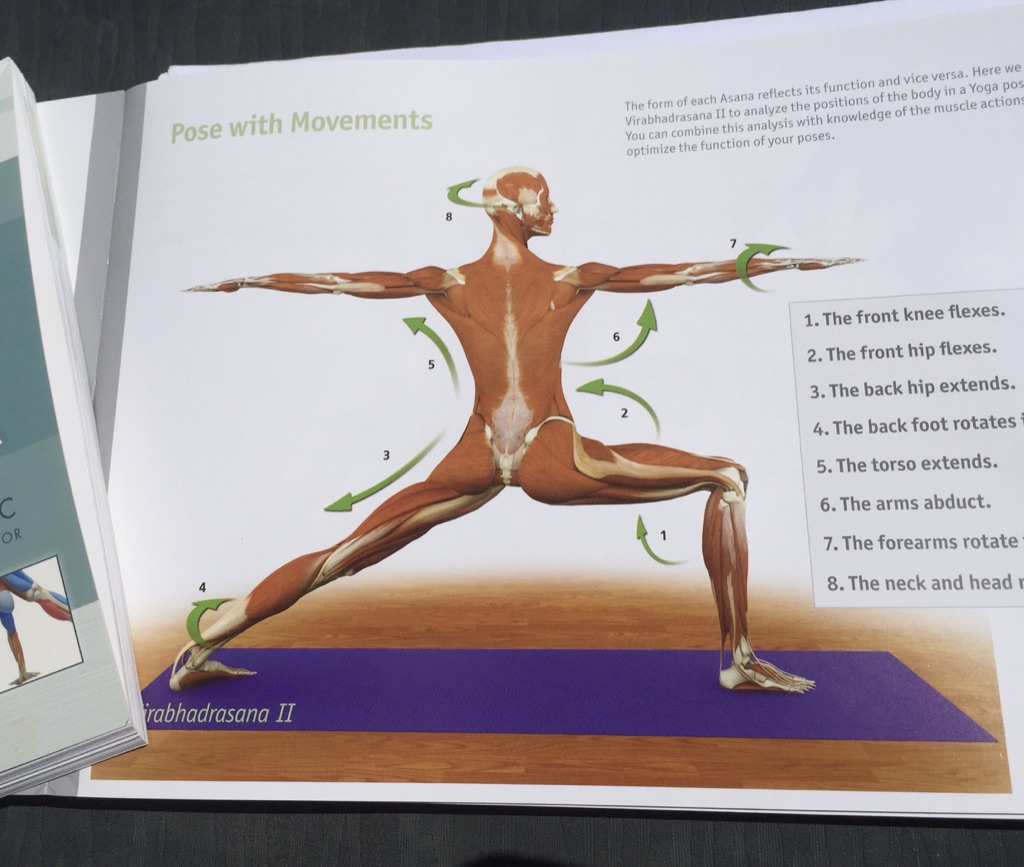
There are of course plenty of books focusing solely on the anatomy side of yoga. Leslie Kaminoff & Amy Matthews’ ”Yoga Anatomy” (I have the second revised edition) is the one of the most recommended ones. In every page it offers a clear illustration of inside the asana (see the photo to get an idea), a classification, actions for joints and muscles, a word about the respiratory mechanism applicable to that pose and additional notes. A perfect go-to book when you want to check how your body works in a given asana, I use this book several times a week.
I also have two books of Dr. Ray Long, ”The Key Muscles of Yoga” and ”The Key Poses of Yoga.” I must admit that I first got excited by these books due to the big illustrations that take up most of the pages. Anatomy can be difficult and the pictures make it more approachable! I find these books (unlike the ones listed before) are also usable during actual practise due to simple layout.
What are the yoga related books you have read and would recommend?
Last Monday I attended a teacher’s symposium on the topic “The Diversity Problem in Yoga” at TriYoga’s Camden studio. The premises of the talk was to find out (as much as possible) why yoga in the Western world, today being more popular and mainstream than ever, seems to practiced by a very homogenous set of people, often identified as a white, able-bodied, middle-class women. Why is it that whilst the population in general is getting more and more overweight and aging and the racial and religious diversities present around us, the yoga community as a whole does not necessary reflect these realities?
“Are we as yoga schools, teachers and students reinforcing existing barriers and divisions, and how can we actively dissolve them? How can we create a more inclusive space for everyone no matter their size, their ethnicity, their income and their gender?”
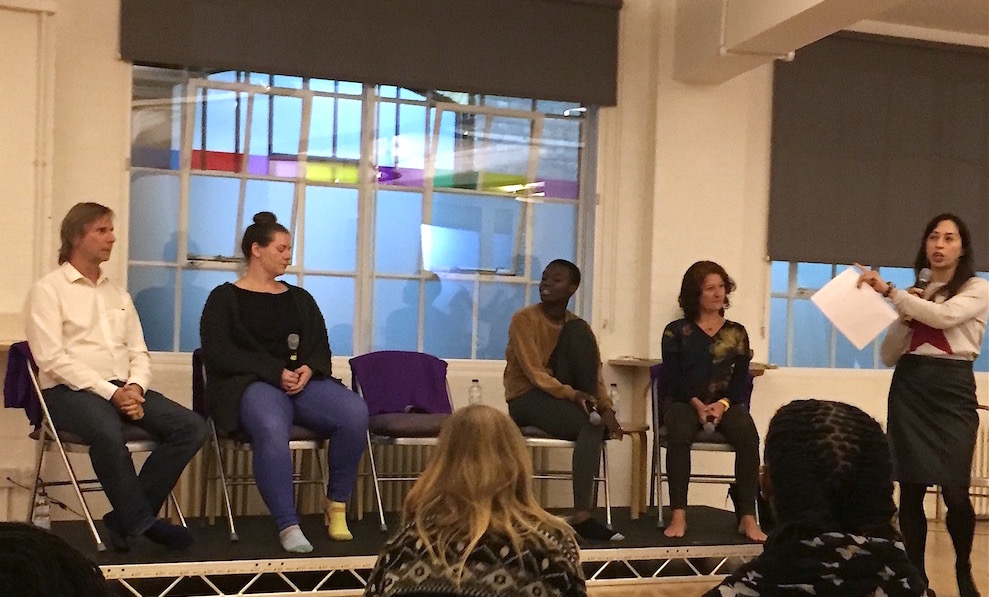
The panellists of the evening included Jonathan Sattin who founded the first TriYoga studio in 2000, Dana Falsetti, a body positive yoga teacher, Corrie Ananda Preece and Isa-Welly Locoh-Donou who teach Mysore and Pilates & Barre respectively at TriYoga and Frederique Sardais who was the first UK teacher to specialise in Adaptive Yoga, a type of specialist classes for people living with disability and limited movement.
From left to right: Jonathan Sattin, Dana Falsetti, Corrie Ananda Preece, Isa-Welly Locoh-Donou and Frederique Sardais
Kindly note that this post is not a transliteration of the 90 minute symposium. My aim is to bring forwards some of the many questions, challenges, various points of views and suggestions for improvement that came up during the discussion. I offer my take on these where I see I have something to add. The discussion was recorded and to hear it full you can head to TriYoga’s Facebook page. The photo credit of the two pictures of the panellists goes to TriYoga who kindly gave me the permission to use their photos.
I want to also highlight before going any further that we all have very different experiences so what is said below is obviously not the universal truth about yoga studios and communities. You do not need to agree with all/anything what follows below – for instance during my over 10 years of regular practise I have more often than not seen people of all ages, from six year old kids to the veterans for WW2, being represented in yoga classes. However this is not the experience many share and I accept age, as an example, can be seen an issue associated with the conversation about diversity in yoga.
For me when something is presented as an issue that needs correction of sorts there are few fundamental questions that needs to be asked right at the beginning, in order to not get lost in the conversation.
What makes us say there is a diversity problem?
What do we believe (or know) are the reasons for this problem?
What does the ideal (or at least improved) situation look like?
Is there something being already done to improve the situation and how is that working (or not and why not?)
In no particular order, here are some of the reasons why we can say there is a diversity problem in yoga:
There seems to be considerably less of yoga teachers and yoga practitioners of colour than there are white practitioners.
There seems to be a lot more women in your average yoga class than there are men. The same goes for yoga teachers.
There seems to be are lot more people who are of “normal” weight if not “slim” practising yoga than people who are overweight.
Most people we see in a regular yoga class are fairly able bodied, although naturally not all disabilities – starting from the mental ones – are visible to others.
Yoga also seems to be very much associated with youth, and more specifically with females in their 20s and 30s, despite the fact the Western population keeps on aging.
In the birth country of yoga, India, yoga transcends all classes and casts. Where does this diversity problem in the West come from then?
A big part of modern yoga’s diversity issue can be traced (or, at least we like to trace it) to the popular imagery: From the covers and features in Yoga Journal to lululemon and Sweaty Betty look books, the white skinny (often very flexible) female is ever present in the photos. Most gyms and yoga studios, whether consciously or not, perpetuate the same imagery. You can talk as much as you want about the welcoming and open atmosphere of a studio in marketing materials but if everybody working there looks more or less that same (and you do not not look like that), this IS part of the reason yoga can be seen as homogenous, or even elitist, activity.
Now is this because of the image some studios want to portray, or is it due to a form of unconscious bias? I am sure there is an element of the both. However, at this day and age, especially when we are talking about an activity that is all about inclusiveness and openness, it feels appropriate to remind us all that the word “yoga” itself means “union.” Feel free to see the irony…
If there is a genuine will to improve things from what is seen as not the ideal situation, the only way forward for all of those involved in the community, as businesses and practitioners, is to fairly and squarely realise the current state and take concrete actions to move forward. As an example of this, TriYoga stated on their Facebook page few days ago ”We recognise (…) that some of our marketing material in the past may not have reflected our intention to be inclusive and we are working to change that.”
That is a big and very noble statement. Being inclusive is hard work, and maybe creating a studio space where nobody, EVER, would feel excluded is not even possible. Yet, by bringing awareness and mindfulness to our thoughts and actions in regards to the words we use, to the assumptions we make (or try not to make) and even to our body language, can take us a long way.
Finally, the financial barriers to yoga are also very real. Ten pounds (or euros) a yoga class can be a lot to pay for a single mother with three kids, for a student, or just for anybody living in an expensive city on a low salary. Many studios charge even more than a ten pounds for a drop-in class at peak-hours. It is true that many places have community classes that are priced on a lower level. However, as one of the audience members on Monday pointed out, if these community classes take place in the middle of the day when most people are working, their impact does not go very far, despite the beautiful intentions. On the other side of the coin, yoga teachers need a make a living too, to provide for the family, pay for the bills and maybe even put something towards the pension fund.
Where does the balance lie with between the yoga studios running as a business, the teachers sharing their passion and the people who can and could benefit from the practise we want to share and offer?
What do we want then and whatever it is, do we know if it already exists somewhere?
Any of the above said does not mean that all the white slim-ish middleclass women should hang their head in shame. None of us chose the body we were born in and nobody can be spared of illnesses and misfortunes of life just because of a socio-economic status. But a lot can be done just through education, having an awareness of the many realities that exist in the communities and checking if our assumptions of the realities are actually founded in the truth.
What came up few times in the discussion on Monday was the feeling of being an outsider, or not belonging to “yoga.” This can come from various factors: One can feel like his/her body shape is not represented and therefore accepted in a class, or have a teacher who does not know how to teach different body shapes and conditions through offering props and modifications. Yoga can feel very “white” activity, or a particular studio can just have a vibe that does not attract. The first time stepping into a yoga class can be a very intimating situation for anybody, so all of us can imagine how this is easily made worse by not feeling welcomed or fitting in for whatever reason.
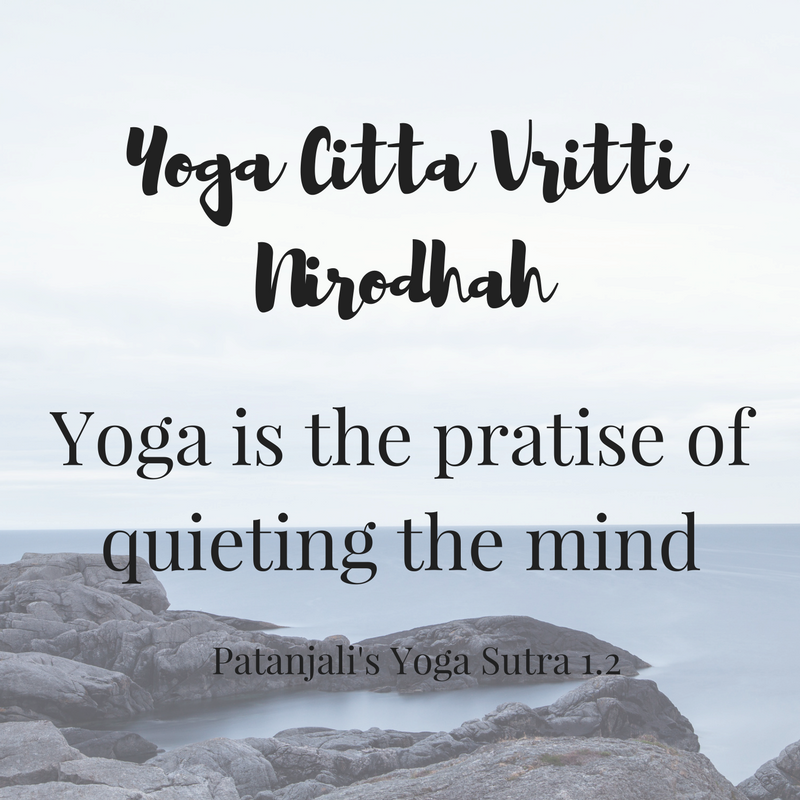
It is also healthy to remember that yoga is much more than the asana practise. Meditation, breathing practises and studying the philosophy are also yoga. The Sutra 1.2 reminds us that yoga is about controlling the fluctuations of the mind. Reducing yoga to represent just asana is also an assumption to be challenged. It is important for all of us as practitioners and teachers to be open to all sorts of questions and show by example how yoga works for everybody, and in every day life. Just the other day I heard a friend saying in all seriousness (in my own kitchen of all places) how “I’d be too scared to go to a yoga class because apparently all those movements make you fart.” I did my best to reassure that more often than not, farting does NOT happen, and even if it does, it is ok (but really, it is rare! I swear!) Yoga is actually very simple physically – it is our minds that play on us to think otherwise. And that mind stuff – well, lets refer back to Sutra 1.2.
Like I said in the beginning, of course there are plenty of people who have never seen or viewed yoga as something alienating, “not for them” or lacking diversity. Yoga is lived and practised in variety of places, outside the traditional shala or the modern studio. Yoga exists in community halls and in the clubrooms owned by various religions. Yoga is featured as an integral part of weekly training for athletes ranging from rugby to ice hockey to martial arts. Yoga classes are offered in ballet schools and physiotherapy clinics, for children at schools and for elderly people in the form of chair yoga. Of course there is progress to be made but there is equally a lot of evidence to demonstrate that yoga truly can work for all, regardless age, race, religion and gender.
The way I see it, the conversation about the lack of diversity in yoga teaches us about the opportunities there are out there to reach out and connect with the community. Think about it and share your thoughts. What is yoga to you and would you like to see more diversity in yoga? What does that diversity would look like to you? Join the conversation in the comments below!
Several of my friends working in the fitness and wellbeing industry have been asking me lately how and where is it good to do a yoga teacher training. Unless you follow a particular teacher and/or school of yoga (such as Ashtanga or Iyengar) there is an overwhelming amount of trainings out there and it can get quite confusing what they have to offer and how do they differ from one another. Below you can find some of the things you want to consider when making your choice.
What is your intention or rather, why do you want to do teacher training in a first place?
This might seem a bit of a silly question but the truth is, many people do a teacher training purely to deepen their knowledge and practise of yoga. And by all means, if you have the time and money for it, nobody is telling you not to go for it. However it might be useful to study other options if you “just” want to get more into your practise and enhance your knowledge.
Yoga retreats and workshop are organised pretty much everywhere, and there are many excellent yoga teachers who travel extensively making it easier to catch them in action. It is worth considering if a week’s intensive or a even weekend’s workshop focusing on a particular aspect of yoga is something you want to explore first, before forking out few thousand (or more) euros/pounds/dollars for your 200 hours full-on training.
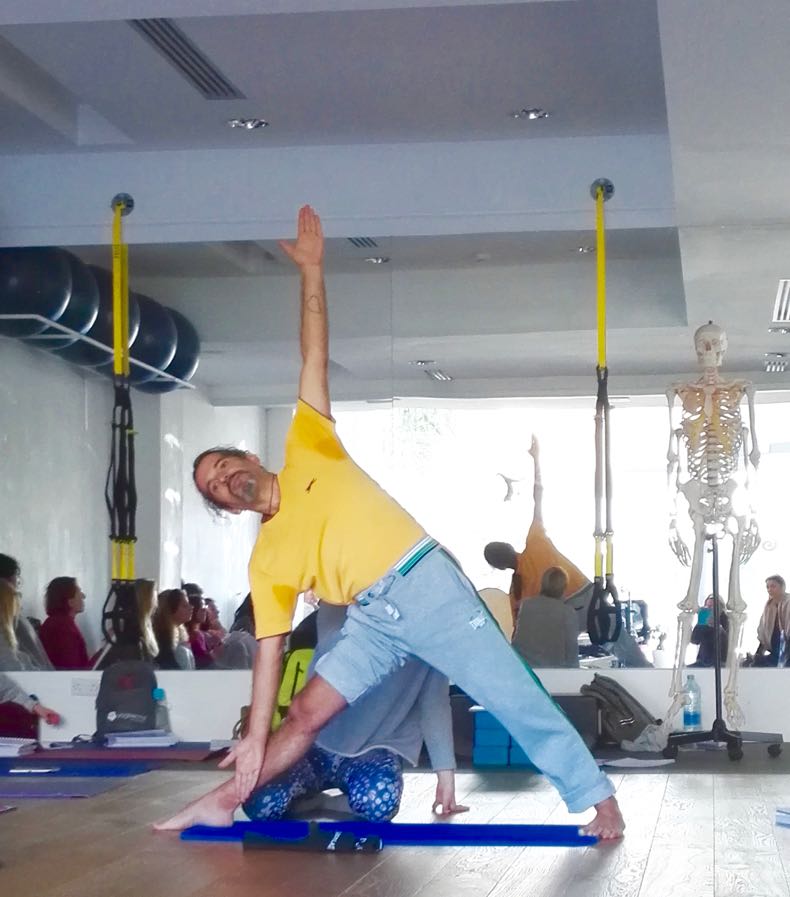
An assistant to yoga teacher training can expect to spend a lot of time in certain poses, such as virabradrasana two.
“I’m mainly interested in the physical aspects of yoga…”
Well, a lot of us were, at least at the start. Some of us might still have a slight preference for asana practise. However, to be a good yoga teacher you will need to have a solid understanding of at least the basics of the seven other limbs of yoga in addition to the physical aspect. Approach them with an open mind and patience and you are very likely to be positively surprised. Or, choose a training with an emphasis on purely what you are interested (you might be missing out on something wonderful though…)
Talking of which…
…or trikonasana
…what does the training consist of?
It is no secret that there is a big problem with modern (Western) yoga teacher trainings in general: There is no one governing body for yoga teacher trainings, despite various alliances and groupings and, well, attempts of having some kind of uniform standards. Bluntly put, your training can include be whatever the course director has decided to teach to you, and the credentials of your teacher are not really controlled by anybody (regardless how many “RYT”s they have after their name.)
However, many teacher trainings do have the following modules included in some sort of form: Techniques, Training and Practice; Teaching Methodology; Anatomy & Physiology; Yoga Philosophy/Ethics/Lifestyle and Practicum. What emphasis is given to these modules can vary a lot from training to training and it is for you to find out and think what do you want to focus on. Remember that in addition to taught parts you might be required to complete certain number of self-practise in the style of yoga you are training on (in mine it was 20 hours in addition to the classes taken in-training) and complete written assignments.
I really have read all of these. Few times.
This might all sound a bit overwhelming and well, chaotic, so let me put it this way: I know several yoga teachers who have done two or more 200 hour teacher trainings, all in different schools, because each of them had something specific to offer. The homework is there to deepen your knowledge, for your benefit. As for the teaching practise, whilst I for one found it quite daunting at the beginning, we are talking about yoga TEACHER training and it is one thing to practise yoga and entirely other one to have the skills to teach yoga to others. Being a student of yoga is not linear path and at the risk the risk of saying a massive cliche, it IS all about the journey.
Learn to teach, teach to learn
Intensive or extensive, home or abroad?
There is a whole range of options available, in various languages. You can do a 21-28 day intensive on a paradise island, a modular inner city ones (and sleep in your own bed) or a training that is a combination of intensives and shorter workshops. I did mine over 6-month period, with intensive weekends (Sat-Sun) every other week. It worked well for me as it allowed a lot of time to read, practise and really let everything sink in, AND I still got to maintain a somewhat normal life too with work and friends. I probably would have found a intensive retreat type of training a little bit too much at that time, yet part of me finds the thought fascinating… so who knows, maybe for my next training I’ll try it out?
I hope this was of some use for you. At the end of the day, nothing beats your own research and gut feeling when it comes to choosing the YTT suitable for you.
As always, I’d love to hear from you so feel free to leave a comment below if you want to tell about your experiences, add something that was not mentioned in the text and/or ask something.
Sideplank, dolphin plank… sometimes yoga teachers do a lot of planking and it is not a bad thing.
The first time I heard about Magnesia Festival, a two-day yoga and heartful living event taking place on a small island in front of Helsinki, was in May when a friend was visiting Cyprus for a weekend yoga-intensive with me. She had visited the inaugural event in 2016 and enjoyed it a lot. Whilst I am not really a camping-in-tent-festival type of person, I do enjoy the more urban type of happenings where you get sleep in a real bed at the end of the day. Magnesia offers this and combines a lot of things I enjoy: Summer in Finland, seaside, islands and ferry rides, yoga and a chilled atmosphere with smiley people not making too much noise.
August is also the main holiday month in Cyprus whereas in Finland it spells the start of return to normal life. Therefore it made perfect sense for this year to plan my visit to the Motherland a little later than usual, and combine it to visit the day one of Magnesia yesterday.
The programme the festival offers contains different type of yoga classes, discussions about relationships, ayuveda and nutrition, dance workshops, tea ceremonies and lot more. With my one-day ticket I could pre-book one workshop of my choice, in addition to which it was possible to queue to other ones to see if there was space. There was also non-bookable programme on the main stage outdoor where you could also buy food and just chill. The ticket also included the 10-minute ferry ride to and from the Lonna Island where the festival takes place. It probably does not surprise anybody that this being Finland everything was super organised, hassle free and any question you could think of was answered online before you could even think of them. Queuing was done in order with strangers happily chatting to each other and the natural personal space of about 3 metres all direction each was cheerfully sacrificed by all to accommodate as many people as possible to the workshops.
In the morning I took Marta Janeczek’s back- and forward bends workshop. Backbends and forward bends have opposing philosophy and benefits associated with them (physical and emotional opening, defiance in the face of vulnerability, stimulation of the nervous system vs. introversion, cooling down, soothing of the nervous system.) Whilst some yoga styles link strong backbends with forward bends closely in the same sequence, I have always been taught to (and it usually feels better for me personally) to at least have a slower transition and/or neutralising pose or two (such as downwards facing dog or a twist) in between them. I was really curious to see what kind of workshop was build around this concept and I was not left disappointed with this one.
I did not know Marta before hand (quite frankly I know very few Finland based yoga teachers by name, let alone have taken their classes) but just based on this one experience I would recommend to seek her out in her Helsinki based yoga studio. She has a really calm, humble yet fun vibe to her AND manages to fill the space she holds with that energy – a gift not given to many. Based on her bio she has an Iyengar influenced background and the class had a lot of detail about the anatomy of the asana we were given, always a winner with me. Marta’s workshop really refreshed my appreciation for and detailed knowledge of many “basic” asana such as the cat and cow poses and just for that, I am grateful.
My friend recommended an intuitive writing and yin-yoga workshop she had taken last year so we both had registered for that one. It was held in an old mine storehouse (in the olden days the Lonna island used to a mine clearing spot) with soft sunlight sweeping through the small windows in the sealing – and packed with people. I felt the class was maybe 10% writing and 90% yin but since you cannot really go wrong with yin, I was very happy to bliss out with the practise. I can always write at home but I cannot make that kind of unique setting with loads of people happen at a will.
The rest of the day we spent just bumming around the grounds, watching a flow yoga practise taking place at the central stage and enjoying the sun and soft sea breeze. The weather was absolutely gorgeous yesterday that was appreciated by everybody, as the summer in Finland has been extremely rainy. Big thanks for all the Magnesia crew for putting out such a beautiful event – I will definitely do my best to come back next year!
Originally I had planned to go to an advanced level vinyasa class on my last full day in Paris. With all the walking done over the days (and long dinner on Tuesday on Tuesday evening) I however started feeling like something mellower would be a better fit for the day. As mentioned I had really like the energy at Studio Keller the day before and I quick look at their schedule showed there was an afternoon all levels vinyasa class (vinyasa tout niveau.) I was really curious to see an all-levels class by another teacher as it is common for most teachers to have a class with people of different abilities and it can be challenging to keep it interesting and challenging enough for everybody. The afternoon class was also Studio Keller’s weekly community class so it was priced only at 10 euros. What’s not to like!?
At the start of the class the teacher greeted returning students by their names, went through all the new people to get their names and introducing herself. She also checked who was new to yoga and maybe most importantly, if anybody had any injuries or restrictions on the day she should be aware of. Unfortunately this is not a question you often hear at classes although especially in the case of people new to asana-practise it allows the teacher to modify the poses based on whatever issue a practitioner might have. I get that in a big class giving individual attention to everybody is simply not do-able but if you have to choose who you are going to give it, this is probably the best way to find out.
The actual yoga was great although personally it was not the best practise I have had. Variations for the vinyasas were given (one being staying in child’s pose) and all the instructions were clear to follow for everybody (which did not stop me from getting confused between right and left but that happens to me everywhere, in every language) and there was a lot of humour. There was a really warm atmosphere in the room that goes to tell a lot about the quality of the teaching. Highly recommended!
There are numerous other yoga studios left to visit so do let me know what are your favourites in the comments as I hope to go and visit the City of Lights again later this year!
There is a real yoga scene in Paris and as I was due to visit my old hometown over few days I naturally wanted to check out what is on offer. Cue a message to the “Finnish people in Paris” Facebook page (note to self, 1am on a Saturday morning is probably not the best time for any question) and googling along the lines “best yoga classes in Paris.”
First impressions? The prices! Apparently you can charge 35€ for a class (and not a workshop, a 60 to 90 minute class)! Average seemed to be around 15€ to 20€ a class but as there is a lot on offer it was worthwhile digging a bit deeper. Most places offer the first visit at a reduced rate and there are several more moderately priced options.
Second impression? Booking in advance online was required for most places. I had sort of forgotten that this is the norm in most big places (Cyprus, as a country, has 1 million people compared to almost 10 in Paris) as a class can easily be 40 people. On the Island we call that a festival! But I suppose booking things before hand can help you get organised with your life so I can definitely see the benefits of it too.
Just a random happy cat on the streets of Paris.
I was determined to start as I meant to go along so for my first class I booked a 8 am “Rise” session at The Yoga Factory (Metro Oberkampf). The name had popped up on most of my searches, the morning classes were prices very reasonably at 7 euros and you did not have to book. I found the place without too much trouble (but did walk past it once before turning back), filled in the form at the reception and was directed to the changing room. The place had a cool industrial vibe to it (hence the “factory”) and was busy even at the early morning.
Now two things happened that I take full responsibility of. Firstly, I somehow managed to omit the fact that The Yoga Factory is all about hot yoga, and in every class the room is heated to +28C. I was a bit surprised by the temperature in the room when I first walked in but hey, I was after new experiences and to be completely honest, I would have probably never entered the place had I known it was about hot yoga (yes, I am that open minded.)
Yes it says “Hot Yoga” on that thing on the door. I noticed it too when I left.
The other thing was that for some reason I had thought the class would be some kind of Hatha variation, nothing too crazy. Obviously I had not bothered to read the class descriptions either. Well, hatha it was not. “Rise” at The Yoga Factory was a full-on 60 minute vinyasa flow like I had not experienced it in several years. To give you an idea how fast paced it was, the 60 minutes included a generous pranayama practise at the start, at least 6 (I lost count) rounds of full Sun Salutation variations, 5 different warrior poses, half moon pose, a whole bunch of the most common standing poses, bakasana (crow pose) as arm balance, tripod headstand for inversion, full bow pose and savasana. All tied together to form a continuous flow that did not stop for a second.
I had said I was after new and different experiences so I was truly served with this one. It could not have been further away from my regular practise! Whilst I did find the class a little bit too fast and “full” for my taste it was also fun and surprisingly energising. With no booking and the 7 euro price tag for the morning and a 17:15 “Happy Hour” class I happily go back to the Yoga Factory when in Paris next time. I will also take my towel with me.
I decided however to pay a bit more attention to the next class I was booking. I figured that with all the walking around the city I could do with something more restorative so I booked a Meditation and Yin yoga class for the next day at the Studio Keller (Metro Voltaire). I had heard great things about this place and they offer an introductory class for 13 euros. After the booking they send me an email with the codes to the building (another thing I had forgotten, the door codes in Paris) and at the door naturally I tried them in the wrong order, the last one letting me in through the first door. Good thing I was on time.
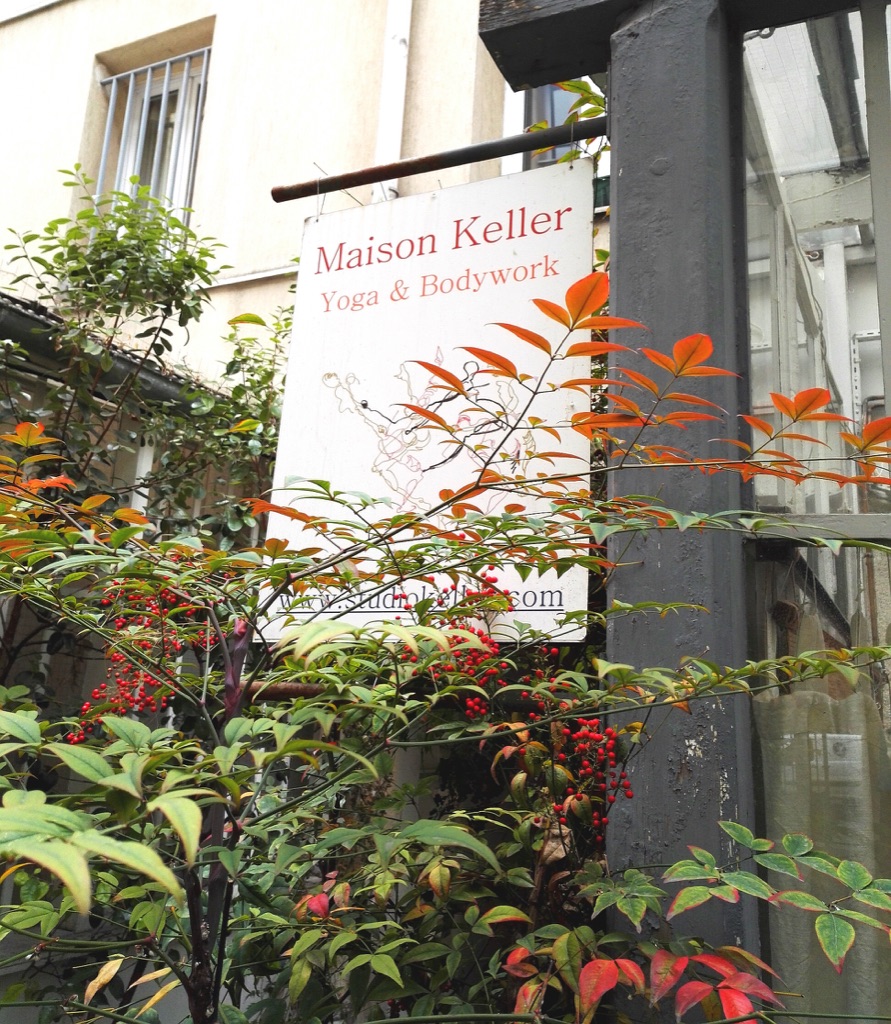
Studio Keller is another beautiful place if a complete opposite to Yoga Factory. This one had a more traditional yoga-shala-meets-old-Parisian-apartment vibe to it with wooden floors and light colours, mix and match props and a lot of light. The class was divine, also pretty busy for a Tuesday morning but very relaxing and calming. After the 15 minutes or so (?) meditation at the start the teacher was very hands on with the asana practise, offering adjustments, helping with the props and to get deeper into the poses in an effective way. Just wonderful!
I liked the feeling of Studio Keller so much I decided to go back for more the next day but about that in the next post.
Patanjali’s Yoga Sutra 1.33 offers us an useful – but not always easy to follow – advise on how to cultivate a calm and clear mind, even in challenging situation. Sounds good right? This Sutra is often referred as ”four locks and four keys” Sutra, as 4 locks and 4 keys comes – you guessed it – with four points, or actions to practise.
There are various translations of the sutra, but roughly speaking it goes like this: ”By cultivating the attitudes of friendliness toward the happy, compassion for the unhappy, delight in the virtuous and neutrality toward the nonvirtous, our state of mind retains its undisturbed calmness.”
These four attitudes can be applied to both toward others and just as importantly to ourselves. Here’s a litte bit more how Patanjali advises this happens:
Lock 1 is Happiness, to which the key is genuine friendliness and kindness towards those who are happy, without any envy or jealousy attached to it. Simple enough.
Lock 2 is Unhappiness that should be responded with compassion and support, a sort of a feeling of welfare for others that comes from a place of caring. This also includes being kind to ourselves at the time of sorrow, rather than succumbing to thoughts along the lines of ”why did I not know better” . ”how did I end up disappointed again” or even ”I am an idiot and only myself to blame for this.” I mean, would you speak to an unhappy friend like this?
Lock 3 refers to Virtues, traits such as patience, courage and benevolence. They are best met with happiness and goodwill. It is not easy to always have positive thoughts, especially when we are having a crap day ourselves. However, feelings of inadequacy or jealousy rarely have brought anything good to anybody so trying to keep things positive and even joyful ultimately serve us better.
Lock 4 is about Nonvirtues, or even wickedness. The key is to confront these with equanimity or neutrality. It is important to note that this does not mean that we have to approve of bad behaviour: Neutrality here is used with the purpose of calming the mind and finding inner peace. From this perspective it is easier to understand why disregarding non-virtous actions (rather than the people who commit them – an awful person is an awful person) is a better option than getting angry and frustrated over something we cannot have any control over.
I’m outta here. Not.My.Drama!
Personally I find that Sutra 1.33 both makes sense and always gives something to think of, no matter how many times I study it. Depending of the day I find it a gift that keeps on giving, or a through mindf**k. This post is just a brief introductory glimpse. If you want to read more, I find the below sources helpful (and written in a normal language, no philosophy degree required): This YogaInternational article, Swami Jnaneshvara’s excellent website, and this blog post from Urban Yoga Garden. And of course a copy of the actual Sutra’s and explanations, available translated by several indiduals. The copy I use can be found here.
In few pictures and words things that happen when planning and preparing for a yoga class.
Muutama sana ja kuva siitä, mitä tapahtuu ennen joogatuntia.
I wash the yoga mats used. I use very mild soap (Ecover or similar) diluted in a lot of water. Otherwise you can end up with a slippery mat which we do not want (cue literal faceplant.) After the wash and rinse with plenty of water I spray the mats with a mix of tea tree oil (antibacterial) and lavender oil (calming), again diluted in a lot of water, and leave them out to dry.
Mattopesu! Pesen matot hyvin miedolla luontoystävällisellä saippualla (en kuitenkaan mäntysuovalla) ja runsaalla vedellä. Mattoihin jää helposti saippuanjäämiä jotka tekevät niistä liukkaita ja se ei ole tietenkään hyvä asia. Kun olen huudellut matot runsaalla vedellä suihkutan niihin vielä teepuu- ja laventeliöljysekoitusta, taas runsaalla vedellä jatkettuna. Teepuu on antibakteriaalinen ja laventeli rauhoittaa. Epäilyistäni huolimatta nämä kaksi öljyä myös sopivat yhteen hajuiltansa.
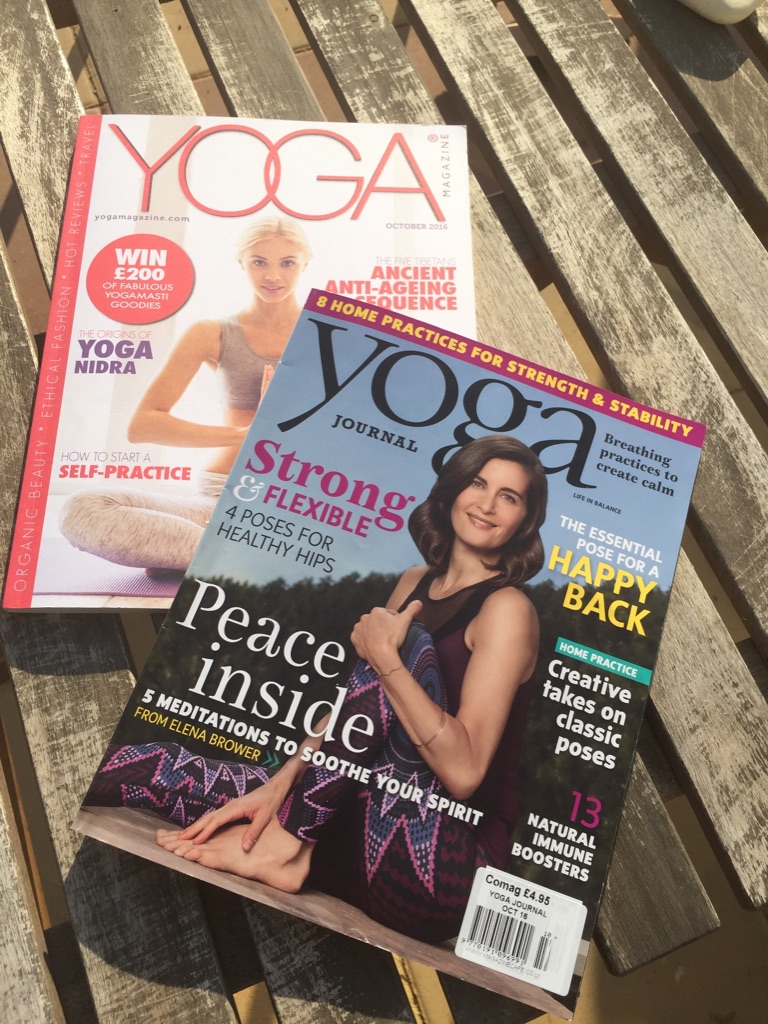
Continous learning. It is often said yoga is 1% theory and 99% practise but I do love magazines and to learn what is out there and how other people are doing it. From these ones I picked up some good modifications for some of the regular poses I use that I put to practise in yesterday’s class. The Yoga Magazine had also some adds for UK based websites that sell yoga clothes made from sustainable materials, such as recycled polyester and bamboo. I pinned some of my favourites on my Pinterest account as I really do not need to buy anything at this moment.
Jatkuva koulutus. Usein kuulee että jooga on 1% teoriaa ja 99% käytäntöä. Rakastan kuitenkin lehtien lukemista (ne kirjat onkin sitten vaikeampi asia) ja näistä lehdistä sain hyviä vinkkejä kuinka muuntaa tiettyjä asanoita joita käytän melkein joka tunnilla. Pistin nämä opit heti käyttöön eilisaamun joogassa. Yoga Magazinessä oli myös mainoksia Englantilaisista nettikaupoista joissa myydään ekologisista materiaaleista, kuten kierretystä polyesterista ja bamboosta, valmistettuja jooga- ja vapaa-ajan vaatteita. Koska en tarvitse tällä hetkellä kuitenkaan yhtä ainutta vaatekappaletta, tyydyin tallentamaan suosikkejani pinterest-tililleni.
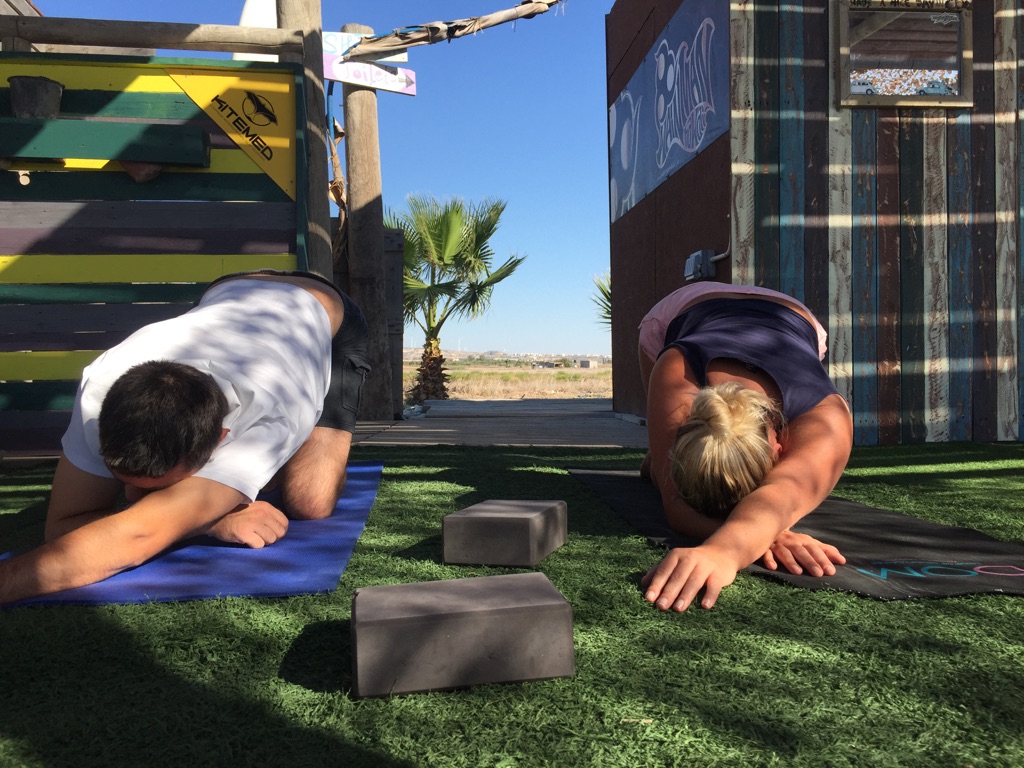
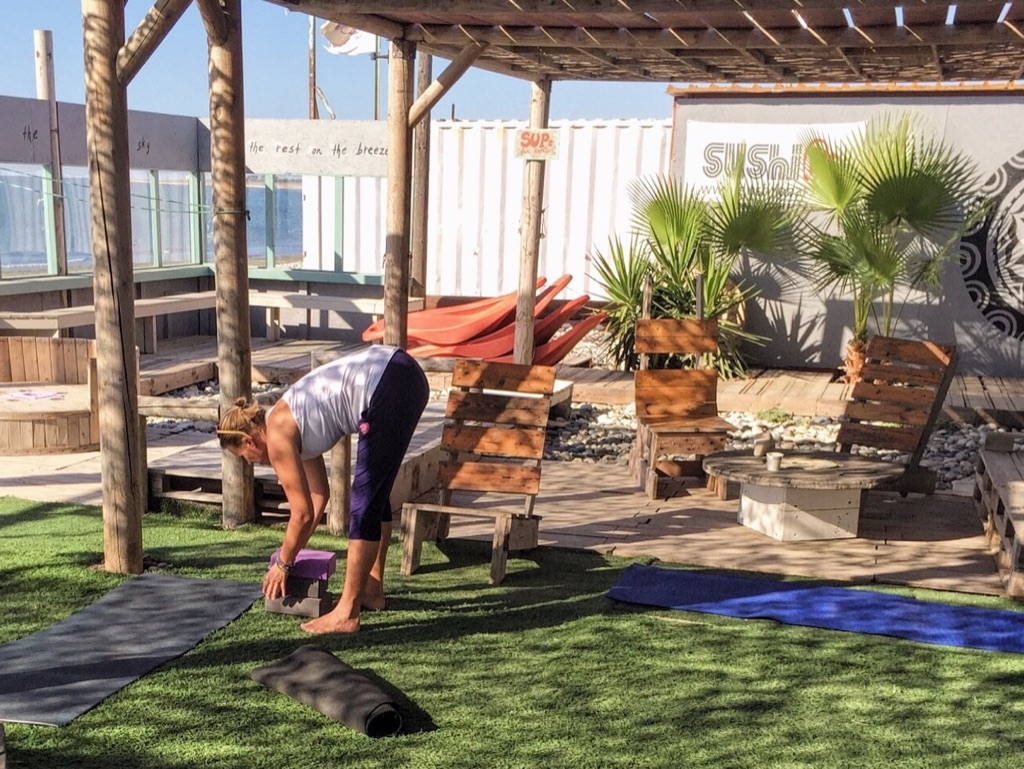
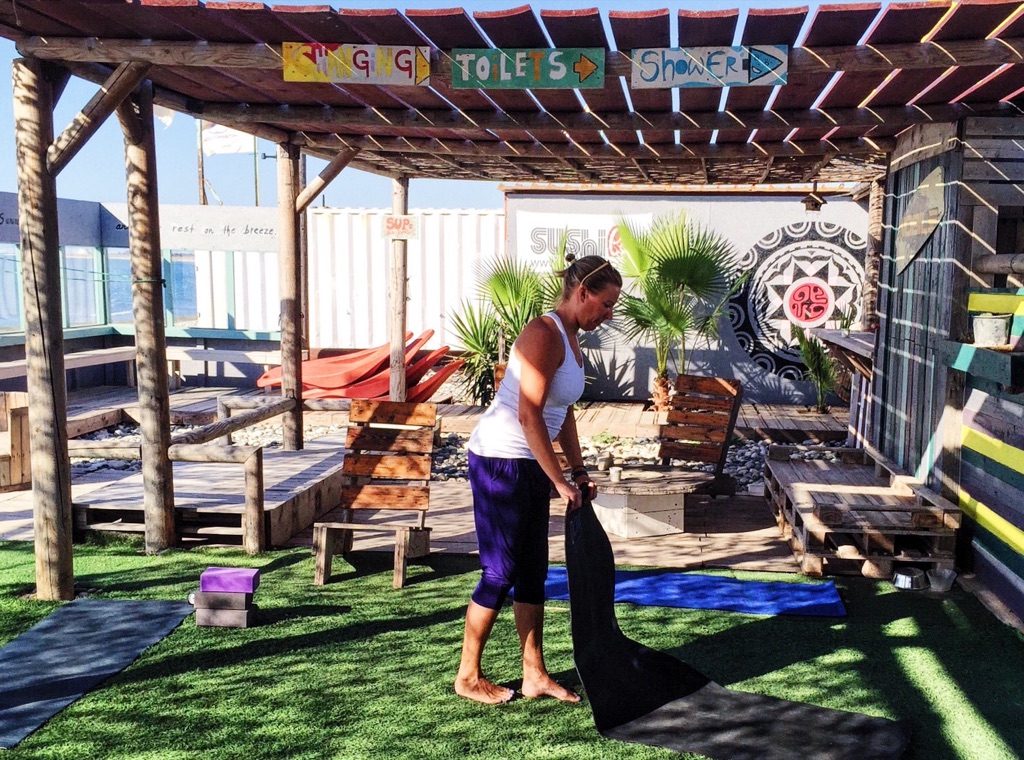
Setting up the class. This is Cyprus and 9 am is not exactly the same 9 am as it is in the Northern Europe. Which is just as well as I always have time to prepare the mats and blocks so all people have to do is to show up and start clearing the mind.
Matot ja blokit paikoilleen. Saarella aamu-yhdeksän ei ole ihan sama käsite kuin Pohjois-Euroopassa joten järjestelyihin ja kuulumisten vaihtoon on aina aikaa. Kaikkialla.