Tag: Books and Websites

  • Long Reads for Holidays

    Long Reads for Holidays

    The end of the year holidays are a good opportunity to slow down and catch up with some long reads. I have a habit of bookmarking all the interesting articles I come across, especially if they are related to the business and trends in wellness and yoga. Some of these articles I read when sitting in the bus or train I always have some unread ones stored away.

    Here’s a selection of yoga and wellbeing related articles I have read and liked over the past months. Some I have already posted on my Facebook page or Linked In, some are new ones I have only recently come across. Catch up with the latest analysis and trends with the below list!

    Wellbeing is a big business these days, and one full of contradictions and extremes as well. The Atlantic published this interesting analysis, “The Art of Woke Wellness”, in November 2018.

    Want to see what may or may not be big in Wellness in 2019? Read the Well & Good list here, write down in the comments what you see taking off (and what not) and why, and we will check out them list next time this year!


    Forward fold

    Talking of trends, I am so happy to see this one taking off: Good old stretching! “Even just 20 minutes of stretching a week can counteract damage and prevent potential injuries.”

    If you have looked at any London yoga studios schedule lately, chances are you have seen Gong Baths featured in the programme. Read here the Guardian’s article on what Gong Baths are all about!

    This one is just weird for me: Technology to “track my yoga performance” is not something I feel anybody needs, as the whole point of yoga practise is to internalise and, well, not measure anything. Just because I have an opinion about it does not however mean that there is not a market for it so here you go, see for yourself!

    Yoga pants – sorry, athleisure wear – at workplace? I am sure you have an opinion about that. Here is some background to to the topic. Feel free to drop your thoughts on this trend in the comments!

    Want more? You can see my previous “long reads” list here.

    Sustainable Yoga Clothing


  • 7 X Yoga Books I Like

    7 X Yoga Books I Like

    I had a chat about yoga books with a friend yesterday and this old post of mine came to mind. As nothing has changed since I first published this text, here you go again, for those who did not see this the first time around.

    Yoga books are nothing new. The first systematic presentation of yoga in a written form, the Yoga Sutras by Patjanhali is said to dated circa 400 CE (I am aware there is debate around this date but I am not going to dwell any deeper into it), whilst another renowned yogic scripture, the Bhagavad Gita dates an estimated 500 BCE.

    There is a ton of yoga books around and it can be hard to pick just one or two. Here’s a list of some of my favourites. Some of these I read almost every day, some less so but they have all served a purpose of some sort in my yoga studies. If the list looks familiar it is because each one of the books is on the Amazon’s ”Top 15 or so Yoga books” list and many are teacher trainer reading staples. Hence expect nothing crazy original but if you are newer to yoga literature this might be helpful.

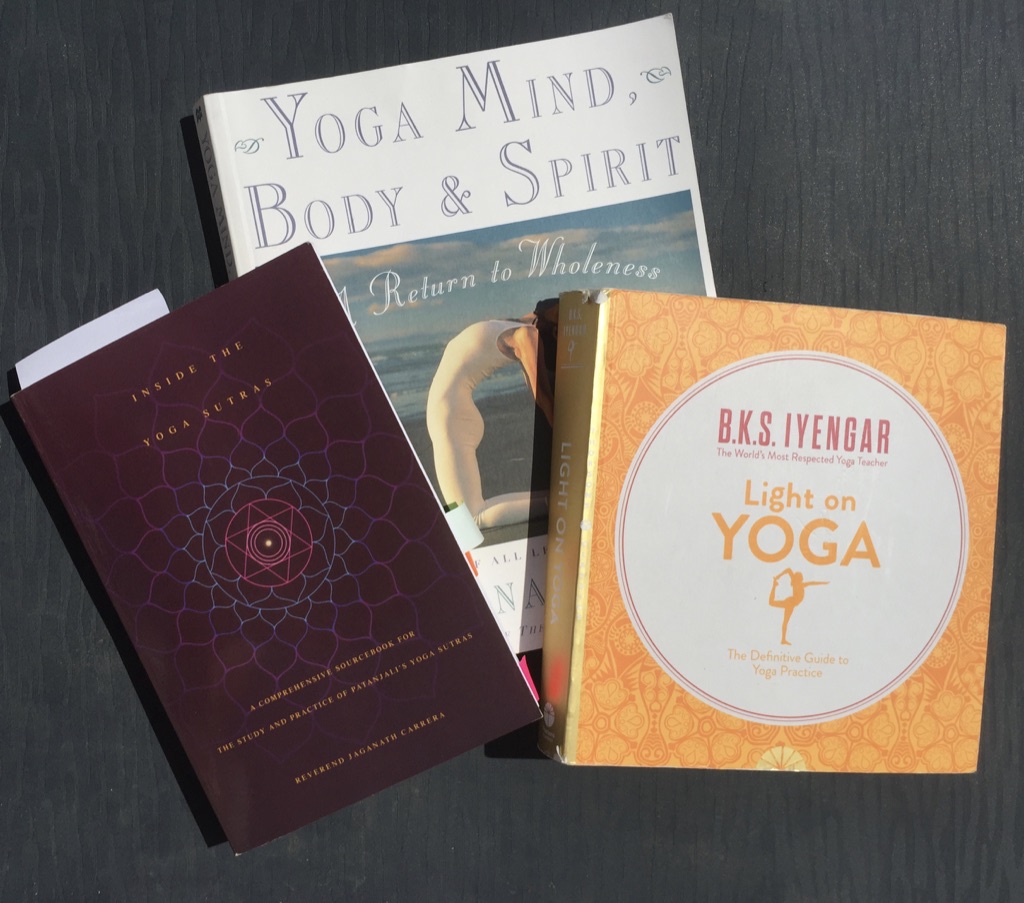
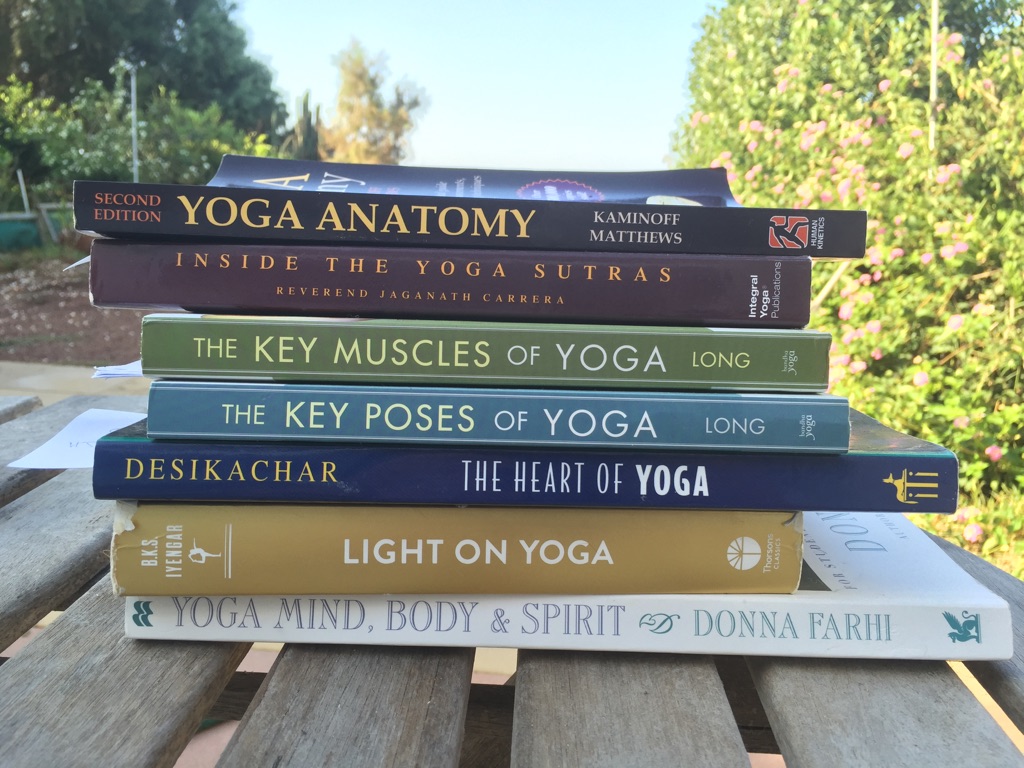
    A lot of people approach yoga through the physical practise. I would however encourage any student of yoga to have a look at what lies in the roots on the asana practise. A good place to start is the Yoga Sutras of Patanjali. These are the basic teachings of yoga are described in short verses called sutras, which are organised in four padas, or chapters. As reading a direct Sanskrit translation might seem a daunting task, there are luckily many textbooks offering an approachable commentary and interpretation of the sutras in a easy-to-digest form. The textbook I have is authored by Reverend Jaganath Carrera and it is called ”Inside The Yoga Sutras.”

    Several books combine philosophy, breathing technique and asana practise in one. A classic is B.S.K Iyengar’s ”Light on Yoga – The Definitive Guide to Yoga Practise.” The books have fantastic black and white photo illustration and the descriptions on how to get into each pose are very detailed. On a completely superficial level, the 2015 edition I have is also beautiful to look at. The only minus comes from it being a very heavy for a paperback so it is not the best travel read.

    Donna Farhi’s ”Yoga Mind, Body & Spirit – A Return to Wholeness” is another very complete book. In all honestly I found this one a bit hard going. However, the illustrations and photos are very clear and I like that the use of props, such as chairs, blankets and blocks, is incorporated to offer different types of modifications. It also has very wide margins for your own notes which is a plus.

    My favourite book on this list is probably T.K.V. Desikachar’s ”The Heart of Yoga – Developing a Personal Practise.” Written in a conversational manner (in fact, part of the book is in an interview Q & A format) the book is a practical approach to various elements of yoga: Asanas, breathing and meditation. It also has a chapter on the Yoga Sutra’s with Desikachar’s own translations and comments.

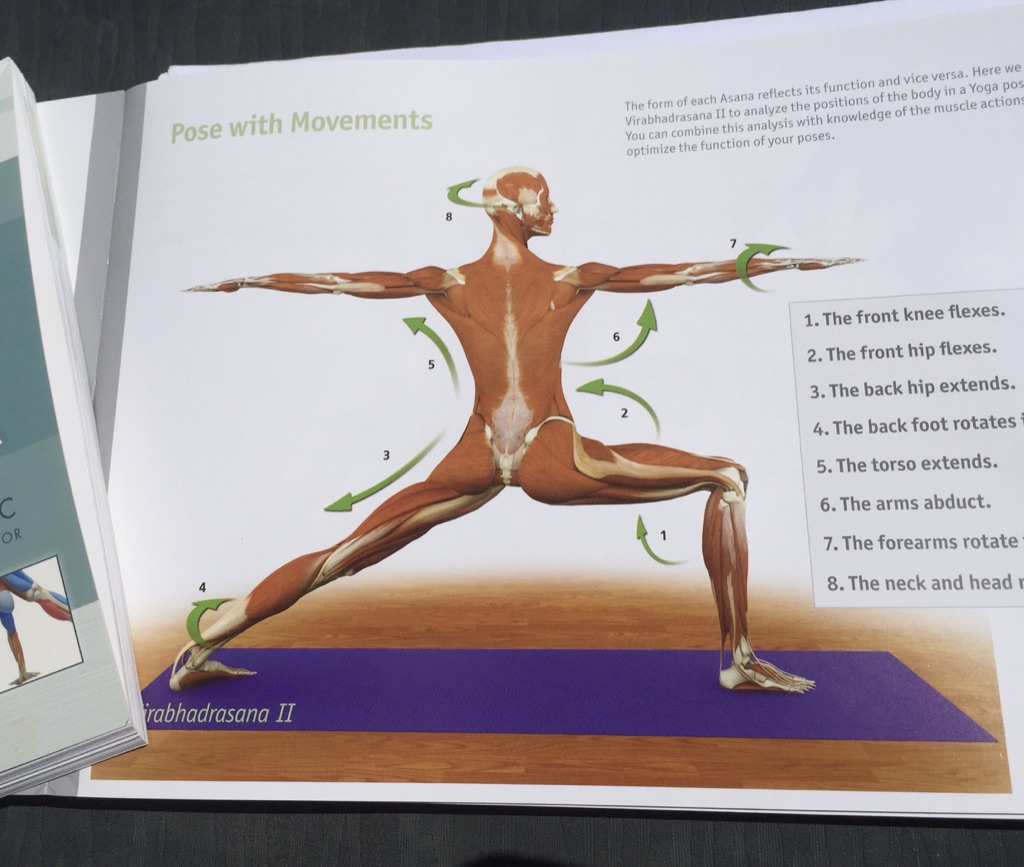
    There are of course plenty of books focusing solely on the anatomy side of yoga. Leslie Kaminoff & Amy Matthews’ ”Yoga Anatomy” (I have the second revised edition) is the one of the most recommended ones. In every page it offers a clear illustration of inside the asana (see the photo to get an idea), a classification, actions for joints and muscles, a word about the respiratory mechanism applicable to that pose and additional notes. A perfect go-to book when you want to check how your body works in a given asana, I use this book several times a week.

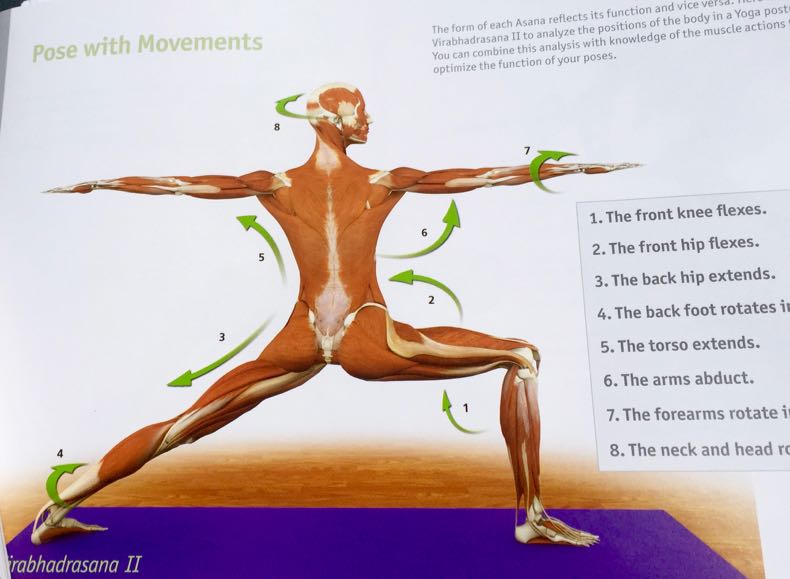
    I also have two books of Dr. Ray Long, ”The Key Muscles of Yoga” and ”The Key Poses of Yoga.” I must admit that I first got excited by these books due to the big illustrations that take up most of the pages. Anatomy can be difficult and the pictures make it more approachable! I find these books (unlike the ones listed before) are also usable during actual practise due to simple layout.

    What are the yoga related books you have read and would recommend?

  • Spring Clean

    Spring Clean

    In the last post I wrote about moving away from things that just do not feel right, even if reason can tell us otherwise. Needless to say, the topic of recognising when it is time to change the course and refocus energies has been in my mind a lot lately.

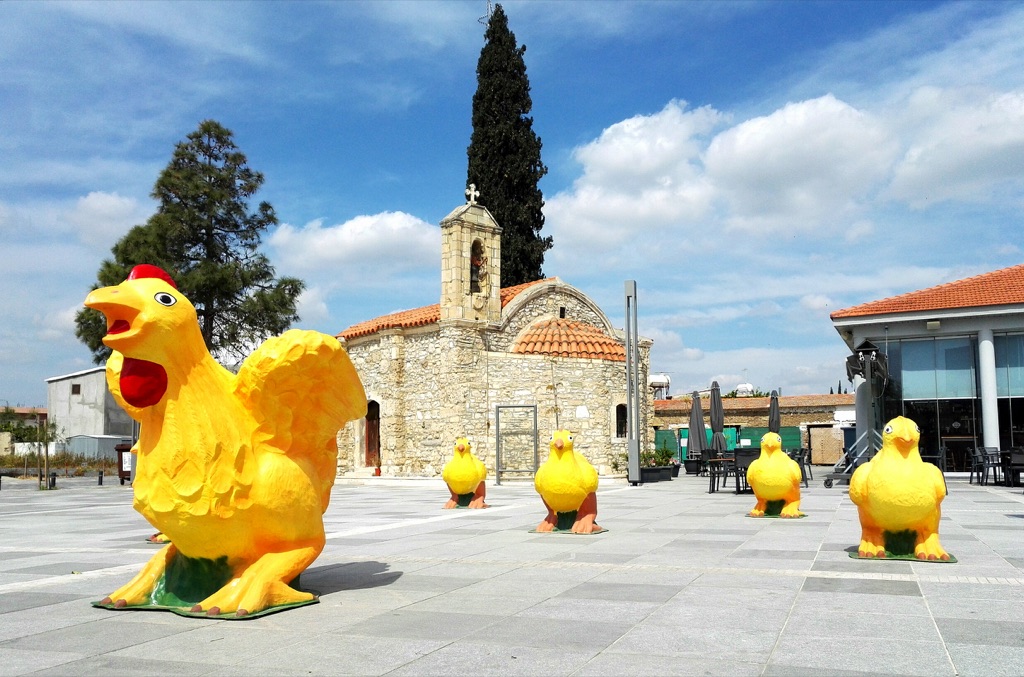
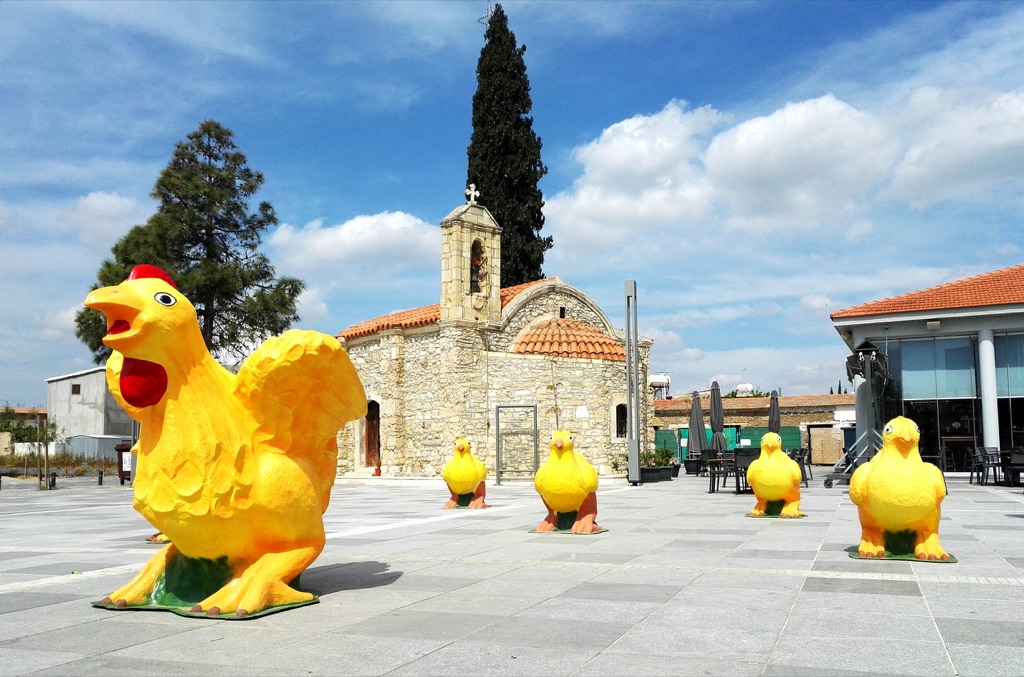
    CrazyChicks on Kiti Square
    Sharp focus like these chicken in an orderly formation.

    Not that I have gone for some radical overhaul of my life (yet), rather I have tweaked certain things and re-evaluated others. In no particular other I…

    ….decided that pursuing the pregnancy yoga teacher certificate is not for me, not right now. I have learned a lot and it has also been a genuine joy to teach the ladies here in my home city. I am very grateful for the experience but also have to let go what does not feel 100% true to me.

    …stopped teaching regular public classes for now. Instead I focus on my Skype Clients and face-to-face privates and small groups. I will also do pop up yoga classes outside by the water as the weather is getting warmer. To catch the times and places of these classes remember to follow my Facebook yoga page!

    … will widen the scope of this blog from yoga to other wellbeing & lifestyle topics that I find interesting. With this you can expect the updates to come a bit more regular too!

    …am sharpening my focus regards finding a job. I love teaching yoga but at this point I cannot solely rely on the revenue it generates. So, if you have or know of a (part-time) role in your organisation and wonder what else I can do in addition to writing, researching, teaching yoga and doing graphs on Canva, check out my LinkedIn profile here. I am also interested in any freelancing gig, project work or similar so do not hesitate to get in touch with me to talk further!

    On this note, here’s a link to an article that resonated and motivated with me. I am not a fan of any type of fatalism along the lines “everything happens for a reason”, and citing the Law of attraction alone (“aim high”) seems a bit too vague on its own. Therefore I was pleased to see a piece with personal responsibility and forgiving oneself (and moving on!) included. Have a look and tell me what you think.

    Onwards and upwards it is. Have a good Easter break everyone and  stay tuned!

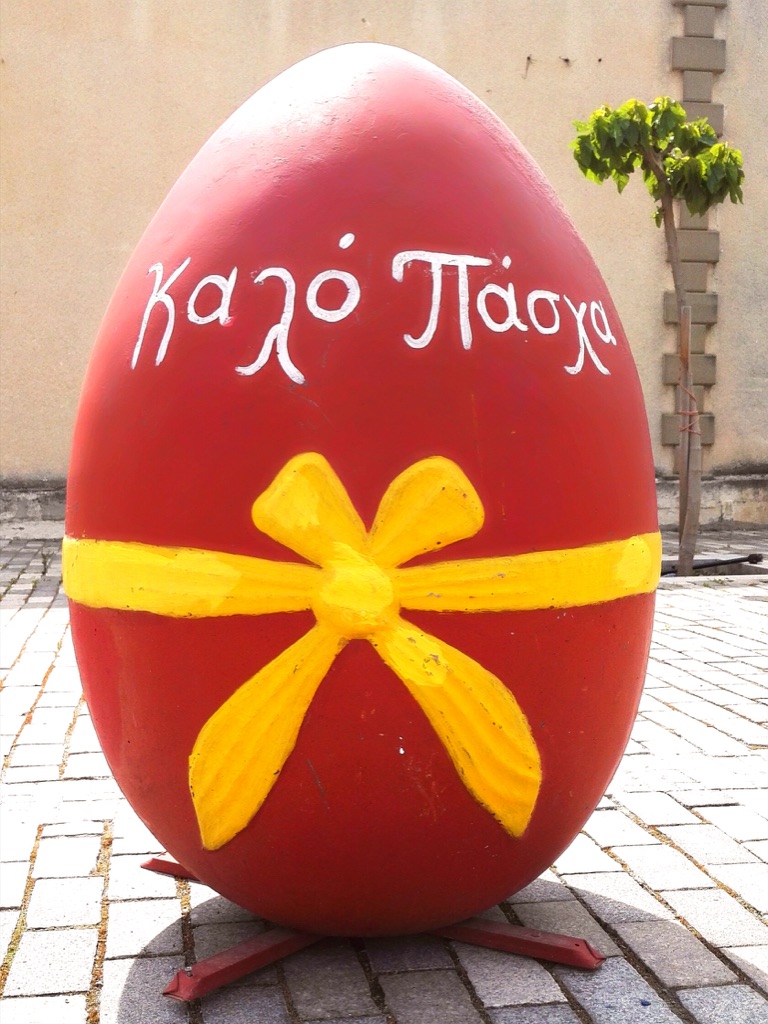
    Easter decoration Kiti Village

    Tallenna

    Tallenna

    Tallenna

  • January Abstinence Yogi Style: The Niyamas

    January Abstinence Yogi Style: The Niyamas

    In the eight limb system of yoga outlined in the Yoga Sutras of Patanjali the the first limb, the yamas, are about our relationship with the outside. The second step, the niyamas, are more about the relationship we have with ourselves. You can view them as a form of a self-training to prepare mind, body and senses on the yogic path. They also offer great material for all of us to reflect upon as a type of lifestyle observances even if we are not necessarily aiming for enlightenment so lets have a closer look!

    Saucha

    Saucha refers to purity and purification (some also use the word hygiene) of both body and mind. The idea is that clean and uncluttered state, both physical and mental, is required to create the calm needed in attaining wisdom and spiritual liberation. Saucha does not however mean purity as in literal sterility. Orderliness and cleanliness are helpful but we should focus more on the bigger picture: the people we spend time with, how we entertain ourselves and of course the food and drink we consume. Saucha is one of the aspects behind the reason so many yogis are vegans.

    Sutra 2.40: “By purification, the body’s protective impulses are awakened, as well as a disinclination for detrimental contact with others.”

    Santosha

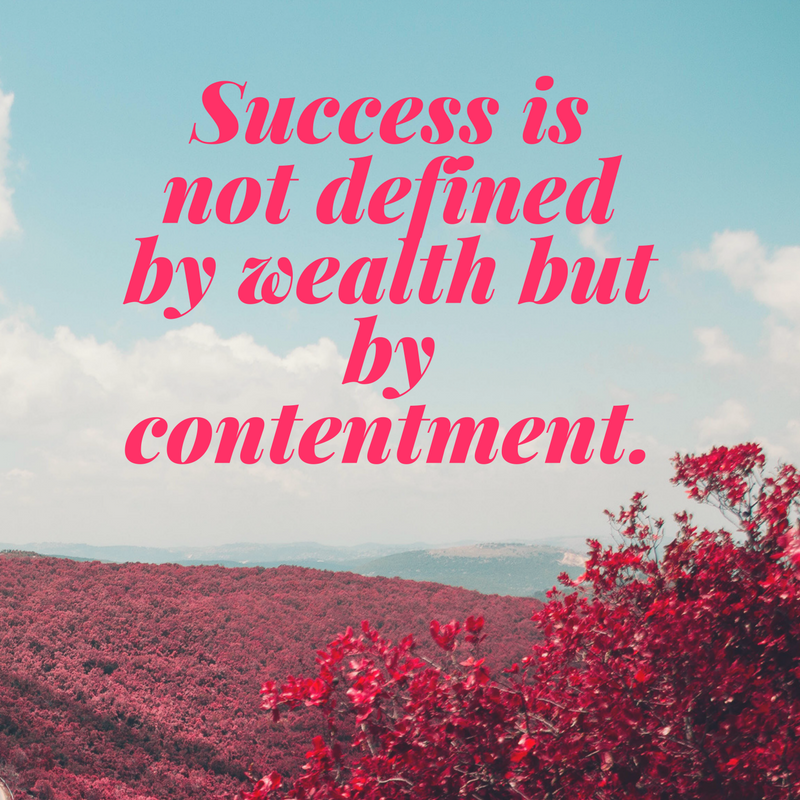
    Santosha means contentment and for explanation of it I first turned to a dictionary. There contentment is explained as follows: ”A state of happiness and satisfaction”, ”freedom from worry or restlessness” and ” peaceful satisfaction.” Sounds wonderful, right?

    The trouble is that our minds and Ego work the opposite way: it is very human to crave for something else, be it the ”perfect” yoga pose, career, relationships, success, stuff, more stuff… Yet contentment comes from accepting and being grateful of what we already have instead of running after something that we think – but do not know – will make us, well, more content.

    contentment

    Tapas

    Tapas has many translations, ranging from ascetism to self-discipline, effort, internal fire and ”purification through discipline.” It is the process of putting ourselves through something we do not necessarily want to do but we know is good for you. The idea is that through the effort – an inner fire pushing us – we also burn away impurities and strengthen ourselves. Tapas helps us to cultivate healthy habits and break away from unhealthy ones.

    For example, a daily work out or a yoga practise can be hard to maintain but we make ourselves to go through with it. After the exercise we feel better ourselves and may even be encouraged to have a healthier meal than usual to nourish ourselves.

    Svadhyaya

    Svadhyaya refers to self-study with the ultimate aim of getting in contact with divine nature. If this seems a bit over ambitious for now, no need to worry. Svadhyahya can be scaled down to more approachable levels by inquiring about ourselves: What are the things that push our buttons, good or bad? What are the patterns of behaviour we have and do they serve us well? How can we chance habits we wish not to keep?

    This type of self-observation, done with empathy and compassion, can then be combined with the study of spiritual texts of one’s choice (Yoga Sutras, Bible, pick your religion…) that are in the service of Svadhyaya. This helps to keep and give perspective and understand the universally shared feelings and questions that exist in the world, rather than making Svadhyaya all about the self, ”me.” With time this leads us towards a more stable and peaceful existence, both internally and externally.

    Sutra 2.44 “Through study comes communion with one’s chosen deity.”

    Ishvara Prandihana

    The big one, dedication of one’s practise to a higher power (whatever you choose to call yours.) In simple terms this means letting go of the ego and dedicating one’s practise, or the fruits of one’s labour, to something greater than us. The act of dedication in itself is a remainder of our connection to something higher and a sign of trusting that force to guide us towards the universal truth.

    And that’s the end of the short introduction to yamas and niyamas. There is obviously a lot more to read on the topic. For my own studies and as background for these articles I have used the following books and sites:

    img_20170120_182424.jpg

    Tallenna

    Tallenna

    Tallenna

  • Good Yoga Reads Online

    Good Yoga Reads Online

    img_0736

    Here’s a round up of few yoga articles & sources I return quite often. Some of you have asked more information about the benefits of yoga and how does it compare to other physical activities so hopefully you’ll find these as useful as I have.

    On Philosophy:

    The Eight Limbs, The Core of Yoga” by William J.D. Doran. Probably a two-three pager if you were to print this out, this is an easily digestable summary of the eight limbs and how they can translate to real life.

    For an explanation and discussion about the Yoga Sutras I have not found any better than this website. There is actually a ton of material on this site even outside the sutras, AND a ”how to use this site” section. Much gratitude to Swami J for his site.

    img_5720
    I’m a tree… no, a pillar!

    On Yoga vs Other Types of Exercise

     There is a growing number of interest in scientifically proving the benefits of yoga, both mentally and physically. The main issue with these is that with so many different types of yoga styles the studies made can have very varied outcomes. Nevertheless, here are few articles that I have found pretty informative and/or interesting, keeping in mind that it is usually advisable to mix up your exercise routine and interested rather than relying on one thing only.

     Alisa Bauman wrote in 2007 about ”Is Yoga Enough to Keep you Fit?”

    If you are a runner, you might want to read this.

    And one about Bikram (hot yoga) and weight loss.

    About the Muscles Used

    Ok, some of these poses in this linke are not very accessible to even the most seasoned practiotioners but there are also some very common streches here. If you already have a practise, this might be interesting to see what musclegroups you strech. Just remember to incorporate your breath!

    Chaturanga (the pose that looks like a plank that you then lower to the ground, arms by your body) is one of the hardest things in a yoga class in my opinion. It is so hard to get it right and the more vinyasa-style class you have, the more you do them. And the more tired you get, the chances are the less mindful you become about it. Here is a good article about how to get comfortable with your chaturanga in your head and here is a video of the physical aspects of it.  You can always modify your chaturanga by placing your knees down on the ground.

    img_2460
    Never easy but at least my wrists in line with my elbows and shoulders.

    Tallenna

  • Yoga books I like

    Yoga books I like

    I had a chat about yoga books with a friend yesterday and this old post of mine came to mindf. As nothing has changed since I first published this text, here you go again: some of my favourite yoga books.

    Yoga books are nothing new. The first systematic presentation of yoga in a written form, the Yoga Sutras by Patjanhali is said to dated circa 400 CE (I am aware there is debate around this date but I am not going to dwell any deeper into it), whilst another renowed yogic scripture, the Bhagavad Gita dates an estimated 500 BCE.

    There is a ton of yoga books around and it can be hard to pick just one or two. Here’s a list of some of my favourites. Some of these I read almost every day, some less so but they have all served a purpose of some sort in my yoga studies. If the list looks familiar it is because each one of the books is on the Amazon’s ”Top 15 or so Yoga books” list and many are teacher trainer reading staples. Hence expect nothing crazy original but if you are newer to yoga literature this might be helpful.

    A lot of people approach yoga through the physical practise. I would however encourage any student of yoga to have a look at what lies in the roots on the asana practise. A good place to start is the Yoga Sutras of Patanjali. These are the basic teachings of yoga are described in short verses called sutras, which are organised in four padas, or chapters. As reading a direct Sanskrit translation might seem a daunting task, there are luckily many text books offering an approachable commentary and interpretation of the sutras in a easy-to-digest form. The text book I have is authored by Reverend Jaganath Carrera and it is called ”Inside The Yoga Sutras.”

    img_3115

    Several books combine philosphy, breathing technique and asana practise in one. A classic is B.S.K Iyengar’s ”Light on Yoga – The Definitive Guide to Yoga Practise.” The books has fantastic black and white photo illustration and the descriptions on how to get into each pose are very detailed. On a complitely superficial level, the 2015 edition I have is also beautiful to look at. The only minus comes from it being a very heavy for a paperback so it is not the best travel read.

    Donna Farhi’s ”Yoga Mind, Body & Spirit – A Return to Wholeness” is another very complete book. In all honestly I found this one a bit hard going BUT it offers very wide margins for your own notes as you go along. The illustrations and photos are very clear and I like that the use of props, such as chairs, blankets and blocks, is incorporated to offer different types of modifications.

    My favourite book on this list is probably T.K.V. Desikachar’s ”The Heart of Yoga – Developing a Personal Practise.” Written in a conversational manner (in fact, part of the book is in an interview Q & A format) the book is a practical approach to various elements of yoga: asanas, breathing and meditation. It also has a chapter on the Yoga Sutra’s with Desikachar’s own translations and comments.

    There are of course plenty of books focusing solely on the anatomy side of yoga. Leslie Kaminoff & Amy Matthews’ ”Yoga Anatomy” (I have the second revised edition) is the one of the most recommended ones. In every page it offers a clear illustration of inside the asana (see the photo to get an idea), a classification, actions for joints and muscules, a word about the respiratory mechanism applicable to that pose and additional notes. A perfect go-to book when you want to check how your body works in a given asana, I use this book several times a week.

    img_3120

    I also have two books of Dr. Ray Long, ”The Key Muscles of Yoga” and ”The Key Poses of Yoga.” I must admit that I first got excited by these books due to the big illustrations that take up most of the pages. Anatomy can be difficult and the pictures make it more approachable! I find these books (unlike the ones listed before) are also usable during actual practise due to simple layout.

    What are the yoga related books you have read and would recommend?

    Tallenna

    Tallenna

    Tallenna