Tag: Asana

  • Lets Talk About Hands On Adjustments

    Lets Talk About Hands On Adjustments

    When I started doing yoga more regularly about 12 years ago I never gave any thought to hands on adjustments. I don’t have any clear recollection to be 100% sure but I guess it is largely because in the classes I attended there were hardly any. In the classes I attended the instructions were given orally with the teachers demoing, to different degrees, the poses in front of the class.

    As I started to practise more regularly and also to make a point of attending yoga classes in the places I got to travel to, I also got more acquainted with hands on adjustments. Usually they were perfectly pleasant and helped me to understand a particular point and to gain better awareness of the asana. But I also had different experiences. Once on a sports camp the instructor literally sat on my back during a forward fold. Sure I could go deeper but also I was not given any advance notice this might happen. I remember very clearly thinking, “I don’t like this.” This was both because it was physically uncomfortable (although not painful) and secondly, I just really did not appreciate somebody sitting on my back like that, in a pose that is supposed to be about internalising and calming down.

    There have also been moments where I was given adjustments without any particular verbal cueing. I am of course sure the good intentions were there but if the teacher fails to verbally explain how and what a particular asana is about, it can be hard to grasp what the adjustments are trying to convey. Because it is not always about the physicality of the action not being welcomed, there is also the aspect of everybody learning things in a different manner.

    Vira 2, adjustment, yoga

    Some years ago I was in a group of yoga teachers and we had an interesting conversation about hands on adjustments. We were in the presence of an international senior yoga teacher who advised us that when teaching a class, it is good policy to ask the students at the start of the class if they do not want any hands on adjustments, outlining few specific examples. This sparked a big (and very interesting) debate: Some of the group did not see the point of asking about adjustments. Their argument was that if you come to a yoga class, you should expect hands on adjustments. Some mentioned they rarely had any done so they had not given much thought about to the topic. Others pointed out that when you start a career as a yoga teacher you are likely to be focused on expressing your sequence the right way you would not even think about giving hands on fine tunings on the participants.

    All the insights were very valuable and demonstrated how differently we can feel about a particular matter. What that conversation sparked for me was a deep consciousness of personal boundaries in the space of a yoga practise and the importance of respecting them.

    We all come to our yoga practise from different backgrounds, with widely different experiences and expectations. What those experiences and expectations are, we do not know. But what we can do as yoga teachers is to give the practitioners the option of not to be touched. In the #MeToo era, knowing that the yoga world unfortunately has not been spared of its own incidents, this is even more important than ever.
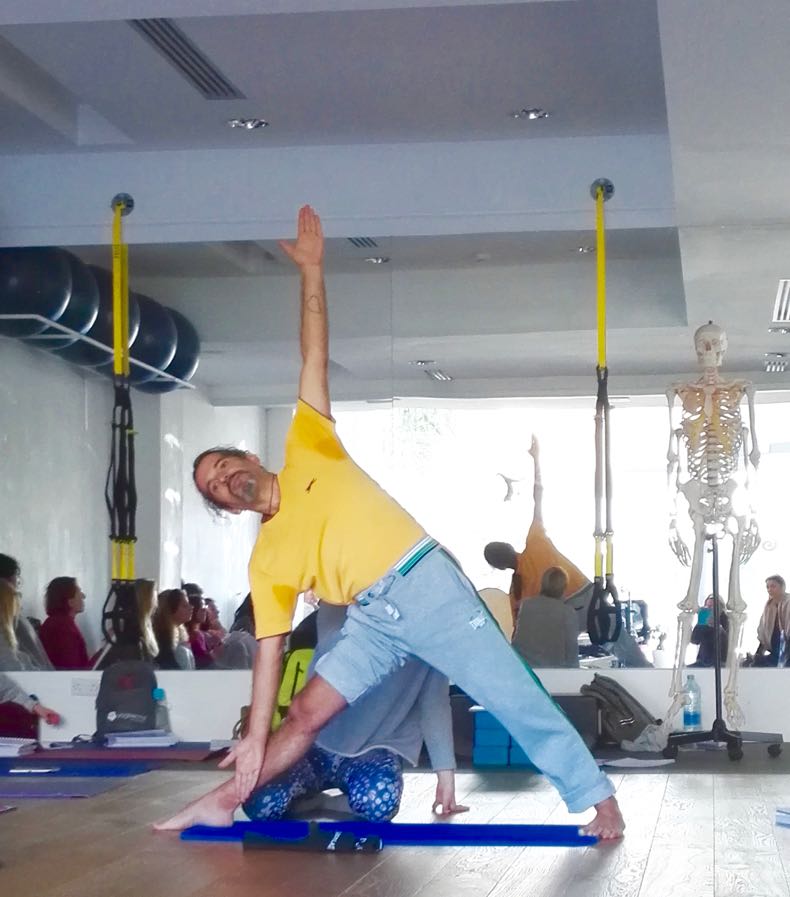
    Hands on adjustments
    …or trikonasana

    So how to go about this? Some teachers lay out in their studio profiles that hands on adjustments are to be expected – This is great but also requires that the profile is read. Some ask you to raise your hand if you don’t want any – but then again, not everybody is happy to speak up in front of others, especially if you are new to practise. There is also the option of the teacher asking you to fold a corner of the mat, or putting a prop in front of the mat. The idea is good in theory but in practise, especially as a teacher, I am always concerned I overlook THE one prop, or the corner of the mat comes undone.


    Recently I have however seen few new innovative initiatives. Few days ago Pranama Studio in Stockholm, Sweden, posted on their Instagram page that they are now using “Consent Crystals” in their classes. Pranama Stockholm writes: “We respect and honor you, and it is totally your choice to be touched/assisted or not during a yoga class. It might even depend on the day […] When you take a Consent Crystal with you in the class, our teachers will know your wishes without asking. Just place it next to your mat and we know we have your consent. Without it, we respect your wish not to be touched at that time and that class.”

    Hands On Adjustments, MeToo

    Another example I recently saw was an American lady who had come up with a small two-sided cards, one side saying “yes” to adjustments and the other “no.” You just place the card next to your mat and the teacher will know. Unfortunately I cannot remember where I saw this but if you recognise this initiative, let me know in the comments and I will edit this post with more detail about this.

    I feel this topic is very much part of the inclusivity in the yoga community discussion that has been taking place for some time now. I would be interested to hear your thoughts about this topic: Are hands on adjustments something you like, you expect, or something you have not really given any thought about? Any ideas you would have or you have seen how to communicate about this, either as a student or as a practitioner? Let me hear your opinions in the comments section!


  • Who Owns Yoga?

    Who Owns Yoga?

    If you found my previous post interesting, there is more! In a documentary entitled “Who Owns Yoga?” the Al-Jazeera correspondent Bhanu Bhatnagar “explores the impact of our modern obsession with one of the world’s oldest physical and spiritual practises.”

    The documentary is only 50 minutes long. It features well established names from the yoga world in the West and East, such as Sharon Gannon and David Life (founders of the Jivamukti Center in NYC), Sri Dharma Mittra, Sadhguru Jaggi Vasudev, Tara Stiles and many more. Check it out, and why not leave your thoughts about it in the comment section.

  • Can yoga ever be considered as a (competitive) sport?

    Can yoga ever be considered as a (competitive) sport?

    Few months ago a fellow yoga teacher posted on Facebook an article about whether or not yoga should be considered as a sport that triggered my interest. For most of us the mere idea of talking yoga and sport, let alone yoga as a competitive sport, seems outrageous. The steady breath, the journey for emotional and maybe even spiritual wellbeing and inner peace that we associate with yoga (or at least, our yoga teacher would like us to associate with the practise) just seem almost completely at odds with what we may think of as (competitive) sports.

    But how do we classify what is a sport in a first place?

    In dictionaries “sports” is defined both as An activity involving physical exertion and skill in which an individual or team competes against another or others for entertainment.” and as a physical activity (such as hunting, fishing, running, swimming, etc.) that is done for enjoyment.”

     In short, sports may or may not be competitive in nature. All it requires is that there is some sort of physical effort. We know that the physical aspect of yoga, asana or posture, is only one of the 8 limbs of yoga as defined by Patanjali. But isn’t fair to say that is the physical practise that many people see as synonymous to “yoga”? To push further, asana practise can be very physically challenging, and the words “effort and ease” are mentioned in the Yoga Sutras: Sthira sukham asanam, yoga posture is an expression between effort and ease.

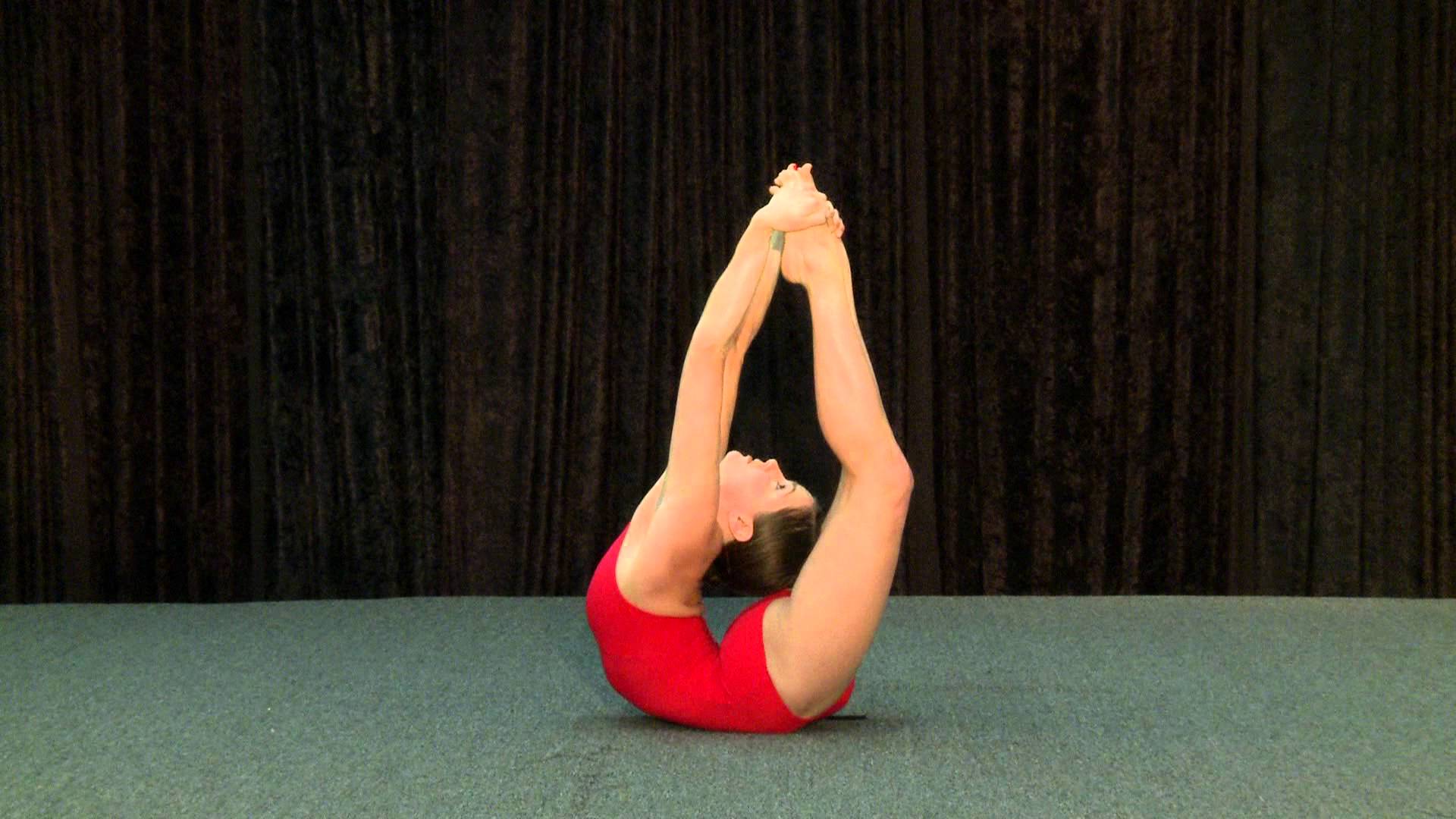
    Mari Dickey at the 2010 Bishnu Ghosh Cup. Photo by Mike McInnis.

    There is no way that sutra can be interpreted that it is ok to have yoga as a competitive sport!” you might be thinking at this point. But even the officials in India, the homeland of yoga, have not been sure where (or how) to place yoga. In September 2015 yoga was recognised as a sport in the Country, only to be derecognised 14 months later, in the late 2016 with the Indian Sports ministry stating, “…Yoga has various dimensions/arms in which competitions are not possible.”

    Definitions aside, it is also interesting to ask…

    …Who would consider yoga as a sport?

    Quite a few people actually, I discovered when doing research for this piece. The International Federation of Yoga Sports website tells that yoga competitions have existed in India for some 2000 years, and competitions with a focus on asana have existed since up to 200 years. The current form of yoga asana competitions on an local, national and international level have existed since 1989, when The First World Yoga Cup and World Yoga Championship was held in 1989 in Uruguay and The First International Yoga Asanas Championship in India.

    Especially in the USA the popularity of these competitions has grown over the years but “yoga as a sport” is a rising phenomenon with several organisations holding national and international competitions and regulating their rules. The biggest one of these entities, The International Federation of Yoga Sports, acts as a governing body for subdivisions in 32 countries.

    Sarah Wells, International Yoga Asana Championship in 2012. Still from a YouTube video.

    “Yoga is about catching the stillness, even in competition”

    Joseph Encinia, the president of USA Yoga, said these words during an interview for the US online magazine Racked last year. In most yoga competitions the participants have to perform a certain number of pre-defined asana and hold them for a certain period of time (in USA Yoga competitions at least 3 seconds.) The postures are of often some sort of variation on a forward bend, a backbend, a stretch, and a twist, either chosen from a list of options or a yogi’s choice. Some organisations also test their competitors on the history of yoga, but the execution of asana to a certain pre-set standards is always present. In the Racked interview Encinia explained how “If a yogi’s alignment is off, we’ll hold it against them, but we’re also watching for balance and control of the breath.”

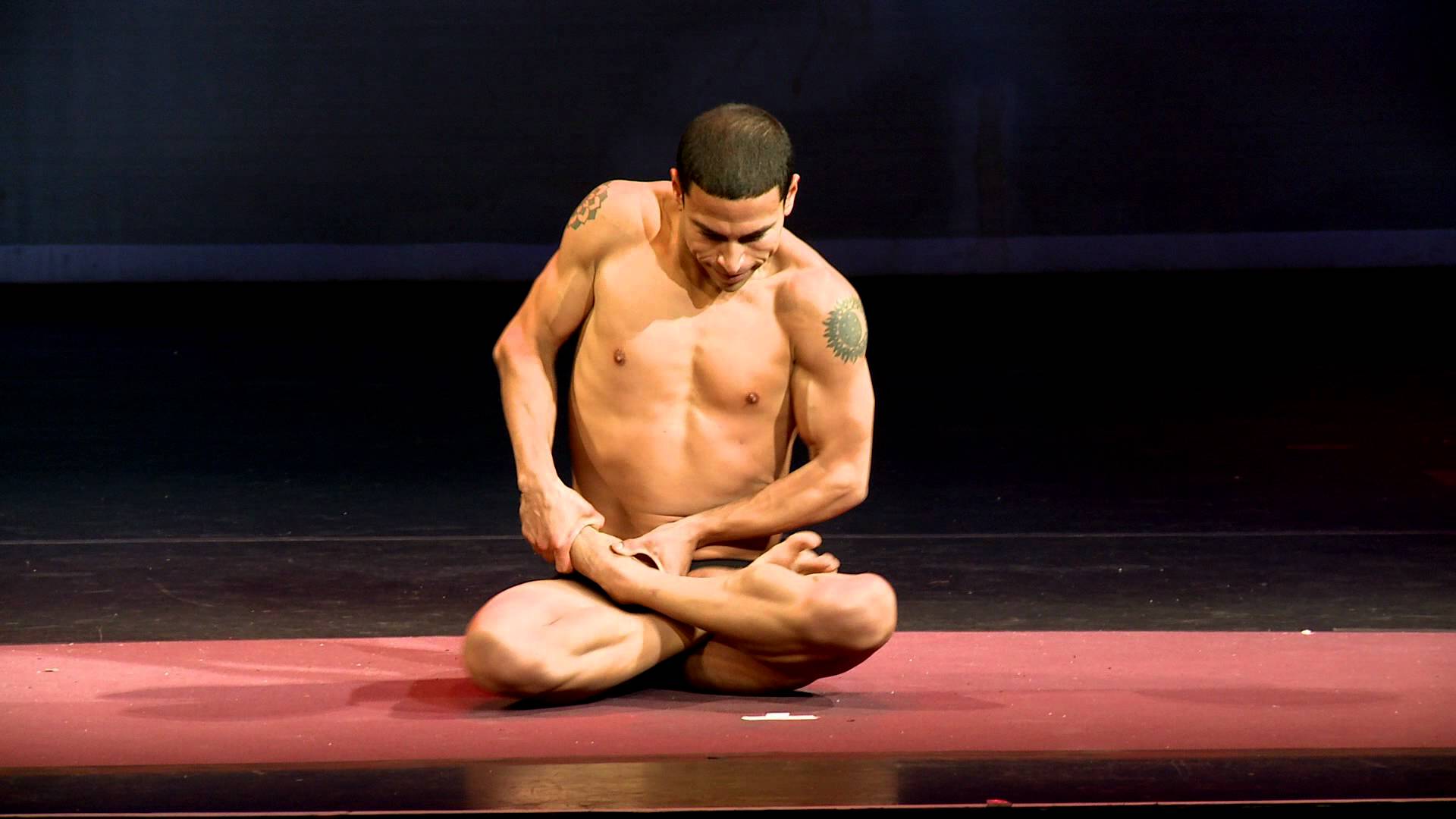
    Joseph Encinia, Demonstration at the 2012 USA Yoga Asana Championship

    Balance and breath are mentioned, that makes these competitions a bit more “yogic”, right?

    Well, maybe not so much. For starters, whose definition of alignment are we talking about? There are dozens of schools of yoga out there these days, some emphasising the anatomical alignment as the paramount of any asana, some much less so and some that barely even mention alignment in their classes. Furthermore, even if you go to two different classes of the same school of yoga, you still might hear things that not 100% identical. And lets not forget that we all have different bodies with different proportions, and I for one think that to get the most out of yoga, it is best taught in a small, if not 1 to 1 setting, where you can pay attention to everybody individually.

    This, together with the perceived lack of spirituality, emotional benefits and relaxation associated with yoga, are among the biggest critical comments against yoga as a competitive sport. Of course yoga teachers and studio owners need to make a living, and for that we need students to come to class. Yet, the absence of the “need to perform” feeling, and lack of comparison to others is something that many of us hold sacred and at the heart of yoga. There are also many other ways that can inspire and motivate us with our practise, and as to catching people’s interest in yoga, are these competitions really representative in any way of the science and art of yoga, thousands of years old?

    Each to their own and as yoga continues to grow in popularity, it is always interesting to hear what attracted people to come to class in a first place and what image of the practise they might have before they step on the mat for the first time. I am going to continue my exploration on all things under the umbrella of yoga this Friday in a form of a documentary screening at a friend’s new yoga studio. I might write more around this topic in the future but in the mean time, let me know what you think about the following:

    Is yoga a sport, and would you like to see (or participate) in an asana competition?

    The pictures are in this post are not mine. The 3 YISF pictures are stills from competition videos available on YouTube.

    Juan Manuel Martin Busutil Demonstration at the 2013 International Yoga Asana Championship

    Tallenna

    Tallenna

    Tallenna

  • The Traveling Yoga Mat

    The Traveling Yoga Mat

    It is 100% true that to practise yoga all you need is the willingness and the patience to do so. The yamas and the niyamas are accessible everywhere, and there is no “wrong” way of practising them. Equally breathing techniques, pranayama, can be incorporated into everything, because well, it’s breathing! As for asana practise, a minimum amount of flat space is of course desirable but after that, the choice of outfit is up to each of us. Even the yoga mat is not compulsory – after all in the ancient times yoga was practised on the ground and the yoga mat as we know it these days is a fairly modern Western invention.

    The reality is however that many of us do prefer to practise with some kind of mat, and if asana practise is part of your routine, you probably prefer having your own mat with you as much as possible. Making space for the regular 180 cm and two-three kilo mat is not a massive issue when traveling with a proper suitcase. In fact, it often has come in handy as it can add some much needed cushioning for the more delicate items, such as a dozen or so Cypriot olive oil bottles I have found myself dragging to various places.

    Things get a little bit trickier though if you want to travel light with hand luggage only, a fact not helped by the fact that airlines (and airports) can have very different attitude towards bulkier items. About a year ago I invested in a foldable (eco-friendly and ethically made because these things matter) travel yoga mat and whilst folding the mat (instead of rolling) first felt like a sacrilege I did get used to it and seriously, this mat has been golden! It weights under 1,5 kilos (that’s 3.2 pounds), is about 2 millimetres thick and has the best grip of all my mats (mind you, the “normal” Jade mats also have a fantastic grip.) In my backpack I can wrap it around my laptop for extra protection, and I have also used it rolled up as a prop to open up the chest and as a picnic mat because why not?

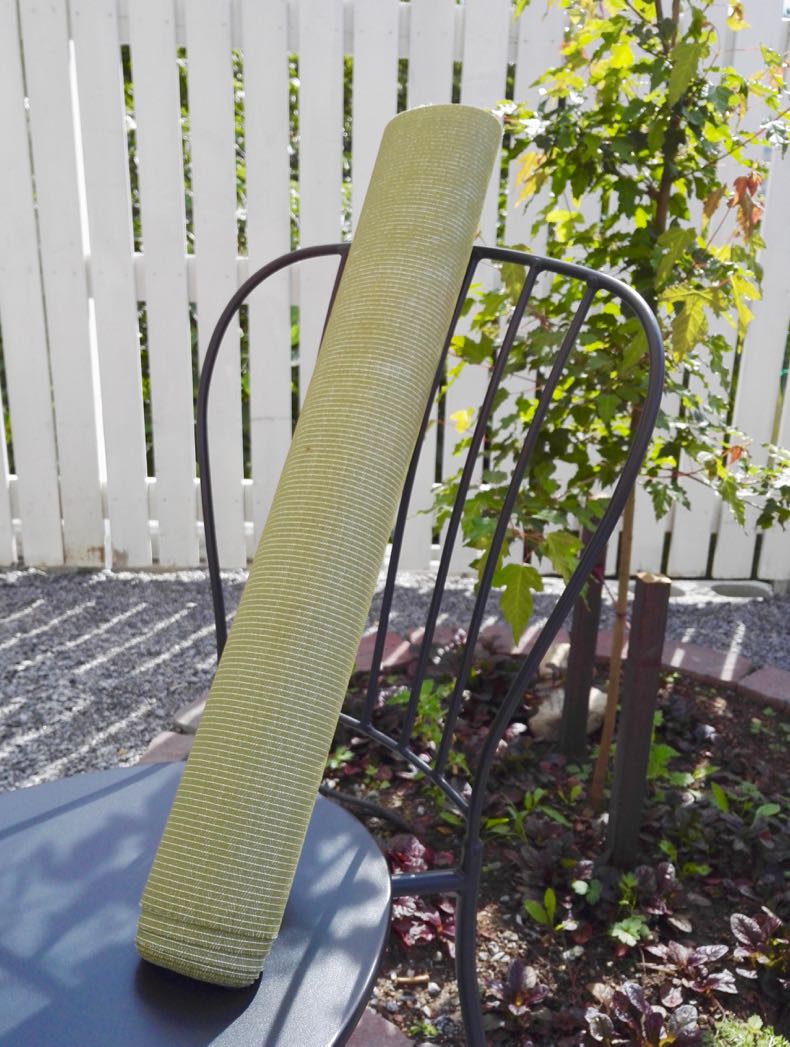
    Some of the mat’s recent adventures are here in the pictures. You can read more about different yogamats here.

    Jade yoga mat Omenapuun alla

    Tallenna

    Tallenna

  • Yoga inspiration or yoga exploitation?

    Yoga inspiration or yoga exploitation?

    Some of you might already have seen the video starring the international yoga teacher Briohny Smith did for the US fitness chain Equinox some six years ago. At the time the clip caused quite an uproar (mainly in the US, not sure if anybody in Europe cared…) as some considered it to be portraying yoga in an overtly sexual way, not representing the “true spirit” of the practise and exploiting the practise we all love for commercial purposes.

    It is said that how we interpret the things we see reveals a lot about ourselves. We can choose to see this video as a sacrilege to an ancient practise, or we can see a beautiful asana flow that clearly has taken years of dedicated, daily work.

    It is also up to ourselves to decide if videos like this make us feel somehow less skilled or worthy practitioner of yoga, because our bakasana-to-handstand-press-to-tripod-headstand transitions (hell, any of those asanas individually, never mind the transitions!) are quite not as smooth as Briohny Smith’s. Or, if we choose to see this as an inspirational clip of what the human body is capable with focused, consistent effort.

    So, have a look and decide for yourself (and notice the impeccable aligment she has!) Do also check out the parody video below: It might say “parody” in the title but I for one think that guy must have one solid, kick ass practise going on!


  • Yoga Etiquette: Good-to-knows for new students

    Yoga Etiquette: Good-to-knows for new students

    It can be just as daunting as it is exciting to start a new activity and yoga is no exception to that. Whether you start to practise in a fancy yoga studio or at a more down to earth community centre, here’s a list of few unwritten rules that most yogis around the word follow. The physical yoga practise is individual yet collectively done and observing the yoga etiquette ensures a pleasant and respectful experience for everybody involved. It might also ease any starter nerves there might be. Most of these rules are pretty common sense though so most importantly, remember to enjoy your yoga class!

    Arrive on time and stay for the whole class

    Punctuality is always appreciated, especially in a space where there is one class after another one. However, even in a more relaxed setting please show your appreciation for the practise and respect for other participants by arriving on time. You can always roll out your mat and lie down to steady your breath and to settle in before the class starts. If you happen to run late for some reason, please enter the class discretely (if it is still possible – some studios can refuse entry if you arrive late.) It is equally appreciated that you stay for the whole class rather than pack your stuff when the relaxation starts. If you for some reason absolutely cannot stay for savasana, please inform the teacher in advance and take your place near the door so you can quietly slip out without disturbing others before the relaxation starts.

    Switch your phone off and appreciate the silence

    When you arrive to your yoga class, remember to switch off your phones, tablets and anything else that might make a noise during the class. This includes taking off any noisy necklaces or bracelets. And for heaven’s sake, if your phone rings, do not waste any time checking who is calling or even worse, answer it. Just sayin’ as it has happened…

    Yoga classes can be great places to meet like-minded people but reserve your chatting to the space outside the class as many people like to take the time before (and after) the class to meditate or to enjoy the relaxed feeling. Keeping noise and chatter to the minimum during the class is also a question of safety as people will need to be able to stay focused and concentrate on (and hear!) the instructions given. After all, you want to be respectful of the environment, the teacher and the people around you, as well as preserve the energy of the class.

    Be aware of the space you take and of that around you

    If there is enough room in the room your yoga class takes place it is common courtesy to stagger your mats so that people behind you can see the teacher. Check also that you are not likely to hit the person on your left and right if spreading your arms to your side. If the class is packed, make room to those joining the class after you by moving your mats closer to each other and be attentive with your asanas. Be also mindful of your steps: do your best to avoid walking on other people’s yoga mats. Finally, we all have good days and bad days. Do not throw your stuff around but equally, offer your quiet smile to those who seem to need it.

    Keep it clean!

    Yoga is practised barefoot although usually you are welcomed to put warm clothes on during savasana for comfort (and health!) However, the yoga etiquette would like you to leave your shoes outside the yoga space and remove your socks. Trust me, nobody cares about your feet as long as they are clean, just like the rest of you. If you are borrowing a mat please clean it if there is a product offered for that and take it (together with other props) to where they belong after the class is over. Also go easy on perfume, scented body lotions, make up etc. Sensitivity or even allergic reactions to strong scents are a real thing.

    Listen (to your body), try modifications and focus on yourself

    Whilst yoga can be massively helpful for one’s physical and mental health, it is not a miracle cure for anything and it is entirely possible to hurt oneself if not practising with care. Make sure you inform your teacher with any injuries you might have so s/he can offer suitable modifications. Also feel free to take a break during the practise (by staying on your mat) if anything gets too much. Your teacher can guide you but nobody can be inside your head so learn to listen what your body tells. If unsure about your health and yoga, please speak to your medical practitioner before starting.

    Even without any injuries, let go of any expectations of what you think your practise should look like, and never compare yourself to the person next to you or whatever you saw on Instagram the other day. Rather concentrate on the feeling, try out modifications suggested and if your mind starts wondering, do your best to bring your focus back to the practise. These things do not come easy for the majority of us but being aware of them is a good place to start. After all, it is not called yoga PRACTISE for nothing.

    Yoga is much more than the physical practise so be interested about how to integrate it to your daily life.

    Sure enough not all yoga classes include any talk about the philosophy per se but all of the points mentioned about yoga etiquette are rooted in its philosphical principles. Curious to learn more? You can start by checking out my posts about Yamas and Niyamas.

    Namaste

    Tallenna

    Tallenna

    Tallenna

    Tallenna

    Tallenna

  • Mitä hyötyä on Iyengarjoogasta?

    Mitä hyötyä on Iyengarjoogasta?

    Iyengarjooga on yksi maailman laajimmalle levinneistä joogamuodoista mutta ei kuitenkaan ehkä yhtä tunnettu kuin hatha- tai astangajooga. Sain ensikosketuksen Iyengarjoogaan kolme vuotta sitten Portugalissa jonne olin matkustanut jooga- ja surffileirille. Päivää ennen leirin alkua onnistuin saamaan olkapääni sijoiltaan enkä ollut varma tulisiko joogaamisesta yhtään mitään. Ensimmäisen aamun joogaopettaja ei kuitenkaan hämmentynyt vammastani yhtään vaan päinvastoin sanoi ettei se ole mikään este. Kyseessä oli siis nimenomaan Iyengarjoogan opettaja ja siitä lähtien olen ollut vakuuttunut tämän tyylisuunnan eduista.

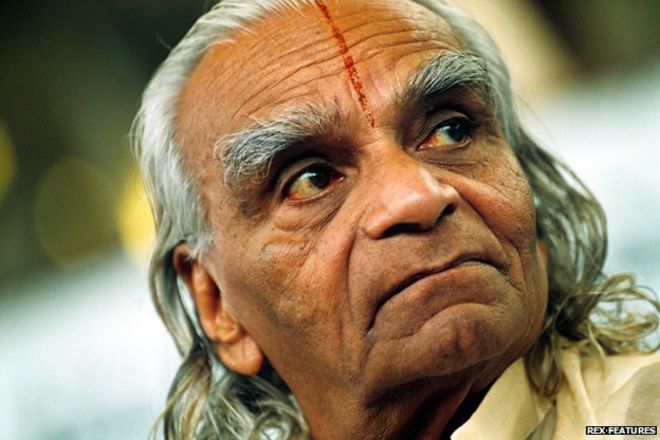
    Iyengarjoogan kehitti Intialainen BKS Iyengar (1918-2014.) Tämä tyylisuunta painottaa asanoiden erittäin tarkkaa linjausta, kehon hyvää asentoa ja nivelten tuomista suotuisaan asentoon suhteessa toisiinsa. Iyengarissa käytetään myös paljon erilaisia apuvälineitä kuten hihnoja, blokkeja ja joogavilttejä. Nämä auttavat kaikentasoisia- ja kuntoisia ihmisia pääsemään asanoihin oikeassa linjauksessa ja siten minimoivat mahdolliset loukkaantumiset tai rasitusvammat.

    Osallistuin viime viikolla Iyengar workshoppiin täällä Kyproksella. Päätin kysellä Iyengarista tarkemmin workshopin vetäjältä Vula Boloulta (sertifioitu Iyegarjooga opettaja tasolla Junior Intermediate Level 3) joka on ollut itse BKS Iyengarin oppilas. Tälläisiä vastauksia sain:

    Liike-elämässä termi hissipuhe tarkoittaa lyhyttä, iskevää ja positiivisen mielikuvan herättävää esitystä tuotteesta, palvelusta tai organisaatiosta ja sen eduista. Millaisen hissipuheen pitäisi Iyengar-joogasta henkilölle joka tietää hyvin vähän joogasta ylipäätänsäkään?

    Jooga on maailman vanhin itsensä kehittämisen muoto. Iyengar-joogan on erityinen joogan tyylisuunta jonka kehitti Intialainen BKS Iyengar. Hän käytti jooga-asanoita ja hengitysharjoituksia parantaakseen itseänsä henkisesti ja fyysisesti. Harjoittelemalla metodinsa mukaisesti BKS Iyengar saavutti henkisen tasapainon ja hyvän terveyden ja hän elikin 96-vuotiaaksi. Hän mahdollisesti myös saavutti korkeamman tietoisuuden tasoja ja eli kaikin puolin rikkaan elämän.

    Mikä sinua viehätti Iyengar-joogassa, miksi valitsit tämän juuri tämän joogatyylin?

    Aloitin joogan kun ystäväni pyysi minua mukaansa kuntosalille. Sanoin hänelle että en halua mennä aerobic-tunnille, mitä muuta salilla voi tehdä? Tarjolla oli hatha-joogaa ja vuoden sitä harrastettuani toinen ystäväni vei minut uuden opettajan tunnille. Tämä tunti oli Iyengar-joogaa ja aloin käymään tämän opettajan tunnilla. Olen kokeillut myös muita joogatyylejä mutta Iyengar on aina ollut minulle mieleisin ja löysin sen hyvin aikaisin joogaurallani. Usein ihmiset löytävät Iyengar-joogan loukkaantumisten tai kuntoutuksen kautta, mutta näin ei käynyt siis minulle.

    Kuinka houkuttelisit ihmisiä jotka harjoittelevat voimakasta vinyasa flow-tyylistä joogaa Iyengar-joogatunnille?

    En lähtisi “myymään” Iyengar-joogaa sillä jos pitää nopeatahtisemmista tunneista, Iyengar-tunti ei välttämättä tunnu yhtä mukavalta. Jokaisen pitää tuntea sisällään että he kaipaavat jotain muuta, jotain jota nopeampi tunti ei pysty tarjoamaan. Pitää olla avoin idealle että asana-harjoituksen voi ymmärtää paremmin jos sen tekee hitaampaan tahtiin: hitaampi harjoitus antaa enemmän aikaa kaikelle. Iyengar-tyyli voi selkeyttää ja syventää yksinkertaistenkin asanojen, kuten trikosanan, ymmärrystä. Iyengar-tunnilla hengitysharjoitukset ovat myös erilaisia kuin muissa tyyleissä ja näin siis avaavat uusia näkökulmia.

    Herospose

    Tittelisi on Junior Intermediate Level 3 joka kuulostaa hieman monimutkaisemmalta kuin tavallinen “joogaopettaja.” Kertoisitko tästä hieman lisää?

    BKS Iyengar halusi luoda tiettyjä sääntöjä ja hierarkioita metodinsa opetukseen. Iyengarjoogaopettajaksi haluavalla pitää olla taustalla ainakin kolmen vuoden säännöllinen harjoituttelu jo sertifioidun Iyengarjoogaopettajan alaisuudessa. Tämän jälkeen voi osallistua ensimmäiseen opettajankoulutukseen joka kestää kaksi vuotta. Tätä voisi ajatella ns. Iyengarjoogan kandin tutkintona. Seuraavaksi on mahdollisuus suorittaa vuoden kestävä Junior Intermediate Level 1-koulutus. Siihen voi hakea 18 kuukautta ensimmäisestä koulutuksesta valmistumisen jälkeen. Tätä seuraavat Intermediate level 2 ja 2 tutkinnot, jonka jälkeen tulevat Senior Intermediate 1, 2 ja 3. Korkeimmat koulutuksen muodot ovat Junior Advanced and Senior Advanced. Tutkintojen välissä tarvitaan tietenkin vuosien henkilökohtainen harjoittelu joka on tärkeintä jokaisessa joogamuodossa.

    Kiitos juttutuokiosta Vula! Kerro vielä missä tunneillesi voi osallistua kotikaupunkisi Ateenan lisäksi?

    Opetan säännöllisesti Kreikan saarilla. Olen myös pitänyt tunteja Itävallassa, Englannissa ja Intiassa. Tällä hetkellä keskustelen mahdollisuudesta tulla opettamaan Turkuun Suomessa sekä Kööpenhaminaan. Tuntiaikatauluni ja paikkani löytyvät sivuilta www.treeofyoga.org ja www.santorinilovesyoga.com.

    BKSIyengarBW2

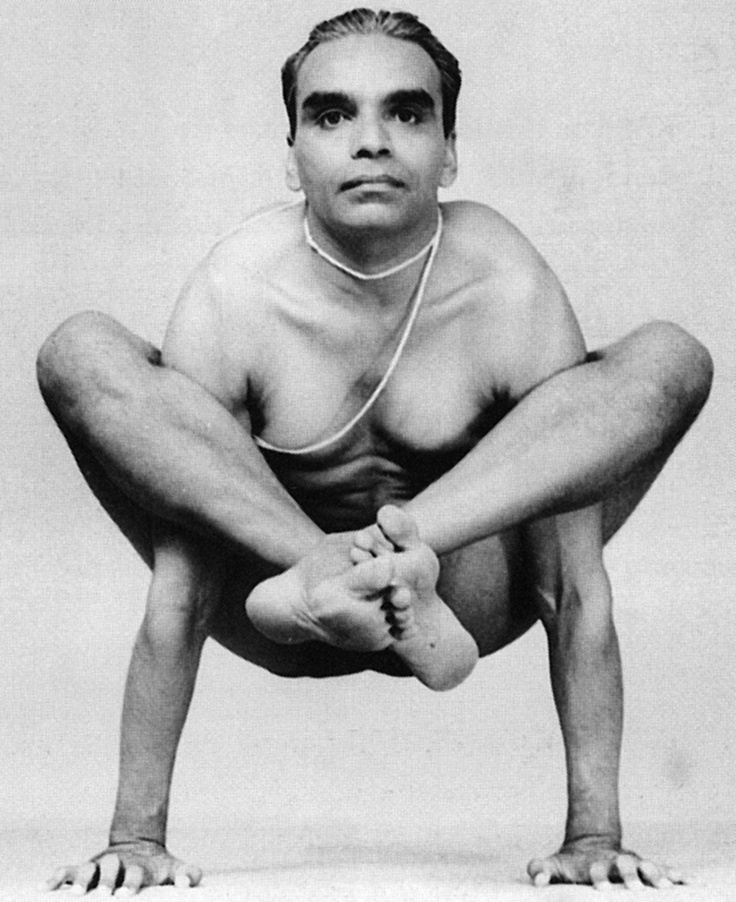
    The BKS Iyengar pictures are from the Internet, all others are mine.

    Tallenna

    Tallenna

    Tallenna

  • About Iyengar Yoga

    About Iyengar Yoga

    Iyengar yoga is one of the most widespread yoga styles in the world, yet it is not as familiar to many as other yoga styles, such as hatha and asthanga. My first experience with Iyengar yoga was three years ago on a surf and yoga camp in Portugal, where I rocked up with a dislocated shoulder I had gotten the day before the camp started. Annoyed with myself, I was so impressed and relieved when morning yoga teacher did not bat an eyelid after hearing about my misfortune and instead said “it is ok for you to do yoga, we modify what we need to modify.” That lady was an Iyengar teacher and I was made a fan of the style there and then.

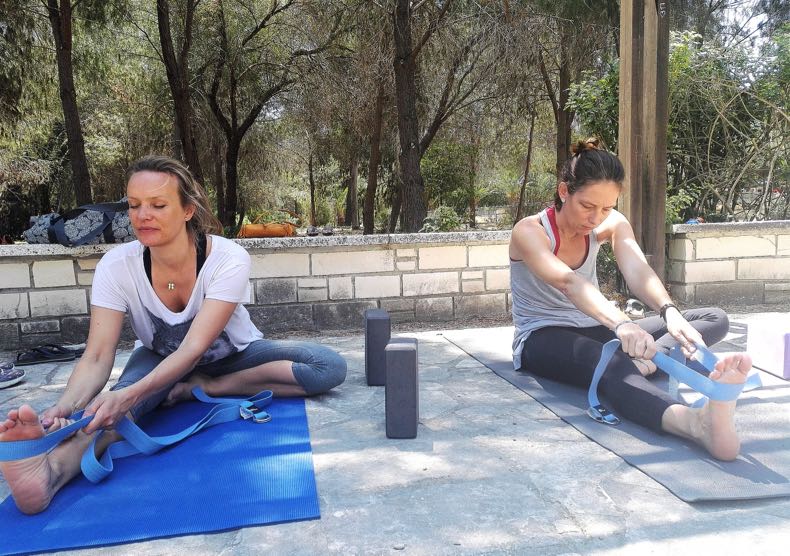
    Iyengar Yoga, named after and developed by BKS Iyengar (1918 – 2014), has an emphasis on detail, precision and alignment in the performance of posture and breath control. Iyengar Yoga is known for making use of props, such as belts, blocks, and blankets, as aids in performing asana. The props enable students to perform the asanas correctly, allowing them to stay longer, minimising the risk of injury or strain, and making the postures accessible to both young and old, able and less able.

    Yoga bolster

    Last weekend I had the chance to participate in an Iyengar workshop. Rather than repeating second hand stories, I decided to interview our teacher Vula Bolou, a Junior Intermediate Level 3 teacher who has been a direct student of BKS Iyengar. Himself. Here is what she had to say.

    In business world the concept of elevator pitch is used to describe a short sales speech, or a summary to quickly define a product, process, service or organisation and its value proposition. What would be your elevator pitch for Iyengar Yoga to somebody who has very limited knowledge of yoga all together?

    Yoga is the oldest method of self-development. Iyengar yoga which is a special method developed by an Indian man called BKS Iyengar. He used asana (yoga postures) and pranayama (breathing exercises) to make himself better in every way possible. Using this method he achieved clarity of mind and good health, reaching the age of 96. He also possibly reached higher stages of consciousness and in general lived life to the full.

    What attracted you to Iyengar over other styles of yoga?

    I started yoga when a friend of mine asked me to go to the gym with her and I said that I am not going to do aerobics, what else is there at the gym to do. They had hatha yoga and after a year of hatha another friend took me to a new teacher. She was teaching Iyengar and I stayed with her. I have tried other yoga methods too but my heart is with Iyengar. So I happened to find the style very early on and not through an injury or similar, which is a common path for people to come to this method.

    How would you promote Iyengar to people who prefer strong and dynamic vinyasa flow-type yoga classes?

    You know, I would not “sell” Iyengar yoga in a sense that if somebody really enjoys a fast paced yoga classes, they will not enjoy Iyengar class the same way. It has to come from within the individual to find something that they need, something that a faster class cannot offer. One needs to be open to the idea that maybe the asana practise can be understood better if done in a slower pace: As the practise is slower, there is just more time for everything. Iyengar yoga can bring more clarity and depth to even the simple poses such as trikonasana. In Iyengar we also use pranayama a different way than in other styles and that offers a different perspective.

    Your title, Junior Intermediate Level 3, sounds a bit complicated. Can you explain that to us?

    BKS Iyengar wanted to create certain rules and hierarchy in his method to the way he was teaching yoga. To become an Iyengar yoga teacher you first of all need to have had a regular practise with an Iyengar certified teacher for 3 years. After that you can take the first training that lasts 2 years. You can think of this like as a BSc-level “degree.” After that you have Junior Intermediate Level 1 for which you can apply after 18 months after the completion of your first degree and that training takes one year, followed by Intermediate level 2 and level 3 trainings. Then you have Senior Intermediate 1, 2 and 3, followed by Junior Advanced. The highest level of certification is Senior Advanced. In between the certifications you of course need to have years of personal practise, as that is in the heart of yoga – all yoga.

    LowLunge.jpeg

    Thank you so much for this talk Vula! Where can we catch you teaching in the future apart from your home base Athens?

    I teach regularly in the Greek Islands. In the past I have been also in Austria, the UK and India now am in the talks to go and teach in Turku, Finland and in Copenhagen. You can check www.treeofyoga.org and santorinilovesyoga.com for details.

    BKS Iyengar


    BKSIyengarBW2

    The BKS Iyengar pictures are from the Internet, all others are mine.

    Tallenna

    Tallenna

    Tallenna

  • Yoga Tourist in Paris Part 2

    Yoga Tourist in Paris Part 2

    Originally I had planned to go to an advanced level vinyasa class on my last full day in Paris. With all the walking done over the days (and long dinner on Tuesday on Tuesday evening) I however started feeling like something mellower would be a better fit for the day. As mentioned I had really like the energy at Studio Keller the day before and I quick look at their schedule showed there was an afternoon all levels vinyasa class (vinyasa tout niveau.) I was really curious to see an all-levels class by another teacher as it is common for most teachers to have a class with people of different abilities and it can be challenging to keep it interesting and challenging enough for everybody. The afternoon class was also Studio Keller’s weekly community class so it was priced only at 10 euros. What’s not to like!?

    At the start of the class the teacher greeted returning students by their names, went through all the new people to get their names and introducing herself. She also checked who was new to yoga and maybe most importantly, if anybody had any injuries or restrictions on the day she should be aware of. Unfortunately this is not a question you often hear at classes although especially in the case of people new to asana-practise it allows the teacher to modify the poses based on whatever issue a practitioner might have. I get that in a big class giving individual attention to everybody is simply not do-able but if you have to choose who you are going to give it, this is probably the best way to find out.

    The actual yoga was great although personally it was not the best practise I have had. Variations for the vinyasas were given (one being staying in child’s pose) and all the instructions were clear to follow for everybody (which did not stop me from getting confused between right and left but that happens to me everywhere, in every language) and there was a lot of humour. There was a really warm atmosphere in the room that goes to tell a lot about the quality of the teaching. Highly recommended!

    There are numerous other yoga studios left to visit so do let me know what are your favourites in the comments as I hope to go and visit the City of Lights again later this year!

    Tallenna

  • Yoga Tourist in Paris

    Yoga Tourist in Paris

    There is a real yoga scene in Paris and as I was due to visit my old hometown over few days I naturally wanted to check out what is on offer. Cue a message to the “Finnish people in Paris” Facebook page (note to self, 1am on a Saturday morning is probably not the best time for any question) and googling along the lines “best yoga classes in Paris.”

    First impressions? The prices! Apparently you can charge 35€ for a class (and not a workshop, a 60 to 90 minute class)! Average seemed to be around 15€ to 20€ a class but as there is a lot on offer it was worthwhile digging a bit deeper. Most places offer the first visit at a reduced rate and there are several more moderately priced options.

    Second impression? Booking in advance online was required for most places. I had sort of forgotten that this is the norm in most big places (Cyprus, as a country, has 1 million people compared to almost 10 in Paris) as a class can easily be 40 people. On the Island we call that a festival! But I suppose booking things before hand can help you get organised with your life so I can definitely see the benefits of it too.

    wp-image-1183085569jpg.jpeg
    Just a random happy cat on the streets of Paris.

    I was determined to start as I meant to go along so for my first class I booked a 8 am “Rise” session at The Yoga Factory (Metro Oberkampf). The name had popped up on most of my searches, the morning classes were prices very reasonably at 7 euros and you did not have to book. I found the place without too much trouble (but did walk past it once before turning back), filled in the form at the reception and was directed to the changing room. The place had a cool industrial vibe to it (hence the “factory”) and was busy even at the early morning.

    Now two things happened that I take full responsibility of. Firstly, I somehow managed to omit the fact that The Yoga Factory is all about hot yoga, and in every class the room is heated to +28C. I was a bit surprised by the temperature in the room when I first walked in but hey, I was after new experiences and to be completely honest, I would have probably never entered the place had I known it was about hot yoga (yes, I am that open minded.)

    wp-1487794163867.jpeg
    Yes it says “Hot Yoga” on that thing on the door. I noticed it too when I left.

    The other thing was that for some reason I had thought the class would be some kind of Hatha variation, nothing too crazy. Obviously I had not bothered to read the class descriptions either. Well, hatha it was not. “Rise” at The Yoga Factory was a full-on 60 minute vinyasa flow like I had not experienced it in several years. To give you an idea how fast paced it was, the 60 minutes included a generous pranayama practise at the start, at least 6 (I lost count) rounds of full Sun Salutation variations, 5 different warrior poses, half moon pose, a whole bunch of the most common standing poses, bakasana (crow pose) as arm balance, tripod headstand for inversion, full bow pose and savasana. All tied together to form a continuous flow that did not stop for a second.

    I had said I was after new and different experiences so I was truly served with this one. It could not have been further away from my regular practise! Whilst I did find the class a little bit too fast and “full” for my taste it was also fun and surprisingly energising. With no booking and the 7 euro price tag for the morning and a 17:15 “Happy Hour” class I happily go back to the Yoga Factory when in Paris next time. I will also take my towel with me.

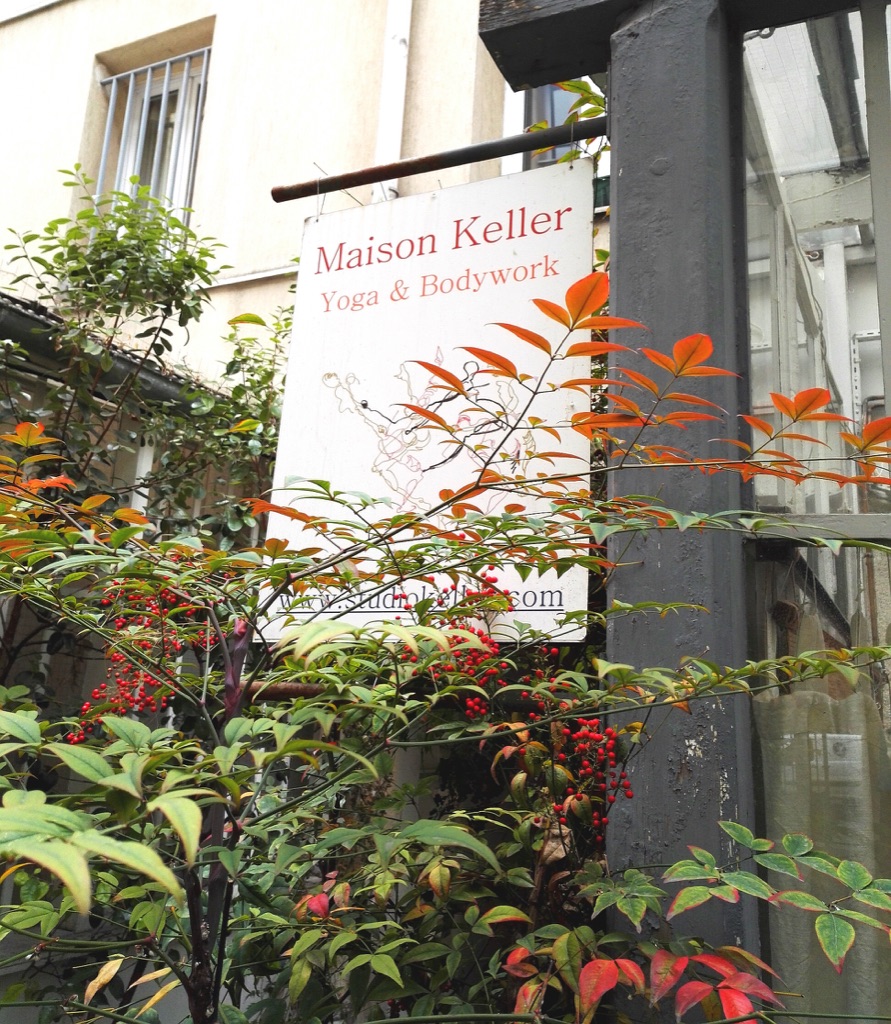
    I decided however to pay a bit more attention to the next class I was booking. I figured that with all the walking around the city I could do with something more restorative so I booked a Meditation and Yin yoga class for the next day at the Studio Keller (Metro Voltaire). I had heard great things about this place and they offer an introductory class for 13 euros. After the booking they send me an email with the codes to the building (another thing I had forgotten, the door codes in Paris) and at the door naturally I tried them in the wrong order, the last one letting me in through the first door. Good thing I was on time.

    wp-1487794179574.jpeg

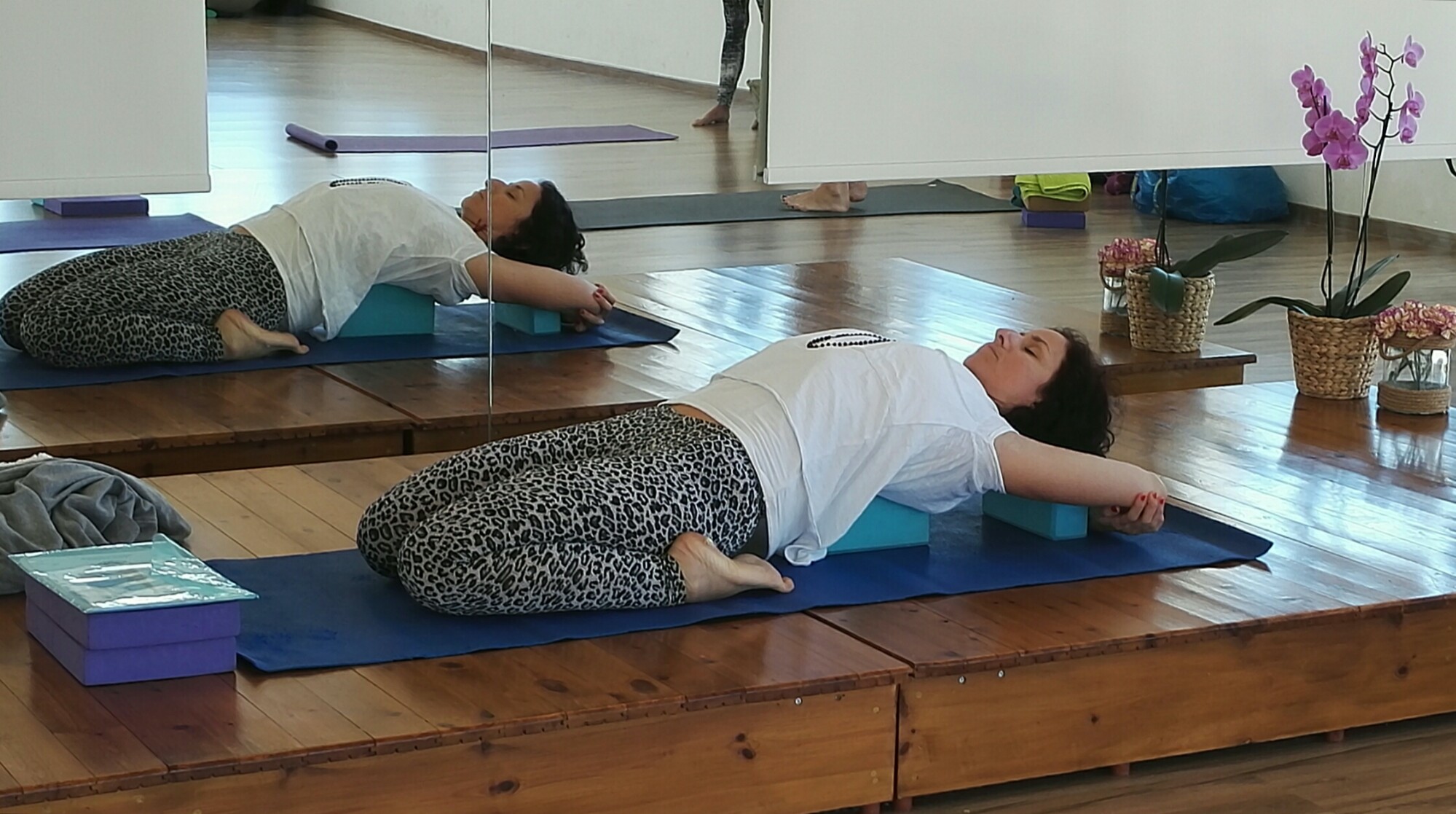
    Studio Keller is another beautiful place if a complete opposite to Yoga Factory. This one had a more traditional yoga-shala-meets-old-Parisian-apartment vibe to it with wooden floors and light colours, mix and match props and a lot of light. The class was divine, also pretty busy for a Tuesday morning but very relaxing and calming. After the 15 minutes or so (?) meditation at the start the teacher was very hands on with the asana practise, offering adjustments, helping with the props and to get deeper into the poses in an effective way. Just wonderful!

    I liked the feeling of Studio Keller so much I decided to go back for more the next day but about that in the next post.

    wp-image-2128335808jpg.jpeg