By now most of us have well and truly realised December has arrived. Not necessarily from the weather (as this day and age this time of the year can just as well be white, green or gray) but from the slightly frantic energy in the air. The Christmas ads are on full gear, invitations to various festive parties are coming from all directions, and the general anticipation of Santa/days off/opportunity to just sleep-eat-sleep is tangible. While all this is happening to the soundtrack of non-stop Christmas jingles, illuminated by various Christmas lights everywhere, and often fuelled by more drinks and nibbles than recommended and reasonable, it is no wonder how the end of the year can leave us a little weary and run down, despite all the fun.
Below are few of my tried and tested tips on how to stay sane, healthy-ish and keep reasonable energy levels all through December. A little bit of effort and self-discipline is required but it guarantees you will be able to make the most of the season.
Keep up with your water intake
Obvious one but hands up, who feels like reaching out for the water bottle when the temperature nears zero? I have noticed that since moving back to the UK from Cyprus my water intake has gone down a lot, and as a result I have started get the occasional headache which never used to happen. We all know basics: 2-3 litres a day, more if you are drinking coffee/tea/alcohol and/or exercising. Warm water with some lemon or ginger in it counts too!
Take a moment – or two – every day to be quiet
This is even more important during December than other months I find. Even on a good day social media updates can do your head in, especially if everybody in your circles is talking about the same subject (i.e. gift shopping, parties, decoration, how much they like/hate this time of the year.) Try to shut down – properly shut down – your phone when you get home in the evenings well before bed time, and do resist the temptation to check it the first thing in the morning. Giving yourself just 10 minutes of proper quiet time, stretching, relaxing the facial muscles and the rest of the body and focusing on the breath will calm the mind and give you some much needed space.
Ease off the pressure from yourself – The nature is taking it easy too
There is no denying, it is cold and dark in the Northern Hemisphere. The shortest day falls onto the 21st December and from there on the days will slowly start get longer again. Whilst hibernating is not really an option for most of us, we can still be comfortable with the knowledge that natural to feel a slower and less energetic than usual. Be kind to yourself and slow down. Think of few things that are essential and things that bring you joy, and let those be your guide on how to navigate the festive season. Not all parties need attending to and some things can be finalised next year. If it feels appropriate, swap your usual vinyasa flow class to a gentler yin or restorative type, and as much as possible, give yourself a little bit more time to get through the everyday stuff. With this in mind (and executed), being merry and jolly flows in naturally.
…and about all those gifts?
Ok, some people might really need something, or they let you in on wish for something – if it is affordable, in line with your values (just saying… gifting should not be about you but also, are you comfortable with the gift you are buying?), go for it. Lacking ideas, think about the immaterial – a massage, a full house cleaning or a dry cleaning for five shirts, a yoga class or a month’s pass..? You can find a variety of services in all price ranges so make a point of taking time to google (or looking around at the small businesses around you) to find out what is available.
And most importantly – enjoy the festive season and what it can offer to you! Be selective, be true to yourself and most importantly, be kind to yourself and to others.
What are your tips to navigate through the December festive season or are you rather indifferent? As always, I would love to hear your thoughts and comments!
Muutama viikko sitten osallistuin seminaariin jossa keskusteltiin joogan monimuotoisuudesta – tai sen puutteesta. Keskustelun lähtökohtana oli usein eteen tuleva käsitys siitä, että joogaa harrastavat tietynlaiset ihmiset jotka usein kuvitellaan valkoihoisiksi, hoikiksi, notkeiksi nuorehkoiksi naisiksi joilla ei ole (ainakaan selkeästi nähtävissä olevia) vakavia terveydellisiä haasteita. Keskustelun panelistit ja yleisö pohtivat mistä tämä oletus johtuu, onko se edes totta ja kuinka vallalla olevia luuloja voi haastaa ja siten tuoda joogaa lähemmäksi erilaisia kohderyhmiä?
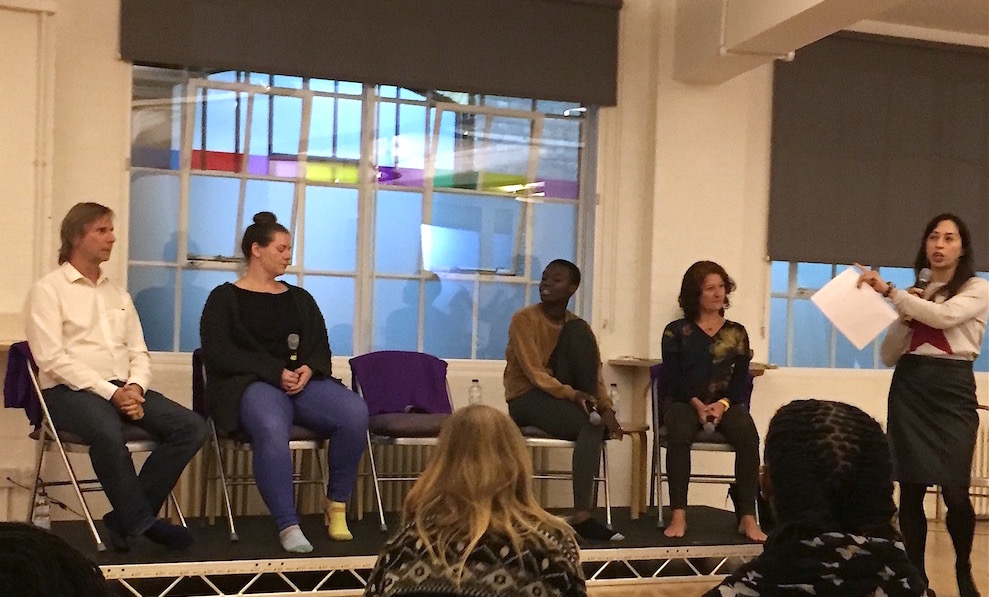
From left to right: Jonathan Sattin, Dana Falsetti, Corrie Ananda Preece, Isa-Welly Locoh-Donou and Frederique Sardais
Meillä kaikilla on tietenkin erilaisia kokemuksia, ja itse olen nähnyt Suomessa (tai no, Tampereella ainakin) joogastudioilla hyvinkin erilaisia ja eri-ikäisiä ihmisiä, vaikka naisia kieltämättä on melkein joka tunnilla enemmistö. Samaan hengenvetoon on kuitenkin todettava että kaikilla joogastudioilla on omanlainen henkensä ja tyylinsä, jotka taas helposti vaikuttavat siihen millaisia ihmisiä asiakkaiksi valikoituu – tai jää valikoitumatta. Joogan kokeilu voi kiinnostaa mutta jos itsellä on olo että ei jotenkin sovellu tietyn paikan asiakkaaksi ja muita vaihtoehtoja ei ole tarjolla, kiinnostus ei ehkä koskaan johda tunnille menoon tai muuhunkaan joogaan tutustumiseen.
Alla on osa paneelikeskustelussa esille tulleista syistä siihen miksi joogatunnille meneminen voi tuntua vieraalta tai vaikealta:
Tunne siitä, että tunneilla on pelkästään naisia ja kaikki joogaopettajatkin ovat naisia.
Tunne siitä, että joogatunnilla käy vain hoikkia ja normaalivartaloisia ihmisiä joilla ei ole koskaan ollutkaan minkäänlaisia terveydellisiä haasteita, joko henkisiä tai fyysisiä.
Tunne siitä, että on liian vanha/kankea/huonokuntoinen joogaamaan.
Tunne siitä, että jooga ei ole kulttuurillisista ja/tai uskonnollisista syistä itselle sopiva harrastus.
Hinta, aikataulut ja etäisyys: Joogatunnin hinta voi olla liian kallis tai joogatunteja ei ole itselle sopivaan aikaan tai sopivan matkan päässä. Jos sopivan hintaisia tunteja olisikin tarjolla, ne voivat olla esimerkiksi keskellä päivää jolloin ollaan töissä
Mistä yllä olevat käsitykset sitten johtuvat? Koska monilla joogasaleilla käy ihmisiä laidasta laitaan, onko yllämainittujen syiden takana se, että joogasta kirjoitettaessa (tai joogatuotteita mainostaessa) kuvituksena käytetään usein saman ihmistyypin edustajia? Onko tämä tietoinen valinta studioiden ja mainostajien puolelta, vai onko kyseessä tiedostamaton ennakkoasenne jonka johdosta uudenlaisia kohderyhmiä ei edes osata kaivata saatikka hakea? On yksi asia sanoa kuinka jooga sopii kaikille ja kuinka kaikki ovat tunnille tervetulleita mutta aivan toinen toteuttaa nämä käytännössä. Mitä jos jollekin kaikesta huolimatta tulee tunne, että ei syystä tai toisesta vain kuulu joukkoon tai että joogaohjaajalla ei ole taitoja modifioida asanoita jollain tavoin liikuntarajoitteiselle, oli kyseessä sitten vakava ylipaino tai vaikea skolioosi?
On tietenkin mahdotonta luoda tilaa jossa aivan kaikki tuntevat olonsa luontevaksi heti sisään tullessaan ja omasta kokemuksestanikin tiedän, että on voi todella hankala vetää tuntia jolla on sekä vasta-alkajia että pitkän linjan joogaajia ja ottaa kaikkien kokemustaso tasapuolisesti huomioon. Asia johon me kaikki pystymme kuitenkin vaikuttamaan on tietoisuus erilaisista kynnyskysymyksistä ja ennakkoasenteista ja pyrkiä vaikuttamaan niihin positiivisesti omalla esimerkillä.
Jooga on myös paljon muuta kuin fyysinen harjoitus. Meditointi, hengitysharjoitukset ja filosofisten tekstien lukeminen ovat myös joogaa ja ehkä joillekin sopivampi tai mielekkäämpi tapa tutustua harjoitukseen. Yhtenä joogaopettaja tärkeimpänä ominaisuutena koen kyvyn pitää mielen avoimena kaikenlaisille kysymyksille, vastata niihin parhaan mukaan ja osoittaa kuinka harjoituksen voi tuoda osaksi jokapäiväistä elämää, ryhmäharjoituksen kanssa tai ilman.
Millaisia ennakkoasenteita sinulla on (tai olet kuullut että muilla on) joogaa kohtaan? Vaikuttaako jooga sinusta enemmän ”naisten harrastukselta”, vai käytkö itse ehkä salilla jossa on edustettuna koko elämän kirjo? Vai oletko edes kiinnittänyt näihin asioihin mitään huomiota? Koska en tiedä Suomen joogaskenestä mitään, olisi hauska kuulla teidän mielipiteitä ja huomioita saleista, niiden tunnelmista ja millaiseen yleisöön jooga sinun kokemustesi mukaan vetoaa (tai ei?)
Aloittaessani säännöllisen joogaamisen, ja jopa vielä muutama vuosi sitten, en ajatellut että musiikki voisi olla joillekin tärkeä osa joogatuntia. Olin kuitenkin suoraan sanoen hämmästynyt (eli siis elänyt täysin omassa kuplassani joka oli syytäkin puhkaista) kun ymmärsin että monille hyvän ja huonon tunnin ero on juuri siinä musiikissa. Kärjistäen voisin sanoa että monille musiikki joogassa = hyvä tunti, ei musiikkia joogatunnilla = ei se kaikista paras tunti. Riippumatta siis itse tunnin sisällöstä ja opettajan taidoista.
Itseäni musiikki ei varsinaisesti haittaa (yleensä) ja kotona voi hyvinkin soida jotain taustalla harjoitellessani. Olen myös ollut tunneilla joissa musiikki on palvellut harjoitusta loistavasti: Drum’n’base kello seitsemältä aamulla voimakkaan Jivamukti-harjoituksen taustalla kyllä herättää päivään siinä missä pari kuppia kahviakin. Vaihtoehtojen edessä, jos siis olisi kaksi täysin samanlaista tuntia edessä, valitsisin ehdottomasti tunnin jossa ei ole musiikkia (en laske musiikkiin mantrojen laulua tai Kirtania joka voi kuulua tuntiin.) En myöskään itse soita yleensä musiikkia omilla tunneillani, alla olevista syistä:
Musiikki häiritsee harjoitukseen keskittymistä. On helpompi hiljentyä ja keskittyä oman kehon tuntemuksiin kun isoin ääni salissa lähtee (ohjaajan lisäksi) omasta hengityksestä.
Elämä on jo muutenkin ääniä täynnä. Yleensä joka paikassa on kaikenlaista taustamelua ihan tarpeeksi. Itse kaipaan usein hiljaisuutta ja haluan myös tarjota mahdollisimman hiljaisen ympäristön heille, jotka tulevat harjoittelemaan kanssani.
Hyvän soundtrackin (puhumattakaan useamman) tekemiseen menisi varmaan hirveästi aikaa. Jos soittaisin musiikkia pitäisi sen sopia tempoltaan ja tunnelmaltaan tunnin eri osiin: Pranayama, lämmittely, tunnin yleinen teema ja asanat… mitä sitten tunnilla tapahtuukaan. Jota ei voi aina etukäteen suunnitella. Ja mitäs sen musiikin kanssa sitten tekisi? Kuulostaa ehkä hieman täydellisyyden tavoittelulta mutta musiikki on vakava(hko) asia
Musiikki on todella henkilökohtaista. Ikinä ei tiedä mitä assosioita ihmisille tulee mistäkin biisistä. Niin epätodennäköistä se onkin että ambient-musiikki tämän aiheuttaisi, olisi kurjaa jos jostain kappaleesta tulisi jollekin mieleen ero tai joku muu ikävä muisto.
Ehkä joku päivä lämpiän taustamusiikin soittamiselle omilla tunneillani, ja kuten sanoin on aina välillä kiva osallistua tunneille jossa soi musiikki. Mitä mieltä te olette: musiikkia joogan taustalla vai ei?
Last Monday I attended a teacher’s symposium on the topic “The Diversity Problem in Yoga” at TriYoga’s Camden studio. The premises of the talk was to find out (as much as possible) why yoga in the Western world, today being more popular and mainstream than ever, seems to practiced by a very homogenous set of people, often identified as a white, able-bodied, middle-class women. Why is it that whilst the population in general is getting more and more overweight and aging and the racial and religious diversities present around us, the yoga community as a whole does not necessary reflect these realities?
“Are we as yoga schools, teachers and students reinforcing existing barriers and divisions, and how can we actively dissolve them? How can we create a more inclusive space for everyone no matter their size, their ethnicity, their income and their gender?”
The panellists of the evening included Jonathan Sattin who founded the first TriYoga studio in 2000, Dana Falsetti, a body positive yoga teacher, Corrie Ananda Preece and Isa-Welly Locoh-Donou who teach Mysore and Pilates & Barre respectively at TriYoga and Frederique Sardais who was the first UK teacher to specialise in Adaptive Yoga, a type of specialist classes for people living with disability and limited movement.
From left to right: Jonathan Sattin, Dana Falsetti, Corrie Ananda Preece, Isa-Welly Locoh-Donou and Frederique Sardais
Kindly note that this post is not a transliteration of the 90 minute symposium. My aim is to bring forwards some of the many questions, challenges, various points of views and suggestions for improvement that came up during the discussion. I offer my take on these where I see I have something to add. The discussion was recorded and to hear it full you can head to TriYoga’s Facebook page. The photo credit of the two pictures of the panellists goes to TriYoga who kindly gave me the permission to use their photos.
I want to also highlight before going any further that we all have very different experiences so what is said below is obviously not the universal truth about yoga studios and communities. You do not need to agree with all/anything what follows below – for instance during my over 10 years of regular practise I have more often than not seen people of all ages, from six year old kids to the veterans for WW2, being represented in yoga classes. However this is not the experience many share and I accept age, as an example, can be seen an issue associated with the conversation about diversity in yoga.
For me when something is presented as an issue that needs correction of sorts there are few fundamental questions that needs to be asked right at the beginning, in order to not get lost in the conversation.
What makes us say there is a diversity problem?
What do we believe (or know) are the reasons for this problem?
What does the ideal (or at least improved) situation look like?
Is there something being already done to improve the situation and how is that working (or not and why not?)
In no particular order, here are some of the reasons why we can say there is a diversity problem in yoga:
There seems to be considerably less of yoga teachers and yoga practitioners of colour than there are white practitioners.
There seems to be a lot more women in your average yoga class than there are men. The same goes for yoga teachers.
There seems to be are lot more people who are of “normal” weight if not “slim” practising yoga than people who are overweight.
Most people we see in a regular yoga class are fairly able bodied, although naturally not all disabilities – starting from the mental ones – are visible to others.
Yoga also seems to be very much associated with youth, and more specifically with females in their 20s and 30s, despite the fact the Western population keeps on aging.
In the birth country of yoga, India, yoga transcends all classes and casts. Where does this diversity problem in the West come from then?
A big part of modern yoga’s diversity issue can be traced (or, at least we like to trace it) to the popular imagery: From the covers and features in Yoga Journal to lululemon and Sweaty Betty look books, the white skinny (often very flexible) female is ever present in the photos. Most gyms and yoga studios, whether consciously or not, perpetuate the same imagery. You can talk as much as you want about the welcoming and open atmosphere of a studio in marketing materials but if everybody working there looks more or less that same (and you do not not look like that), this IS part of the reason yoga can be seen as homogenous, or even elitist, activity.
Now is this because of the image some studios want to portray, or is it due to a form of unconscious bias? I am sure there is an element of the both. However, at this day and age, especially when we are talking about an activity that is all about inclusiveness and openness, it feels appropriate to remind us all that the word “yoga” itself means “union.” Feel free to see the irony…
If there is a genuine will to improve things from what is seen as not the ideal situation, the only way forward for all of those involved in the community, as businesses and practitioners, is to fairly and squarely realise the current state and take concrete actions to move forward. As an example of this, TriYoga stated on their Facebook page few days ago ”We recognise (…) that some of our marketing material in the past may not have reflected our intention to be inclusive and we are working to change that.”
That is a big and very noble statement. Being inclusive is hard work, and maybe creating a studio space where nobody, EVER, would feel excluded is not even possible. Yet, by bringing awareness and mindfulness to our thoughts and actions in regards to the words we use, to the assumptions we make (or try not to make) and even to our body language, can take us a long way.
Finally, the financial barriers to yoga are also very real. Ten pounds (or euros) a yoga class can be a lot to pay for a single mother with three kids, for a student, or just for anybody living in an expensive city on a low salary. Many studios charge even more than a ten pounds for a drop-in class at peak-hours. It is true that many places have community classes that are priced on a lower level. However, as one of the audience members on Monday pointed out, if these community classes take place in the middle of the day when most people are working, their impact does not go very far, despite the beautiful intentions. On the other side of the coin, yoga teachers need a make a living too, to provide for the family, pay for the bills and maybe even put something towards the pension fund.
Where does the balance lie with between the yoga studios running as a business, the teachers sharing their passion and the people who can and could benefit from the practise we want to share and offer?
What do we want then and whatever it is, do we know if it already exists somewhere?
Any of the above said does not mean that all the white slim-ish middleclass women should hang their head in shame. None of us chose the body we were born in and nobody can be spared of illnesses and misfortunes of life just because of a socio-economic status. But a lot can be done just through education, having an awareness of the many realities that exist in the communities and checking if our assumptions of the realities are actually founded in the truth.
What came up few times in the discussion on Monday was the feeling of being an outsider, or not belonging to “yoga.” This can come from various factors: One can feel like his/her body shape is not represented and therefore accepted in a class, or have a teacher who does not know how to teach different body shapes and conditions through offering props and modifications. Yoga can feel very “white” activity, or a particular studio can just have a vibe that does not attract. The first time stepping into a yoga class can be a very intimating situation for anybody, so all of us can imagine how this is easily made worse by not feeling welcomed or fitting in for whatever reason.
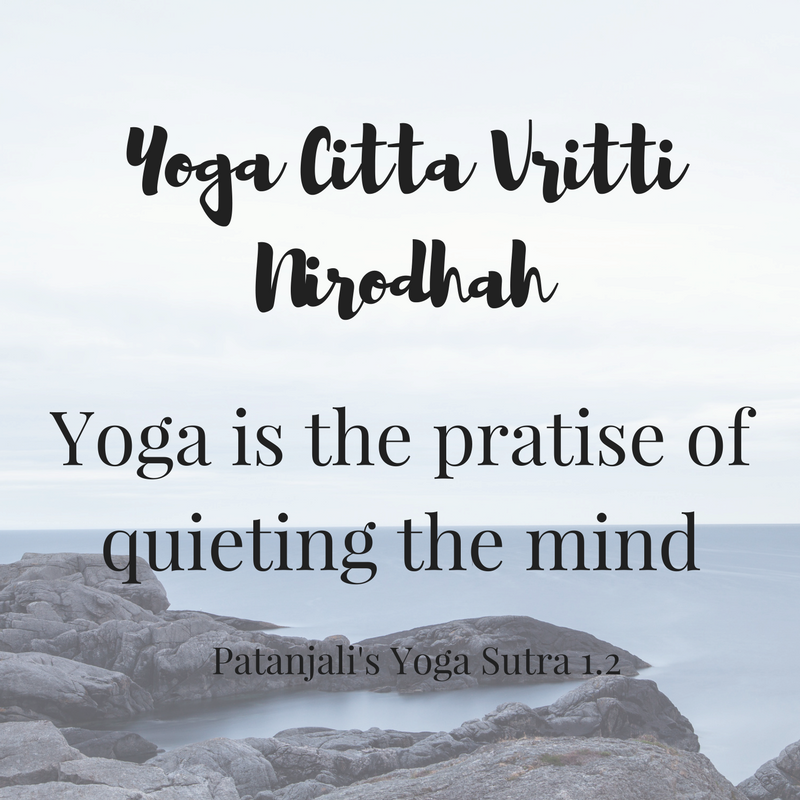
It is also healthy to remember that yoga is much more than the asana practise. Meditation, breathing practises and studying the philosophy are also yoga. The Sutra 1.2 reminds us that yoga is about controlling the fluctuations of the mind. Reducing yoga to represent just asana is also an assumption to be challenged. It is important for all of us as practitioners and teachers to be open to all sorts of questions and show by example how yoga works for everybody, and in every day life. Just the other day I heard a friend saying in all seriousness (in my own kitchen of all places) how “I’d be too scared to go to a yoga class because apparently all those movements make you fart.” I did my best to reassure that more often than not, farting does NOT happen, and even if it does, it is ok (but really, it is rare! I swear!) Yoga is actually very simple physically – it is our minds that play on us to think otherwise. And that mind stuff – well, lets refer back to Sutra 1.2.
Like I said in the beginning, of course there are plenty of people who have never seen or viewed yoga as something alienating, “not for them” or lacking diversity. Yoga is lived and practised in variety of places, outside the traditional shala or the modern studio. Yoga exists in community halls and in the clubrooms owned by various religions. Yoga is featured as an integral part of weekly training for athletes ranging from rugby to ice hockey to martial arts. Yoga classes are offered in ballet schools and physiotherapy clinics, for children at schools and for elderly people in the form of chair yoga. Of course there is progress to be made but there is equally a lot of evidence to demonstrate that yoga truly can work for all, regardless age, race, religion and gender.
The way I see it, the conversation about the lack of diversity in yoga teaches us about the opportunities there are out there to reach out and connect with the community. Think about it and share your thoughts. What is yoga to you and would you like to see more diversity in yoga? What does that diversity would look like to you? Join the conversation in the comments below!
Useampikin ystäväni on viime aikoina kysellyt viime aikoina miten ja kuinka joogaopettajaksi kannattaa kouluttautua, ja millainen se koulutus itse asiassa on. Tässä on jutun aihe joka on pyörinyt päässäni pidempäänkin joten naputeltuani useamman kerran samat vastaukset eri ihmisille nyt on hyvä aika koota oman vinkkini yhteen tekstiin.
Tietyillä suuntauksilla, kuten ashtangalla ja iyengar-joogalla, on omat koulutusperiaatteensa. Jos joogasuuntauden ”puhtaus” ei ole se tärkein kriteeri, valinnan varaa eri 200 tunnin koulutusten suhteen on todella paljon. Koska joogaopettajan koulutus voi olla hyvinkin hintava (= useita tuhansia euroja), kannattaa ihan ensimmäiseksi miettiä…
…Miksi minä ylipäätänsä haluan kouluttautua joogaopettajaksi?
Tämä voi kuulostaa tyhmältä kysymykseltä mutta on iso joukko ihmisiä jotka tekevät 200 tunnin koulutuksen ”vain” syventääkseen omaa joogatietouttaan. Ja mikäs siinä, jos aikataulut ja talous sen mahdollistavat. Voi olla kuitenkin hyvä tutkia myös muita vaihtoehtoja oman oppimisen kartuttamiseksi, koska erilaisia joogaretriittejä ja workshoppeja järjestetään Suomessa ja maailmalla ympäri vuoden. Jos haluat kokeilla kevyempää täysipäiväistä joogakokemusta ja/tai keskittyä vaikka yhteen osa-alueeseen ennen täysivaltaisempaan (ja kalliimpaan) koulutukseen sitoutumista voi tämä olla sopiva vaihtoehto. Lyhyempi kokemus on tietenkin myös hyvä tapa tutustua tietyn opettajan tyyliin, jos se ei ole ennestään tuttu.
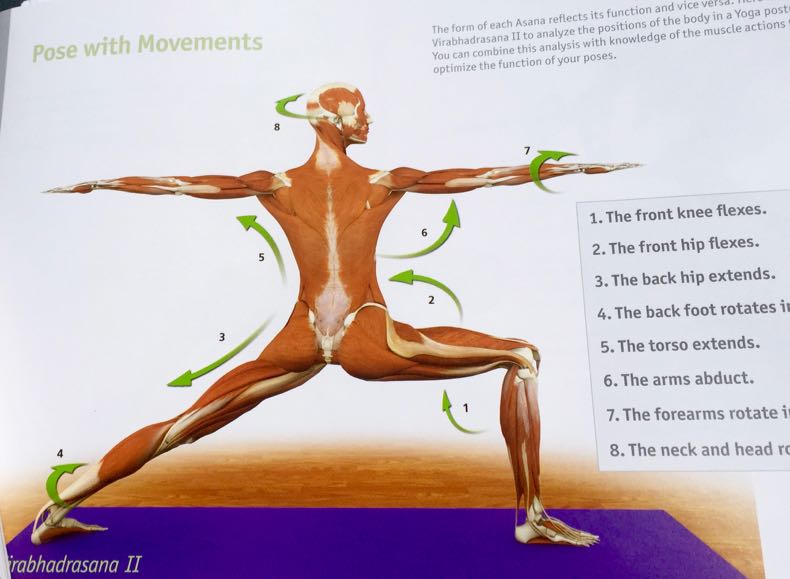
Mitä kaikkea soturi 2 asanassa oikein tapahtuukaan?
Jooga ei tarkoita pelkkää asana-harjoitusta…
…ja hyvällä joogaopettajalla on ainakin perustiedot joogan kahdeksasta haarasta. Kukaan ei vaadi täydellistä sanskriitin osaamista mutta esimerkiksi joogafilosofiaan tutustumiseen kannattaa suhtautua avoimin mielin – en tunne ketään joka olisi koulutuksen jälkeen katunut esimerkiksi jooga sutriin tarkempaa tutustumista. Eri koulutukset painottavat myös eri asioita (ja hyvä niin) joten jos olet varma että anatomia kiinnostaa enemmän kuin pranayama, kannattaa kurssin tarkka sisältö ja painotus selvittää etukäteen.
Mitä 200 tunnin koulutukseen yleensä sitten kuuluu?
Tästä päästäänkin yhteen (länsimaisen) joogan ja joogabusineksen isoimpaan ongelmaan: Kukaan ei valvo mitä koulutuksiin pitää kuulua ja mitä niissä oikeasti tapahtuu. Yritystä valvomiseen on tapahtunut (ja tapahtuu) esimerkiksi Yoga Alliance- ja British Wheel of Yoga-kattojärjestöjen puolesta mutta pelkästään se, että näitä järjestöjä on monia kertoo missä mennään. Erilaiset logot ja kirjainyhdistelmät koulutuksen ja ohjaajien perässä tarkoittavat lähinnä sitä, että he ovat maksaneet järjestön jäsenmaksun, ja kenenkään ei tietenkään ole pakko kuulua mihinkään organisaatioon, varsinkaan jos tuntuu että siitä ei varsinaista hyötyä ole. Eli siis, siinä missä opettajankoulutusta voi vetää elinikäinen joogi jolla on mahtavat kredentiaalit ympäri maailmaa, paperilla samankuuloisen kurssin voi pistää pystyyn myös naapurin Seppo fysioterapeuttivaimonsa kanssa.
Yksinkertaisuuden nimissä voidaan kuitenkin sanoa että useista koulutuksista löytyvät seuraavat moduulit: Fyysinen harjoittelu ja tekniikka; opetusmetodologia; anatomia ja fysiologia; joogafilosofia/etiikka/elämäntapa ja käytännön (opetus) harjoittelu. Kuinka paljon mitäkin aluetta painotetaan on paljon opettajasta/koulutussuunnasta kiinni joten eri koulutuksia kannattaa vertailla saadakseen hyvän kuvan siitä mitä on tarjolla (ja kuka opettaa mitäkin.) Ryhmäopiskelun ja opetuksen lisäksi kurssiin voi kuulua ”pakollinen” oma harjoittelu (omani vaati 20 kertaa saman opettajankoulutuksen käyneiden opettajien tunneilla käymistä, näiltä tunneilta piti saada vetäjän allekirjoitus todisteena) ja kirjallisia tehtäviä esseiden ja tuntisuunnitelmien laatimisen muodossa. Jälkimmäisiin meni itselläni ainakin helposti tunteja, tosin jämähdin aina lukemaan aiheesta ja varsinkin sen vierestä varsin laajasti.
I really have read all of these. Few times.
Mielestäni hyvään opettajankoulutukseen kuuluu myös itse opettamisen harjoittelu (practicum.) On eri asia olla ahkera ja ”hyvä” joogi kuin hyvä joogan opettaja ja kuten kaikissa asioissa, mitä enemmän asiaa harjoittelee (ja ottaa avoimesti palautteen vastaan) sitä paremmaksi siinä tulee.
Intensiivisesti vai ei, kotona vai ulkomailla?
Aika ja kieli voivat asettaa tälle omat rajoitteensa, mutta joogaopettajaksi on mahdollista opiskella todella monenlaisessa muodossa. Intensiivikurssit voivat kestää 21-28 päivää, kursseja löytyy myös modulaarisessa muodossa, osa yhdistelee viikon intensiivejä ja viikonlopun kestäviä jaksoja… Oma koulutukseni kesti kuutisen kuukautta jona aikana tapasimme joka toinen viikonloppu, aina 9-10 tuntia kerrallaan. Itselleni tämä sopi oikein hyvin koska se mahdollisti myös muun elämän ylläpitämisen, työssä käymisen ja antoi kunnolla aikaa keskittyä kirjallisiin tehtäviin. En ole varma onko pääni edes tehty pitkäaikaista intensiivikurssia varten, vaikka se tavallaan kyllä myös kiehtoo. Ehkä jonain päivänä…
Mietittävää ja tutkittavaa siis löytyy kaikille joogaopettajakoulutuksesta kiinnostuneille ja jos hyviä vaihtoehtoja on useampia kannattaa tietenkin kuunnella omaa sisintään: mistä kurssista tulee se fiilis joka vetää eniten puoleensa?
Millaista joogaopettajakurssia te olette ajatelleet tai jo tehneet, mikä kurssissa vetää/veti puoleensa ja vastasiko se odotuksia? Kommentoi alla jos haluat jakaa omia kokemuksia ja/tai sinulla on jotain kysyttävää.
Kovaääninenkin joogaopettaja voi tarvita mikrofonia.
Several of my friends working in the fitness and wellbeing industry have been asking me lately how and where is it good to do a yoga teacher training. Unless you follow a particular teacher and/or school of yoga (such as Ashtanga or Iyengar) there is an overwhelming amount of trainings out there and it can get quite confusing what they have to offer and how do they differ from one another. Below you can find some of the things you want to consider when making your choice.
What is your intention or rather, why do you want to do teacher training in a first place?
This might seem a bit of a silly question but the truth is, many people do a teacher training purely to deepen their knowledge and practise of yoga. And by all means, if you have the time and money for it, nobody is telling you not to go for it. However it might be useful to study other options if you “just” want to get more into your practise and enhance your knowledge.
Yoga retreats and workshop are organised pretty much everywhere, and there are many excellent yoga teachers who travel extensively making it easier to catch them in action. It is worth considering if a week’s intensive or a even weekend’s workshop focusing on a particular aspect of yoga is something you want to explore first, before forking out few thousand (or more) euros/pounds/dollars for your 200 hours full-on training.
An assistant to yoga teacher training can expect to spend a lot of time in certain poses, such as virabradrasana two.
“I’m mainly interested in the physical aspects of yoga…”
Well, a lot of us were, at least at the start. Some of us might still have a slight preference for asana practise. However, to be a good yoga teacher you will need to have a solid understanding of at least the basics of the seven other limbs of yoga in addition to the physical aspect. Approach them with an open mind and patience and you are very likely to be positively surprised. Or, choose a training with an emphasis on purely what you are interested (you might be missing out on something wonderful though…)
Talking of which…
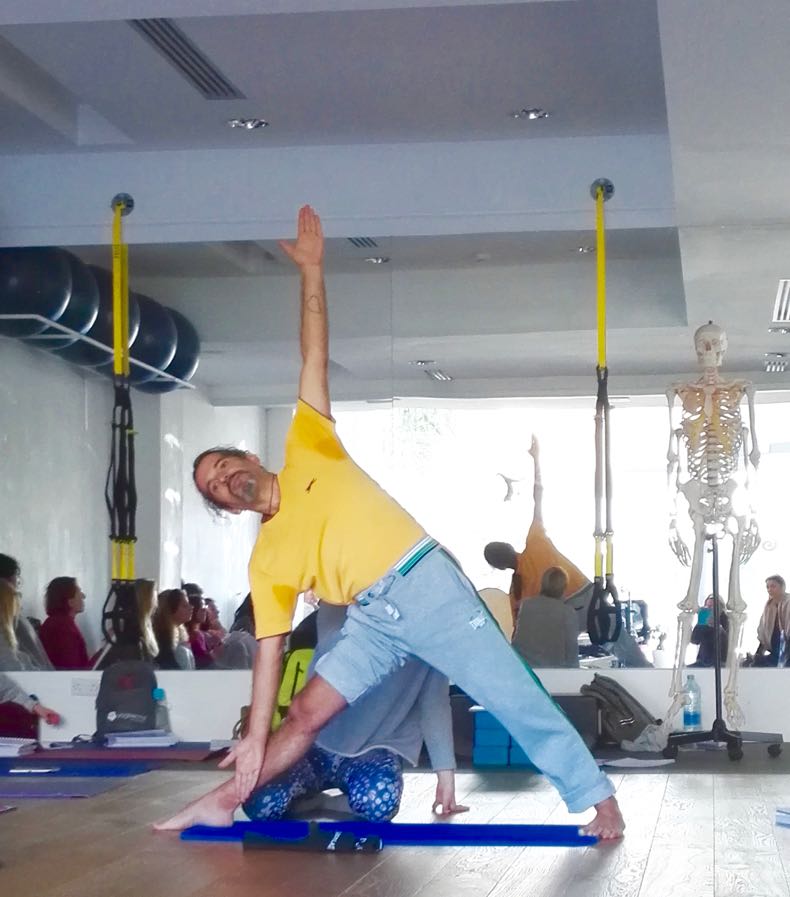
…or trikonasana
…what does the training consist of?
It is no secret that there is a big problem with modern (Western) yoga teacher trainings in general: There is no one governing body for yoga teacher trainings, despite various alliances and groupings and, well, attempts of having some kind of uniform standards. Bluntly put, your training can include be whatever the course director has decided to teach to you, and the credentials of your teacher are not really controlled by anybody (regardless how many “RYT”s they have after their name.)
However, many teacher trainings do have the following modules included in some sort of form: Techniques, Training and Practice; Teaching Methodology; Anatomy & Physiology; Yoga Philosophy/Ethics/Lifestyle and Practicum. What emphasis is given to these modules can vary a lot from training to training and it is for you to find out and think what do you want to focus on. Remember that in addition to taught parts you might be required to complete certain number of self-practise in the style of yoga you are training on (in mine it was 20 hours in addition to the classes taken in-training) and complete written assignments.
I really have read all of these. Few times.
This might all sound a bit overwhelming and well, chaotic, so let me put it this way: I know several yoga teachers who have done two or more 200 hour teacher trainings, all in different schools, because each of them had something specific to offer. The homework is there to deepen your knowledge, for your benefit. As for the teaching practise, whilst I for one found it quite daunting at the beginning, we are talking about yoga TEACHER training and it is one thing to practise yoga and entirely other one to have the skills to teach yoga to others. Being a student of yoga is not linear path and at the risk the risk of saying a massive cliche, it IS all about the journey.
Learn to teach, teach to learn
Intensive or extensive, home or abroad?
There is a whole range of options available, in various languages. You can do a 21-28 day intensive on a paradise island, a modular inner city ones (and sleep in your own bed) or a training that is a combination of intensives and shorter workshops. I did mine over 6-month period, with intensive weekends (Sat-Sun) every other week. It worked well for me as it allowed a lot of time to read, practise and really let everything sink in, AND I still got to maintain a somewhat normal life too with work and friends. I probably would have found a intensive retreat type of training a little bit too much at that time, yet part of me finds the thought fascinating… so who knows, maybe for my next training I’ll try it out?
I hope this was of some use for you. At the end of the day, nothing beats your own research and gut feeling when it comes to choosing the YTT suitable for you.
As always, I’d love to hear from you so feel free to leave a comment below if you want to tell about your experiences, add something that was not mentioned in the text and/or ask something.
Sideplank, dolphin plank… sometimes yoga teachers do a lot of planking and it is not a bad thing.
The Third Open Yoga Day Cyprus is coming up on the 8th October, hosted this time in Larnaca, under the theme of Satya, truthfulness. To learn more about this free & open for all event I sat down with two of the organisers, Mayka Sabova and Marilena Shyama Shakti, for a chat.
This is the third year this event is being held in Cyprus. Where did the initial idea for the Open Yoga Day Cyprus come from and who are the people behind it?
Inspired by similar events around the world, the Open Yoga Day Cyprus was founded by Marilena in 2015. There are many community events in other countries that offer various kinds of free services to citizens. The main principle of these types of events is to find enthusiastic and like-minded people who are willing to offer selflessly to others, without expecting a tangible reward in exchange.
These days it can be rare to find people who have the ability to offer selflessly, people who are committed, loyal and driven to dedicate their free time and energy for creating something for others. Yet these are the qualities of the people behind the OYDC. We share passion for yoga and we aim at bringing it to as many people as possible. Alongside our founder, we are a small group of volunteers (mostly yoga teachers and practitioners), who share the common vision and are willing to walk an extra mile for the benefits of others. We operate with the support of local municipalities and every year we have few private sponsors and supporters who offer financial or other assistance.
In addition to fostering a community spirit and sharing the passion for yoga, what is the main message you wish to promote with the Open Yoga Day Cyprus?
Our vision is to promote wellbeing through yoga, while contributing in building healthy communities. The more people practice yoga, the better our society can become. We want to offer an opportunity to everyone, regardless their level of physical fitness, age or familiarity with the practice, to try yoga, enjoy the outdoor group practice and cultivate the sense of belonging and unity. The world has become more and more selfish with people focused strictly on their own lives without considering the others. With this even we want to encourage people to interact. In this sense, we use yoga as a tool for social interaction, while spreading the message of selfless giving, togetherness, sharing, love and unity.
These are also the reasons why the event is organized every year in a different location across the island. This way, the people already familiar with the event mix with newcomers and the message can reach more people.
This is the third time the Open Yoga Day Cyprus is taking place. Have you noticed any changes in the yoga community in Cyprus during this time, and has that influenced how you are setting up the event this year?
We noticed that more and more people have started practicing yoga over the recent years, and more and more of them have become yoga instructors too. This has not influenced the way we planned our 3rd edition, but it will influence the future events to come. For instance, we would like to bring new instructors closer to the more experienced ones, as well as the new approaches of teaching yoga with traditional ones. In yoga we learn to go with the flow so we try to go with the flow of changes, the evolution of the yogi community and most importantly, with the flow of people so we can all open up, learn, feel and grow further.
How did you choose Satya, truthfulness, as the theme for this year?
Every edition of the event has a set intention. The power of collective intention is immense and when we do things, whatever they are, with an intention, we deepen the purpose of any activity. This year our intention is Satya, truthfulness. Satya was chosen by the founder of OYDC, Marilena Shyama Shakti, as the theme of this year’s event after she went through the gift of being pregnant and giving birth. For her, the experience of giving birth to a new life was so true and real and, of course, deeply personal, with truthfulness present in every moment. Whether it was the eye contact, reactions or the sounds of the baby, all of these profoundly impressed Marilena, as it made her realize that human beings are born so pure and it is our duty to preserve the ability to stay innocent and true to ourselves.
I don’t want to get ahead of things as this years’ event is still ahead of us, taking place on the 8th October, but can you already talk a little bit about your future plans?
We wish to bring yoga community in Cyprus closer together by encouraging those who share our values to offer their services and contribute in any way they can. For this purpose we would like to boost our reputation as a non-profit initiative through the annual event, and perhaps with even more events in the near future. We promote yoga, which indirectly benefits all yoga teachers across the island as we create potential audience for them. Therefore, we would like yoga teachers and instructors to bond and cooperate through our events in order to create an effective and efficient yoga hub.
We are also collecting data about yoga instructors and centres across the island, with a vision to create a central online yoga platform with directories and many other features. Everyone who wishes to give something back to the community and is ready to offer selflessly can reach out to us and contribute with their talent, skill or service.
Thank you very much for your time Marilena and Mayka – I am sure this years event in Larnaca will be even bigger than the events of the past two years. I’ll see you in Larnaca on the 8th October!
If you found my previous post interesting, there is more! In a documentary entitled “Who Owns Yoga?” the Al-Jazeera correspondent Bhanu Bhatnagar “explores the impact of our modern obsession with one of the world’s oldest physical and spiritual practises.”
The documentary is only 50 minutes long. It features well established names from the yoga world in the West and East, such as Sharon Gannon and David Life (founders of the Jivamukti Center in NYC), Sri Dharma Mittra, Sadhguru Jaggi Vasudev, Tara Stiles and many more. Check it out, and why not leave your thoughts about it in the comment section.
Joogan suosion kasvaessa se saa jatkuvasti uudenlaisia muotoja. Jotkut niistä saaattavat tuntua hyvinkin kauaksi jalostetuilta versioilta siitä joogasta josta Patanjali kirjoittaa noin 5000 vuotta sitten kirjoitetuissa sutrissaan. Ja mitä mieltä olet joogakilpailuista? Niin absurdilta kun sanat ”jooga” ja ”kilpailu” kuulostavat samassa lauseessa, näitä kilpailuja järjestetään useissa eri maissa jo useamman vuoden ajan.
Kirjoitin joogakilpailusta laajemmin englanniksi jutussa jonka voit lukea täältä. Joogakilpailuista ja muista joogan muodoista keskustelee myös Al Jazeeran toimittaja Bhanu Bhatnagar vuonna 2014 ilmestyneessä dokumentissaan ”Who Owns Yoga?” – Kuka omistaa joogan? 50 minuutin aikana Bhatnagar käy lävitse eri joogailmiöitä ja haastattelee eri tyylien joogaopettajia ympäri maailmaa. Vuoronsa saavat joogakilpailijoiden lisäksi kristillisen joogan opettaja, nyrkkeilyjooga, Sri Dharma Mittra, muutama intialainen guru ja moni muu. Suosittelen dokumentin katselemista kaikille jotka ovat kiinnostuneet joogasta ja siitä mitä se edustaa eri ihmisille.
Mielenkiintoisen artikkelin joka pohdiskelee näitä samoja asioita suomeksi löytyy myös täältä.
Few months ago a fellow yoga teacher posted on Facebook an article about whether or not yoga should be considered as a sport that triggered my interest. For most of us the mere idea of talking yoga and sport, let alone yoga as a competitive sport, seems outrageous. The steady breath, the journey for emotional and maybe even spiritual wellbeing and inner peace that we associate with yoga (or at least, our yoga teacher would like us to associate with the practise) just seem almost completely at odds with what we may think of as (competitive) sports.
But how do we classify what is a sport in a first place?
In dictionaries “sports” is defined both as “An activity involving physical exertion and skill in which an individual or team competes against another or others for entertainment.” and as ”a physical activity (such as hunting, fishing, running, swimming, etc.) that is done for enjoyment.”
In short, sports may or may not be competitive in nature. All it requires is that there is some sort of physical effort. We know that the physical aspect of yoga, asana or posture, is only one of the 8 limbs of yoga as defined by Patanjali. But isn’t fair to say that is the physical practise that many people see as synonymous to “yoga”? To push further, asana practise can be very physically challenging, and the words “effort and ease” are mentioned in the Yoga Sutras: Sthira sukham asanam, yoga posture is an expression between effort and ease.
Mari Dickey at the 2010 Bishnu Ghosh Cup. Photo by Mike McInnis.
“There is no way that sutra can be interpreted that it is ok to have yoga as a competitive sport!” you might be thinking at this point. But even the officials in India, the homeland of yoga, have not been sure where (or how) to place yoga. In September 2015 yoga was recognised as a sport in the Country, only to be derecognised 14 months later, in the late 2016 with the Indian Sports ministry stating, “…Yoga has various dimensions/arms in which competitions are not possible.”
Definitions aside, it is also interesting to ask…
…Who would consider yoga as a sport?
Quite a few people actually, I discovered when doing research for this piece. The International Federation of Yoga Sports website tells that yoga competitions have existed in India for some 2000 years, and competitions with a focus on asana have existed since up to 200 years. The current form of yoga asana competitions on an local, national and international level have existed since 1989, when The First World Yoga Cup and World Yoga Championship was held in 1989 in Uruguay and The First International Yoga Asanas Championship in India.
Especially in the USA the popularity of these competitions has grown over the years but “yoga as a sport” is a rising phenomenon with several organisations holding national and international competitions and regulating their rules. The biggest one of these entities, The International Federation of Yoga Sports, acts as a governing body for subdivisions in 32 countries.
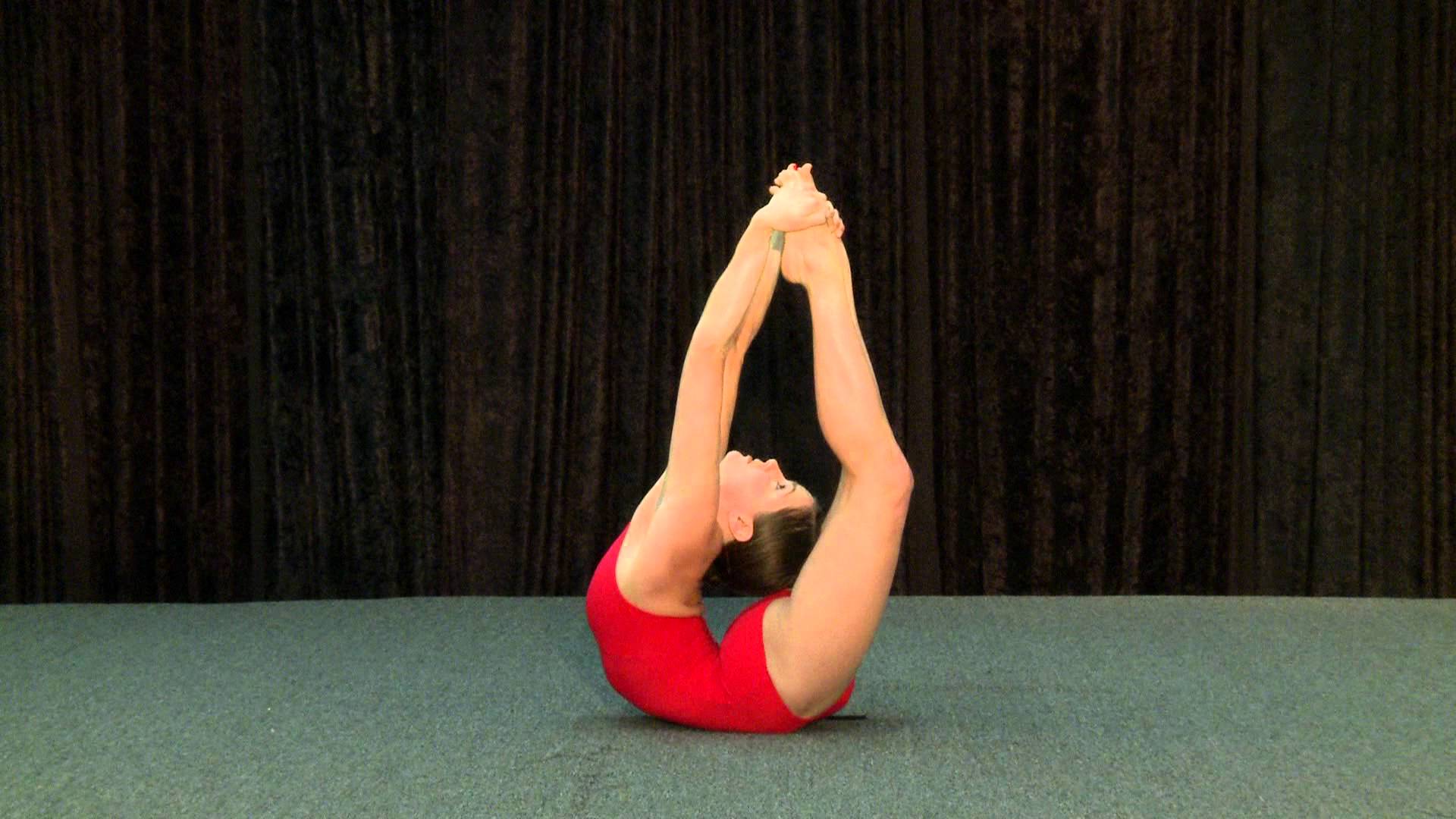
Sarah Wells, International Yoga Asana Championship in 2012. Still from a YouTube video.
“Yoga is about catching the stillness, even in competition”
Joseph Encinia, the president of USA Yoga, said these words during an interview for the US online magazine Racked last year. In most yoga competitions the participants have to perform a certain number of pre-defined asana and hold them for a certain period of time (in USA Yoga competitions at least 3 seconds.) The postures are of often some sort of variation on a forward bend, a backbend, a stretch, and a twist, either chosen from a list of options or a yogi’s choice. Some organisations also test their competitors on the history of yoga, but the execution of asana to a certain pre-set standards is always present. In the Racked interview Encinia explained how “If a yogi’s alignment is off, we’ll hold it against them, but we’re also watching for balance and control of the breath.”
Joseph Encinia, Demonstration at the 2012 USA Yoga Asana Championship
Balance and breath are mentioned, that makes these competitions a bit more “yogic”, right?
Well, maybe not so much. For starters, whose definition of alignment are we talking about? There are dozens of schools of yoga out there these days, some emphasising the anatomical alignment as the paramount of any asana, some much less so and some that barely even mention alignment in their classes. Furthermore, even if you go to two different classes of the same school of yoga, you still might hear things that not 100% identical. And lets not forget that we all have different bodies with different proportions, and I for one think that to get the most out of yoga, it is best taught in a small, if not 1 to 1 setting, where you can pay attention to everybody individually.
This, together with the perceived lack of spirituality, emotional benefits and relaxation associated with yoga, are among the biggest critical comments against yoga as a competitive sport. Of course yoga teachers and studio owners need to make a living, and for that we need students to come to class. Yet, the absence of the “need to perform” feeling, and lack of comparison to others is something that many of us hold sacred and at the heart of yoga. There are also many other ways that can inspire and motivate us with our practise, and as to catching people’s interest in yoga, are these competitions really representative in any way of the science and art of yoga, thousands of years old?
Each to their own and as yoga continues to grow in popularity, it is always interesting to hear what attracted people to come to class in a first place and what image of the practise they might have before they step on the mat for the first time. I am going to continue my exploration on all things under the umbrella of yoga this Friday in a form of a documentary screening at a friend’s new yoga studio. I might write more around this topic in the future but in the mean time, let me know what you think about the following:
Is yoga a sport, and would you like to see (or participate) in an asana competition?
The pictures are in this post are not mine. The 3 YISF pictures are stills from competition videos available on YouTube.
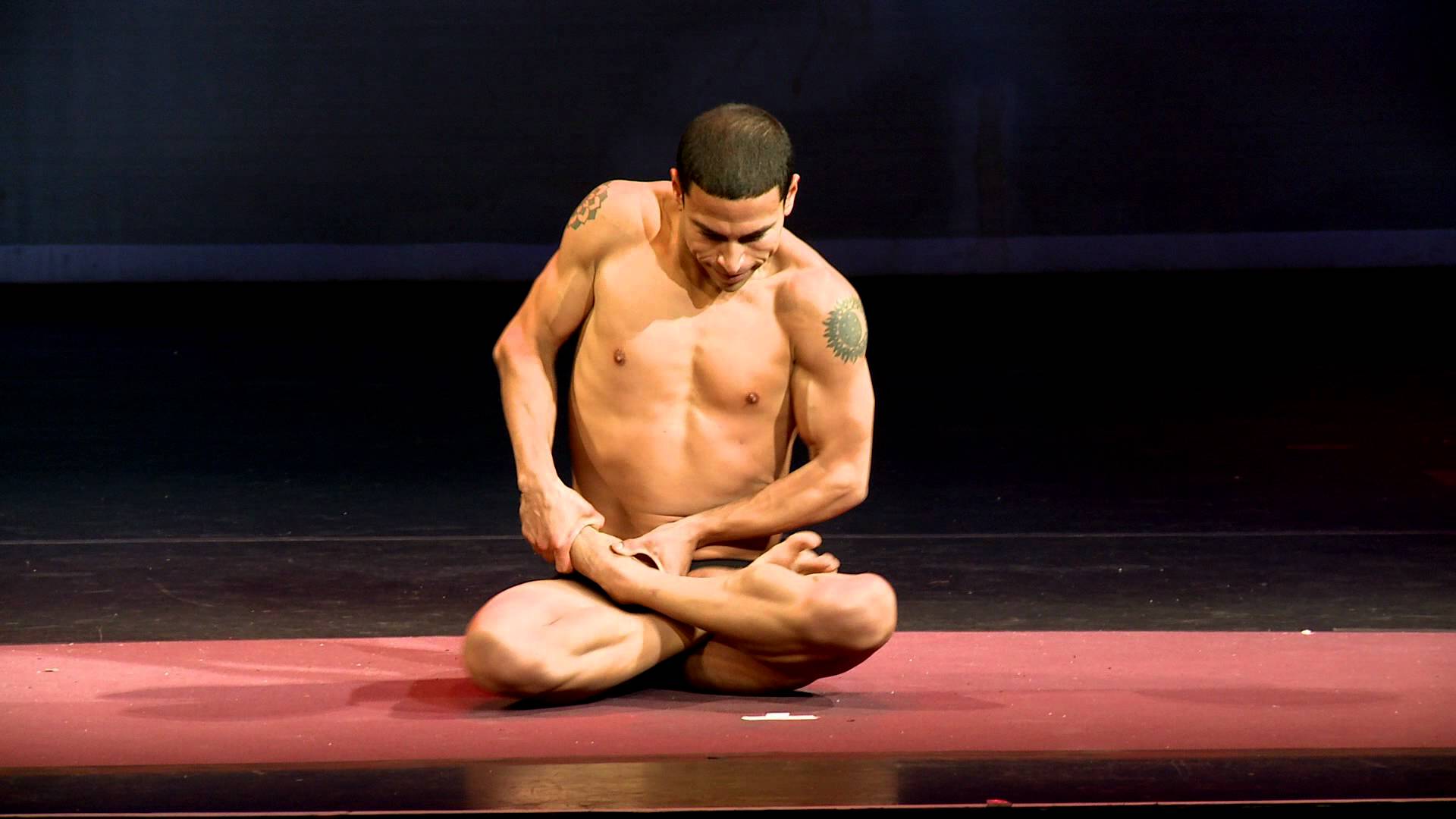
Juan Manuel Martin Busutil Demonstration at the 2013 International Yoga Asana Championship