Gratitude: The quality of being
thankful; readiness to show appreciation for and to return kindness. (The
Oxford Dictionary)
Gratitude has become a bit of a buzz word over
the last few years. Walk into any self-respecting stationary shop and you will
find at least one (if not ten) Gratitude Journals on its shelves. On Instagram,
under the tag #grateful you find a whopping 27.8 million (and counting) posts,
with #grateful-with-namaste-hands, #gratitude and all imaginable word
combinations all having tens of thousands pictures tagged. The message is clear: Gratitude is popular, it is good for you and we are
better off expressing it often.
There is obviously is nothing new here. Already Cicero, Statesman and Philosopher of the Ancient Rome noted “Gratitude is not only the greatest of the virtues, but the parent of all of the others.” Fast-forward few thousands year, several academic studies have confirmed that there is a clear association between gratitude and higher levels of wellbeing. Greater resiliency in the face of adversity, better sleep and protection from stress are all linked to the ability to recognise and celebrate all the things we have in our lives to be appreciative for.
“Gratitude is not only the greatest of the virtues, but the parent of all of the others.”
Cicero
About a month ago I read an article that reminded that it is however important to maintain a common sense attitude towards gratitude. As good as it is to be thankful, it should never be used as a justification for any type of bad behaviour or situation. “Oh at least I can be grateful for having a roof over my head” might well be true (and something to genuinely be grateful for) but it does not make objectively bad situation, such as being a victim of domestic abuse, any better. And whilst something might be better than nothing, it can also be sensible to stop and think if that something is really needed. Maybe its absence can give space to something new and improved, something to be genuinely grateful for?
For many of us 2018 was a bit of a funny year. Things might have started,
they got going – and then stopped. We might have had a lot of shifting, transforming
and re-evaluations happening in our lives and with those close to us. The
global climate, both in the literal and figurative sense, has not given us much
reason to celebrate either.
Yet, we have made it so far in the year. Even if the year has felt like dragging your feet, now it is the perfect time to sit down and reflect on what has happened. Write down the small and the big things of the year you are happy and grateful for, as they come to your mind. One reflection will lead you to another one and I would not be surprised if you find yourself having made more progress and more fun memories than you thought you had. Start writing that list, keep it going over the next few days and take your time to be grateful for every single item on it. It will do you good – it’s scientifically proven.
A prior version of this text has been published in the Think Trigg blog.
Christmas is coming, as you have surely realised by now. It is a season of high expectations, self-inflicted pressure, being surround by more than usual amounts of stuff everywhere and various parties. Unfortunately for many this is also the season of feeling ill or run down, the symptoms varying from being slightly sniffy to a full blown fever and several days of bed time. So how to survive December, once again?
Because we all love lists and advice, here’s my top tips to survive what is left of December and its aftermath.
1. Use hand sanitizer and wash your hands at every opportunity
Sounds obvious and most of us probably do this already (thank you for that.) But really, I mean washing your hands all the time. The bigger the city, the more the germs and thus more opportunities to catch some nasty streak of a bug. I have taken to washing my hands the first thing I arrive anywhere and the last thing I do when I leave the place, including my own home. Sounds exaggerated? Maybe but I have also been feeling pretty ok over the last weeks.
I am not alone on reminder people about this either. I recently visited a new gym and counted ten (yes, 10) hand sanitizers in the ladies changing room alone, plus several in the reception area and in the studios. They know too.
2. Supplements and food you put in
Now I am the first one to admit I have no particular interest in talking about food or supplements. We all know that Vitamin C is beneficial and we should up the intake when ill, either through food or supplements. In addition, I usually take extra zinc in the winter to help combat against viruses and unwanted bacteria. A yoga teacher friend of mine swears by Olive Leaf Extract and after I learned the capsules also contain zinc I switched to those. So far, so good.
Naturally the quality (and quantity) of food we put in has a big impact. December tends to be about excess and indulgence to an extent but I try to counterbalance that by making sure I have a healthy breakfast, keep up with my fruit and veg intake and drink loads of water and herbal teas. Winter is also the citrus season in the Southern Europe. I try to make sure that my mandarins, lemons and oranges come from Cyprus, Greece, Spain and Italy, rather than go for berries and other fruit coming from another continent.
3. Move – and Rest
Cold weather, rain and darkness are not the greatest motivators when it comes to exercise but even a little bit of movement goes a long way. I used to be very sceptical of 45 minute yoga classes but these days, knowing how busy things can get, I happily throw my yoga purity mindset out of the window – everything counts for something and if all you can squeeze in is a 45 minute class, so be it.
If you are into measuring your fitness performance, it might be an idea to try and mellow down your normal routine, especially if you are feeling the end of the year tiredness creeping in. Moving should be a pleasure, not a punishment. Just remember, even the word “asana” translates as a “comfortable seat.”
Finally, if you feel like just resting, rest. Have baths. Sleep. It is like putting money in the Bank (of Health.)
The Sanskrit word “asana” translates as “comfortable seat.”
4. Go online for your purchases…
…or even better, don’t buy any material things at all. Give services, charity items and your time. Seriously, it is pure madness to even try and make it to the high street, especially knowing that on the 26th everything will be heavily discounted.
I am not a Grinch, I am just trying to get to the essence of the Christmas. Peaceful mind, togetherness and all that.
…And The Beyond Part?
Recovery. As important as getting ready and being in the moment. As a part of the “survived December” plan I will be looking into the following:
Colonic cleansing, because they are good for you! Especially after a period of having digested (or not) probably more and/or heavier food than usual. I see Suki at The Colon Whisperer.
An introductory offer pass to a new yoga studio: A perfect way to try new classes. Plus, the 7-14 day window is a good motivation to make it to few more classes than maybe usually. If cold is not your friend and you are London based, why not take up on the hot yoga offers at Hotpodyoga or Light Centre Monument.
Facial or natural face lift massage. To get a bit of the potentially lost glow back.
Rest and baths, as before Christmas. Whatever you do, always remember to rest.
Happy holiday season everybody, stay warm and safe!
Last weekend the 2nd edition of the Balance Festival took place at The Old Truman Brewery in East London, just off Brick Lane. Last year it attracted 8000 visitors over 3 days and the organisers said the targer for this year was to double that.
I cannot tell if that target was met but what I can tell you it was massive, super well organised, a bit overwhelming and a lot of fun!
Unfortunately I did not have a chance to take part in many of the fitness and yoga classes available but there was so much else to see! I have never seen so much plant based products in my life! I wish all the best success for all the businesses that were present: I would love to see your products more prominent on the supermarkets, as well as with the independent vendors!
Now let the pictures tell their story.
Thank you Balance Festival for an awesome weekend! See you in 2019 I hope!
I had a chat about yoga books with a friend yesterday and this old post of mine came to mind. As nothing has changed since I first published this text, here you go again, for those who did not see this the first time around.
Yoga books are nothing new. The first systematic presentation of yoga in a written form, the Yoga Sutras by Patjanhali is said to dated circa 400 CE (I am aware there is debate around this date but I am not going to dwell any deeper into it), whilst another renowned yogic scripture, the Bhagavad Gita dates an estimated 500 BCE.
There is a ton of yoga books around and it can be hard to pick just one or two. Here’s a list of some of my favourites. Some of these I read almost every day, some less so but they have all served a purpose of some sort in my yoga studies. If the list looks familiar it is because each one of the books is on the Amazon’s ”Top 15 or so Yoga books” list and many are teacher trainer reading staples. Hence expect nothing crazy original but if you are newer to yoga literature this might be helpful.
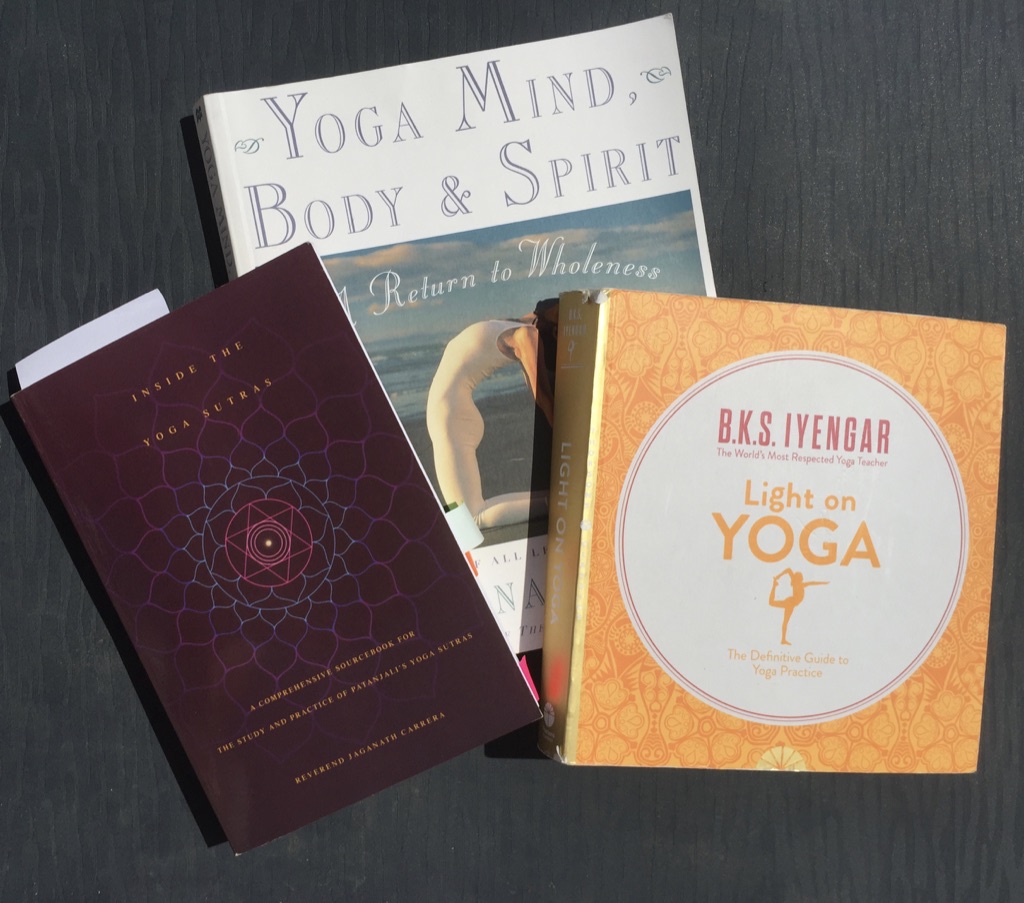
A lot of people approach yoga through the physical practise. I would however encourage any student of yoga to have a look at what lies in the roots on the asana practise. A good place to start is the Yoga Sutras of Patanjali. These are the basic teachings of yoga are described in short verses called sutras, which are organised in four padas, or chapters. As reading a direct Sanskrit translation might seem a daunting task, there are luckily many textbooks offering an approachable commentary and interpretation of the sutras in a easy-to-digest form. The textbook I have is authored by Reverend Jaganath Carrera and it is called ”Inside The Yoga Sutras.”
Several books combine philosophy, breathing technique and asana practise in one. A classic is B.S.K Iyengar’s ”Light on Yoga – The Definitive Guide to Yoga Practise.” The books have fantastic black and white photo illustration and the descriptions on how to get into each pose are very detailed. On a completely superficial level, the 2015 edition I have is also beautiful to look at. The only minus comes from it being a very heavy for a paperback so it is not the best travel read.
Donna Farhi’s ”Yoga Mind, Body & Spirit – A Return to Wholeness” is another very complete book. In all honestly I found this one a bit hard going. However, the illustrations and photos are very clear and I like that the use of props, such as chairs, blankets and blocks, is incorporated to offer different types of modifications. It also has very wide margins for your own notes which is a plus.
My favourite book on this list is probably T.K.V. Desikachar’s ”The Heart of Yoga – Developing a Personal Practise.” Written in a conversational manner (in fact, part of the book is in an interview Q & A format) the book is a practical approach to various elements of yoga: Asanas, breathing and meditation. It also has a chapter on the Yoga Sutra’s with Desikachar’s own translations and comments.
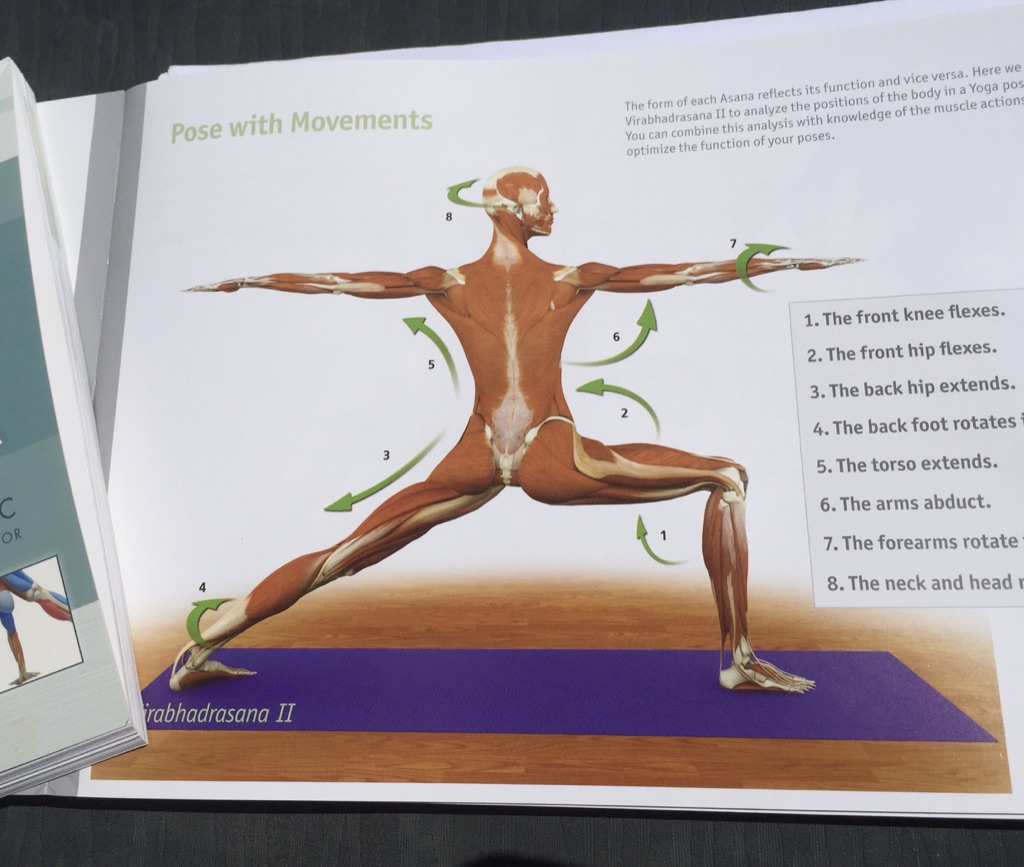
There are of course plenty of books focusing solely on the anatomy side of yoga. Leslie Kaminoff & Amy Matthews’ ”Yoga Anatomy” (I have the second revised edition) is the one of the most recommended ones. In every page it offers a clear illustration of inside the asana (see the photo to get an idea), a classification, actions for joints and muscles, a word about the respiratory mechanism applicable to that pose and additional notes. A perfect go-to book when you want to check how your body works in a given asana, I use this book several times a week.
I also have two books of Dr. Ray Long, ”The Key Muscles of Yoga” and ”The Key Poses of Yoga.” I must admit that I first got excited by these books due to the big illustrations that take up most of the pages. Anatomy can be difficult and the pictures make it more approachable! I find these books (unlike the ones listed before) are also usable during actual practise due to simple layout.
What are the yoga related books you have read and would recommend?
Whilst we are free to make small and big resolutions any time of the year – or day, for that matter – The New Year is very much seen as THE time to make a change or few in one’s life. Just look at the amount of people you see at the gym during the first two weeks of January or alternatively, how pubs and bars seem emptier, especially mid week.
The issue with resolutions is not the resolutions themselves – that is often the easy part. The real difficulty is how to stick with them after the initial days or weeks when the first enthusiasm and heightened sense of self-discipline have started to wane. Here are few ideas on how to get through the difficult patches when all you want to do is not to stick with your ideas.
First one is the favourite of every life- and career coach (and a true fact too): If you have a big goal to attain, break it into several smaller ones. Of course you do not want to lose the sight of the end goal but rather than start feeling overwhelmed by it, approach it in smaller chunks. Just keep thinking how many rivers make an ocean and trust that with several small goals the big one will come, in due time. And if at some point you veer off the course, remember it is just temporary: One lost battle does not mean you are losing the war either so get back on track as soon as you can and carry on.
Use old school squared paper and pen!
A start up magazine I bought for my latest flight had a tip that apparently originates from the comic Jerry Seinfield: using a piece of squared paper (placed somewhere where you can see it easily and every day) and a pen to track your daily progress in regards to whatever it is you want to achieve. Be it about meditating every day or not drinking for a month, the daily cross on the paper releases the dopamin in the brain as you gain a sense of satisfaction from tracking your progress in a visual way. This can also help you to get through those moments of “I will skip it just today…” as you do not want to interrupt the flow of the Xs on your square paper. A gap in a row might be just the thing to boost your willpower – and help you to get one step closer to your goal.
Use a planner, as fancy as you want!
I am one of those people who loves lists, mind maps, journals and coloured pens. Which is all fine and well but to truly make progress you need some kind of a plan and a follow up system too. Otherwise it is very easy to get side-tracked by the daily grind whilst certain items on your to-do list keep on being pushed to a “better time” and goals made become more and more elusive.
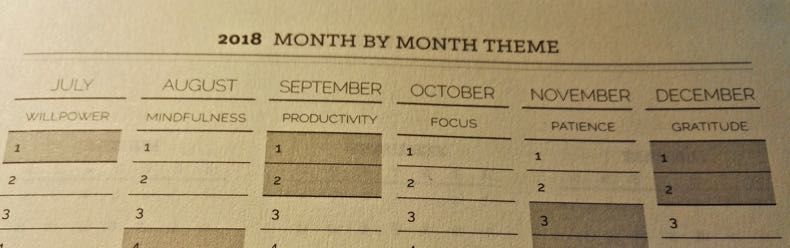
Last year I used a bullet journal that worked pretty good – but not good enough for me not wanting to try something else for 2018. There are several ready-made planners out there and I settled to a UK designed one that lays out a theme for every month, helps you to classify stuff you want to do from urgent and essential to nice-to ones, and offers space for reflection before and after each month, with already laid out questions! A perfect solution for those inevitable moments when motivation is low and the last thing you feel like doing is to think at all. I got the same planner for my flatmate, in the name of peer support and well, keeping each other going.
EDIT. I have gotten a lot of questions about what this planner is. It is called Trigg Life Mapper. This is not a commercial collaboration, after few days of researching I settled to ordering this one and so far I like the look of it. The pictures of this post are from Trigg Life Mapper.
It is of however important to remember that life should not be only about performance and accomplishments. Plenty of scientific studies have proven that for the wellbeing of the brain and body alike it is important we spend time each day to rest and be still, without any pressure to achieve anything. It is good from time to time to also allow ourselves to get bored as boredom has been proven to feed creativity in adults and children alike.
Our New Year resolutions should not however become an obsession that dictates everything we do during the day. Not everything can be controlled and a gap in the row of Xs on a square paper is not the end of the world. The real strength, one that we all do have in ourselves, is to face difficult moments as they are. It is ok to get annoyed and sad but equally important take on board any lessons to be learned and to move one. There are usually many ways to reach our goals and adjusting the plan on the way is entirely possible.
What type of methods do use when planning your goals and how to achieve them? Leave a comment below!
The below text is from yesterday morning, something I wrote straight after the yoga class I had taken. It was one of those moments when the right words to express what had until then been just a slightly uncomfortable feeling came to me and demanded to be written down straight away. So I sat down and typed everything on my phone, in the fear that I would lose the essence of what was, and posted it on Instagram. As Insta is not the most comfortable platform for longer reads, here is a repost.
I did a vinyasa flow class this morning. The type I tell myself I am not too keen on, the type that I feel requires too much effort. “It’s dark, cold and almost the Winter Solistice”, I have been telling myself (since start of November), “In order to take care and nurture myself I better to just yin and restorative classes. And maybe something with chanting. No vinyasa.”
However I have some free classes to use as I volunteer at my local studio in exchange of yoga classes (karma yoga!), and somewhere in the back of my mind I knew I needed to venture out my comfort zone to cheer myself up/give myself a good kick on the backside. See, I am a typical Cancer and being moody and withdrawn comes to me very easily.
So I walked to this vinyasa class, chosen because it was only 60 minutes, not the usual 75. I like to threat carefully, hedge my bets, and this tells you how much I was expecting to, well, not enjoy the class.
I lie down on two blocks to open up the upper body and make my way up to seated when the teacher walks in. After the usual “who is new to yoga/any injuries” questions, the first thing she says is to use the practise to look back at the year and reflect on the things and people we are grateful for, as “gratitude gives us perspective.”
BOOM! Whilst I always aim to be realistically aware and grateful for everything and every day, so often I have been struggling (and feeling bad for it) to really genuinely FEEL it. The feelings of sadness and hopeless often seem to take the upper hand, no matter how hard I try to chase them away. But here was the invitation to try again this morning, an opportunity to let things come up on their own – when I least expected it. And maybe it was because of that, because I truly had no expectations, this morning I had one of those practises that people talk about with glowing eyes: Everything came easy (although the practise was not physically easy), with joy and gratitude for my ability to move, in that space, in this time, at that very moment. And for everything else. It was the type of yoga practise non-yoga people probably think we have all the time, and those with a regular practise know does not happen very often.
It is a weird feeling when things come up on their own, when you observe without forcing it, yet being so fully aware. Yes it has been a hard year. But it has also been a year of conscious effort to figuring out my s**t even when I really did not want to, learn about the whats and whys, causes and consequences. Cleaning out the past and making space for the new, in all meanings of the term. Accepting that going forward sometimes means you first need to stop and even go backwards and that is ok.
We need to contract in order to expand, like the lungs contract and expand when we breath.
It’s been a year of horrible losses and bottomless sadness, reconnections, letting go – some things unwillingly, some because it just had to be done. It has also been a year of plenty of happy moments, deeper connections, and reconnections, and being incredibly lucky with everything I have had and everything I have.
And this morning, in that vinyasa class, when I least expected it, I feel genuinely grateful for it all.
By now most of us have well and truly realised December has arrived. Not necessarily from the weather (as this day and age this time of the year can just as well be white, green or gray) but from the slightly frantic energy in the air. The Christmas ads are on full gear, invitations to various festive parties are coming from all directions, and the general anticipation of Santa/days off/opportunity to just sleep-eat-sleep is tangible. While all this is happening to the soundtrack of non-stop Christmas jingles, illuminated by various Christmas lights everywhere, and often fuelled by more drinks and nibbles than recommended and reasonable, it is no wonder how the end of the year can leave us a little weary and run down, despite all the fun.
Below are few of my tried and tested tips on how to stay sane, healthy-ish and keep reasonable energy levels all through December. A little bit of effort and self-discipline is required but it guarantees you will be able to make the most of the season.
Keep up with your water intake
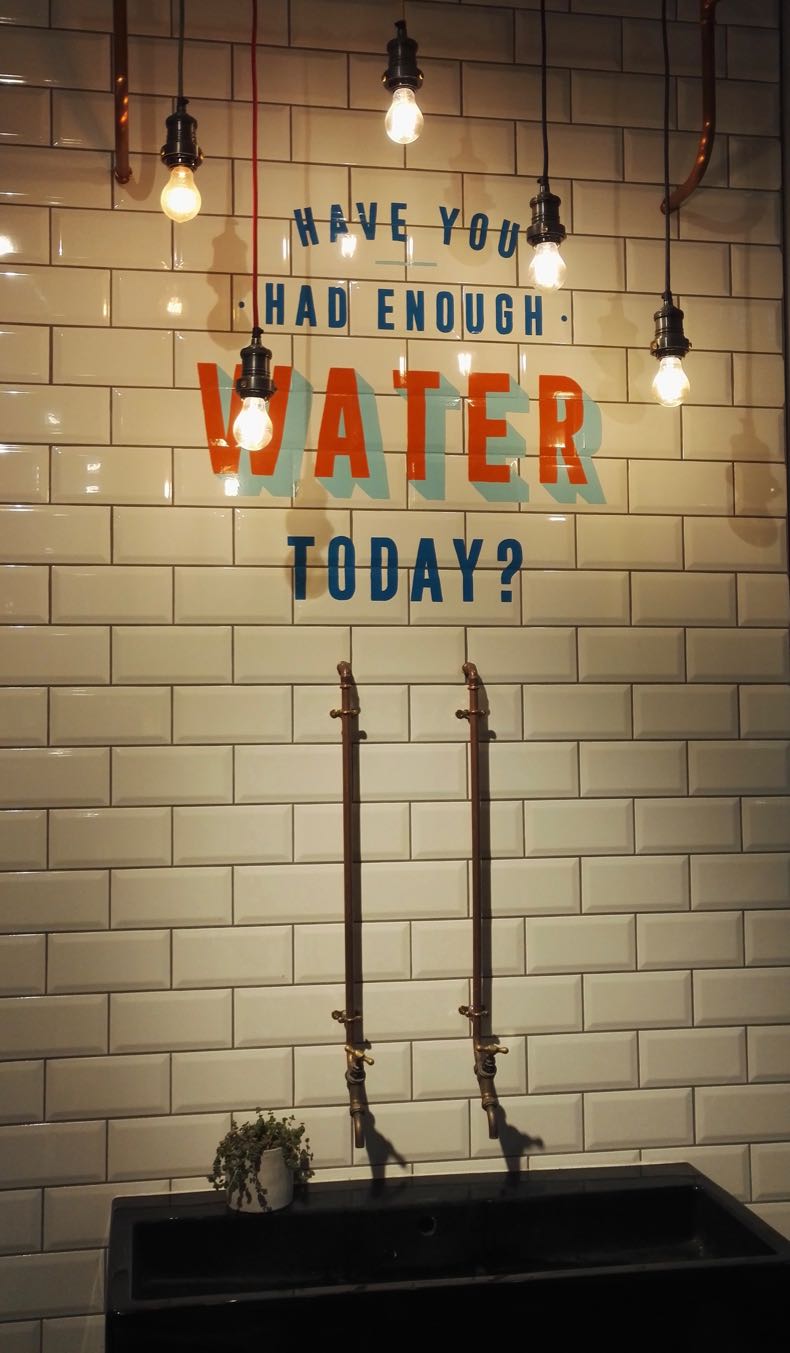
Obvious one but hands up, who feels like reaching out for the water bottle when the temperature nears zero? I have noticed that since moving back to the UK from Cyprus my water intake has gone down a lot, and as a result I have started get the occasional headache which never used to happen. We all know basics: 2-3 litres a day, more if you are drinking coffee/tea/alcohol and/or exercising. Warm water with some lemon or ginger in it counts too!
Take a moment – or two – every day to be quiet
This is even more important during December than other months I find. Even on a good day social media updates can do your head in, especially if everybody in your circles is talking about the same subject (i.e. gift shopping, parties, decoration, how much they like/hate this time of the year.) Try to shut down – properly shut down – your phone when you get home in the evenings well before bed time, and do resist the temptation to check it the first thing in the morning. Giving yourself just 10 minutes of proper quiet time, stretching, relaxing the facial muscles and the rest of the body and focusing on the breath will calm the mind and give you some much needed space.
Ease off the pressure from yourself – The nature is taking it easy too
There is no denying, it is cold and dark in the Northern Hemisphere. The shortest day falls onto the 21st December and from there on the days will slowly start get longer again. Whilst hibernating is not really an option for most of us, we can still be comfortable with the knowledge that natural to feel a slower and less energetic than usual. Be kind to yourself and slow down. Think of few things that are essential and things that bring you joy, and let those be your guide on how to navigate the festive season. Not all parties need attending to and some things can be finalised next year. If it feels appropriate, swap your usual vinyasa flow class to a gentler yin or restorative type, and as much as possible, give yourself a little bit more time to get through the everyday stuff. With this in mind (and executed), being merry and jolly flows in naturally.
…and about all those gifts?
Ok, some people might really need something, or they let you in on wish for something – if it is affordable, in line with your values (just saying… gifting should not be about you but also, are you comfortable with the gift you are buying?), go for it. Lacking ideas, think about the immaterial – a massage, a full house cleaning or a dry cleaning for five shirts, a yoga class or a month’s pass..? You can find a variety of services in all price ranges so make a point of taking time to google (or looking around at the small businesses around you) to find out what is available.
And most importantly – enjoy the festive season and what it can offer to you! Be selective, be true to yourself and most importantly, be kind to yourself and to others.
What are your tips to navigate through the December festive season or are you rather indifferent? As always, I would love to hear your thoughts and comments!
Last Monday I attended a teacher’s symposium on the topic “The Diversity Problem in Yoga” at TriYoga’s Camden studio. The premises of the talk was to find out (as much as possible) why yoga in the Western world, today being more popular and mainstream than ever, seems to practiced by a very homogenous set of people, often identified as a white, able-bodied, middle-class women. Why is it that whilst the population in general is getting more and more overweight and aging and the racial and religious diversities present around us, the yoga community as a whole does not necessary reflect these realities?
“Are we as yoga schools, teachers and students reinforcing existing barriers and divisions, and how can we actively dissolve them? How can we create a more inclusive space for everyone no matter their size, their ethnicity, their income and their gender?”
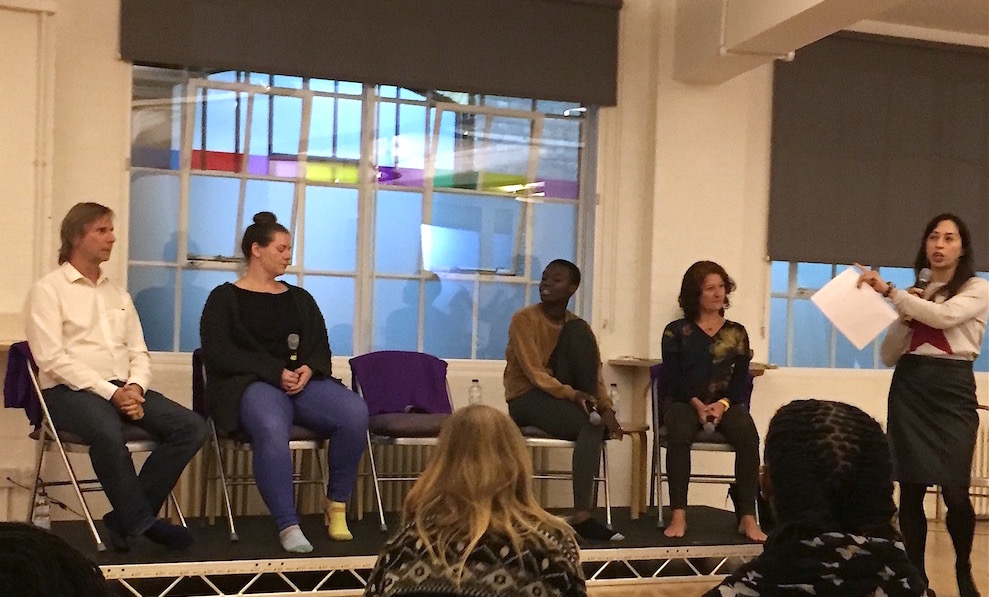
The panellists of the evening included Jonathan Sattin who founded the first TriYoga studio in 2000, Dana Falsetti, a body positive yoga teacher, Corrie Ananda Preece and Isa-Welly Locoh-Donou who teach Mysore and Pilates & Barre respectively at TriYoga and Frederique Sardais who was the first UK teacher to specialise in Adaptive Yoga, a type of specialist classes for people living with disability and limited movement.
From left to right: Jonathan Sattin, Dana Falsetti, Corrie Ananda Preece, Isa-Welly Locoh-Donou and Frederique Sardais
Kindly note that this post is not a transliteration of the 90 minute symposium. My aim is to bring forwards some of the many questions, challenges, various points of views and suggestions for improvement that came up during the discussion. I offer my take on these where I see I have something to add. The discussion was recorded and to hear it full you can head to TriYoga’s Facebook page. The photo credit of the two pictures of the panellists goes to TriYoga who kindly gave me the permission to use their photos.
I want to also highlight before going any further that we all have very different experiences so what is said below is obviously not the universal truth about yoga studios and communities. You do not need to agree with all/anything what follows below – for instance during my over 10 years of regular practise I have more often than not seen people of all ages, from six year old kids to the veterans for WW2, being represented in yoga classes. However this is not the experience many share and I accept age, as an example, can be seen an issue associated with the conversation about diversity in yoga.
For me when something is presented as an issue that needs correction of sorts there are few fundamental questions that needs to be asked right at the beginning, in order to not get lost in the conversation.
What makes us say there is a diversity problem?
What do we believe (or know) are the reasons for this problem?
What does the ideal (or at least improved) situation look like?
Is there something being already done to improve the situation and how is that working (or not and why not?)
In no particular order, here are some of the reasons why we can say there is a diversity problem in yoga:
There seems to be considerably less of yoga teachers and yoga practitioners of colour than there are white practitioners.
There seems to be a lot more women in your average yoga class than there are men. The same goes for yoga teachers.
There seems to be are lot more people who are of “normal” weight if not “slim” practising yoga than people who are overweight.
Most people we see in a regular yoga class are fairly able bodied, although naturally not all disabilities – starting from the mental ones – are visible to others.
Yoga also seems to be very much associated with youth, and more specifically with females in their 20s and 30s, despite the fact the Western population keeps on aging.
In the birth country of yoga, India, yoga transcends all classes and casts. Where does this diversity problem in the West come from then?
A big part of modern yoga’s diversity issue can be traced (or, at least we like to trace it) to the popular imagery: From the covers and features in Yoga Journal to lululemon and Sweaty Betty look books, the white skinny (often very flexible) female is ever present in the photos. Most gyms and yoga studios, whether consciously or not, perpetuate the same imagery. You can talk as much as you want about the welcoming and open atmosphere of a studio in marketing materials but if everybody working there looks more or less that same (and you do not not look like that), this IS part of the reason yoga can be seen as homogenous, or even elitist, activity.
Now is this because of the image some studios want to portray, or is it due to a form of unconscious bias? I am sure there is an element of the both. However, at this day and age, especially when we are talking about an activity that is all about inclusiveness and openness, it feels appropriate to remind us all that the word “yoga” itself means “union.” Feel free to see the irony…
If there is a genuine will to improve things from what is seen as not the ideal situation, the only way forward for all of those involved in the community, as businesses and practitioners, is to fairly and squarely realise the current state and take concrete actions to move forward. As an example of this, TriYoga stated on their Facebook page few days ago ”We recognise (…) that some of our marketing material in the past may not have reflected our intention to be inclusive and we are working to change that.”
That is a big and very noble statement. Being inclusive is hard work, and maybe creating a studio space where nobody, EVER, would feel excluded is not even possible. Yet, by bringing awareness and mindfulness to our thoughts and actions in regards to the words we use, to the assumptions we make (or try not to make) and even to our body language, can take us a long way.
Finally, the financial barriers to yoga are also very real. Ten pounds (or euros) a yoga class can be a lot to pay for a single mother with three kids, for a student, or just for anybody living in an expensive city on a low salary. Many studios charge even more than a ten pounds for a drop-in class at peak-hours. It is true that many places have community classes that are priced on a lower level. However, as one of the audience members on Monday pointed out, if these community classes take place in the middle of the day when most people are working, their impact does not go very far, despite the beautiful intentions. On the other side of the coin, yoga teachers need a make a living too, to provide for the family, pay for the bills and maybe even put something towards the pension fund.
Where does the balance lie with between the yoga studios running as a business, the teachers sharing their passion and the people who can and could benefit from the practise we want to share and offer?
What do we want then and whatever it is, do we know if it already exists somewhere?
Any of the above said does not mean that all the white slim-ish middleclass women should hang their head in shame. None of us chose the body we were born in and nobody can be spared of illnesses and misfortunes of life just because of a socio-economic status. But a lot can be done just through education, having an awareness of the many realities that exist in the communities and checking if our assumptions of the realities are actually founded in the truth.
What came up few times in the discussion on Monday was the feeling of being an outsider, or not belonging to “yoga.” This can come from various factors: One can feel like his/her body shape is not represented and therefore accepted in a class, or have a teacher who does not know how to teach different body shapes and conditions through offering props and modifications. Yoga can feel very “white” activity, or a particular studio can just have a vibe that does not attract. The first time stepping into a yoga class can be a very intimating situation for anybody, so all of us can imagine how this is easily made worse by not feeling welcomed or fitting in for whatever reason.
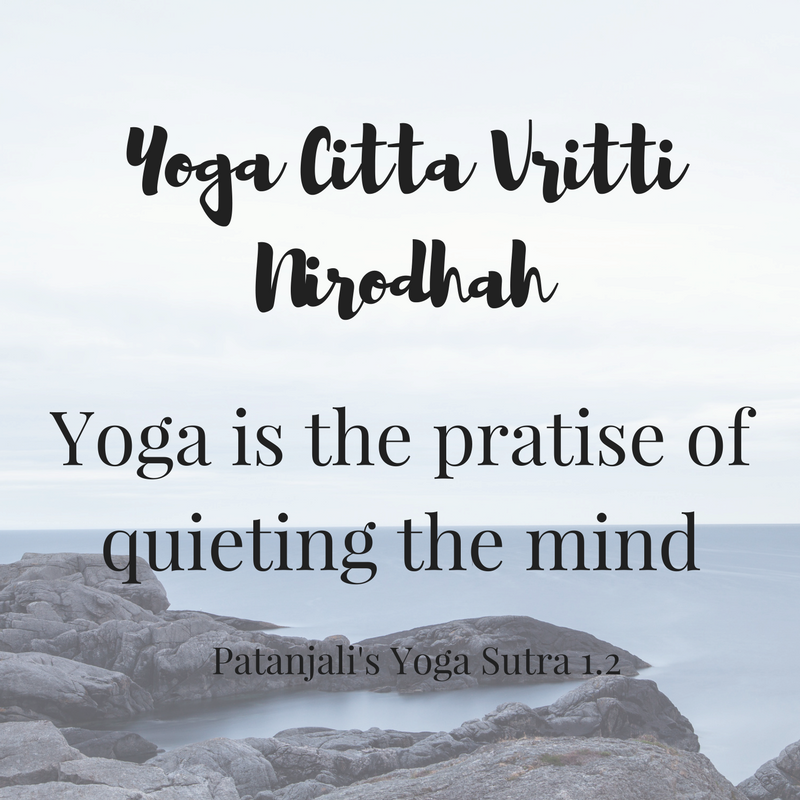
It is also healthy to remember that yoga is much more than the asana practise. Meditation, breathing practises and studying the philosophy are also yoga. The Sutra 1.2 reminds us that yoga is about controlling the fluctuations of the mind. Reducing yoga to represent just asana is also an assumption to be challenged. It is important for all of us as practitioners and teachers to be open to all sorts of questions and show by example how yoga works for everybody, and in every day life. Just the other day I heard a friend saying in all seriousness (in my own kitchen of all places) how “I’d be too scared to go to a yoga class because apparently all those movements make you fart.” I did my best to reassure that more often than not, farting does NOT happen, and even if it does, it is ok (but really, it is rare! I swear!) Yoga is actually very simple physically – it is our minds that play on us to think otherwise. And that mind stuff – well, lets refer back to Sutra 1.2.
Like I said in the beginning, of course there are plenty of people who have never seen or viewed yoga as something alienating, “not for them” or lacking diversity. Yoga is lived and practised in variety of places, outside the traditional shala or the modern studio. Yoga exists in community halls and in the clubrooms owned by various religions. Yoga is featured as an integral part of weekly training for athletes ranging from rugby to ice hockey to martial arts. Yoga classes are offered in ballet schools and physiotherapy clinics, for children at schools and for elderly people in the form of chair yoga. Of course there is progress to be made but there is equally a lot of evidence to demonstrate that yoga truly can work for all, regardless age, race, religion and gender.
The way I see it, the conversation about the lack of diversity in yoga teaches us about the opportunities there are out there to reach out and connect with the community. Think about it and share your thoughts. What is yoga to you and would you like to see more diversity in yoga? What does that diversity would look like to you? Join the conversation in the comments below!
As long as I can remember I have had an interest in environmental issues and holistic living, long before yoga came to my life. Coming from Finland environment is something we are surrounded by all the time and things like not littering, paying for plastic bags in supermarkets and recycling were things that were well established in every aspect of the society already in the 1980s and even before that.
Always keen to dig a little bit deeper I went on to study sustainable development as a part of my master’s degree and even did some research work on the topic for UNESCO back in the day. Life happens and for over a decade I ended up working in a completely different environment. By this time the concept of sustainable development had started broaden and include the notion of corporate social responsibility (CSR) in a more prominent way. Working in a corporate environment allowed me to keep track on the latest developments in CSR and to think what opportunities we have to include sustainable practises in every aspect of our lives in a world that was – and is – rapidly changing and bringing us more and more complex challenges.
The below text was first published few weeks ago as a part of my on-going collaboration with EcoHomeStore. The idea for it came from the wish to go back to the basics: so often we talk about ideas and plans for future, only to realise that what our understanding of different concepts behind our ideas can be very different. There obviously is more to sustainable development what is offered below but it does offer a starting point and/or a recap for those wondering what it is all about.
What are we talking about when we talk about sustainable development?
Sustainable development, sustainable living, conscious living, socially responsible consumption… We hear these words more and more and instinctively probably would agree they are good thing. But have you ever wondered what do these words really mean, in real-life terms? And where does the concept of sustainable development come from in a first place?
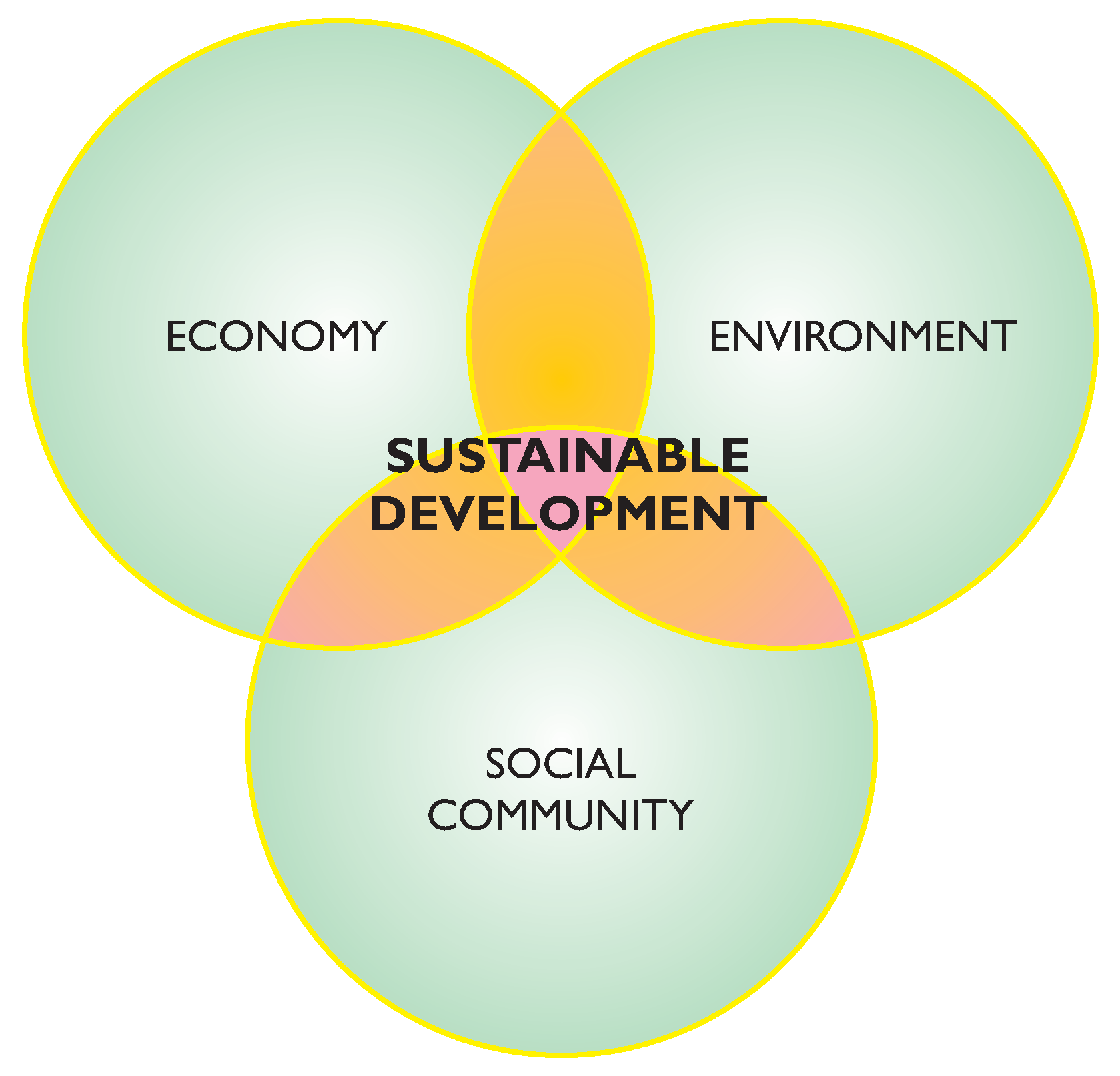
The term “sustainable development” was first outlined in 1987 in a United Nations document called “Our Common Future” where it is defined as ““development that meets the needs of the present without compromising the ability of future generations to meet their own needs.” In other words, the aim was to highlight the interdependence of economic development and environmental issued and how they should be discussed together. Since 1987 the concept and discussion of sustainable development has vastly evolved and expanded. Today it is commonly described to include three interlinked pillars: The environment (or ecology), the economy and society.
The environmental dimension refers to the need to preserve basic natural resources essential for sustaining life, such as the availability and quality of air, water, food and shelter. Other aspects of the environmental sphere are related to health (e.g. pollution as a health risk) and the use of natural resources for economic gains faster than these materials can be replenished naturally. At the heart of environmental sustainability is the need to (re)design the activities societies need whilst not degrading nature’s supplies. Examples of this are the utilisation of renewable energies such as wind and sun, mindful usage of water and harvesting materials such as wood from forests at a rate that maintains biodiversity. Further example is to eat food produced as locally as possible, from sources that favour methods of farming that do not damage the soil or water resources.
The United Nation’s Development Goals define sustainable economic growth as ”a requirement for the societies to create the conditions that allow people to have quality jobs that stimulate the economy while not harming the environment.” The premise behind this is that poverty puts stress on the environment, as lack of resources and education in the underdeveloped parts of the word tends to lead to overuse of resources, as survival is at stake. Equally environmental problems often hit the poorest regions the worst. Some theories claim that increased global production helps the world’s poor to improve their income and with it their health, opportunities for education etc. Yet, it is impossible to dispute the fact that the gains economic growth of the planet are distributed unevenly, in addition to which the richest countries in the world are responsible for most of the pollution whilst consuming most of the resources.
The situation today calls for new ways of thinking with research and innovation being in its core. Many businesses are also waking up to the possibilities that caring about the environmental impact can be beneficial to them as their clients become more aware of the issues at stake on a global level. The latest step in this field is the European Directive that now requires big companies to produce an annual “non-financial statement.” This document needs to contain information about their environmental, social and employee matters, respect for human rights and anti-corruption matters. This directive came into force in Cyprus on 2nd June 2017 in the form of the Companies Law.
Social aspect of sustainability is a widely ranging, multi-dimensional concept. Broadly speaking it is concerned with taking humane aspects and development into account in everything, including the economy. Social sustainability is as much about diversity and inclusion at home and at workplace as it is about equal access to education, training. Another element of it is fair access to green spaces in urban communities but also, quite literally, about physical access to buildings and public transportation for people with different abilities. And we cannot talk about social sustainability without mention the importance of democracy and good governance, on every level of the society.
Ultimately, social sustainability is about respecting the human rights of all individuals and conscious eradication of any obstacles (or even unconscious bias) that exist. This can take the form of codes of conducts and transparent policies at workplace preventing discrimination, clear acknowledgement that diverse opinions and participation usually lead to more inclusive governance and improved social cohesion and encouraging social interaction between different communities and groups.
Looking back to the developments since 1987 when “Our Common Future” was first published there is lot to be optimistic about. Whilst the world we live in has become more complex, the understanding of what is required for improving environmental, economic and social sustainability continues to spread. Now more than ever we all have a part to play in this. We can all consider our options with our everyday consumer choices: Buying good quality products that are made or grown locally, even if they are a little bit more expensive. Turning off the tap when washing up, rather than keeping the water running. Recycling, taking your trash to the bin and educating the children about why do these things matter. Saying hello to the new family in the neighbourhood and aiming to act with curiosity and acceptance towards our surroundings. And if you are up for it, why not take on a wider challenge: Where do we get our idea of “development” and what does it mean in practise and is it sustainable for the generations to come?
Now over to you. What else does sustainable development mean to you? Are you concerned in a first place or just going with the flow? I would love to hear from your thoughts in the comments!
Some of you might already have seen the video starring the international yoga teacher Briohny Smith did for the US fitness chain Equinox some six years ago. At the time the clip caused quite an uproar (mainly in the US, not sure if anybody in Europe cared…) as some considered it to be portraying yoga in an overtly sexual way, not representing the “true spirit” of the practise and exploiting the practise we all love for commercial purposes.
It is said that how we interpret the things we see reveals a lot about ourselves. We can choose to see this video as a sacrilege to an ancient practise, or we can see a beautiful asana flow that clearly has taken years of dedicated, daily work.
It is also up to ourselves to decide if videos like this make us feel somehow less skilled or worthy practitioner of yoga, because our bakasana-to-handstand-press-to-tripod-headstand transitions (hell, any of those asanas individually, never mind the transitions!) are quite not as smooth as Briohny Smith’s. Or, if we choose to see this as an inspirational clip of what the human body is capable with focused, consistent effort.
So, have a look and decide for yourself (and notice the impeccable aligment she has!) Do also check out the parody video below: It might say “parody” in the title but I for one think that guy must have one solid, kick ass practise going on!