Category: Asana Practise and Wellness Through Movement

About yoga classes, stand up paddling, injuries and moving in general

  • How To Clean And Care For Your Yogamat Sustainably

    How To Clean And Care For Your Yogamat Sustainably

    Long gone are the days when we would walk into a yoga studio and borrow/rent a yogamat. In many countries, the new normal dictates that we must bring our own mats and props with us. With that goes the mandatory cleaning of the equipment on a regular basis. Even if you are quite not ready to join a public class (Zoom classes are definitely here to say), you do want to show some care for your hardworking yoga mat from time to time.

    I am sure many of us have just showed our yoga mats to the washing machine and be done with it. This can be done, however I do not recommend it. Why? First of all, machine wash can be a bit rough on your mat, and it can lose some of its grippiness as a result. Secondly, depending on the material and make of your mat, there might be small pieces of the mat that break away. Not great for the mat but also, not great for the pipes, nuts and bolts of your washing machine!

    With the gyms and yoga studios opening here in the UK this week (and cleaning being something we all do A LOT these days), here is how you can clean your yoga mat at home in a sustainable manner, staying kind to your washing machine and enviroment alike.

    Read below the steps to take to clean your yoga mat in an eco-friendly way

    1. Have any type of spray bottle at hand (I use an old magnesium spray bottle)
    2. Use filtered or otherwise purified water
    3. Have some white vinegar, leftover vodka (or other type of clear spirit) or lemon juice.
    4. Fill the bottle with mainly water, then add few drops of vinegar/alcohol/lemon juice in the mix (I never measure anything, but here I am talking about actual drops)
    5. Then shake the bottle well (before every cleaning), spray the mix all over the mat and wipe it dry with a clean cloth

    If there are bigger stains in the mat you can use a soft sponge to gently rub them. Be careful though as this might damage the surface of the mat! Some people recommend using mild ecological soap but be watch out with this one. Any soap residue will make your mat very slippery and we do not want that.

    Be also mindful that some mats stain easier than others (you can read about different types of yoga mats here.) For instance, whilst adding few drops of essential oil to your homemade cleaning solution can have its benefits (e.g. tea tree is naturally antibacterial, lavender has a calming smell…), they can also contribute towards staining. At the end of the day though, a stain from cleaning your mat is always better than a stain from months and years of usage.

    If there is residue water left on the surface from your cleaning, you can take you mat out to the sun to dry. Don’t leave it out for too long however, strong sun is not a friend of any yoga mat in large quantities as it makes the material more fragile.

    Store your yoga mat away when not practising

    After use it is always a good idea to roll up your yoga mat and tuck it away for the next use. I know it is tempting to leave your mat lying on the floor. However, especially if you have any furry family members (or ones with any type of sharp claws), you give longer lease of life for your mat if you store it away between practises. You might also want to think about having one mat for your home practise, and another to take with you socially distanced studio class. A good quality mat that is well cared for will last you for years, also making you an environmentally friendly yoga practitioner!

    Enjoy cleaning your mat and continue enjoying your practice!

    four yoga mats
  • World Yoga Day 2020

    World Yoga Day 2020

    The 21st June is The International Day of Yoga, also known as World Yoga Day. It has been celebrated since 2015, the year was approved by the United Nation’s General Assembly, by an unprecented concensus by the Member Nations.

    The impetus to mark the Yoga Day came from India, the birth country of Yoga. The Prime Minister of India, Narenda Modi, said at the time how “Yoga is an invaluable gift of India’s ancient tradition. It embodies unity of mind and body; thought and action; restraint and fulfilment; harmony between man and nature; a holistic approach to health and well-being. It is not about exercise but to discover the sense of oneness with yourself, the world and the nature. By changing our lifestyle and creating consciousness, it can help us deal with climate change. Let us work towards adopting an International Yoga Day”.

    Many of us are familiar with the physical aspect of yoga, the asana, but there is much more in offer when we start digging into yoga. Interviewed few days ago, India’s Ambassador to the US, Taranjit Singh Sandhu noted As Prime Minister Modi has emphasized yoga is a means to both fitness and wellness. The COVID-19 pandemic has disrupted our daily lives. In this context, yoga has become even more relevant for healthy living. I hope more people will be inspired and adopt yoga in their lives.”

    The theme for this year’s Yoga Day is Yoga at Home and Yoga with Family, quite aptly. I would imagine many of you reading this have taken at least one YouTube, IG Live or a Zoom Yoga class over the past months, from your respective quarantine locations. However, it does not take these unusual circumstances to appreciate how yoga is as much of a personal practice, as it can be about community. The eight limbs of yoga are an enormous offering for contemplation that can be conveyed to audiences of any age.

    So why the  date of the 21st June, the time of Summer Solstice in the Northern hemisphere? It is the that marks also the longest day of the year, and already has special significance in many parts of the world. Well that IS the reason, as from Yoga’s perspective summer solstice is a transition period and therefore an optimal time for meditation. But so does the Winter Solstice, taking place exactly 6 months after (or before) the Summer one. Lets look further

    The summer marks a time of everything being in full bloom. In the other end, the Winter Solstice symbolizes death and rebirth, new beginnings and fresh starts. I have heard how this can parallel the phases of the moon. The New Moon is dark and is often said to mark a new cycle, whereas the Full Moon is when things you started to foster at New Moon become to their full potential. Essentially both are about the cyclical nature of life, about beginnings and endings, starting and finishing… and repeating the cycle again.

    Like the sound of this all and keen to hear more? To celebrate the World Yoga Day I am offering a session of 36 Sun Salutations for FREE on Sunday the 21st June, at 12:00 pm UK Time. Everybody on my email list will be sent a Zoom link before Sunday, and you can join the list by leaving your email address here.

    But why 36 Sun Salutations? Why not 108? Check in later in the week to know why.

  • Yoga for Mental Health Awareness

    Yoga for Mental Health Awareness

    In The UK this week is The Mental Health Awareness Week, hosted by Mental Health Foundation. I have written about this topic before and it is a real pleasure to notice how, as the years go by, there is more and more awareness on the importance of taking care of our mental health and the different forms mental health issues can take. The society at large is more and more comfortable addressing these issues in an open and non-judgemental way and this can only benefit all of us.

    Obviously mental health is not an issue just for one week a year, just like a good mental health is more than just absence of a mental health problem. Stress and anxiety for instance are issues that touch all of us at least some point in our lives: School or university exams, professional demands and relationship challenges are unavoidable but luckily there are ways to ease their toll on us.

    No surprises here, I am of course talking about yoga and mindfulness. It widely recognised through clinical studies that both yoga and mindfulness can be an effective way to help us during tough times. Read on to find out how.

    The Power of Breath – Pranayama – Brings on Calm and Relieves Anxiety

    To keep things simple, just focusing on lengthening inhales and exhales, whilst breathing through the nose, is a very effective way to bring stillness to the mind. You can try counting during inhales and exhales to help to keep the rhythm even, with the added bonus that when you count quietly in your mind, it is pretty hard to have other thoughts disturbing you.

    Yoga Postures – The Asanas – Relief Physical Tension and Can Help The Mind to Refocus

    The word “Asana” itself translates as “comfortable seat.”  Just forget about the contortionist-ish level poses you might have come across on Instagram on elsewhere and focus on the basics. A class called hatha or beginners, taken online or in a studio/gym setting, will already teach you several poses you can start using in your home practise that does not even be that long.  Even a ten minute practise a day, done regularly, can have a huge positive impact.

    Mindfulness or Meditation Practise, With or Without an App, Can Be Done in Few Minutes

    One concept that has really come to the forefront of conversation over the last few years is mindfulness. It can be described as a mental state achieved by focusing – one purpose –  one’s awareness on the present moment, while calmly acknowledging and accepting one’s feelings, thoughts, and bodily sensations in a non-judgmental way.

    It is always helpful to check in with ourselves to inquire how we are REALLY feeling and why, even more so if we have a chance to remove ourselves temporarily from a taxing situation. Noticing what triggers our worries and concerns (or anger – just as legit emotion as any!) might take some time initially but will pay itself generously back once we learn to take preventative actions.

    The Only Constant In Life is Change

    One of the reoccurring themes in yoga is that everything – absolutely everything – is temporary. Things will pass. It might not always feel like and it can be annoying to be reminded of this when the feeling is everything but. But things will pass, always.

    Look around and see if there is a yoga class happening somewhere near you – or even in your office – this week, or try out a little bit of meditation. YouTube is a great place to start, or you can download an app such as Just Breathe, Calm or Headspace and use their free versions to find out how mindfulness works for you!

  • The Difference Between Restorative and Yin Yoga

    The Difference Between Restorative and Yin Yoga

    If there is one thing that has been making me happy lately, it is to read that calmer, gentler physical activities are becoming more popular. Among the calmest in the calm yoga styles, we have the restorative and yin yoga. Although sometimes you see these terms used almost interchangeably, they are two different styles.

    Read below to learn how restorative and yin yoga differ and what are their respective, specific benefits.

    Restorative Yoga

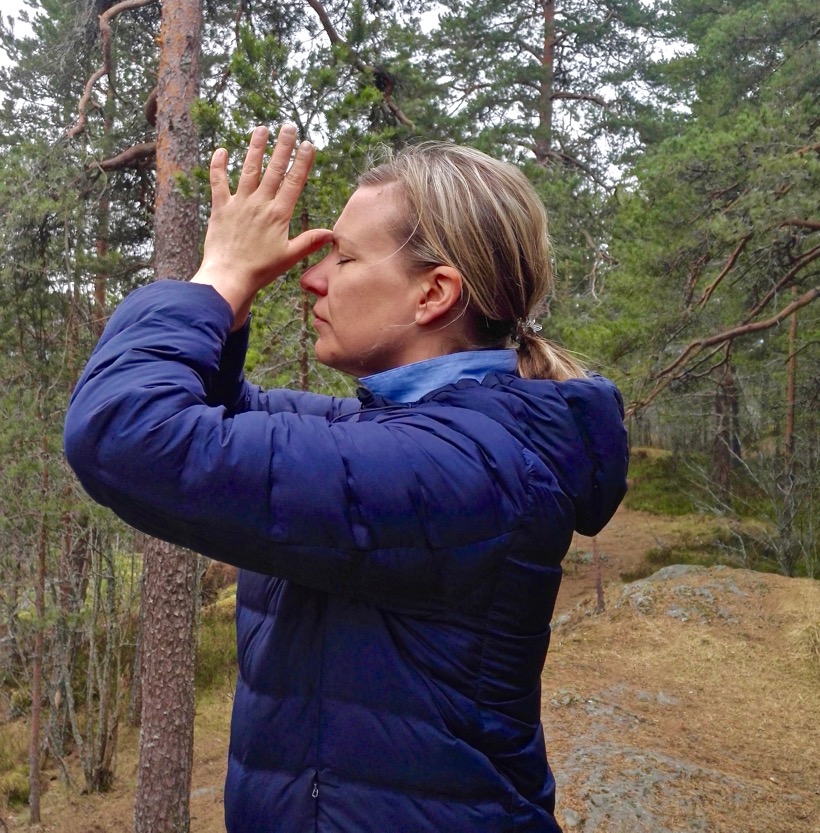
    Restorative yoga has its roots in the Iyengar style. It emphasises extensive use of props to support the body to so the practise of yoga becomes accessible to everybody, despite any physical limitations there may be. Developed in the West in the 70s by Judith Lasater, restorative yoga intends to slow down movement, breath and mind and, help to activate the parasympathetic nervous system. In other words, we try to move from the “fight or flight” state of mind many of us are on almost permanently, to more towards “rest and digest” state.

    Restorative poses are very subtle and passive. Various props are often used help the body stay in the asana without any effort for an extended period of time. The body (and mind) can just surrender and let go. Restorative poses can be hold between 5 to 20 minutes, depending on the overall class length and the type of asana chosen. For example, in a 90-minute restorative class I often teach 4 or max 5 poses, one of them being the final relaxation at the end. 

    Yoga bolster, restorative yoga

    Yin Yoga

    Yin yoga has its roots in similar practises that have existed in China for over 2000 years, but it was developed in its modern (or should I say “Western” again?) form by Paulie Zink and Paul Grilley in the 70s.

    Whereas of restorative yoga is about almost feeling nothing, yin yoga aims to put moderate stress on the connective tissues – fascia, ligaments and tendons – of the body. This can help to restore the range of motion in the body, as well as revitalising the body tissues. The pace in yin yoga is still slow but the postures are held shorter time than those in restorative yoga. Beginners can start from 45 seconds onwards, whereas experienced practitioner can hold an asana up to five or even ten minutes.

    In Yin practitioners are expected to find a deeper sensation (sometimes described as “slight discomfort”) in the asana and props are used less than in restorative yoga. Between every pose there is a rebound moment to feel the effects of the asana. This is not a counter pose as such but can be a simple corpse pose or a child’s pose that helps to “reset” the body before the next asana.

    Herospose

    Both yin and restorative practises are greatly beneficial and are a great addition to the more dynamic, heath creating yoga practises. They are also very valuable to those who would usually not consider yoga for their fitness practise. Restorative yoga especially can also be suitable to those who have a limited range of motion because of the props offer countless opportunities for modifications, ensuring comfort and relaxation.

    Have you already tried these slower types of yoga? What did you think, and do you have a favourite between the two? I would love to hear your comments below!

  • Stuff That Yoga Teachers Say

    Stuff That Yoga Teachers Say

    Yoga terminology can be very confusing. Hand up who does not remember being new to a yoga class and at least some point wondering what on earth the teacher is talking about?

    As September is kind of like January when it comes to “new life, new hobbies” mindset, I thought it would be a good idea to run through few of the most common words, phrases and wordings that you may come across in your yoga class.

    Kindly note that as yoga spreads in popularity there might be some variations to the interpretation of yoga terminology. In this article I have tried to look for the most authentic/widely used one but if you have any questions/comments, leave a comment and we continue the discussion.

    Props/”Take any props you might need”

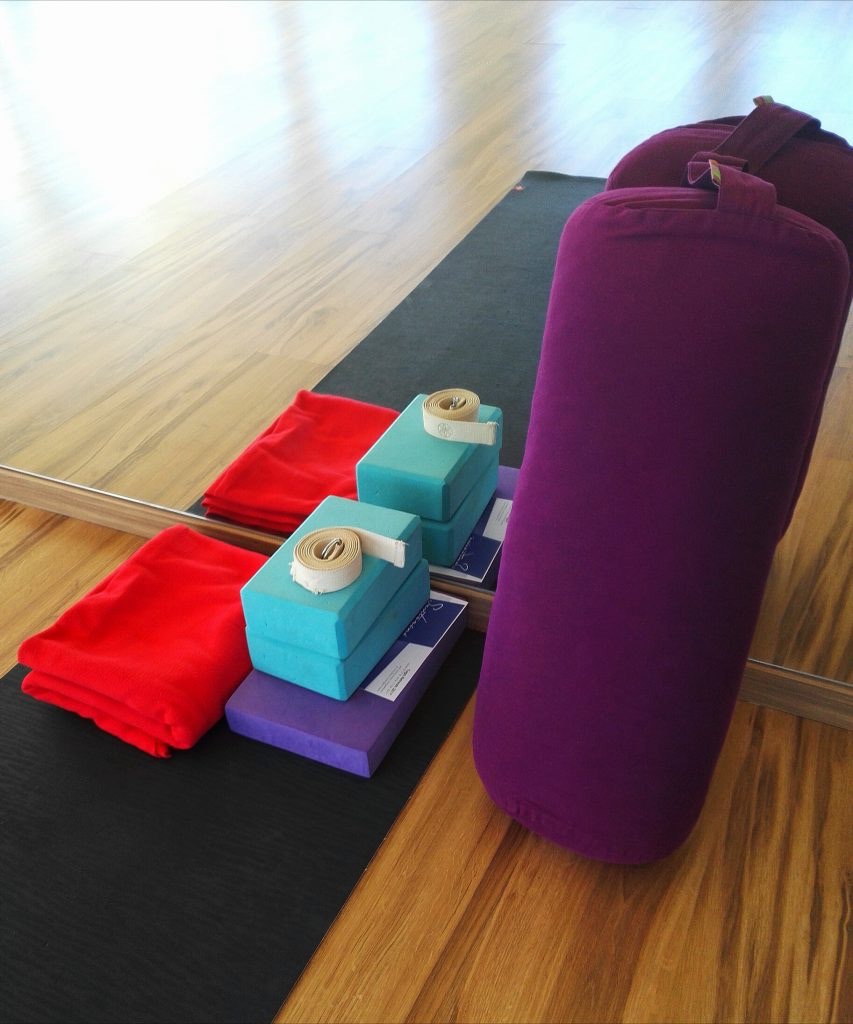
    Yoga props refer to the various objects that can be used to help us to get better into a particular pose, or to simply gain a better awareness for the pose by making it more accessible with the help of props. These objects include straps, bolsters, yoga blocks and wheels, blankets, chairs…

    Not all yoga classes need props or make use of them, but if you are really interested in of the many ways they can be used, head to a Iyengar class – You will be served (plus Iyengar yoga is a wonderful form of yoga in general, you can read more about it here.)

    Bolster, yoga_strap, yoga_blocks

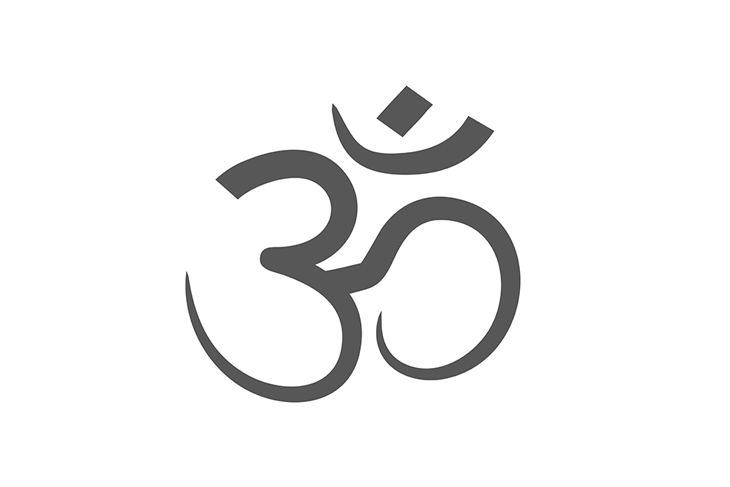
    OM

    OM is an ancient Sanskrit letter and a sacred syllable. It is often described as the Sound of the Universe, the most elemental of vibration, a sound that attunes to the our true nature.

    You can hear “Om” chanted at the start or end of the class, sometimes once, sometimes several times. It is however not present in all classes as different teachers have different styles. I sometimes hear that people can find “OM-ing” it a bit intimitating at first but trust me, nobody comes to yoga class to check out or judge your chanting voice. Just give it a go, you might like it!

    UniversalSound

    Grounding/Rooting Down Through Your Feet

    A confession: Until few years ago I really did not get what “rooting” meant, as in, what it REALLY meant. Was standing on my feet normally not enough? What was there more to it?

    Through exploring the mountain pose (i.e. tadasana) with experienced teachers I have learned so much about using the whole surface of the feet, through big toe to the little toe to the edges of your feet and the heel. Today I would describe “rooting down” as becoming aware of the distribution of the weight in your feet, together with the feeling of the ground (mat) underneath. At the end of the day, how we stand impacts our posture so much, which in turn impacts how we feel internally and how we present ourselves to the outside world.

    Who would have thought there is so much to simple action of standing?

    Abdominal Breathing/Focus on Your Breath

    Yoga is all about breath and specifically, about abdominal breathing. This can also be referred as belly breathing or diaphragmatic breathing. It means that we breathe using all available lung capacity, inhaling so that we feel our stomach expanding. We want to keep the inhales and the exhales more or less the same length.

    I find it useful to inhale counting quietly in my head to three or four (or whatever is the suitable length at a given time) and keeping the exhale the same length. The additional benefit of this is that you cannot think anything else whilst counting so ta-daa, your focus is squarely on the breath.

    There is so much more to be said about breath that I will make a separate post about it – in the mean time, check out this belly breathing video.

    Vinyasa/”Take a Vinyasa”

    This is a phrase you can hear a lot in yoga classes and it can get confusing for a beginner watching other doing what seems a very quick – and complicated – flowing sequence.

    Translated from Sanskrit, vinyasa means “to place in a special way.” Each movement is a gradual progression from one to the next, hence the term ”vinyasa flow.” You link you breath to the movement and with practise it indeed reminds a flow. Most of the time. Sometimes, even for the most experienced practitioner it might feel anything but a flow.

    Vinyasa is also used to refer a particular type of dynamic yoga class, and as a noun to refer a sequence of asanas taken as a transition between poses or two sides of poses. A chart of Surya Namaskar A that is the best illustration of what your class “take a vinyasa” can be.

    Sun Salutations, Vinyasa
    Picture from http://www.jasonyoga.com/2015/03/13/sun_salutations/

    “Feel the Body Melting/Surrendering to the Mat”

    The best way I can put this is “just feel it, don’t think about it.” Melting/surrendering to the mat it is an encouragement to try and relax the muscles a little bit more (and there is always that little bit more), letting the thoughts go (rather than thinking all the things you are going to do after the class) and just allow yourself to be still.

    Savasana

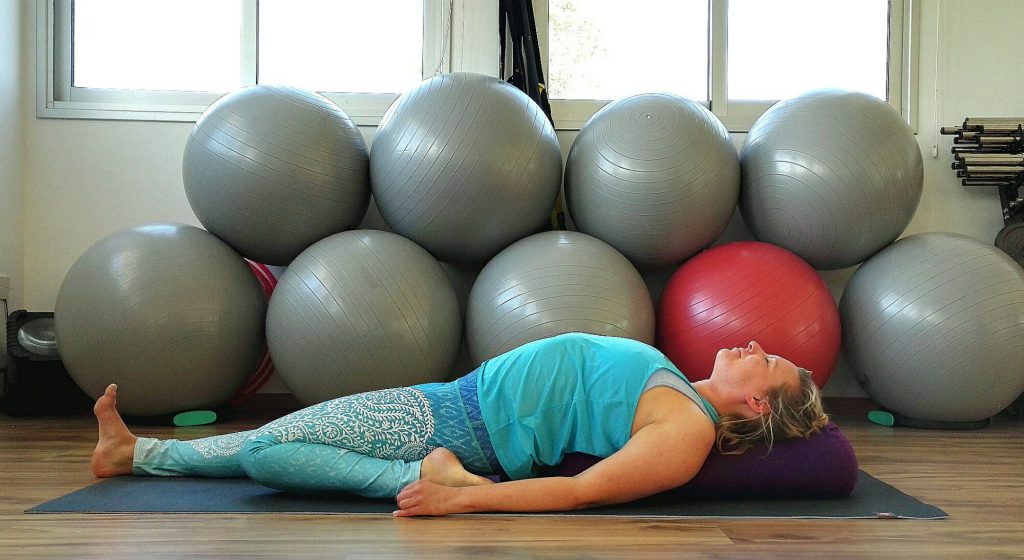
    Often referred as most people’s favourite part of the practise, savasana (or “dead man’s pose” as it is called in English) is the final relaxation that comes at the end of the asana practise. Usually it is done lying down on one’s back, but variations can be keeping knees bend or having legs slightly elevated – whatever allows the practitioner to feel completely relaxed and peaceful.

    It is perfectly normal to feel fidgety during savanasa. In today’s world we are not always very comfortable staying still. However do try stay in the class for the savasana and to breath through the mental discomfort – after few times you will learn to love it.

    Omenapuun alla

    Namaste

    At the end of the yoga class (but can happen in other situations too) you might hear your teacher say “Namaste”. This is usually combined with bringing our hands together in front of the chest, in the prayer position (also called “Anjali mudra, read more about that here) and bowing your head. The literal translation of “Namaste” translates simply as “I bow to you.” The more spiritual translation of Namaste comes to “The light in me greets the light in you”, representing the belief that we all share the one and Same Divine Consciousness.

    Some teachers use the term ”Namaskar” which can be understood in a similar way in the context of a yoga class.

    Any other yoga terminology you want to ask about or share? Please do so in the comments!

    Namaste


  • Treat Yourself to Restorative Yoga

    Treat Yourself to Restorative Yoga

    Restorative yoga is a relaxing and mellow type of yoga with the aim of, well, restoring the body and the mind. It complements perfectly more dynamic type of asana practises and is also very suitable for complete yoga novices.

    A typical restorative yoga sequence has very few poses. Depending on the length of the class the sequence has 2-6 asanas. Props such as blocks, bricks, bolsters, blankets and straps are used to support the body so literally no effort is required.  The support of the props allows each pose to be hold for an extensive period of time, up to ten minutes. This means that the body can relax and let go completely.

    Restorative yoga is a perfect antidote for the hectic city life as it allows us to unwind, de-stress and practise mindfulness whilst gently stretching the body. I often describe restorative yoga as “just lying around” but I don’t mean it in a dismissive or impolite way. Keeping still can actually be quite challenging for many at the beginning, but most people do reach a point during the practise when any resistance melts away.

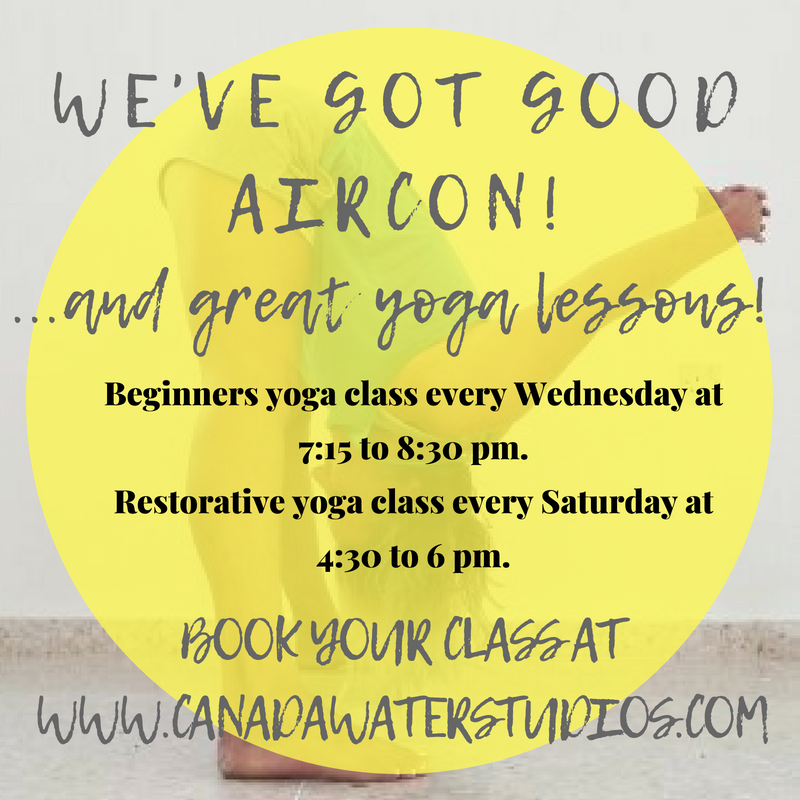
    With the current heatwave going on it is very important to remember that humans are not machines and it is necessary to slow down. Therefore restorative yoga is a great thing to practise these days. I will be teaching it most Saturdays over the next 5-6 weeks at The Canada Water Studios in South East London (next to the Canada Water tube station you can access on Jubilee Line and Overground Trains.)

    The class is 90 minutes long from 16:30 to 18:00 and costs £14. Please book your class directly from the Canada Water Studios website, and of course let me know if you have any questions!

    Oh, and we also have an air conditioning in the studio so really, be kind to yourself and come along!

    restorative yoga

  • Have You Tried SUP Yoga Yet?

    Have You Tried SUP Yoga Yet?

    Cyprus is the perfect place for weddings, wind(surfing), occasionally waves AND for SUP Yoga! I am currently on the Island for all of the above and will be teaching two more SUP Yoga classes this Saturday and Sunday at WindsurfCity Cyprus in Makenzy Beach, Larnaca.

    So what happens on a SUP Yoga class?

    In all honestly I prefer calling SUP Yoga as “yoga inspired” class rather than a “yoga class.” As the whole thing happens whilst floating on what essentially is a big surf board (just wider and longer) it is simply impossible to have as good balance as we would standing on the ground. Therefore all the poses we do need to be more or less adapted and some are simply out of the question. Sure we can go to Instagram and see people doing headstands and all that stuff on a board but just like the other fancy poses you see, they do not represent the reality.

    SUPyogaclass

    If you feel slightly disappointed now, don’t! SUP Yoga will challenged you regardless, even if you are experienced yogi or have never tried yoga before, because of the Sea beneath us. The key is to let go all expectations and just focus on the moment – and trust me, a sudden movement of the sea, in the middle of calm, really brings you to the here and now. I usually start my classes lying down, tuning in and build the sequence up to hands and knees and eventually standing. There will be plenty of familiar poses to be experienced in a new way and you can also expect to feel and activate your muscles in a different way. Falling in also happens, it is part of the fun and a sure way of test where the Ego is. And of course there is Savasana at the end. Nothing better than Savanasa lying down on a board, in the beautiful East Med, under the morning sun!

    Final relaxation on SUP

    Wear your swim gear (bikini, swimsuit, rash vest if you prefer complete sun protection, shorts…), sunscreen, sun glasses you don’t mind getting wet and maybe a cap or another type of hat. Just like in a regular yoga class,  is always better if your gear does not have buckles, decoration, big buttons or anything metallic as we will be lying down both on our backs and belly and you do not want anything pressing against your body.

    Please book your board in advance by dropping me or Margarita a text via this and this link – SUPping is very popular so we want to make sure everybody who shows up gets a board and nobody is left waiting because of no-shows and/or drop ins. The cost of the class is 18 euros and it will be in English (although I do speak very poor Greek too, occasionally.)

    SUP jooga


  • 7 X Yoga Books I Like

    7 X Yoga Books I Like

    I had a chat about yoga books with a friend yesterday and this old post of mine came to mind. As nothing has changed since I first published this text, here you go again, for those who did not see this the first time around.

    Yoga books are nothing new. The first systematic presentation of yoga in a written form, the Yoga Sutras by Patjanhali is said to dated circa 400 CE (I am aware there is debate around this date but I am not going to dwell any deeper into it), whilst another renowned yogic scripture, the Bhagavad Gita dates an estimated 500 BCE.

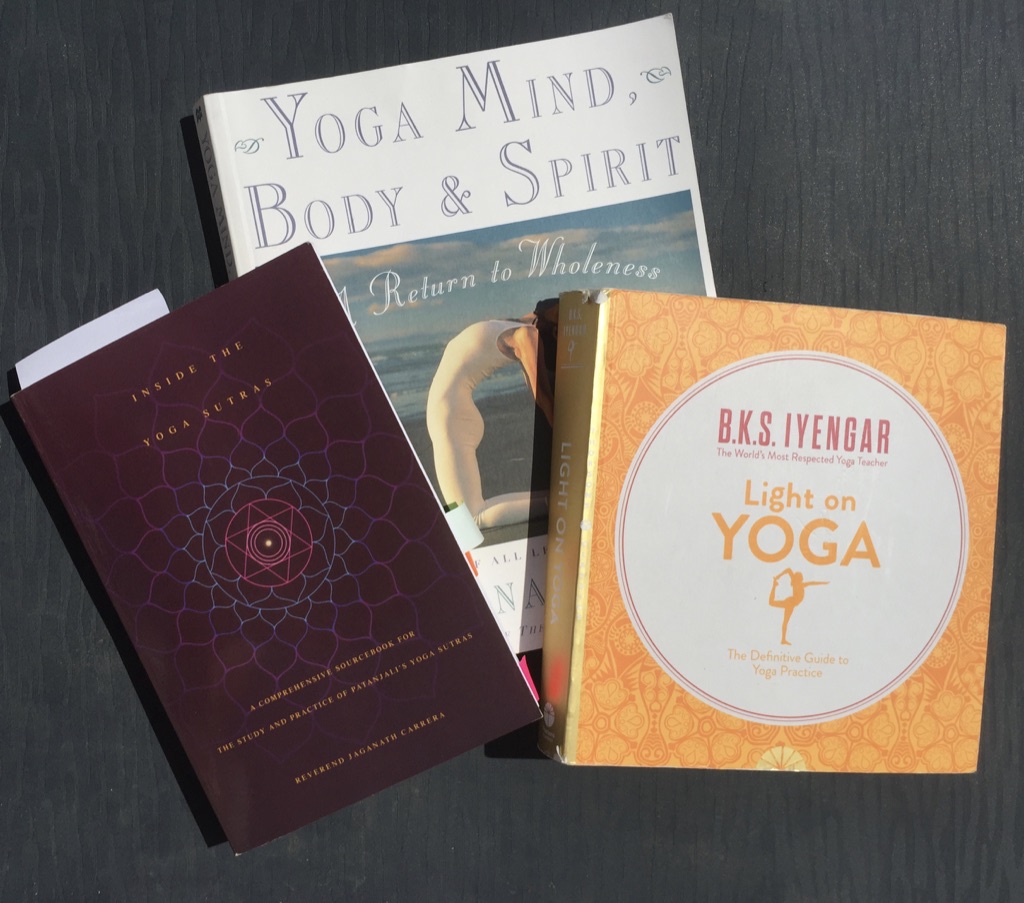
    There is a ton of yoga books around and it can be hard to pick just one or two. Here’s a list of some of my favourites. Some of these I read almost every day, some less so but they have all served a purpose of some sort in my yoga studies. If the list looks familiar it is because each one of the books is on the Amazon’s ”Top 15 or so Yoga books” list and many are teacher trainer reading staples. Hence expect nothing crazy original but if you are newer to yoga literature this might be helpful.

    A lot of people approach yoga through the physical practise. I would however encourage any student of yoga to have a look at what lies in the roots on the asana practise. A good place to start is the Yoga Sutras of Patanjali. These are the basic teachings of yoga are described in short verses called sutras, which are organised in four padas, or chapters. As reading a direct Sanskrit translation might seem a daunting task, there are luckily many textbooks offering an approachable commentary and interpretation of the sutras in a easy-to-digest form. The textbook I have is authored by Reverend Jaganath Carrera and it is called ”Inside The Yoga Sutras.”

    Several books combine philosophy, breathing technique and asana practise in one. A classic is B.S.K Iyengar’s ”Light on Yoga – The Definitive Guide to Yoga Practise.” The books have fantastic black and white photo illustration and the descriptions on how to get into each pose are very detailed. On a completely superficial level, the 2015 edition I have is also beautiful to look at. The only minus comes from it being a very heavy for a paperback so it is not the best travel read.

    Donna Farhi’s ”Yoga Mind, Body & Spirit – A Return to Wholeness” is another very complete book. In all honestly I found this one a bit hard going. However, the illustrations and photos are very clear and I like that the use of props, such as chairs, blankets and blocks, is incorporated to offer different types of modifications. It also has very wide margins for your own notes which is a plus.

    My favourite book on this list is probably T.K.V. Desikachar’s ”The Heart of Yoga – Developing a Personal Practise.” Written in a conversational manner (in fact, part of the book is in an interview Q & A format) the book is a practical approach to various elements of yoga: Asanas, breathing and meditation. It also has a chapter on the Yoga Sutra’s with Desikachar’s own translations and comments.

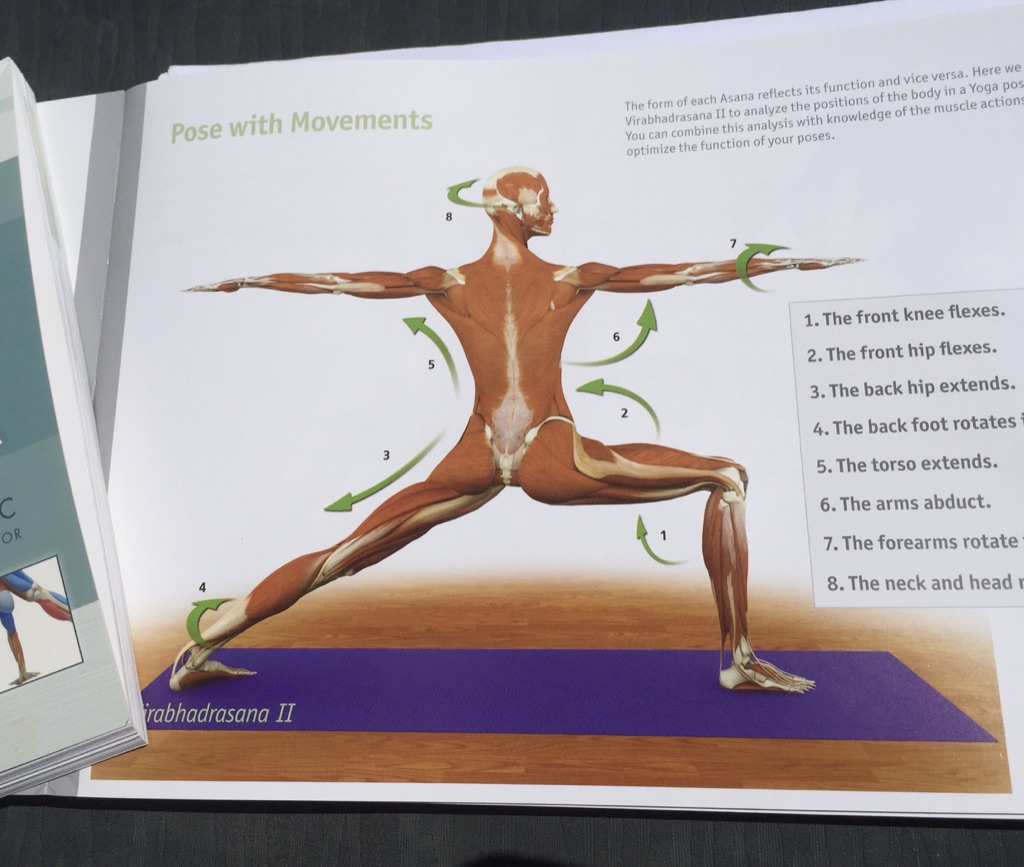
    There are of course plenty of books focusing solely on the anatomy side of yoga. Leslie Kaminoff & Amy Matthews’ ”Yoga Anatomy” (I have the second revised edition) is the one of the most recommended ones. In every page it offers a clear illustration of inside the asana (see the photo to get an idea), a classification, actions for joints and muscles, a word about the respiratory mechanism applicable to that pose and additional notes. A perfect go-to book when you want to check how your body works in a given asana, I use this book several times a week.

    I also have two books of Dr. Ray Long, ”The Key Muscles of Yoga” and ”The Key Poses of Yoga.” I must admit that I first got excited by these books due to the big illustrations that take up most of the pages. Anatomy can be difficult and the pictures make it more approachable! I find these books (unlike the ones listed before) are also usable during actual practise due to simple layout.

    What are the yoga related books you have read and would recommend?

  • Yoga Teacher Training – Things to Consider

    Yoga Teacher Training – Things to Consider

    Several of my friends working in the fitness and wellbeing industry have been asking me lately how and where is it good to do a yoga teacher training. Unless you follow a particular teacher and/or school of yoga (such as Ashtanga or Iyengar) there is an overwhelming amount of trainings out there and it can get quite confusing what they have to offer and how do they differ from one another. Below you can find some of the things you want to consider when making your choice.

    What is your intention or rather, why do you want to do teacher training in a first place?

    This might seem a bit of a silly question but the truth is, many people do a teacher training purely to deepen their knowledge and practise of yoga. And by all means, if you have the time and money for it, nobody is telling you not to go for it. However it might be useful to study other options if you “just” want to get more into your practise and enhance your knowledge.

    Yoga retreats and workshop are organised pretty much everywhere, and there are many excellent yoga teachers who travel extensively making it easier to catch them in action. It is worth considering if a week’s intensive or a even weekend’s workshop focusing on a particular aspect of yoga is something you want to explore first, before forking out few thousand (or more) euros/pounds/dollars for your 200 hours full-on training.

    Warrior two yoga
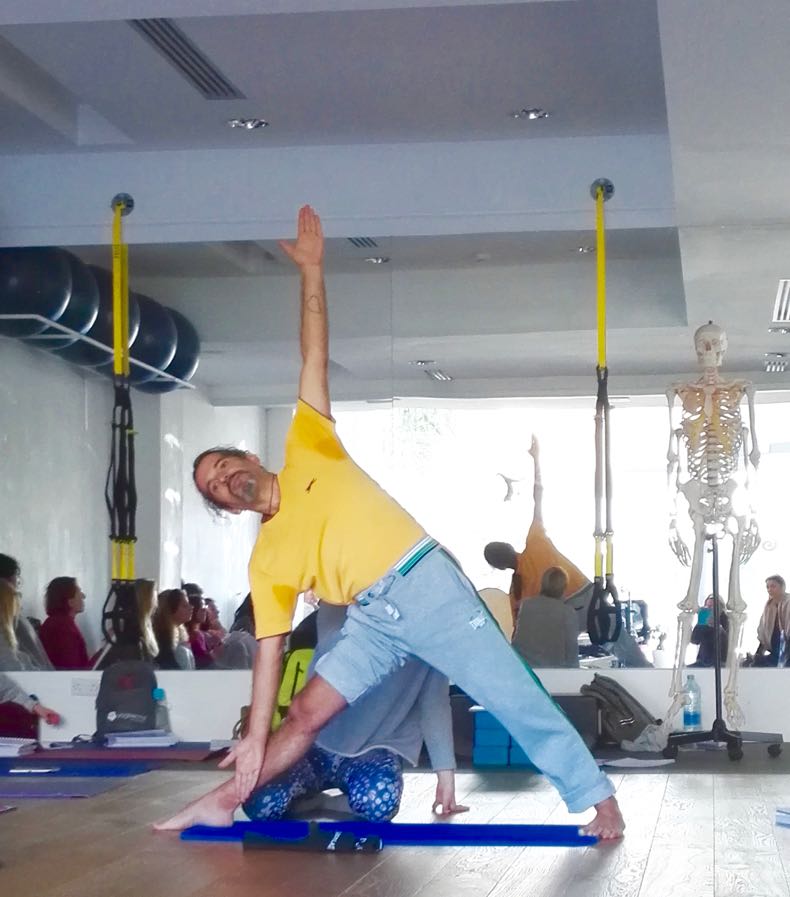
    An assistant to yoga teacher training can expect to spend a lot of time in certain poses, such as virabradrasana two.


    “I’m mainly interested in the physical aspects of yoga…”

    Well, a lot of us were, at least at the start. Some of us might still have a slight preference for asana practise. However, to be a good yoga teacher you will need to have a solid understanding of at least the basics of the seven other limbs of yoga in addition to the physical aspect. Approach them with an open mind and patience and you are very likely to be positively surprised. Or, choose a training with an emphasis on purely what you are interested (you might be missing out on something wonderful though…)

    Talking of which…

    …or trikonasana

    …what does the training consist of?

    It is no secret that there is a big problem with modern (Western) yoga teacher trainings in general: There is no one governing body for yoga teacher trainings, despite various alliances and groupings and, well, attempts of having some kind of uniform standards. Bluntly put, your training can include be whatever the course director has decided to teach to you, and the credentials of your teacher are not really controlled by anybody (regardless how many “RYT”s they have after their name.)

    However, many teacher trainings do have the following modules included in some sort of form: Techniques, Training and Practice; Teaching Methodology; Anatomy & Physiology; Yoga Philosophy/Ethics/Lifestyle and Practicum. What emphasis is given to these modules can vary a lot from training to training and it is for you to find out and think what do you want to focus on. Remember that in addition to taught parts you might be required to complete certain number of self-practise in the style of yoga you are training on (in mine it was 20 hours in addition to the classes taken in-training) and complete written assignments.

    I really have read all of these. Few times.

    This might all sound a bit overwhelming and well, chaotic, so let me put it this way: I know several yoga teachers who have done two or more 200 hour teacher trainings, all in different schools, because each of them had something specific to offer. The homework is there to deepen your knowledge, for your benefit. As for the teaching practise, whilst I for one found it quite daunting at the beginning, we are talking about yoga TEACHER training and it is one thing to practise yoga and entirely other one to have the skills to teach yoga to others. Being a student of yoga is not linear path and at the risk the risk of saying a massive cliche, it IS all about the journey.

    Learn to teach, teach to learn

    Intensive or extensive, home or abroad?

    There is a whole range of options available, in various languages. You can do a 21-28 day intensive on a paradise island, a modular inner city ones (and sleep in your own bed) or a training that is a combination of intensives and shorter workshops. I did mine over 6-month period, with intensive weekends (Sat-Sun) every other week. It worked well for me as it allowed a lot of time to read, practise and really let everything sink in, AND I still got to maintain a somewhat normal life too with work and friends. I probably would have found a intensive retreat type of training a little bit too much at that time, yet part of me finds the thought fascinating… so who knows, maybe for my next training I’ll try it out?

    I hope this was of some use for you. At the end of the day, nothing beats your own research and gut feeling when it comes to choosing the YTT suitable for you.

    As always, I’d love to hear from you so feel free to leave a comment below if you want to tell about your experiences, add something that was not mentioned in the text and/or ask something.

    Dolphin Plank
    Sideplank, dolphin plank… sometimes yoga teachers do a lot of planking and it is not a bad thing.

    Tallenna

    Tallenna

  • Can yoga ever be considered as a (competitive) sport?

    Can yoga ever be considered as a (competitive) sport?

    Few months ago a fellow yoga teacher posted on Facebook an article about whether or not yoga should be considered as a sport that triggered my interest. For most of us the mere idea of talking yoga and sport, let alone yoga as a competitive sport, seems outrageous. The steady breath, the journey for emotional and maybe even spiritual wellbeing and inner peace that we associate with yoga (or at least, our yoga teacher would like us to associate with the practise) just seem almost completely at odds with what we may think of as (competitive) sports.

    But how do we classify what is a sport in a first place?

    In dictionaries “sports” is defined both as An activity involving physical exertion and skill in which an individual or team competes against another or others for entertainment.” and as a physical activity (such as hunting, fishing, running, swimming, etc.) that is done for enjoyment.”

     In short, sports may or may not be competitive in nature. All it requires is that there is some sort of physical effort. We know that the physical aspect of yoga, asana or posture, is only one of the 8 limbs of yoga as defined by Patanjali. But isn’t fair to say that is the physical practise that many people see as synonymous to “yoga”? To push further, asana practise can be very physically challenging, and the words “effort and ease” are mentioned in the Yoga Sutras: Sthira sukham asanam, yoga posture is an expression between effort and ease.

    Mari Dickey at the 2010 Bishnu Ghosh Cup. Photo by Mike McInnis.

    There is no way that sutra can be interpreted that it is ok to have yoga as a competitive sport!” you might be thinking at this point. But even the officials in India, the homeland of yoga, have not been sure where (or how) to place yoga. In September 2015 yoga was recognised as a sport in the Country, only to be derecognised 14 months later, in the late 2016 with the Indian Sports ministry stating, “…Yoga has various dimensions/arms in which competitions are not possible.”

    Definitions aside, it is also interesting to ask…

    …Who would consider yoga as a sport?

    Quite a few people actually, I discovered when doing research for this piece. The International Federation of Yoga Sports website tells that yoga competitions have existed in India for some 2000 years, and competitions with a focus on asana have existed since up to 200 years. The current form of yoga asana competitions on an local, national and international level have existed since 1989, when The First World Yoga Cup and World Yoga Championship was held in 1989 in Uruguay and The First International Yoga Asanas Championship in India.

    Especially in the USA the popularity of these competitions has grown over the years but “yoga as a sport” is a rising phenomenon with several organisations holding national and international competitions and regulating their rules. The biggest one of these entities, The International Federation of Yoga Sports, acts as a governing body for subdivisions in 32 countries.

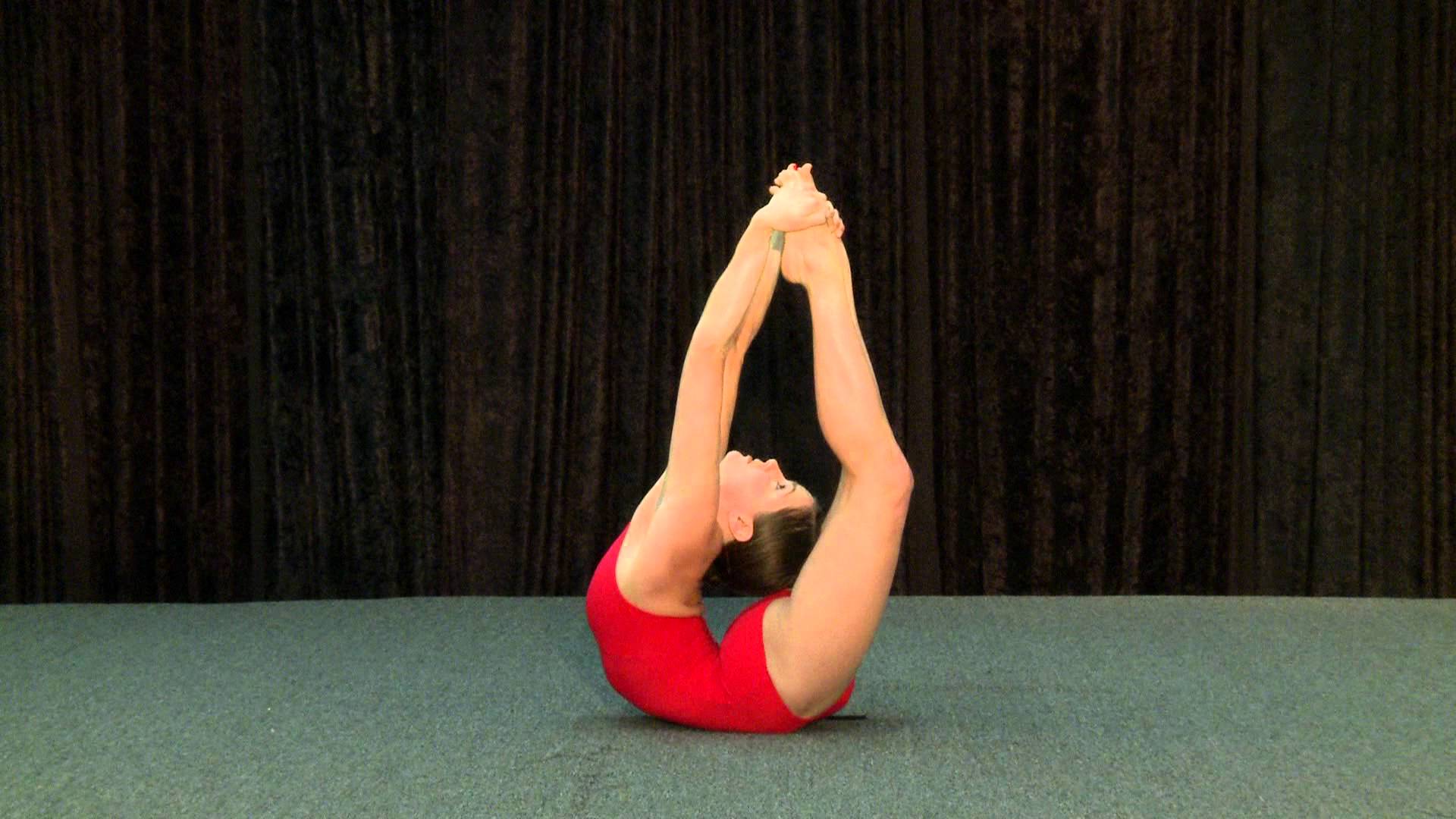
    Sarah Wells, International Yoga Asana Championship in 2012. Still from a YouTube video.

    “Yoga is about catching the stillness, even in competition”

    Joseph Encinia, the president of USA Yoga, said these words during an interview for the US online magazine Racked last year. In most yoga competitions the participants have to perform a certain number of pre-defined asana and hold them for a certain period of time (in USA Yoga competitions at least 3 seconds.) The postures are of often some sort of variation on a forward bend, a backbend, a stretch, and a twist, either chosen from a list of options or a yogi’s choice. Some organisations also test their competitors on the history of yoga, but the execution of asana to a certain pre-set standards is always present. In the Racked interview Encinia explained how “If a yogi’s alignment is off, we’ll hold it against them, but we’re also watching for balance and control of the breath.”

    Joseph Encinia, Demonstration at the 2012 USA Yoga Asana Championship

    Balance and breath are mentioned, that makes these competitions a bit more “yogic”, right?

    Well, maybe not so much. For starters, whose definition of alignment are we talking about? There are dozens of schools of yoga out there these days, some emphasising the anatomical alignment as the paramount of any asana, some much less so and some that barely even mention alignment in their classes. Furthermore, even if you go to two different classes of the same school of yoga, you still might hear things that not 100% identical. And lets not forget that we all have different bodies with different proportions, and I for one think that to get the most out of yoga, it is best taught in a small, if not 1 to 1 setting, where you can pay attention to everybody individually.

    This, together with the perceived lack of spirituality, emotional benefits and relaxation associated with yoga, are among the biggest critical comments against yoga as a competitive sport. Of course yoga teachers and studio owners need to make a living, and for that we need students to come to class. Yet, the absence of the “need to perform” feeling, and lack of comparison to others is something that many of us hold sacred and at the heart of yoga. There are also many other ways that can inspire and motivate us with our practise, and as to catching people’s interest in yoga, are these competitions really representative in any way of the science and art of yoga, thousands of years old?

    Each to their own and as yoga continues to grow in popularity, it is always interesting to hear what attracted people to come to class in a first place and what image of the practise they might have before they step on the mat for the first time. I am going to continue my exploration on all things under the umbrella of yoga this Friday in a form of a documentary screening at a friend’s new yoga studio. I might write more around this topic in the future but in the mean time, let me know what you think about the following:

    Is yoga a sport, and would you like to see (or participate) in an asana competition?

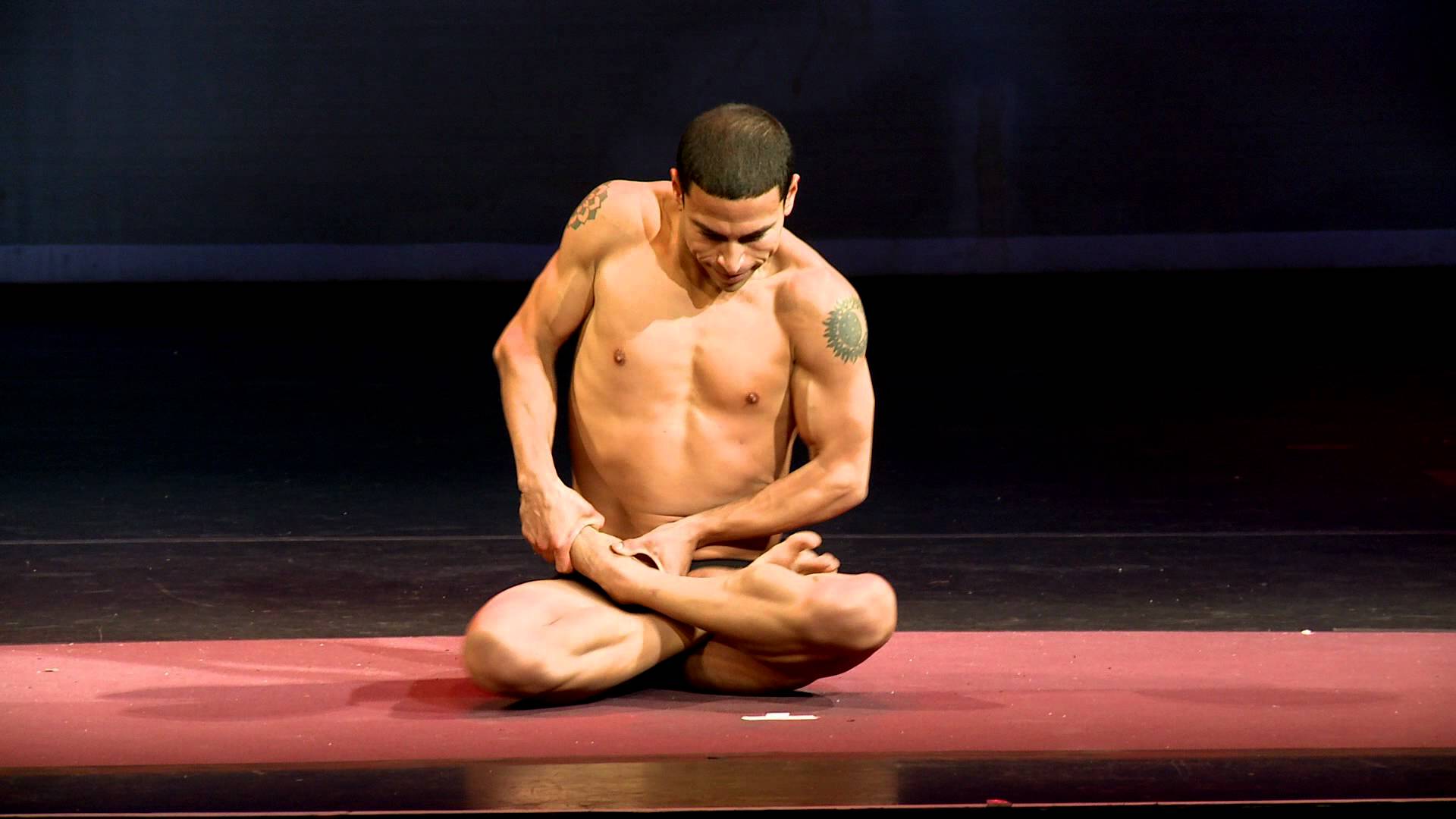
    The pictures are in this post are not mine. The 3 YISF pictures are stills from competition videos available on YouTube.

    Juan Manuel Martin Busutil Demonstration at the 2013 International Yoga Asana Championship

    Tallenna

    Tallenna

    Tallenna