Tag: SustainableLiving

  • Sustainable Christmas Presents Ideas for 2019!

    Sustainable Christmas Presents Ideas for 2019!

    My last “Sustainable Christmas Presents” post was written three years ago. Reading it now am struck by how much things have changed for the better, in terms of sustainable living and life choices being in the minds of every day consumer! Having the full information on how, where and by whom items are produced is so much easier. Those of us who will be in last minute rush will no longer need to opt for charity donations on behalf of somebody (although this is a great thing to do) but you can easily find sustainable alternatives for a range of gifts, regardless your budget!  

    So, in case you feel your nearest and dearest (or your boss) are not quite ready to hear you have sponsored goats/toilets/school uniforms on their behalf, here are some ideas of sustainable gifts. All of the products/companies below I am either a happy customer myself, or have heard great things of from trusted source. 

    Cosmetics That Are Good For the Skin and Planet

    For cosmetics check out UpCircle Beauty, a company that takes used coffee grounds and turn them into beauty products such as scrubs. How genious is that? Everything is vegan, organic, sustainable, recyclable… For those small gifts and stocking fillers, check out their “under £10” section.

    Ecological beauty products
    UpCycle Pamper Kit

    In Finland, just head to Ruohonjuuri (or their website) for a wide selection of eco-friendly, cruelty free options. In Cyprus, my go-to shop (online and in Nicosia) is Eco Home Store.

    Fairly and Sustainably Made Clothes

    For sustainable clothing and accessories, I am loving how much more choice there is these days, for different types of activities. Also the quality of materials has improved so much. Personally I find my recycled plastic leggings these days far superior to the traditional poly-elastane mix leggings in comfort and in fit. As I have gone through a lot of leggings in my life, you can trust me on this one!

    Weekendbee is a Finnish online shop that only sells active wear from companies that have sustainability as their core value. Their mission is to make its products, manufacturing, and operations as sustainable as possible. As well as some of the better known brands, such as Patagonia and Jack Wolfskin, they also stock smaller and newer sustainable brands.

    Finisterre is a British brand that designs functional and sustainable outdoor products. Their items range from wetsuits to coats to dresses and jumpsuits. They also have a repair service for their products, based in Cornwall.

    Allbirds Footwear  and Will’s Vegan shoes  both have sustainability, ethics and fair wages in the forefront of their business model. I have also not met a single person who would not have been happy with their Allbirds and Will’s shoes so they are definitely something to check out. 

    Ninety Percent is a London based company sells the type of womens wear we all use: There are sweats, dresses, knitwear… They also share 90% of their distributed profits between five charitable causes. My next trackpants and basic T’s are coming from here for sure! 

    For leggings and yoga gear, FreeSpirit and Nitara are both UK based, female run and make leggings and tops out of recycled plastic and organic cotton. Designed for movement, these products do not start sliding or feeling otherwise awkward when in the middle of yoga class. N

    Sustainable Yoga Clothing
    Freespirit tops

    If it is swim and surf wear you are after, The Seea makes amazingly elegant and highly functional products that last. I am still using pieces I bought 8 years ago! They also have an increasing collection of rashies, one pieces and bikinis made out of recycled materials.  

    Sustainable swim wear, ecological fashion, surf leggings
    Still using these TheSeea products, ordered in 2012…

    Finally, Halla x Halla is a Finnish company whose swimwear fabric starts its journey as fishing nets, carpet flooring, and plastic from landfills and oceans all over the world. The products are manufactured in Bali, with the factory employees paid a fair living wage and good working conditions.  

    Other Sustainable Present Options

    If candles are your thing, look out how they are made. For instance, candles made from soy wax usually burn cleaner and longer than paraffin candles, giving a more subtle fragrance. Another option is candles made of coconut wax that have a great scent throw and burns slowly. Beeswax candles are not vegan, but help purify the air as it burns and is often blended with other waxes as it has a scent of its own. 

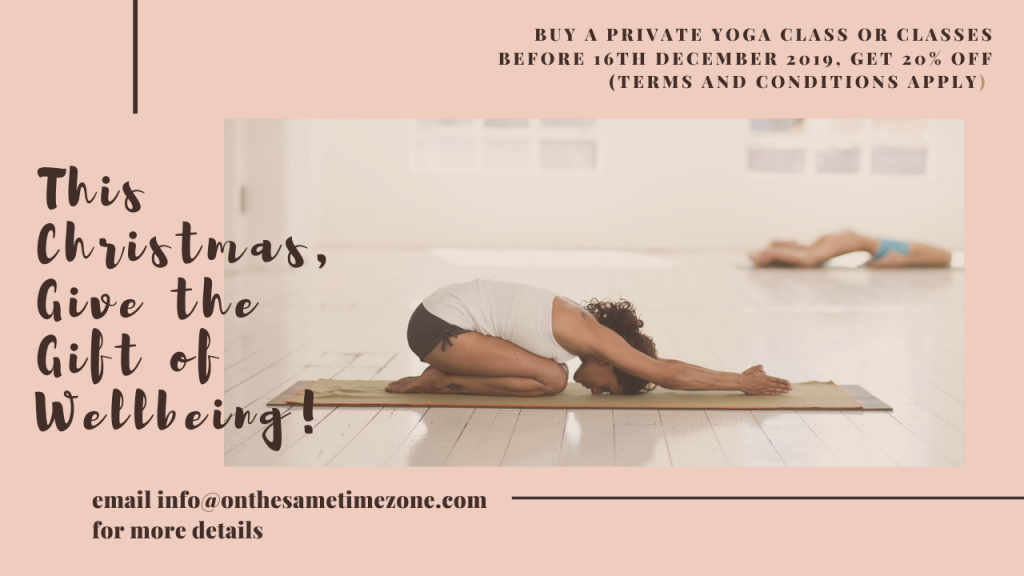
    There are also many great option for non-material Sustainable Christmas Presents, one of them being one or a series of one-to-one (or small group) yoga classes. I am offering my private classes with -20% discount if purchased by Monday the 16th December. If this raises your curiosity, do not hesitate to get in touch !
    Private Yoga lessons in London

    What are your ideas for Sustainable Christmas Presents?

  • How To Survive December and Beyond

    How To Survive December and Beyond

    Christmas is coming, as you have surely realised by now. It is a season of high expectations, self-inflicted pressure, being surround by more than usual amounts of stuff everywhere and various parties. Unfortunately for many this is also the season of feeling ill or run down, the symptoms varying from being slightly sniffy to a full blown fever and several days of bed time. So how to survive December, once again?

    Because we all love lists and advice, here’s my top tips to survive what is left of December and its aftermath.

    1. Use hand sanitizer and wash your hands at every opportunity

    Sounds obvious and most of us probably do this already (thank you for that.) But really, I mean washing your hands all the time. The bigger the city, the more the germs and thus more opportunities to catch some nasty streak of a bug. I have taken to washing my hands the first thing I arrive anywhere and the last thing I do when I leave the place, including my own home. Sounds exaggerated? Maybe but I have also been feeling pretty ok over the last weeks.

    I am not alone on reminder people about this either. I recently visited a new gym and counted ten (yes, 10) hand sanitizers in the ladies changing room alone, plus several in the reception area and in the studios. They know too.

    How to clean your yogamat

    2. Supplements and food you put in

    Now I am the first one to admit I have no particular interest in talking about food or supplements. We all know that Vitamin C is beneficial and we should up the intake when ill, either through food or supplements. In addition, I usually take extra zinc in the winter to help combat against viruses and unwanted bacteria. A yoga teacher friend of mine swears by Olive Leaf Extract and after I learned the capsules also contain zinc I switched to those. So far, so good.

    Naturally the quality (and quantity) of food we put in has a big impact. December tends to be about excess and indulgence to an extent but I try to counterbalance that by making sure I have a healthy breakfast, keep up with my fruit and veg intake and drink loads of water and herbal teas. Winter is also the citrus season in the Southern Europe. I try to make sure that my mandarins, lemons and oranges come from Cyprus, Greece, Spain and Italy, rather than go for berries and other fruit coming from another continent.

    Lemons, Local Food, Citrus

    3. Move – and Rest

    Cold weather, rain and darkness are not the greatest motivators when it comes to exercise but even a little bit of movement goes a long way. I used to be very sceptical of 45 minute yoga classes but these days, knowing how busy things can get, I happily throw my yoga purity mindset out of the window – everything counts for something and if all you can squeeze in is a 45 minute class, so be it.

    If you are into measuring your fitness performance, it might be an idea to try and mellow down your normal routine, especially if you are feeling the end of the year tiredness creeping in. Moving should be a pleasure, not a punishment. Just remember, even the word “asana” translates as a “comfortable seat.”

    Finally, if you feel like just resting, rest. Have baths. Sleep. It is like putting money in the Bank (of Health.)

    The Sanskrit word “asana” translates as “comfortable seat.”

    RestorativeYogaProps

    4. Go online for your purchases…

    …or even better, don’t buy any material things at all. Give services, charity items and your time. Seriously, it is pure madness to even try and make it to the high street, especially knowing that on the 26th everything will be heavily discounted.

    I am not a Grinch, I am just trying to get to the essence of the Christmas. Peaceful mind, togetherness and all that.

    …And The Beyond Part?

     Recovery. As important as getting ready and being in the moment. As a part of the “survived December” plan I will be looking into the following:

    • Colonic cleansing, because they are good for you! Especially after a period of having digested (or not) probably more and/or heavier food than usual. I see Suki at The Colon Whisperer.
    • An introductory offer pass to a new yoga studio: A perfect way to try new classes. Plus, the 7-14 day window is a good motivation to make it to few more classes than maybe usually. If cold is not your friend and you are London based, why not take up on the hot yoga offers at Hotpodyoga or Light Centre Monument.
    • Facial or natural face lift massage. To get a bit of the potentially lost glow back.
    • Rest and baths, as before Christmas. Whatever you do, always remember to rest.

    Happy holiday season everybody, stay warm and safe!

    Grey jumper

  • 5 X Daily Routine To Stay Grounded and Keep Going

    5 X Daily Routine To Stay Grounded and Keep Going

    Whether you find it boring or not, there are a lot of good things to be said about daily routine: Several studies have proved that having a routine can, for example, reduce stress, improve sleep and consequently lead to improved health. Other benefits of routine include the possibility of eliminating certain time consuming tasks from your days completely so you can focus on the essentials: Hence the distinctly always-the-same sartorial choices of Mark Zuckenberg, Barak Obama and the late Steve Jobs.

    However, even with a very regular schedule it can sometimes be very easy to start feeling overwhelmed, demonstrating as anxiousness, stress, and lack of energy and/or motivation. Then there are the days when even the best laid plans and intentions seem to fly out of the window and life feels like one big game of never ending catch up.

    Whilst there are no miracle recipes to stay cool and collected in every situation, here are my top five daily routines to help me to stay (or return to feeling) rooted and calm(-ish.)

    Coffee with a view

    1. Morning Stretch and Mood Setting – In Quiet

    Having a stress free start to the day is an absolute must for me. I rather wake up an hour early to have a relaxed morning than experience a mad rush first thing when opening my eyes.

    The old saying “start as you mean to go along” is something I try to apply to every day.

    Whilst I am just as likely to hit to snooze as any other person, I take the time in between to have a slow, gentle stretch with my eyes still closed, waking up my facial muscles, wrists, ankles one by one, followed by a spinal twist to both sides. I also stay away from electronics, radio or any other source of noise for at least 15 minutes after getting up. Instead I might do a small meditation, have a look at my paper calendar or have a chat with my housemates whilst making about the coffee, checking in how we slept and how do we plan to tackle the day ahead.

    Some days it is of course harder to get out of bed but as they say, sticking to a plan can become a habit in less than a month so if your mornings always seem manic, maybe this is something to try?

    Viparita Karani

    1. Glass of water and Breath of Fresh Air

    Nothing new with this one but routines are not about what you know, they are about what you do. There is no need to stress about the lack of fresh lemon to squeeze in your water – this is Instagram free time anyway so have that glass of water next to your bed if that is the best way for you to remember to down it.

    As for fresh air, opening the window and taking in few deep inhales and exhales counts too. 30 seconds is all your need. If I can make it for a brisk walk even better, although I always aim this not to be a mad rush for the bus.

    1. The mid-day/afternoon 5-10 minutes time off – Again, In Quiet

    Especially in bigger cities there is noise absolutely everywhere! If you do not have the opportunity to escape to the forests/beach on a regular basis (I am thinking of you lucky Cypriots and Nordic people!) you might have to get very strict about this but trust me, it is so worth it. Put it in your calendar and lock yourself to the nearest toilet cubicle, or use headphones to block the outside noise as much as possible.

    There was a time when the saying “if you do not have 10 minutes to meditate, take an hour” used to drive me insane, even if I deep down realised how much truth there is in it. It does not even have to be 10 minutes, and it does not need to be a meditation. Just sitting in stillness and letting the breath work its magic usually does the trick.

    If you are sceptical, try this just once: Find as quiet place as possible and close your eyes. Sit on a chair or whatever is comfortable and have your hands on your knees, palms facing upwards. Relax your facial muscles and jaw and take ten deep inhales and exhales, trying to keep them as even length as possible.

    How did it go?

    1. Feel the bodyweight to root and rebound

    With increasingly sedentary lifestyles it is no surprise many of us feel disconnected from our bodies. We might experience aches and pains but are not able to locate or describe them in a clear manner, and “body coordination” can make sense as a term but not as something we would say we are good at.

    Just as having a quiet moment or two every day can help with increasing our mind-body-soul awareness, I also find using my body weight to actually feel the physical edges and capacity (or non-capacity at certain moments) something I need to do every day. The beauty of this is that it does not mean a daily trip to the gym or yoga studio, this is something that can be done in five minutes and in pretty much any type clothing.

    Some of my favourites “just checking in” body weight exercises are:

    • Planking (knees up or knees down)
    • Side planking
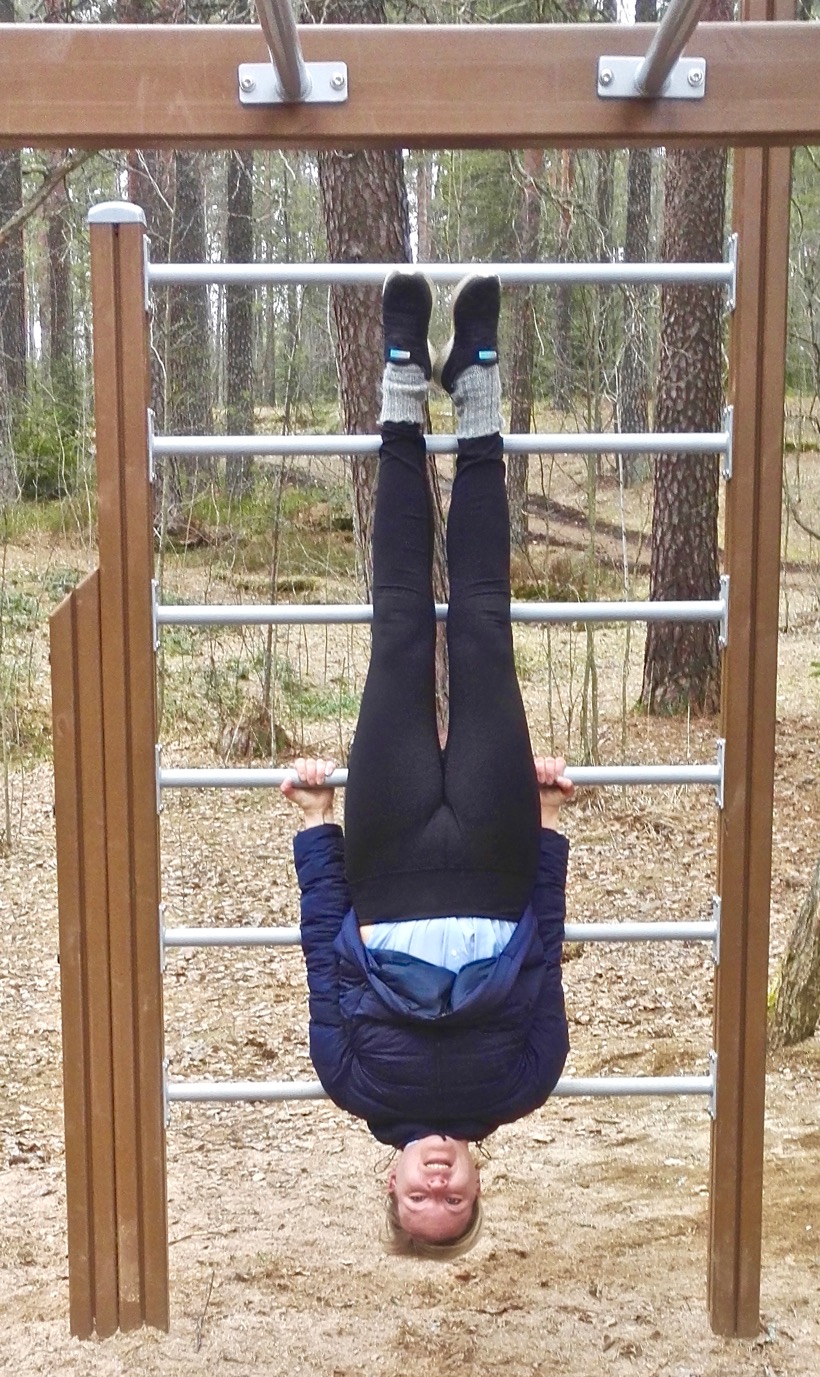
    • Hanging off a wall bar or a sealing bar (the metal bar connecting toilet cubicles is perfect: this used to be my go-to office pick me up, perfectly do-able in a suit and heels. Unfortunately I do not have any pictures.)
    • Reverse table top (also known as crab pose)
    • On a chair pressing down with your arms and lifting your bum and legs up (L-sit variation)
    • Handstand/cartwheel/any inversion

    The above might sound a bit crazy but hey, you can go to the gym and do dead lifts, or you can just practise lifting yourself. For the latter, do you really have any excuse?

    1. Approach your bedtime with the respect it deserves

    The other bookend of the day, bedtime, is just as important as the way you wake up. It really is worth the effort to put the phone away even 30 minutes before bedtime. An analogue alarm clock costs about 5 quid/euros (I just got a new one for myself) so you can even leave the phone to a different room all together. If feeling too fidgety for a silence straight away, try to old school before sleep activity of reading a book, a comic or a feature story in that free magazine you picked up three days ago.

    I find it easiest to ban all electronics from my bedroom at all times. That way I do not even have the opportunity to quickly check my phone the first thing in the morning or last thing in the evening. As I have to be physically up to get to it, having a good stretch or a cup of tea/coffee becomes just as feasible – and often preferred – action to take and in no time, a habit.

    What is your main daily routine that help you stay grounded and going every day?


  • How to Keep Calm During The December Madness

    How to Keep Calm During The December Madness

    By now most of us have well and truly realised December has arrived. Not necessarily from the weather (as this day and age this time of the year can just as well be white, green or gray) but from the slightly frantic energy in the air. The Christmas ads are on full gear, invitations to various festive parties are coming from all directions, and the general anticipation of Santa/days off/opportunity to just sleep-eat-sleep is tangible. While all this is happening to the soundtrack of non-stop Christmas jingles, illuminated by various Christmas lights everywhere, and often fuelled by more drinks and nibbles than recommended and reasonable, it is no wonder how the end of the year can leave us a little weary and run down, despite all the fun.

    Below are few of my tried and tested tips on how to stay sane, healthy-ish and keep reasonable energy levels all through December. A little bit of effort and self-discipline is required but it guarantees you will be able to make the most of the season.

    1. Keep up with your water intake

    Obvious one but hands up, who feels like reaching out for the water bottle when the temperature nears zero? I have noticed that since moving back to the UK from Cyprus my water intake has gone down a lot, and as a result I have started get the occasional headache which never used to happen. We all know basics: 2-3 litres a day, more if you are drinking coffee/tea/alcohol and/or exercising. Warm water with some lemon or ginger in it counts too!

    1. Take a moment – or two – every day to be quiet

    This is even more important during December than other months I find. Even on a good day social media updates can do your head in, especially if everybody in your circles is talking about the same subject (i.e. gift shopping, parties, decoration, how much they like/hate this time of the year.) Try to shut down – properly shut down – your phone when you get home in the evenings well before bed time, and do resist the temptation to check it the first thing in the morning. Giving yourself just 10 minutes of proper quiet time, stretching, relaxing the facial muscles and the rest of the body and focusing on the breath will calm the mind and give you some much needed space.

    1. Ease off the pressure from yourself – The nature is taking it easy too

    There is no denying, it is cold and dark in the Northern Hemisphere. The shortest day falls onto the 21st December and from there on the days will slowly start get longer again. Whilst hibernating is not really an option for most of us, we can still be comfortable with the knowledge that natural to feel a slower and less energetic than usual. Be kind to yourself and slow down. Think of few things that are essential and things that bring you joy, and let those be your guide on how to navigate the festive season. Not all parties need attending to and some things can be finalised next year. If it feels appropriate, swap your usual vinyasa flow class to a gentler yin or restorative type, and as much as possible, give yourself a little bit more time to get through the everyday stuff. With this in mind (and executed), being merry and jolly flows in naturally.

    1. …and about all those gifts?

    Ok, some people might really need something, or they let you in on wish for something – if it is affordable, in line with your values (just saying… gifting should not be about you but also, are you comfortable with the gift you are buying?), go for it. Lacking ideas, think about the immaterial – a massage, a full house cleaning or a dry cleaning for five shirts, a yoga class or a month’s pass..? You can find a variety of services in all price ranges so make a point of taking time to google (or looking around at the small businesses around you) to find out what is available.

    And most importantly – enjoy the festive season and what it can offer to you! Be selective, be true to yourself and most importantly, be kind to yourself and to others.

    What are your tips to navigate through the December festive season or are you rather indifferent? As always, I would love to hear your thoughts and comments!


  • What are we talking about when we talk about sustainable development?

    What are we talking about when we talk about sustainable development?

    As long as I can remember I have had an interest in environmental issues and holistic living, long before yoga came to my life. Coming from Finland environment is something we are surrounded by all the time and things like not littering, paying for plastic bags in supermarkets and recycling were things that were well established in every aspect of the society already in the 1980s and even before that.

    Always keen to dig a little bit deeper I went on to study sustainable development as a part of my master’s degree and even did some research work on the topic for UNESCO back in the day. Life happens and for over a decade I ended up working in a completely different environment. By this time the concept of sustainable development had started broaden and include the notion of corporate social responsibility (CSR) in a more prominent way. Working in a corporate environment allowed me to keep track on the latest developments in CSR and to think what opportunities we have to include sustainable practises in every aspect of our lives in a world that was – and is – rapidly changing and bringing us more and more complex challenges.

    The below text was first published few weeks ago as a part of my on-going collaboration with EcoHomeStore. The idea for it came from the wish to go back to the basics: so often we talk about ideas and plans for future, only to realise that what our understanding of different concepts behind our ideas can be very different. There obviously is more to sustainable development what is offered below but it does offer a starting point and/or a recap for those wondering what it is all about.

    What are we talking about when we talk about sustainable development?

    Sustainable development, sustainable living, conscious living, socially responsible consumption… We hear these words more and more and instinctively probably would agree they are good thing. But have you ever wondered what do these words really mean, in real-life terms? And where does the concept of sustainable development come from in a first place?

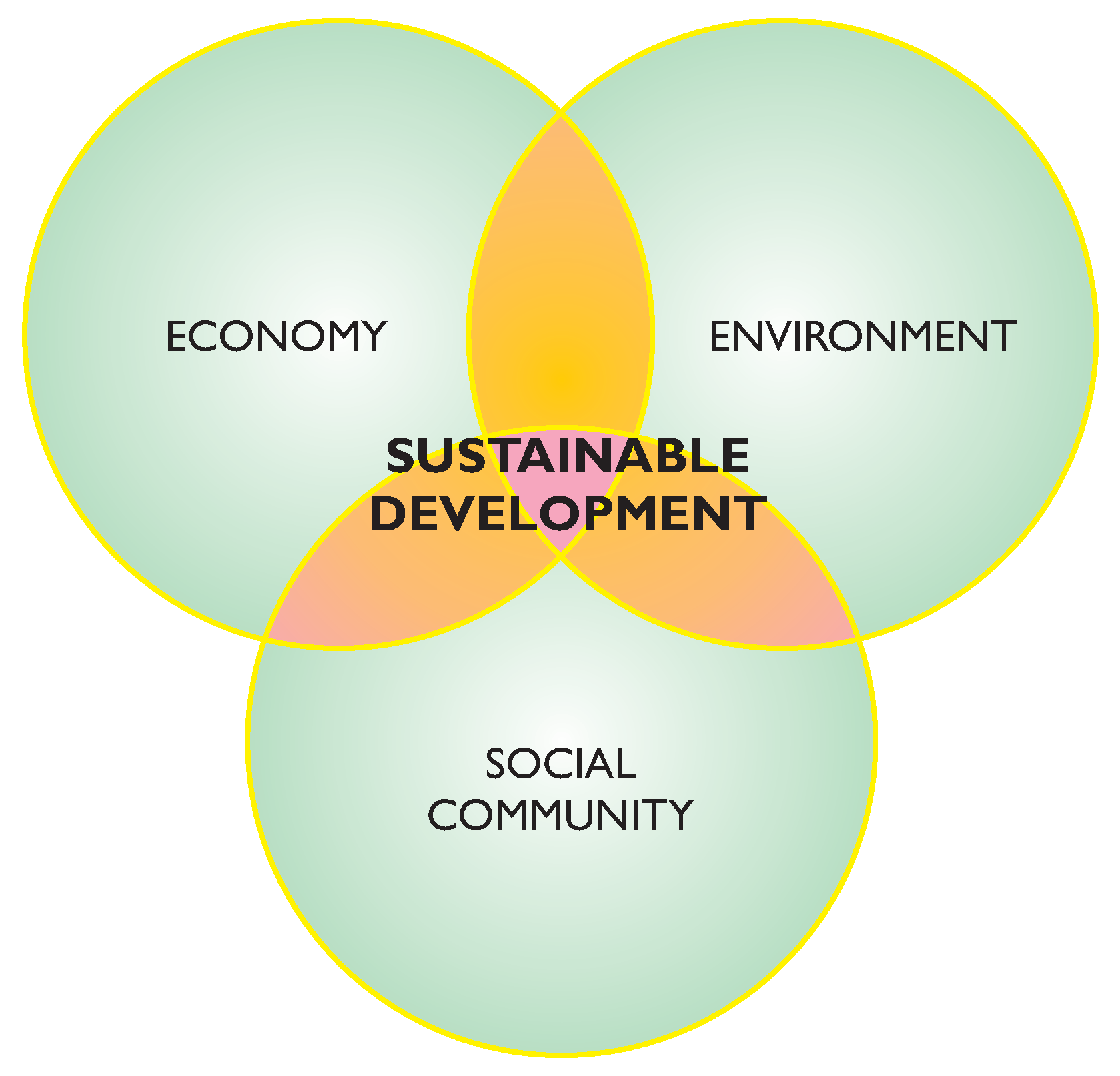
    The term “sustainable development” was first outlined in 1987 in a United Nations document called “Our Common Future” where it is defined as “development that meets the needs of the present without compromising the ability of future generations to meet their own needs.” In other words, the aim was to highlight the interdependence of economic development and environmental issued and how they should be discussed together. Since 1987 the concept and discussion of sustainable development has vastly evolved and expanded. Today it is commonly described to include three interlinked pillars: The environment (or ecology), the economy and society.

    Kestävän kehityksen määritelmä

    The environmental dimension refers to the need to preserve basic natural resources essential for sustaining life, such as the availability and quality of air, water, food and shelter. Other aspects of the environmental sphere are related to health (e.g. pollution as a health risk) and the use of natural resources for economic gains faster than these materials can be replenished naturally. At the heart of environmental sustainability is the need to (re)design the activities societies need whilst not degrading nature’s supplies. Examples of this are the utilisation of renewable energies such as wind and sun, mindful usage of water and harvesting materials such as wood from forests at a rate that maintains biodiversity. Further example is to eat food produced as locally as possible, from sources that favour methods of farming that do not damage the soil or water resources.

    The United Nation’s Development Goals define sustainable economic growth as ”a requirement for the societies to create the conditions that allow people to have quality jobs that stimulate the economy while not harming the environment.” The premise behind this is that poverty puts stress on the environment, as lack of resources and education in the underdeveloped parts of the word tends to lead to overuse of resources, as survival is at stake. Equally environmental problems often hit the poorest regions the worst. Some theories claim that increased global production helps the world’s poor to improve their income and with it their health, opportunities for education etc. Yet, it is impossible to dispute the fact that the gains economic growth of the planet are distributed unevenly, in addition to which the richest countries in the world are responsible for most of the pollution whilst consuming most of the resources.

    The situation today calls for new ways of thinking with research and innovation being in its core. Many businesses are also waking up to the possibilities that caring about the environmental impact can be beneficial to them as their clients become more aware of the issues at stake on a global level. The latest step in this field is the European Directive that now requires big companies to produce an annual “non-financial statement.” This document needs to contain information about their environmental, social and employee matters, respect for human rights and anti-corruption matters. This directive came into force in Cyprus on 2nd June 2017 in the form of the Companies Law.

    Social aspect of sustainability is a widely ranging, multi-dimensional concept. Broadly speaking it is concerned with taking humane aspects and development into account in everything, including the economy. Social sustainability is as much about diversity and inclusion at home and at workplace as it is about equal access to education, training. Another element of it is fair access to green spaces in urban communities but also, quite literally, about physical access to buildings and public transportation for people with different abilities. And we cannot talk about social sustainability without mention the importance of democracy and good governance, on every level of the society.

    Ultimately, social sustainability is about respecting the human rights of all individuals and conscious eradication of any obstacles (or even unconscious bias) that exist. This can take the form of codes of conducts and transparent policies at workplace preventing discrimination, clear acknowledgement that diverse opinions and participation usually lead to more inclusive governance and improved social cohesion and encouraging social interaction between different communities and groups.

    Looking back to the developments since 1987 when “Our Common Future” was first published there is lot to be optimistic about. Whilst the world we live in has become more complex, the understanding of what is required for improving environmental, economic and social sustainability continues to spread. Now more than ever we all have a part to play in this. We can all consider our options with our everyday consumer choices: Buying good quality products that are made or grown locally, even if they are a little bit more expensive. Turning off the tap when washing up, rather than keeping the water running. Recycling, taking your trash to the bin and educating the children about why do these things matter. Saying hello to the new family in the neighbourhood and aiming to act with curiosity and acceptance towards our surroundings. And if you are up for it, why not take on a wider challenge: Where do we get our idea of “development” and what does it mean in practise and is it sustainable for the generations to come?

    Now over to you. What else does sustainable development mean to you? Are you concerned in a first place or just going with the flow? I would love to hear from your thoughts in the comments!

    Tallenna

  • January Abstinence Yogi Style: The Yamas

    January Abstinence Yogi Style: The Yamas

    Earlier I wrote a brief post about the eight limbs of yoga as described by Patanjali in his Yoga Sutras. Most students of yoga are familiar with three of them: breath (pranayama), posture (asana) and meditation. The remaining five are not often even mentioned in many (asana) classes and if we were to come across them somewhere they can understandably seem a bit hard to grasp.

    What is however offered in Patanjali’s writings is still very much relevant to this day. In short, he offers – not dictates – a guide for us to contemplate and follow to help us all on our way to a happier, more peaceful live. The first limb, the yamas, are about restraint, abstinences and self-regulation: a code of self-regulation. As it is January, this seems a very suitable topic so lets break the five yamas down.

    Ahimsa

    Ahimsa is the principle of non-violence, non-harming and non-injury and it is the highest of the yamas. Rather than referring simply to physical aspects of violence (or to say, non consumption of animal products), ahimsa also means letting go of hostile, aggressive or irritating thoughts as they prevents us from being at peace with ourselves. Included in this concept is also how we treat ourselves: do we speak to ourselves with the same kindness and respect than we speak to others? Ahimsa does not however tell us fall victim: we are all allowed to defend or protect ourselves, if this is to prevent larger harm from happening.

    Sutra 2.35: “As a Yogi becomes firmly grounded in non-injury (ahimsa), other people who come near will naturally lose any feelings of hostility (ahimsa pratishthayam tat vaira-tyagah.)”

    Satya

    Satya is the concept of truthfulness and honestly. The key to satya is to understand that it does not simply refer to what is our subjective truth. Instead it calls for an understanding for the larger truth takes into account in the big picture: opinions (e.g. gossip) are separate from the truth and it is important we learn to distinguish between the two.

     Satya also means that our thoughts, words and actions are in line: that we not only talk the talk, we also walk the walk. However, Satya is measured in relation to ahima, non-violence. It does not give us the permission to go around and say what we please to people in the name of ”but it is true” as this can be hurtful.

    Friends

    Asteya

    Asteya is what we also know as ”thou shalt not steal.” But as this is yoga, asteya does not simply refer to material things. Theft also exists in the form of taking others’ time (for instance, by being excessively late), draining their energy, ruining their happy mood or using their work ideas. Asteya invites us to reflect what and how we consume, well, everything: the idea is that all energy is interconnected and what you take from somebody else excessively always creates an imbalance.

    In a practical sense asteya can be seen in the principle of fair trade. Another example would be not paying back something that you should.

    Brahmacharya

    Brahmacharya is often translated as continence, but it does not mean celibacy is required to be a ”good yogi.” Widely speaking brahmacharya refers to being aware of the divine, and living in a way that is mindful of the energy we use. We all have experienced situations we have gotten disproportionally angry or agitated over something and ended up exhausted for it – not a good use of our energy. Another good example is how we use our effort during asana practise: are we practising mindfully and relaxed mind or focusing more on how we think our backbend should look? Which type of practise is more pleasurable?

    Sutra 2.38: “To one established in continence, vigor is gained.”

    Aparigraha

    Aparigraha refers to non-possessiveness, or non-greed. Simply put it means we should not accumulate stuff excessively or get attached to what we own. We are not the things we possess, nor do they define our personality or value.

    On a non-material level aparigraha means we should let go of old beliefs if they do not serve us anymore: For instance, how we behave with our friends or other relationships can change if the circumstances necessity a different attitude. Equally, we do not have to vote for the same party all our lives if a better option emerges. Our identities do not need to be fixed, and with the realisation of that comes freedom.

    This was should a quick introduction to yamas but how do they sound to you? Feel free to drop a comment to add, disagree, say you what to want to say – nothing better than a good discussion.

    img_1343

    Tallenna