Tag: Breath

  • The Difficulty of Being Honest with Yourself

    The Difficulty of Being Honest with Yourself

    One of the hardest things in this life is to be honest with yourself.

    The first reaction when I hear this phrase is to be in a state of complete denial. “I am realistic,” I’ll say to myself.

    “I know what I weigh, I am happy to list my development points if asked in a job interview and my insurance company knows I am a social smoker.“ And I suppose these statements are all true and admirable. No problems there.

    But I am talking about the deep shit, the stuff that is so deep under the surface, sometimes confusing, that we don’t even want to talk about it. Or in some cases, we talk about it all the time, overanalyse every detail over and and over again, convincing ourselves that we are ok with how things are.

    Yet, if we were to take a moment to be silent, uncomfortable feelings may surface. Feelings that are hard to grasp because they have been buried through days and months of a life bombarded by noise and constant action.

    These are the feelings that tell us the truth -the real truth- as to what is really going on deep down inside. Some call it intuition, some call it a gut feeling or inkling. I’m sure you know what I am talking about, because we all had moments when that feeling came so strong we could not ignore it. And whether you listened to that gut instinct or not, you knew deep down what the right thing in that situation would have been.

    But why is it that we often find it so hard to acknowledge what our mind and body knows all along?

    I am convinced that in most cases it is because of fear.

    Fear of having to walk away from situations and people we have become attached to, even though they are less than ideal.

    Fear of what other people might think if we go with our gut feeling.

    Fear because we cannot rationalise our intuition and it can often go against what would make sense rationally.

    Fear of the unknown and the anxiety of making the wrong move, regardless of what everything in our gut tells us otherwise.

    Fear for making a truly honest assessment of where are at.

    So how do we know it is time to take a moment and have a long, hard, good look inside? How do we recognise that something inside of us is trying to send us a message?

    It often starts with that quiet inner voice that something is off. It can be very hard to pinpoint what that “something” is, especially if everything seems to be just fine on the surface. Odd feelings can come and go, but if these feelings keep coming back – it is worth to take a pause and check in.

    The truth is not out there. It is inside. It is a long and difficult road to understand ourselves, but remember that the truth is alive and living in us. When we slowly begin to understand and connect to our inner truth, it can take some time to get comfortable with the feelings and emotions that comes with it. But there is no reason to fear this. The key is to take all the time that is needed. Days, weeks, months, sometimes years. It might feel overwhelming (again) but celebrate this journey and continue on making time for these moments to yourself on a regular basis, to check in and evaluate.

    Journal, reflect, whatever is needed. Dig deep for the honest connection with yourself.

    And remember- your truth is yours, and yours only.

    The first version of this text is published on Happy Girl Yoga.


  • That Moment of Genuine Gratitude

    That Moment of Genuine Gratitude

    The below text is from yesterday morning, something I wrote straight after the yoga class I had taken. It was one of those moments when the right words to express what had until then been just a slightly uncomfortable feeling came to me and demanded to be written down straight away. So I sat down and typed everything on my phone, in the fear that I would lose the essence of what was, and posted it on Instagram. As Insta is not the most comfortable platform for longer reads, here is a repost.

    I did a vinyasa flow class this morning. The type I tell myself I am not too keen on, the type that I feel requires too much effort. “It’s dark, cold and almost the Winter Solistice”, I have been telling myself (since start of November), “In order to take care and nurture myself I better to just yin and restorative classes. And maybe something with chanting. No vinyasa.”

    However I have some free classes to use as I volunteer at my local studio in exchange of yoga classes (karma yoga!), and somewhere in the back of my mind I knew I needed to venture out my comfort zone to cheer myself up/give myself a good kick on the backside. See, I am a typical Cancer and being moody and withdrawn comes to me very easily.

    So I walked to this vinyasa class, chosen because it was only 60 minutes, not the usual 75. I like to threat carefully, hedge my bets, and this tells you how much I was expecting to, well, not enjoy the class.

    I lie down on two blocks to open up the upper body and make my way up to seated when the teacher walks in. After the usual “who is new to yoga/any injuries” questions, the first thing she says is to use the practise to look back at the year and reflect on the things and people we are grateful for, as “gratitude gives us perspective.”

    BOOM! Whilst I always aim to be realistically aware and grateful for everything and every day, so often I have been struggling (and feeling bad for it) to really genuinely FEEL it. The feelings of sadness and hopeless often seem to take the upper hand, no matter how hard I try to chase them away. But here was the invitation to try again this morning, an opportunity to let things come up on their own – when I least expected it. And maybe it was because of that, because I truly had no expectations, this morning I had one of those practises that people talk about with glowing eyes: Everything came easy (although the practise was not physically easy), with joy and gratitude for my ability to move, in that space, in this time, at that very moment. And for everything else. It was the type of yoga practise non-yoga people probably think we have all the time, and those with a regular practise know does not happen very often.

    It is a weird feeling when things come up on their own, when you observe without forcing it, yet being so fully aware. Yes it has been a hard year. But it has also been a year of conscious effort to figuring out my s**t even when I really did not want to, learn about the whats and whys, causes and consequences. Cleaning out the past and making space for the new, in all meanings of the term. Accepting that going forward sometimes means you first need to stop and even go backwards and that is ok.

    We need to contract in order to expand, like the lungs contract and expand when we breath.

    It’s been a year of horrible losses and bottomless sadness, reconnections, letting go – some things unwillingly, some because it just had to be done. It has also been a year of plenty of happy moments, deeper connections, and reconnections, and being incredibly lucky with everything I have had and everything I have.

    And this morning, in that vinyasa class, when I least expected it, I feel genuinely grateful for it all.

  • How to turn a bad day to a better one

    How to turn a bad day to a better one

    Bad days happen to all of us. Sometimes you just know the day is not going to be the best one straight after waking up. Sometimes a bad day creeps up on you slowly, starting with an innocent coffee spill, followed by signal failure in the tube and the realisation the keys were left at home… When things start going wrong it can feel like you are watching a car crash happening: there is nothing to do but to let day run its course and hope for the best.

    The good news is that it does not have to be like that. We have all the power to turn a day that has started badly to one that is, if not amazingly brilliant, a pretty good one. Here’s how.

    1. Acknowledge things are not going smoothly and make peace with it

    About a month ago I was few minutes late for a morning yoga class I was teaching. Not a big deal, being less than five minutes late, especially in Cyprus. Only this was few days after I had written a blog post how one should never be late for a yoga class. I was embarrassed and felt like a hypocrite. During the class I kept confusing my cues. Instead of shrugging it off, trusting that people were still following the class, I got annoyed and the rest of the class things continued to come out from my mouth sounding more or less strange: lefts became rights and so one. After the session, when somebody wanted to pay for a monthly pass, I realised I had left my purse home. At that point I let out a small “argh!” and the lady paying looked at me. “You are having not the best morning, are you? It’s ok, we all have those.”

    For some reason those words gave me real comfort. Yes, bad days do happen for everybody and guess what, people understand that. They are not going to judge me for small mistakes. So why on Earth was I getting so worked out over things that quite frankly were very, very minor? Why was I calling myself a hypocrite for being three minutes late when nobody else was doing that?

    And just like that, I made peace with the not so great day. I was not letting it to dictate my day. There is no great book of destiny that orders us to have x amount of s**t days a year, on specific dates on top of that. Instead, we can all do the following:

    2. Reflect on the triggers and keep things in perspective

    Things might not go great early on a given day because you are tired, or already overwhelmed by something that has happened earlier. When acknowledging and making peace with the not so smooth day so far, take a moment to check in with yourself. Ten deep breaths (I know, easier said that done but that’s why we practise yoga) by your desk, in the bus or even in the nearest toilet cubicle already help to calm the nervous system working on overdrive. Try to avoid catastrophising the events so far along the lines “This only happens to me” and “I might just give up and go home because the rest of the day is only going to be rubbish.” Trust me, there is no “bad day conspiracy” going on, aimed particularly at you. Instead, try to keep a positive (or at least a neutral) outlook and think what in particular has triggered you to react emotionally. Once you have identified them it is easier to find ideas that will help, if not to turn them around, at least keep them in perspective.

    3. Modify your plan respecting your resources

    So you are not feeling the best but need to get through the day. Have a look at your schedule and decide what are the things that have to be done, things what you can do and things that can wait. Is there a challenging one-to-one meeting coming up? Rescheduling is not great but as long as it is not what you are famous for in the office, maybe today is the day to do it. First draft of a report to be passed on to a colleague – you probably do not need to go it over with a comb, if it is the first draft nobody will care about few typos or less-than-perfect headlines. In short, treat yourself with compassion rather than punishing yourself for expecting excellence when you clearly are not up for it.

    4. Switch your “to-do” list to a “done” list

    Most of us have our lists (or ten) for things we must and want to get done during the day. Most of us also have things on those lists that we really are not too keen on, even on a good day.

    One thing I often do, bad day or not, is to change my “to-do” list to a “done” list. I write down every task I do, whether it figures in my notebook or not. Sometimes the things I get to mark down on the “done” list are the same that I have on the “to-do” list – if that is the case, great. Sometimes I end up with a list of things that are entirely different. The point is, the things I end up doing are always tasks that needed to be sorted sooner or later. And so what if your “done” list includes things like sending a postcard to your cousin who lives in another country, and stretching in front of three episodes of your favourite series on Netflix. Because at the end of the day your cousin will probably appreciate your postcard more than your colleagues would be impressed by your intellectual contribution to the company Intranet you had planned to do originally. And gentle stretching whilst unwinding in front of a good program is just as good as going to a two-hour power vinyasa class you really did not feel like.

    Celebrate the even small accomplishments with good consciousness. Your best today is good enough or did somebody tell you something else?

    Finally, remember that everything in this life is temporary and  tomorrow is another – and with all likelihood – a better day.

    What are your best tips for improving a day going not too well?

    Tallenna

    Tallenna

  • Yoga inspiration or yoga exploitation?

    Yoga inspiration or yoga exploitation?

    Some of you might already have seen the video starring the international yoga teacher Briohny Smith did for the US fitness chain Equinox some six years ago. At the time the clip caused quite an uproar (mainly in the US, not sure if anybody in Europe cared…) as some considered it to be portraying yoga in an overtly sexual way, not representing the “true spirit” of the practise and exploiting the practise we all love for commercial purposes.

    It is said that how we interpret the things we see reveals a lot about ourselves. We can choose to see this video as a sacrilege to an ancient practise, or we can see a beautiful asana flow that clearly has taken years of dedicated, daily work.

    It is also up to ourselves to decide if videos like this make us feel somehow less skilled or worthy practitioner of yoga, because our bakasana-to-handstand-press-to-tripod-headstand transitions (hell, any of those asanas individually, never mind the transitions!) are quite not as smooth as Briohny Smith’s. Or, if we choose to see this as an inspirational clip of what the human body is capable with focused, consistent effort.

    So, have a look and decide for yourself (and notice the impeccable aligment she has!) Do also check out the parody video below: It might say “parody” in the title but I for one think that guy must have one solid, kick ass practise going on!


  • Patience, Where Are Thou?

    Patience, Where Are Thou?

    “Patience: the capacity to accept or tolerate delay, difficulty, or annoyance without getting angry or upset.” 

    Patience can mean different things to us, and its definition can also vary depending on the situation. Usually patience has an underlying realisation that we want, need  – or lack – more self-control in situation we face. Here are few thoughts on how to map where we stand on this issue and how to work on it further.

    1. Patience as a skill to be learned. Some people are born more patient than others but we can all work on improving it. Unfortunately there are no short cuts and as with everything, progress might not be linear. The good thing is that our lives are usually not short of opportunities to practice and improve.
    2. Evaluate the current situation: It is important to understand what in your behaviour are reasonable and justified prompts to advance a situation (in a positive and constructive way) and what falls under the category of being impatient. Asking politely to speak to a manager for receiving bad service/unsatisfactory repair is usually entirely justified, demanding to see the ”one in charge” so loudly that the neighbours can hear it too, less so. Do a quick poll with those close to you to get some feedback in case you are unsure where you stand in this.
    3. Notice your triggers: Are you patient with others but get frustrated when you cannot pick up a new skill as fast as you liked? Or are you very accepting with yourself but slow traffic or screaming kids make you grit your teeth? Or are your triggers a combination of both? Start noticing what makes your blood pressure rise and see if there are any patterns that come to light.
    4. What is the worst that can happen? You are stuck in traffic, your kids/partner/friends take forever to get ready, your mail order has not yet arrived… All of these situations can most of us pretty frustrated. However, if these things are not regular occurrences, what IS the worst thing that could happen? You are not the only person who gets delayed because of traffic, and some people just need longer to get ready, for whatever reason. So what? If you however realize you have repeated situations of frustration, you have two options: Be proactive in seeking solutions or accept the situation as it is.
    5. Deep breaths: If you need, excuse yourself and walk away (or just walk away.) Find a calm corner, a fire escape or a toilet cubicle, close your eyes, relax your jaw and take deep breaths. Give yourself the time to calm down, and re-compose yourself. You are more than allowed to.
    6. Practice: Coming back to the first point, notice the moments you start becoming upset, agitated, even angry. Observe them, embrace them, try the things above. Over and over again. Try not focus on the end goal, whatever it may be for you. Instead, focus on the small things, stay mindful and enjoy the more peaceful situations that will follow.

    patience2

    Kärsivällisyyttä etsimässä…

    Kärsivällisyys voi tarkoittaa eri ihmisille eri asioita eri tilanteissa mutta usein takana on tietoisuus itsehillinnän hakemisesta, kehittämisen tarpeesta – tai sen puutteesta. Alla muutamia ajatuksia kuinka kartoittaa omaa kärsivällisyyttään ja miten sitä voi kehittää.

    Välikevennyksenä todettakoon että koitin löytää jutun kuvitukseksi suomalaista sananlaskua kärsivällisyydestä (englanniksi kun niitä löytyi pilvin pimein). Google kuitenkin sitkeästi ehdotti kärsimystä ja siihen liittyviä sanontoja. Mielestäni kyseessä ei ole kuitenkaan ihan sama asia vaikka läheltä voi joskus liipatakin. Saatte siis nyt tyytyä Roope-Setään.

    ankkaka%cc%88rsiva%cc%88llisyys

    1. Kärsivällisyys on taito jota voi opetella. Jotkut meistä syntyvät kärsivällisimpinä kuin toiset mutta kaikilla meillä on mahdollisuus opetella sitä. Valitettavasti tähän ei ole mitään ihmekonstia eikä se oppiminenkaan ole aina suoraviivaista. Positiivista kuitenkin on että elämässä ei yleensä tule pulaa mahdollisuuksista kehittää omaa kärsivällisyyttään.
    2. Tiedosta tämän hetkinen tilanne. Kärsivällisyys ei tarkoita kynnysmatoksi ryhtymistä ja aivan kaiken sietämistä. Joskus on ihan aiheellista ja tarpeenkin vaatia esimerkiksi parempaa/nopeampaa palvelua tms. Kuten monessa asiassa, tapa millä asiansa esittää on tärkeämpi kuin mikä itse asia on. Jos on vaikeaa itse määritellä omaa kärsivällisyyttään eri tilanteissa voit kysyä ystävien, kollegoiden ja vaikka lapsien mielipidettä asiasta.
    3. Mikä ärsyttää? Siedätkö toisten ihmisten erilaisia tapoja hyvinkin, mutta turhaudut itsesi kanssa? Vai oletko oma paras ystäväsi mutta hidas liikenne tai huutavat lapset saavat pinnasi heti kiristymään. Kiinnitä huomiota mitkä asiat ja/tai tilanteet saavat sinut kärsimättömäksi ja mihin pisteeseen asti. Onko tilanteiden välillä yhteneväisyyksiä? Mitä paremmin tunnet itsesi ja reaktiosi, sitä paremmin osaat ennakoida ja ohjata omaa käyttäytymistäsi.
    4. Kaatuuko maailma? Olet jumissa liikenteessä, lapset/partneri/ystävät tuntuvat hidastelevan, odottamasi asia ei saavukaan silloin kun oletit… Nämä kaikki tilanteet ovat tietenkin ärsyttäviä MUTTA. Mikä on pahinta mitä voi tapahtua vaikka asiat eivät menekään niin kuin odotit? Meistä kukaan ei istu ruuhkassa ensimmäistä tai viimeistä kertaa, ja joskus muut ihmiset ja asiat nyt vain ottavat aikansa ilman että siihen voi mitenkään vaikuttaa. Jos kuitenkin huomaat säännöllisesti löytäväsi itsesi samanlaisesta tilanteesta on vaihtoehtoja yleensä kaksi: Joko alat etsimään ratkaisuja tilanteeseen joka koettelee kärsivällisyyttäsi, tai hyväksi sen sellaisena kuin se on.
    5. Hengitä. Tiukan paikan tullen poistu tilanteesta ja kävele ensimmäiseen hiljaiseen paikkaan. Sulje silmäsi ja hengitä syvään. Anna itsellesi aikaa rauhoittua ja koota itsesi uudestaan.
    6. Kuten alussa totesin, joka päivältä yleensä löytyy tilanne jossa kärsivällisyyttä voi harjoitella. Kiinnitä huomiota tilanteisiin joissa olo alkaa tuntua levottomalta tai ärtyneeltä. Huomioi, hyväksy, yritä yllä mainittuja asioita. Aina ja uudestaan. Yritä olla keskittymättä tiettyyn lopputulokseen, keskitä sen sijaan ajatuksesi tähän hetkeen, omiin tuntemuksiin ja niiden hallintaan. Pikkuhiljaa voit huomata elämäsi muuttuvan hieman seesteisemmäksi.

    patiencechicken


  • Yoga for Pregnancy

    Yoga for Pregnancy

    Yoga can be very beneficial during pregnancy for several reasons. In addition to the “general” (in the absence of a better word…) benefits I talked about earlier here, here’s a few pregnancy specific points that are interesting:

    1. An asana practise can be very grounding both physically and emotionally: It can literally improve balance as the centre of gravity of the body shifts during pregnancy. It also offers hightened mental balance during time when emotions can run on the surface more than before.
    2. Yoga develops and increases body awareness and acceptance during and through the pregnancy and labour. You can learn techniques to ease discomfort during pregnancy and labour, how to promote optimal featal position and helps to create a connection with the baby.
    3. We cannot talk about any type of yoga without mentioning the breath: Just as breath is incorporated to every asana, it is also an integral tool of childbirth. Pranayama practises learned during pregnancy yoga can be also utilised during contractions, labour and birth.
    4. Yoga offers a moment of relaxation and self-nurture, especially important during pregnancy. Yoga poses modified for pregnancy effectively relieve tension in neck, shoulders, upper and lower back, chest and hips.
    5. A group pregnancy class promotes general wellbeing and health but also offer a bonding experience with others in the same stage of life: this can be a real community building experience

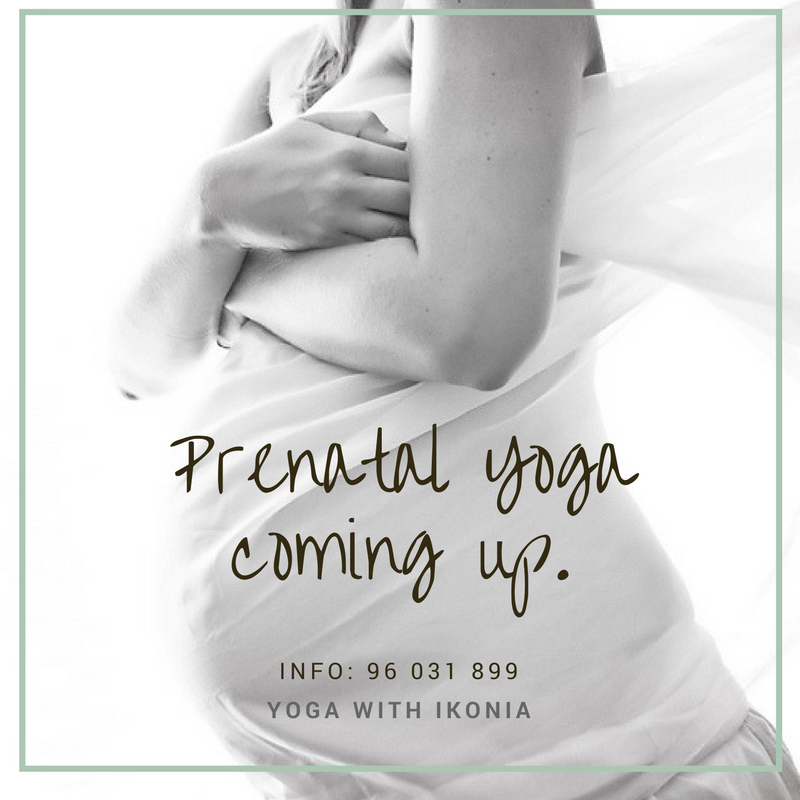
    If you are pregnant, this got you interested AND you are in the Larnaca area in Cyprus I would love to hear from you! I am currently in training to obtain the Birthlight organisation’s perinatal yoga teacher diploma, in addition to my 200 hour yoga teacher credentials. Together with my yoga teacher colleague and a coursemate Ikonia we will be starting Birthlight perinatal classes in 2017 that is fast coming up! The classes will be held at the Evi Suri Russian Ballet School in Larnaca. The exact times will be confirmed once we have an idea how many people are interested. Any questions, please do not hesitate to get in touch, we will be happy to answer!

    perinatalyogacomingup

    Photo from Yoga with Ikonia FB page.

    Featured image by Brian Tomlinson

    Tallenna

  • 5 Ways to Practice Self-Care

    5 Ways to Practice Self-Care

    This post was first published in HappyGirlYoga. Lue suomalainen versio teksistä tästä.

    No matter how busy we are, there are several ways to practice self-care everyday., These are the moments we put ourselves first. It’s not necessarily about getting a mani-pedi ahead of a an event, or having time for a cup of coffee. In addition to taking care of our basic needs, we also need to decompress ,centre, and check in with ourselves to make happiness a priority.

    Even as healers and instructors, this is not always easy and we are all guilty of not practising what we preach.

    But do try (practise is the key here as well) because when we do, we will feel healthier, better and just lighter. And of course when we feel like this, we become much more mindful, attentive and more productive in everything we do.

    Here are some useful few tips and suggestions to incorporate into your daily routine for a more balanced, happier you:

    img_4359

    1. See The Humor In Every Situation-and Laugh!

    We all have those moments when it is hard to find anything even remotely funny and all we want to do is growl. For days like this, think about what amuses you, even if it means watching your favorite reruns of comedy TV shows or movies. Laughter makes our body release endorphins, the body’s ”feel good” chemicals could even help alleviate physical pain.

    There are plenty of funny, bizarre, curious or ironic things that happen around us everyday: It could be a toddler telling some recently learned ”truth” a little bit too loudly when queuing to pay for the groceries, or an unfortunate mispelling on a newpaper header or street sign. Cultivate your ability to see and appreciate the funny side of things as they come along. If laughing aloud is not an option, you can always have a little inward chuckle.

    2. Positive Affirmations

    Whilst some may dismiss reading proverbs about divine energy and making lemonade with lemons as silly, positive affirmations are a proven method of self-help. Not only do affirmations purify the thought process, they help us to restructure the brain by working on the subconcious mind. There are many ways to weave affirmation to your everyday life. You can memorize a simple, one-liner mantra to repeat in the car on your way to work. You can keep a positive phrase of your choice as your screensaver, or have a post-it inside the kitchen cupboard. However and wherever you choose to incorporate these positive affirmations into your daily life, make it immediately accessible to your daily routine.

    untitled-design

     3. Learn To Say No.

    Boundaries are not only about learning to say ”no.” It can be quite tricky as the road to self-neglect is usually paved with good intentions.

    Most people want to help others, be it sympathising with a colleague, lending some cash to a friend, or saying yes to extra volunteering hours ”for a few weeks” when we already feel there is not enough hours during the day. However, be always aware of the possibility that the colleague might become increasingly clingy, 100 euros lend can become 500, and those extra volunteer hours can take time away from your sleep.

    Of course most situation are temporary , but think twice before committing yourself to a responsibility and ask yourself if this act of kindness isn’t something that will cause havoc in your life..

    Also, be aware of the people who are naturally more persuasive and even willing to push us beyond what we are comfortable with. Remember that at the end of the day, we all need to own up to our actions and setting boundaries with a firm response could ultimately be the best situation for everyone involved.

    4. Get Rid of Toxic People

    Getting rid of toxic people in our lives could be a long-term process, especially if these people run in the same circles as you. Equally, you want to avoid burning bridges, if possible.

    First, some friendships are meant to be transitory: There is a time and a place for certain relationships to be formed. Rather than artificially trying to maintain a relationship that (especially if it feels complitely one-sided) does not serve any purpose, it is entirely ok to allow these friendships to fade at its own pace.

    It doesn’t necessarily mean these relationships cannot re-enter your life again. Situations and people could change, and who knows if one day the friendship could be re-ignited in the future?

    Then there are the people we’ve all encountered.: The permanently smug, condesending, energy-vampires, the ”life-as-competition” types, the backstabbers… and the list goes on. Of course it is fair to try and explain your feelings about the relationship and provide a million excuses for their behavior and attitude, but after some time if you find that not much is changing, don’t think twice about dropping these individuals from your life.

    Finally the hardest kind: The relationship you’re trying too hard to ”make it work.”

    It is entirely possible to deeply love and care for somebody but realise that things are not working out as they should, no matter how much effort both parties have given. A relationship can be hard, but it should not be draining. It might even take several attempts to clear yourself of this situation but it is important to honestly recognise what we feel deep down: If you feel as though a weight has been lifted from your shoulders at the thought of starting a fresh chapter without this relationship, you know you’ve done the right thing.

    img_4478
    Text from Eckhart Tolle’s “Practising the Power of Now”.

    5.  Practice Mindful Breathing

    Sometimes it may be necessary to take a break and head to the forest, hills, mountains, nearest park… hell, even a rooftop will do, if that is the only thing you have available! You do not have to sweat buckets, kick any walls, but taking deep slow breaths is a must. Close your eyes and take deep full-belly breaths. Doing so could make you feel more connected to your body and and eventually decrease the heart rate, which in turn has the effect of lowering the blood pressure, too.

    Just five minutes of taking a pause to turn your thoughts internally by focusing on the breath can work wonders to your health and reprogram your mind. You got this!

    Processed with VSCO with m5 preset

    Perhaps these are familiar tactics (well done in that case!) or you found a point or two that could be intergrated to your daily life.

     But now we want to hear from you! What other self-care tips do you practice?

  • 2 Easy Breathing Techniques to Calm the Mind

    2 Easy Breathing Techniques to Calm the Mind

    Breathing. Natural, pretty essential and still so many ways of doing it. Many of us tend to breath with our chest only, i.e. only using the top part of our lungs. Yet, the power of the belly breath is far greater than we realise and deep breath works on many levels: it can bring almost instantenous stress relief, improves oxygen intake (surprise, surprise) and helps to detoxify your body as it encourages the lymphatic system to work better just to mention few benefits.

    I still clearly remember the first time I was officially introduced to belly breathing (also known as diaphragmatic, deep or abdominal breathing), breathing with all my lung capacity in a concious manner. It was a real ”holy shit!” moment (in a positive way, to be clear.)

    img_3560

    Here are two ways you can start familiarise yourself with belly breathing if that is new to you. Be patient with yourself if it takes a moment to get hang of it. It IS ok to confuse your inhales and exhales. Instinctively we all know how to do the right thing so just relax and feel rather than (over)think. As a proof of this, all babies breath with their tummies, just look at a sleeping baby next time you see one. Just choose a child you know the parents of though, unless you want to come across as a proper creep.

     Practise 1:

    Sit cross legged in a comfortable position. If you want, you can put a pillow, a yoga block, or even a book under your bum, just make sure you have an even seat. If sitting is not an option you can also lie down on your back. Place one hand on your upper chest and one on your stomach, just below where the ribs end. It does not matter which way your legs are crossed and your hands are. Just be comfortable, with as straight spine as possible.

    img_4153

    Inhale through your nose. Let the inhale fill your stomach so that you can feel your belly and ribs on the side expanding. The chest stays fairly still. With exhale, think about emptying your lungs as much as you can whilst remaining comfortable. You can exhale through a small gap between your lips if you want. When exhaling some find it helpful thinking about the belly button going towards the spine, or they feel their stomach muscles contracting. With every inhale and exhale lenghten your breath: some find it helpful to count into 3 (or 4, or 5), you do not have to count to if you want but try to keep the inhales and exhales of equal lenght. Keep doing this for 5-10 minutes, or as long (or short) you are comfortable with.

     Practise 2:

    For this one you want to be in a seated position. Place your palms on your knees, facing upwards. Imagine that you are picking up your breath from your right palm with your right nostril and think how it travels up your arm all the way to your nose. Without holding the breath, let the exhale go out from your left nostril and travel with the same pace down your left arm all the way to your left palm. Once you get there, pick up (= inhale) the breath from your left palm, let it travel up to your nose and exhale down from the left nostril down to your left palm. Continue like this for 5-10 minutes.

    img_4158

    Hengittäminen. Se tulee luonnollisesti meille useammille, on hyvin tärkeää ja kuitenkin on monia eri tapoja tehdä se. Moni meistä hengittää ainakin hetkittäin pelkästään keuhkojen yläosalla. Hengityksen todellinen voima tulee kuitenkin esille hengittäessämme keuhkojen koko kapasiteetillä. Syvähengitys tuo mukanaan monia etuja: se laskee stressitasoa nopeasti, parantaa hapenkulkua (yllätys), ja auttaa puhdistamaan kehoa sen kuona-aineista tehostamalla imusolmukkeiden toimintaa, muutamia esimerkkejä mainitakseni.

    Muistan itse selvästi ensimmäisen kerran kun tein ”oikean” hengitysharjoituksen joogatunnilla käyttämällä palleahengitystä, eli hengitystä jossa maha ja kyljet liikkuvat. Hektisen ja stressaavan työpäivän jälkeen hengittäminen koko keuhkojen mitalla oli positiivisesti herättävä kokemus siihen mihin oma keho pystyy.

    Alla on kaksi eri tapaa harjoitella syvähengitystä. Ole rauhallinen harjoituksen kanssa, jos ulos- ja sisäänhengitykset menevät sekaisin ei se haittaa. Koko keuhkoilla hengittäminen on asia jonka me kaikki osaamme luonnostamme: katso vaikka seuraavan kerran nukkuvaa pikkulasta hänen nukkuessaan ja tarkkaile kuinka maha kohoaa aina sisäänhengittäessä. Suosittelen kuitenkin, että valitset lapsen jonka vanhemmat tunnet ellet halua poliisia kimppuusi tai vähintäänkin omituisia katseita.

    Harjoitus 1:

    Istu jalat ristissä mukavassa asennossa. Jos haluat, voit pistää takamuksen alle tyynyn, joogablokin tai vaikka ison kirjan. Pääasia on että istut tasapainoisesti. Jos istuminen ei tunnut hyvältä, voit myös maata selälläsi, jalat suorana tai koukussa. Aseta toinen käsi rintalastan päälle ja toinen mahalle, kylkiluiden alapuolelle. Löydä hyvä asento ja koita pitää selkä niin suorana kun mahdollista.

    Hengitä sisään nenän kautta. Tunne kuinka sisäänhengitys täyttää mahan niin että se pullistuu. Samoin voi käydä kylkiluille ja voit tuntea kätesi kautta kuinka ne ”levenevät”. Rintakehä puolestaan pysyy suhteellisen liikkumattomana. Uloshengityksellä tunne kuinka keuhkot tyhjentyvät, kuitenkin niin että tunne on mukava eikä henki lopu kesken. Uloshengityksen voi tehdä myös suun kautta muodostamalla pienen raon huulien väliin. Voit myös ajatella että vedät napaa selkärankaa kohti kun uloshengität, jotkut taas tuntevat kuinka mahalihakset aktivoituvat. Yritä pitää sisään- ja uloshengitykset yhtä pitkinä. Voit halutessasi laskea neljään (tai viiteen. Tai kuuteen) jos tämä auttaa. Jatka harjoitusta 5-10 minuutin ajan, tai niin kauan kun hyvältä tuntuu.

    img_4159

    Harjoitus 2:

    Tämä harjoitus on hyvä tehdä istuvassa asennossa, mutta jos lattialla istuminen tuntuu vaivalloiselta voi hyvin istua myös tuolilla. Aseta kädet kummallekin polvelle, kämmenet ulospäin. Kuvittele että nappaat sisäänhengityksen oikeasta kädestä oikealla sieraimella ja tunne kuinka hengitys matkustaa käsivartta ylös nenään asti. Tee uloshengitys vasemmalla sieraimella vasenta kättä alaspäin kunnes hengitys saavuttaa vasemman kämmenen. Jatka sitten sisäänhengittämällä vasemmasta kämmenestä vasempaan sieraimeen ja taas ulos oikeasta sieraimesta oikeaan kämmeneen. Jatka näin 5-10 minuuttia. Kuulostaa oudolta mutta toimii.

    img_4157

  • So what can yoga do for me?

    So what can yoga do for me?

    Last week I wrote a piece about what yoga is (or can be.) I promised a follow up post on the benefits as well so here we go. You will not see flexibility on the list because it seems to be part of any other list of benefits/yoga discussion and I wanted to give space to all the other good stuff.

    Before anything we have to do a small reality check: Yoga is not a miracle cure for anything. BUT, you can definitely start getting the benefits from the first class and a regular practise will help you to feel them on a deeper level. You will also not always eagerly skip and hop to every yoga class. Even long term practitioners have moments when they really have to drag themselves onto the mat. We want to be patient with yoga: it is as alive and evolving as everything else in life. But just consider this: Have you ever head anybody regretting going to yoga class?

    To the point though. What’s there to gain?

    1. Improved breath awarenes: We all know to how to breath, but there is a difference between breathing and breathing. In a yoga class you learn to focus on breathing with all your lungcapacity and lenghten your inhales and exhales. This in turn promotes the slowing of the heart rate, lowering of blood pressure and with this you get…
    2. lower stress levels!
    3. Yoga moves your whole body: some poses move many different muscle groups, some just parts of your body. A yoga class is likely to be a combination of these micromovements and bigger ones, all contributing towards a…
    4. Improved body awareness. And awareness in general. Remember, you have started your class with breathing, calmed your mind so you are also more receptive to what is going on in your body.
    5. Strenght building. This happens slowly but surely, as you work through the poses and hold them between 3-5 breaths.
    6. Increased blood flow: Yoga poses together with the breath makes blood circulate better, bringing oxyganated to the cells. This in turn alleviates symptoms caused by poor circulation such as body fluid retention and/or swelling.
    7. Improved immunity: Bluntly put, the breathing, twisting and getting in and out of poses you do in a class makes the fluids and organs inside us move, helping the lymphatic system to combat infections and to remove cellular waste.
    8. Clarity of the mind, focus and relaxation: By know you understand that there is a lot going on during a yoga class, mostly on a subtle level. Your instructor will guide you with your poses and breathing, and after the final relaxation at the end you will feel lighter and rested…
    9. Which means you will also enjoy a better sleep!

    The list could go on and on… You can read more about the benefits here.

    Let me know in the comments what benefits you have noticed coming up with your yoga practise?

    Tallenna

    Tallenna