Blog

  • The Difference Between Restorative and Yin Yoga

    The Difference Between Restorative and Yin Yoga

    If there is one thing that has been making me happy lately, it is to read that calmer, gentler physical activities are becoming more popular. Among the calmest in the calm yoga styles, we have the restorative and yin yoga. Although sometimes you see these terms used almost interchangeably, they are two different styles.

    Read below to learn how restorative and yin yoga differ and what are their respective, specific benefits.

    Restorative Yoga

    Restorative yoga has its roots in the Iyengar style. It emphasises extensive use of props to support the body to so the practise of yoga becomes accessible to everybody, despite any physical limitations there may be. Developed in the West in the 70s by Judith Lasater, restorative yoga intends to slow down movement, breath and mind and, help to activate the parasympathetic nervous system. In other words, we try to move from the “fight or flight” state of mind many of us are on almost permanently, to more towards “rest and digest” state.

    Restorative poses are very subtle and passive. Various props are often used help the body stay in the asana without any effort for an extended period of time. The body (and mind) can just surrender and let go. Restorative poses can be hold between 5 to 20 minutes, depending on the overall class length and the type of asana chosen. For example, in a 90-minute restorative class I often teach 4 or max 5 poses, one of them being the final relaxation at the end. 
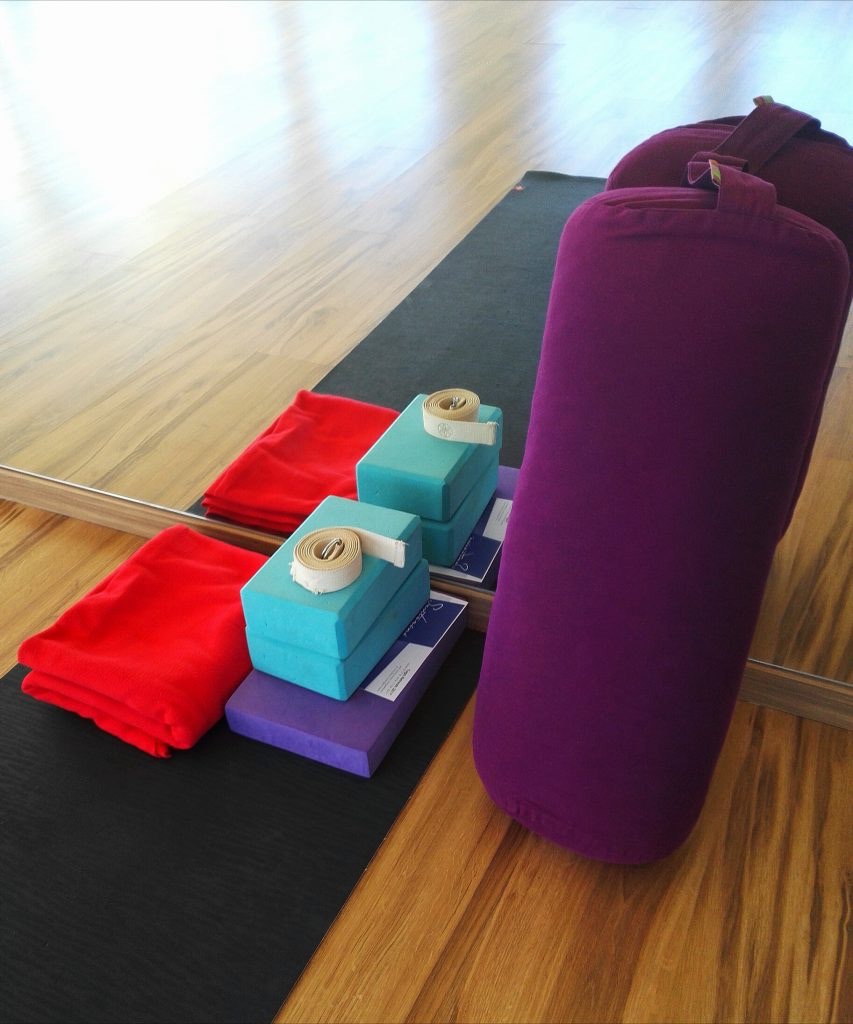
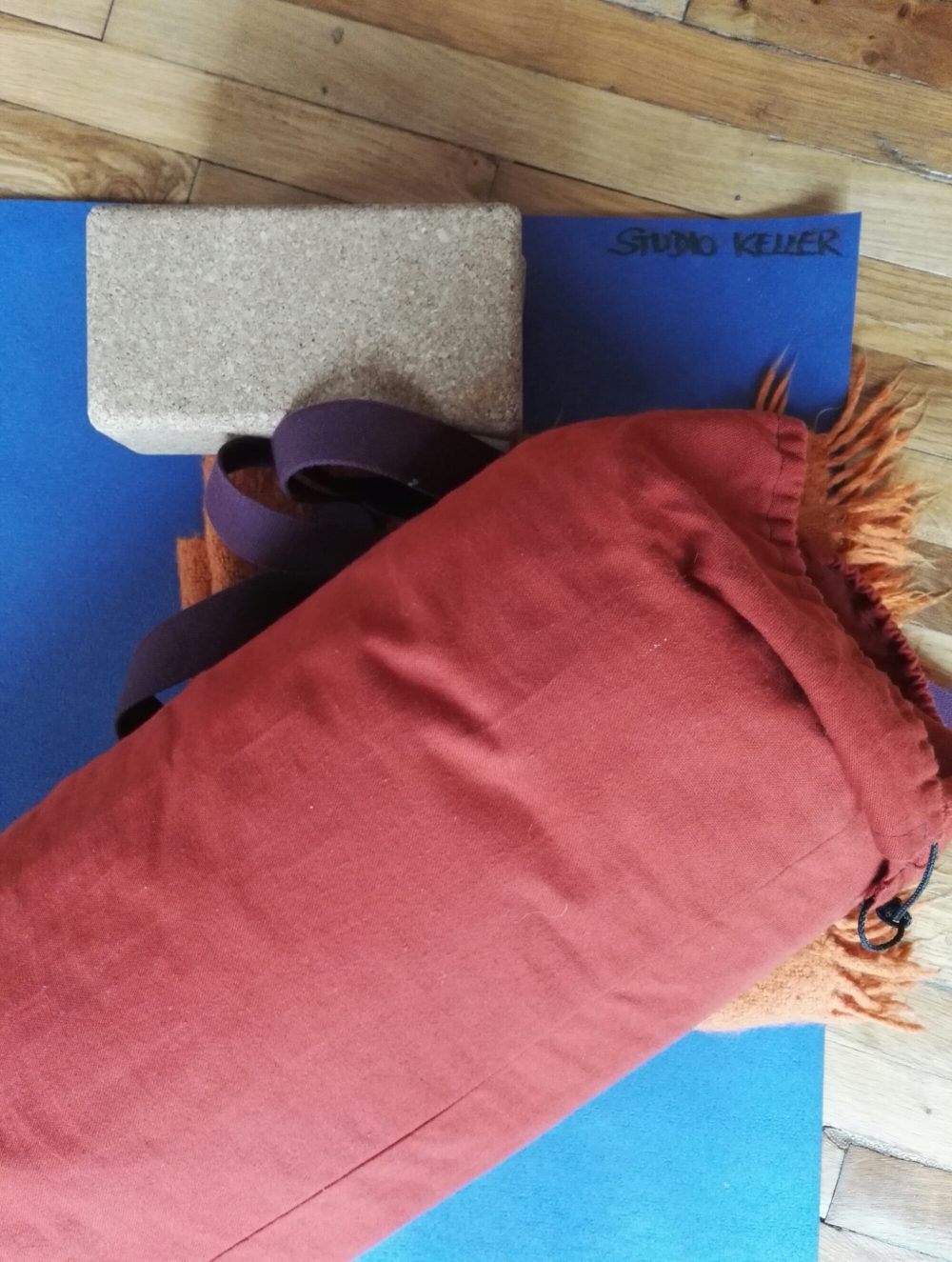
    Yoga bolster, restorative yoga

    Yin Yoga

    Yin yoga has its roots in similar practises that have existed in China for over 2000 years, but it was developed in its modern (or should I say “Western” again?) form by Paulie Zink and Paul Grilley in the 70s.

    Whereas of restorative yoga is about almost feeling nothing, yin yoga aims to put moderate stress on the connective tissues – fascia, ligaments and tendons – of the body. This can help to restore the range of motion in the body, as well as revitalising the body tissues. The pace in yin yoga is still slow but the postures are held shorter time than those in restorative yoga. Beginners can start from 45 seconds onwards, whereas experienced practitioner can hold an asana up to five or even ten minutes.

    In Yin practitioners are expected to find a deeper sensation (sometimes described as “slight discomfort”) in the asana and props are used less than in restorative yoga. Between every pose there is a rebound moment to feel the effects of the asana. This is not a counter pose as such but can be a simple corpse pose or a child’s pose that helps to “reset” the body before the next asana.
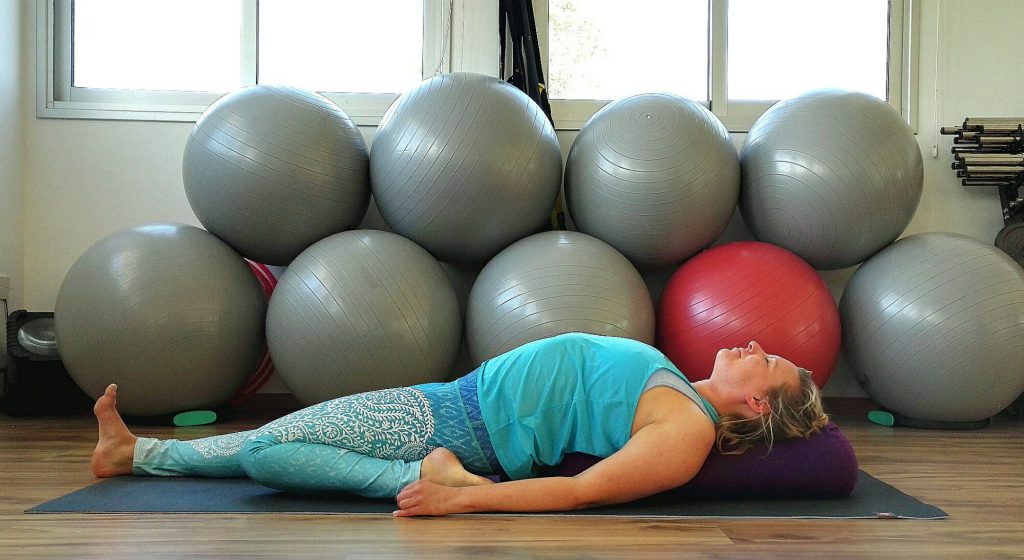
    Herospose

    Both yin and restorative practises are greatly beneficial and are a great addition to the more dynamic, heath creating yoga practises. They are also very valuable to those who would usually not consider yoga for their fitness practise. Restorative yoga especially can also be suitable to those who have a limited range of motion because of the props offer countless opportunities for modifications, ensuring comfort and relaxation.

    Have you already tried these slower types of yoga? What did you think, and do you have a favourite between the two? I would love to hear your comments below!

  • About Gratitude

    About Gratitude

    Gratitude: The quality of being thankful; readiness to show appreciation for and to return kindness. (The Oxford Dictionary)

    Gratitude has become a bit of a buzz word over the last few years. Walk into any self-respecting stationary shop and you will find at least one (if not ten) Gratitude Journals on its shelves. On Instagram, under the tag #grateful you find a whopping 27.8 million (and counting) posts, with #grateful-with-namaste-hands, #gratitude and all imaginable word combinations all having tens of thousands pictures tagged. The message is clear: Gratitude is popular, it is good for you and we are better off expressing it often.

    There is obviously is nothing new here. Already Cicero, Statesman and Philosopher of the Ancient Rome noted “Gratitude is not only the greatest of the virtues, but the parent of all of the others.” Fast-forward few thousands year, several academic studies have confirmed that there is a clear association between gratitude and higher levels of wellbeing. Greater resiliency in the face of adversity, better sleep and protection from stress are all linked to the ability to recognise and celebrate all the things we have in our lives to be appreciative for.

    Gratitude is not only the greatest of the virtues, but the parent of all of the others.”

    Cicero

    About a month ago I read an article that reminded that it is however important to maintain a common sense attitude towards gratitude. As good as it is to be thankful, it should never be used as a justification for any type of bad behaviour or situation. “Oh at least I can be grateful for having a roof over my head” might well be true (and something to genuinely be grateful for) but it does not make objectively bad situation, such as being a victim of domestic abuse, any better. And whilst something might be better than nothing, it can also be sensible to stop and think if that something is really needed. Maybe its absence can give space to something new and improved, something to be genuinely grateful for?

    December in Finland

    For many of us 2018 was a bit of a funny year. Things might have started, they got going – and then stopped. We might have had a lot of shifting, transforming and re-evaluations happening in our lives and with those close to us. The global climate, both in the literal and figurative sense, has not given us much reason to celebrate either.

    Yet, we have made it so far in the year. Even if the year has felt like dragging your feet, now it is the perfect time to sit down and reflect on what has happened. Write down the small and the big things of the year you are happy and grateful for, as they come to your mind. One reflection will lead you to another one and I would not be surprised if you find yourself having made more progress and more fun memories than you thought you had. Start writing that list, keep it going over the next few days and take your time to be grateful for every single item on it. It will do you good – it’s scientifically proven.

    A prior version of this text has been published in the Think Trigg blog.

  • Long Reads for Holidays

    Long Reads for Holidays

    The end of the year holidays are a good opportunity to slow down and catch up with some long reads. I have a habit of bookmarking all the interesting articles I come across, especially if they are related to the business and trends in wellness and yoga. Some of these articles I read when sitting in the bus or train I always have some unread ones stored away.

    Here’s a selection of yoga and wellbeing related articles I have read and liked over the past months. Some I have already posted on my Facebook page or Linked In, some are new ones I have only recently come across. Catch up with the latest analysis and trends with the below list!

    Wellbeing is a big business these days, and one full of contradictions and extremes as well. The Atlantic published this interesting analysis, “The Art of Woke Wellness”, in November 2018.

    Want to see what may or may not be big in Wellness in 2019? Read the Well & Good list here, write down in the comments what you see taking off (and what not) and why, and we will check out them list next time this year!


    Forward fold

    Talking of trends, I am so happy to see this one taking off: Good old stretching! “Even just 20 minutes of stretching a week can counteract damage and prevent potential injuries.”

    If you have looked at any London yoga studios schedule lately, chances are you have seen Gong Baths featured in the programme. Read here the Guardian’s article on what Gong Baths are all about!

    This one is just weird for me: Technology to “track my yoga performance” is not something I feel anybody needs, as the whole point of yoga practise is to internalise and, well, not measure anything. Just because I have an opinion about it does not however mean that there is not a market for it so here you go, see for yourself!

    Yoga pants – sorry, athleisure wear – at workplace? I am sure you have an opinion about that. Here is some background to to the topic. Feel free to drop your thoughts on this trend in the comments!

    Want more? You can see my previous “long reads” list here.

    Sustainable Yoga Clothing


  • How To Survive December and Beyond

    How To Survive December and Beyond

    Christmas is coming, as you have surely realised by now. It is a season of high expectations, self-inflicted pressure, being surround by more than usual amounts of stuff everywhere and various parties. Unfortunately for many this is also the season of feeling ill or run down, the symptoms varying from being slightly sniffy to a full blown fever and several days of bed time. So how to survive December, once again?

    Because we all love lists and advice, here’s my top tips to survive what is left of December and its aftermath.

    1. Use hand sanitizer and wash your hands at every opportunity

    Sounds obvious and most of us probably do this already (thank you for that.) But really, I mean washing your hands all the time. The bigger the city, the more the germs and thus more opportunities to catch some nasty streak of a bug. I have taken to washing my hands the first thing I arrive anywhere and the last thing I do when I leave the place, including my own home. Sounds exaggerated? Maybe but I have also been feeling pretty ok over the last weeks.

    I am not alone on reminder people about this either. I recently visited a new gym and counted ten (yes, 10) hand sanitizers in the ladies changing room alone, plus several in the reception area and in the studios. They know too.

    How to clean your yogamat

    2. Supplements and food you put in

    Now I am the first one to admit I have no particular interest in talking about food or supplements. We all know that Vitamin C is beneficial and we should up the intake when ill, either through food or supplements. In addition, I usually take extra zinc in the winter to help combat against viruses and unwanted bacteria. A yoga teacher friend of mine swears by Olive Leaf Extract and after I learned the capsules also contain zinc I switched to those. So far, so good.

    Naturally the quality (and quantity) of food we put in has a big impact. December tends to be about excess and indulgence to an extent but I try to counterbalance that by making sure I have a healthy breakfast, keep up with my fruit and veg intake and drink loads of water and herbal teas. Winter is also the citrus season in the Southern Europe. I try to make sure that my mandarins, lemons and oranges come from Cyprus, Greece, Spain and Italy, rather than go for berries and other fruit coming from another continent.

    Lemons, Local Food, Citrus

    3. Move – and Rest

    Cold weather, rain and darkness are not the greatest motivators when it comes to exercise but even a little bit of movement goes a long way. I used to be very sceptical of 45 minute yoga classes but these days, knowing how busy things can get, I happily throw my yoga purity mindset out of the window – everything counts for something and if all you can squeeze in is a 45 minute class, so be it.

    If you are into measuring your fitness performance, it might be an idea to try and mellow down your normal routine, especially if you are feeling the end of the year tiredness creeping in. Moving should be a pleasure, not a punishment. Just remember, even the word “asana” translates as a “comfortable seat.”

    Finally, if you feel like just resting, rest. Have baths. Sleep. It is like putting money in the Bank (of Health.)

    The Sanskrit word “asana” translates as “comfortable seat.”

    RestorativeYogaProps

    4. Go online for your purchases…

    …or even better, don’t buy any material things at all. Give services, charity items and your time. Seriously, it is pure madness to even try and make it to the high street, especially knowing that on the 26th everything will be heavily discounted.

    I am not a Grinch, I am just trying to get to the essence of the Christmas. Peaceful mind, togetherness and all that.

    …And The Beyond Part?

     Recovery. As important as getting ready and being in the moment. As a part of the “survived December” plan I will be looking into the following:

    • Colonic cleansing, because they are good for you! Especially after a period of having digested (or not) probably more and/or heavier food than usual. I see Suki at The Colon Whisperer.
    • An introductory offer pass to a new yoga studio: A perfect way to try new classes. Plus, the 7-14 day window is a good motivation to make it to few more classes than maybe usually. If cold is not your friend and you are London based, why not take up on the hot yoga offers at Hotpodyoga or Light Centre Monument.
    • Facial or natural face lift massage. To get a bit of the potentially lost glow back.
    • Rest and baths, as before Christmas. Whatever you do, always remember to rest.

    Happy holiday season everybody, stay warm and safe!

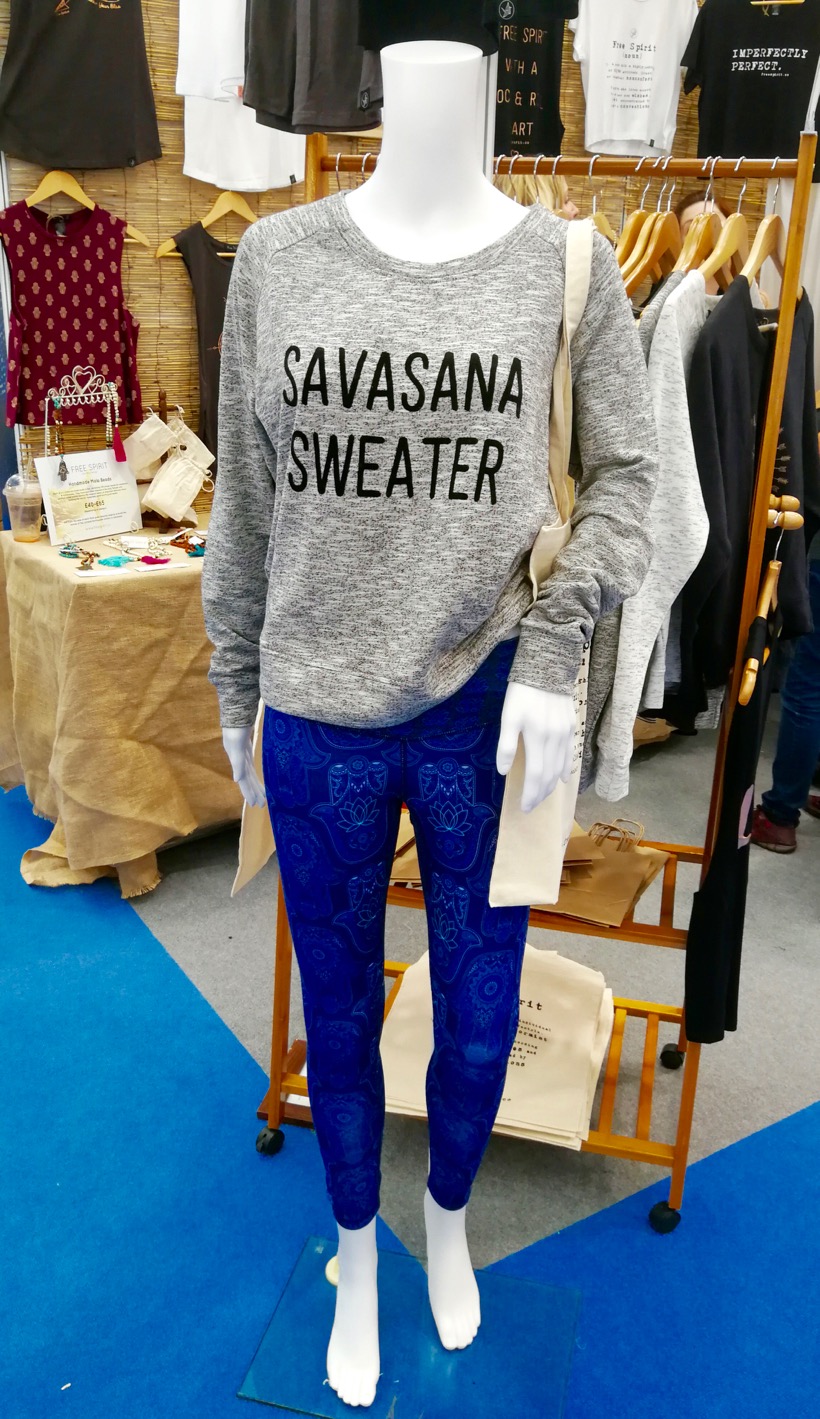
    Grey jumper

  • OM Yoga Show London 2018 Pictures

    OM Yoga Show London 2018 Pictures

    A bit over a week ago I made my way to my second OM Yoga Show in London, one of the biggest yoga events in Europe. I was curious to see what is happening in the front of sustainably made yoga apparel, listen to some talks, meet friends old and new and also practise a bit of yoga.

    Alexandra Palace in North London is an amazing venue itself. The show, as last years, was almost a bit overwhelming. So much so see and do! I’ll let the pictures to do most of the talking.

    Ally Pally Om Yoga Show

    No yoga on corridors

    Yoga festival

    Yoga Festival

    Food Truck

    Inversions

    Men Do Yoga

    Yoga gear

    MindBody Yoga

    Sustainable Yoga Clothing

    Hand made Malas

    YogaDoo

    Big thanks to Nubyen Active Wear for my ticket to the show. I forgot to take a picture of their stand becaise we were chatting too much so here is another one of their beautiful yoga clothes!

    Beautiful yoga clothes


  • Stuff That Yoga Teachers Say

    Stuff That Yoga Teachers Say

    Yoga terminology can be very confusing. Hand up who does not remember being new to a yoga class and at least some point wondering what on earth the teacher is talking about?

    As September is kind of like January when it comes to “new life, new hobbies” mindset, I thought it would be a good idea to run through few of the most common words, phrases and wordings that you may come across in your yoga class.

    Kindly note that as yoga spreads in popularity there might be some variations to the interpretation of yoga terminology. In this article I have tried to look for the most authentic/widely used one but if you have any questions/comments, leave a comment and we continue the discussion.

    Props/”Take any props you might need”

    Yoga props refer to the various objects that can be used to help us to get better into a particular pose, or to simply gain a better awareness for the pose by making it more accessible with the help of props. These objects include straps, bolsters, yoga blocks and wheels, blankets, chairs…

    Not all yoga classes need props or make use of them, but if you are really interested in of the many ways they can be used, head to a Iyengar class – You will be served (plus Iyengar yoga is a wonderful form of yoga in general, you can read more about it here.)

    Bolster, yoga_strap, yoga_blocks

    OM

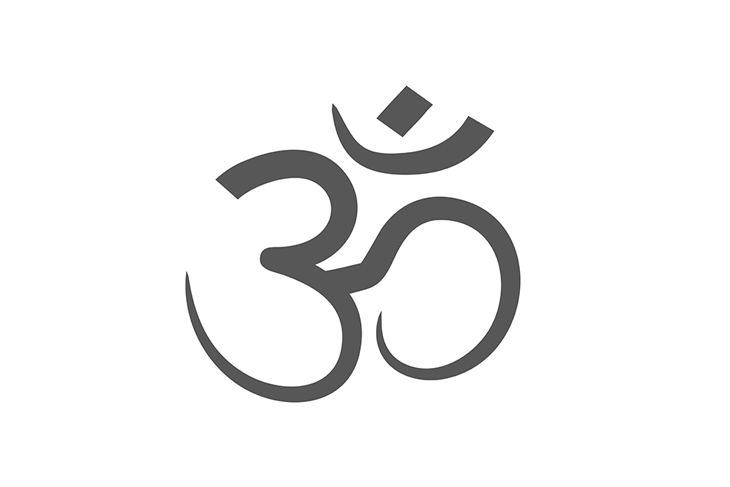
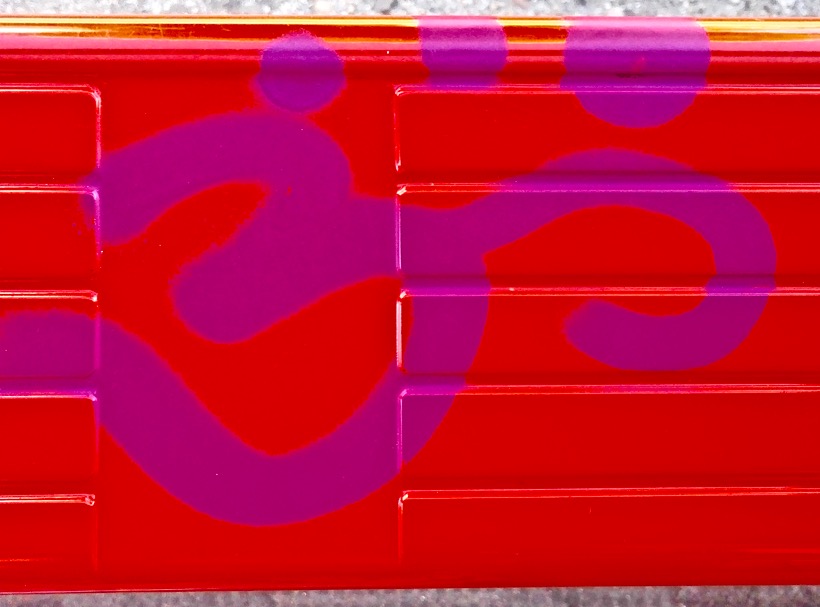
    OM is an ancient Sanskrit letter and a sacred syllable. It is often described as the Sound of the Universe, the most elemental of vibration, a sound that attunes to the our true nature.

    You can hear “Om” chanted at the start or end of the class, sometimes once, sometimes several times. It is however not present in all classes as different teachers have different styles. I sometimes hear that people can find “OM-ing” it a bit intimitating at first but trust me, nobody comes to yoga class to check out or judge your chanting voice. Just give it a go, you might like it!

    UniversalSound

    Grounding/Rooting Down Through Your Feet

    A confession: Until few years ago I really did not get what “rooting” meant, as in, what it REALLY meant. Was standing on my feet normally not enough? What was there more to it?

    Through exploring the mountain pose (i.e. tadasana) with experienced teachers I have learned so much about using the whole surface of the feet, through big toe to the little toe to the edges of your feet and the heel. Today I would describe “rooting down” as becoming aware of the distribution of the weight in your feet, together with the feeling of the ground (mat) underneath. At the end of the day, how we stand impacts our posture so much, which in turn impacts how we feel internally and how we present ourselves to the outside world.

    Who would have thought there is so much to simple action of standing?

    Abdominal Breathing/Focus on Your Breath

    Yoga is all about breath and specifically, about abdominal breathing. This can also be referred as belly breathing or diaphragmatic breathing. It means that we breathe using all available lung capacity, inhaling so that we feel our stomach expanding. We want to keep the inhales and the exhales more or less the same length.

    I find it useful to inhale counting quietly in my head to three or four (or whatever is the suitable length at a given time) and keeping the exhale the same length. The additional benefit of this is that you cannot think anything else whilst counting so ta-daa, your focus is squarely on the breath.

    There is so much more to be said about breath that I will make a separate post about it – in the mean time, check out this belly breathing video.

    Vinyasa/”Take a Vinyasa”

    This is a phrase you can hear a lot in yoga classes and it can get confusing for a beginner watching other doing what seems a very quick – and complicated – flowing sequence.

    Translated from Sanskrit, vinyasa means “to place in a special way.” Each movement is a gradual progression from one to the next, hence the term ”vinyasa flow.” You link you breath to the movement and with practise it indeed reminds a flow. Most of the time. Sometimes, even for the most experienced practitioner it might feel anything but a flow.

    Vinyasa is also used to refer a particular type of dynamic yoga class, and as a noun to refer a sequence of asanas taken as a transition between poses or two sides of poses. A chart of Surya Namaskar A that is the best illustration of what your class “take a vinyasa” can be.

    Sun Salutations, Vinyasa
    Picture from http://www.jasonyoga.com/2015/03/13/sun_salutations/

    “Feel the Body Melting/Surrendering to the Mat”

    The best way I can put this is “just feel it, don’t think about it.” Melting/surrendering to the mat it is an encouragement to try and relax the muscles a little bit more (and there is always that little bit more), letting the thoughts go (rather than thinking all the things you are going to do after the class) and just allow yourself to be still.

    Savasana

    Often referred as most people’s favourite part of the practise, savasana (or “dead man’s pose” as it is called in English) is the final relaxation that comes at the end of the asana practise. Usually it is done lying down on one’s back, but variations can be keeping knees bend or having legs slightly elevated – whatever allows the practitioner to feel completely relaxed and peaceful.

    It is perfectly normal to feel fidgety during savanasa. In today’s world we are not always very comfortable staying still. However do try stay in the class for the savasana and to breath through the mental discomfort – after few times you will learn to love it.

    Omenapuun alla

    Namaste

    At the end of the yoga class (but can happen in other situations too) you might hear your teacher say “Namaste”. This is usually combined with bringing our hands together in front of the chest, in the prayer position (also called “Anjali mudra, read more about that here) and bowing your head. The literal translation of “Namaste” translates simply as “I bow to you.” The more spiritual translation of Namaste comes to “The light in me greets the light in you”, representing the belief that we all share the one and Same Divine Consciousness.

    Some teachers use the term ”Namaskar” which can be understood in a similar way in the context of a yoga class.

    Any other yoga terminology you want to ask about or share? Please do so in the comments!

    Namaste


  • OM So Hum – Mantra

    OM So Hum – Mantra

    Those of you who have been to my classes over the past few weeks might remember the Om So Hum – Mantra from the beginning and end of the classes. With some of you I talked briefly about the message of this mantra but I wanted to share it more widely here in the blog too.

    First things first though, what is a “mantra”?

    The literal Sanskrit meaning of the word can be roughly translated as “tool of the mind”, as the root “man-“ means “mind” and the suffix “-tra” refers to “tools or instruments.” Very bluntly put (and bearing in mind that there is no single definition for mantra agreed by all), mantras are thoughts, prayers, sounds or words/phrases, believed to have spiritual or psychological powers. Mantras are repeated silently in the mind or aloud (for instance by singing) and often have the aim of helping the mind to silence and focus in meditation.

    The literal Sanskrit meaning of the word Mantra can be roughly translated as “tool of the mind”, as the root “man-“ means “mind” and the suffix “-tra” refers to “tools or instruments.”

    I am going to leave that definition hang in there for now although obviously there is A LOT more to history, definitions and meanings of mantras.

    There are countless of mantras in the world but what does “Om So Hum” mean specifically?

    OM (Actually it is Aum but we’ll leave it for now) = Familiar to many from a yoga class, OM is an ancient Sanskrit letter and a sacred syllable. It is often described as the Sound of the Universe, the most elemental of vibration, a sound that attunes to the our true nature. It can be used as a mantra on its own.

    So Hum = Reflecting the sound of the breath, so hum translates as “I am that” or “I am this.”

    Put together, “OM So Hum” therefore translates roughly as “I am the Sound of the Universe”. It can be interpreted as a mantra connecting us with the Universe and everything that is.

    Enjoy the mantra!

  • Lets Talk About Hands On Adjustments

    Lets Talk About Hands On Adjustments

    When I started doing yoga more regularly about 12 years ago I never gave any thought to hands on adjustments. I don’t have any clear recollection to be 100% sure but I guess it is largely because in the classes I attended there were hardly any. In the classes I attended the instructions were given orally with the teachers demoing, to different degrees, the poses in front of the class.

    As I started to practise more regularly and also to make a point of attending yoga classes in the places I got to travel to, I also got more acquainted with hands on adjustments. Usually they were perfectly pleasant and helped me to understand a particular point and to gain better awareness of the asana. But I also had different experiences. Once on a sports camp the instructor literally sat on my back during a forward fold. Sure I could go deeper but also I was not given any advance notice this might happen. I remember very clearly thinking, “I don’t like this.” This was both because it was physically uncomfortable (although not painful) and secondly, I just really did not appreciate somebody sitting on my back like that, in a pose that is supposed to be about internalising and calming down.

    There have also been moments where I was given adjustments without any particular verbal cueing. I am of course sure the good intentions were there but if the teacher fails to verbally explain how and what a particular asana is about, it can be hard to grasp what the adjustments are trying to convey. Because it is not always about the physicality of the action not being welcomed, there is also the aspect of everybody learning things in a different manner.

    Vira 2, adjustment, yoga

    Some years ago I was in a group of yoga teachers and we had an interesting conversation about hands on adjustments. We were in the presence of an international senior yoga teacher who advised us that when teaching a class, it is good policy to ask the students at the start of the class if they do not want any hands on adjustments, outlining few specific examples. This sparked a big (and very interesting) debate: Some of the group did not see the point of asking about adjustments. Their argument was that if you come to a yoga class, you should expect hands on adjustments. Some mentioned they rarely had any done so they had not given much thought about to the topic. Others pointed out that when you start a career as a yoga teacher you are likely to be focused on expressing your sequence the right way you would not even think about giving hands on fine tunings on the participants.

    All the insights were very valuable and demonstrated how differently we can feel about a particular matter. What that conversation sparked for me was a deep consciousness of personal boundaries in the space of a yoga practise and the importance of respecting them.

    We all come to our yoga practise from different backgrounds, with widely different experiences and expectations. What those experiences and expectations are, we do not know. But what we can do as yoga teachers is to give the practitioners the option of not to be touched. In the #MeToo era, knowing that the yoga world unfortunately has not been spared of its own incidents, this is even more important than ever.

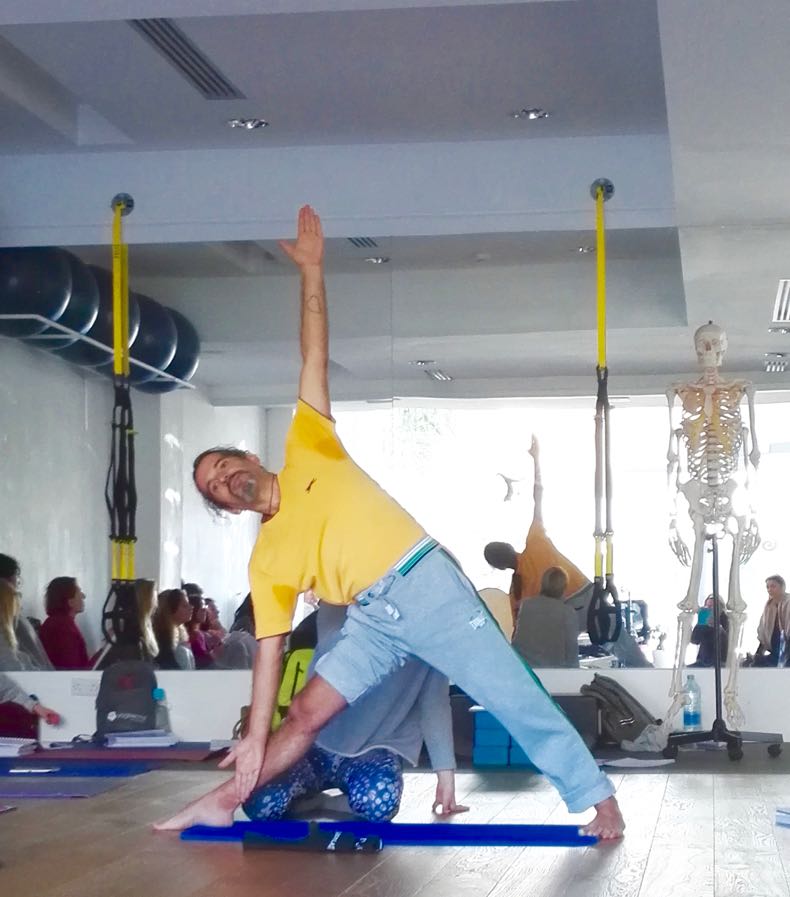
    Hands on adjustments
    …or trikonasana

    So how to go about this? Some teachers lay out in their studio profiles that hands on adjustments are to be expected – This is great but also requires that the profile is read. Some ask you to raise your hand if you don’t want any – but then again, not everybody is happy to speak up in front of others, especially if you are new to practise. There is also the option of the teacher asking you to fold a corner of the mat, or putting a prop in front of the mat. The idea is good in theory but in practise, especially as a teacher, I am always concerned I overlook THE one prop, or the corner of the mat comes undone.


    Recently I have however seen few new innovative initiatives. Few days ago Pranama Studio in Stockholm, Sweden, posted on their Instagram page that they are now using “Consent Crystals” in their classes. Pranama Stockholm writes: “We respect and honor you, and it is totally your choice to be touched/assisted or not during a yoga class. It might even depend on the day […] When you take a Consent Crystal with you in the class, our teachers will know your wishes without asking. Just place it next to your mat and we know we have your consent. Without it, we respect your wish not to be touched at that time and that class.”

    Hands On Adjustments, MeToo

    Another example I recently saw was an American lady who had come up with a small two-sided cards, one side saying “yes” to adjustments and the other “no.” You just place the card next to your mat and the teacher will know. Unfortunately I cannot remember where I saw this but if you recognise this initiative, let me know in the comments and I will edit this post with more detail about this.

    I feel this topic is very much part of the inclusivity in the yoga community discussion that has been taking place for some time now. I would be interested to hear your thoughts about this topic: Are hands on adjustments something you like, you expect, or something you have not really given any thought about? Any ideas you would have or you have seen how to communicate about this, either as a student or as a practitioner? Let me hear your opinions in the comments section!


  • Treat Yourself to Restorative Yoga

    Treat Yourself to Restorative Yoga

    Restorative yoga is a relaxing and mellow type of yoga with the aim of, well, restoring the body and the mind. It complements perfectly more dynamic type of asana practises and is also very suitable for complete yoga novices.

    A typical restorative yoga sequence has very few poses. Depending on the length of the class the sequence has 2-6 asanas. Props such as blocks, bricks, bolsters, blankets and straps are used to support the body so literally no effort is required.  The support of the props allows each pose to be hold for an extensive period of time, up to ten minutes. This means that the body can relax and let go completely.

    Restorative yoga is a perfect antidote for the hectic city life as it allows us to unwind, de-stress and practise mindfulness whilst gently stretching the body. I often describe restorative yoga as “just lying around” but I don’t mean it in a dismissive or impolite way. Keeping still can actually be quite challenging for many at the beginning, but most people do reach a point during the practise when any resistance melts away.

    With the current heatwave going on it is very important to remember that humans are not machines and it is necessary to slow down. Therefore restorative yoga is a great thing to practise these days. I will be teaching it most Saturdays over the next 5-6 weeks at The Canada Water Studios in South East London (next to the Canada Water tube station you can access on Jubilee Line and Overground Trains.)

    The class is 90 minutes long from 16:30 to 18:00 and costs £14. Please book your class directly from the Canada Water Studios website, and of course let me know if you have any questions!

    Oh, and we also have an air conditioning in the studio so really, be kind to yourself and come along!

    restorative yoga

  • Have You Tried SUP Yoga Yet?

    Have You Tried SUP Yoga Yet?

    Cyprus is the perfect place for weddings, wind(surfing), occasionally waves AND for SUP Yoga! I am currently on the Island for all of the above and will be teaching two more SUP Yoga classes this Saturday and Sunday at WindsurfCity Cyprus in Makenzy Beach, Larnaca.

    So what happens on a SUP Yoga class?

    In all honestly I prefer calling SUP Yoga as “yoga inspired” class rather than a “yoga class.” As the whole thing happens whilst floating on what essentially is a big surf board (just wider and longer) it is simply impossible to have as good balance as we would standing on the ground. Therefore all the poses we do need to be more or less adapted and some are simply out of the question. Sure we can go to Instagram and see people doing headstands and all that stuff on a board but just like the other fancy poses you see, they do not represent the reality.

    SUPyogaclass

    If you feel slightly disappointed now, don’t! SUP Yoga will challenged you regardless, even if you are experienced yogi or have never tried yoga before, because of the Sea beneath us. The key is to let go all expectations and just focus on the moment – and trust me, a sudden movement of the sea, in the middle of calm, really brings you to the here and now. I usually start my classes lying down, tuning in and build the sequence up to hands and knees and eventually standing. There will be plenty of familiar poses to be experienced in a new way and you can also expect to feel and activate your muscles in a different way. Falling in also happens, it is part of the fun and a sure way of test where the Ego is. And of course there is Savasana at the end. Nothing better than Savanasa lying down on a board, in the beautiful East Med, under the morning sun!

    Final relaxation on SUP

    Wear your swim gear (bikini, swimsuit, rash vest if you prefer complete sun protection, shorts…), sunscreen, sun glasses you don’t mind getting wet and maybe a cap or another type of hat. Just like in a regular yoga class,  is always better if your gear does not have buckles, decoration, big buttons or anything metallic as we will be lying down both on our backs and belly and you do not want anything pressing against your body.

    Please book your board in advance by dropping me or Margarita a text via this and this link – SUPping is very popular so we want to make sure everybody who shows up gets a board and nobody is left waiting because of no-shows and/or drop ins. The cost of the class is 18 euros and it will be in English (although I do speak very poor Greek too, occasionally.)

    SUP jooga