Category: Yoga Philosophy and Mindfulness

About The Yoga Sutras and other ponderings.

  • 2 Easy Breathing Techniques to Calm the Mind

    2 Easy Breathing Techniques to Calm the Mind

    Breathing. Natural, pretty essential and still so many ways of doing it. Many of us tend to breath with our chest only, i.e. only using the top part of our lungs. Yet, the power of the belly breath is far greater than we realise and deep breath works on many levels: it can bring almost instantenous stress relief, improves oxygen intake (surprise, surprise) and helps to detoxify your body as it encourages the lymphatic system to work better just to mention few benefits.

    I still clearly remember the first time I was officially introduced to belly breathing (also known as diaphragmatic, deep or abdominal breathing), breathing with all my lung capacity in a concious manner. It was a real ”holy shit!” moment (in a positive way, to be clear.)
    img_3560

    Here are two ways you can start familiarise yourself with belly breathing if that is new to you. Be patient with yourself if it takes a moment to get hang of it. It IS ok to confuse your inhales and exhales. Instinctively we all know how to do the right thing so just relax and feel rather than (over)think. As a proof of this, all babies breath with their tummies, just look at a sleeping baby next time you see one. Just choose a child you know the parents of though, unless you want to come across as a proper creep.

     Practise 1:

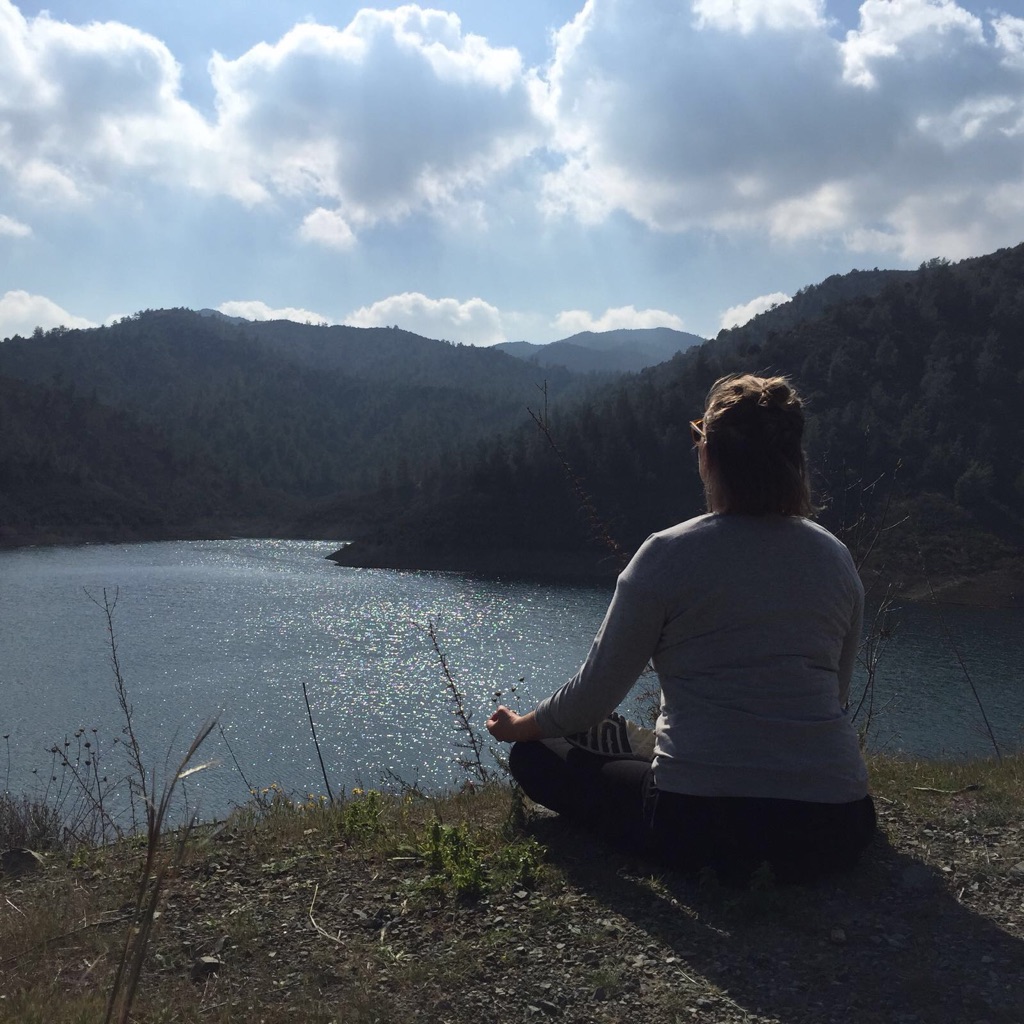
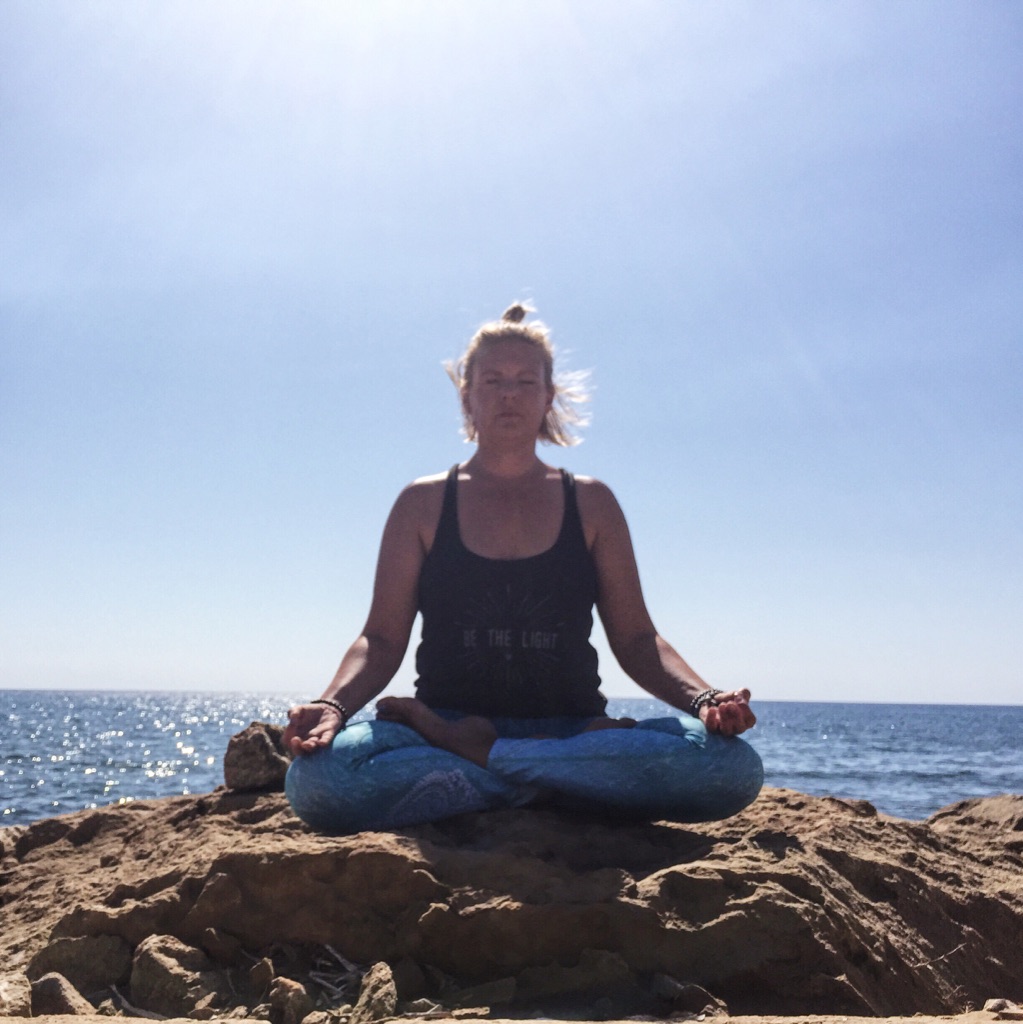
    Sit cross legged in a comfortable position. If you want, you can put a pillow, a yoga block, or even a book under your bum, just make sure you have an even seat. If sitting is not an option you can also lie down on your back. Place one hand on your upper chest and one on your stomach, just below where the ribs end. It does not matter which way your legs are crossed and your hands are. Just be comfortable, with as straight spine as possible.

    img_4153

    Inhale through your nose. Let the inhale fill your stomach so that you can feel your belly and ribs on the side expanding. The chest stays fairly still. With exhale, think about emptying your lungs as much as you can whilst remaining comfortable. You can exhale through a small gap between your lips if you want. When exhaling some find it helpful thinking about the belly button going towards the spine, or they feel their stomach muscles contracting. With every inhale and exhale lenghten your breath: some find it helpful to count into 3 (or 4, or 5), you do not have to count to if you want but try to keep the inhales and exhales of equal lenght. Keep doing this for 5-10 minutes, or as long (or short) you are comfortable with.

     Practise 2:

    For this one you want to be in a seated position. Place your palms on your knees, facing upwards. Imagine that you are picking up your breath from your right palm with your right nostril and think how it travels up your arm all the way to your nose. Without holding the breath, let the exhale go out from your left nostril and travel with the same pace down your left arm all the way to your left palm. Once you get there, pick up (= inhale) the breath from your left palm, let it travel up to your nose and exhale down from the left nostril down to your left palm. Continue like this for 5-10 minutes.
    img_4158

    Hengittäminen. Se tulee luonnollisesti meille useammille, on hyvin tärkeää ja kuitenkin on monia eri tapoja tehdä se. Moni meistä hengittää ainakin hetkittäin pelkästään keuhkojen yläosalla. Hengityksen todellinen voima tulee kuitenkin esille hengittäessämme keuhkojen koko kapasiteetillä. Syvähengitys tuo mukanaan monia etuja: se laskee stressitasoa nopeasti, parantaa hapenkulkua (yllätys), ja auttaa puhdistamaan kehoa sen kuona-aineista tehostamalla imusolmukkeiden toimintaa, muutamia esimerkkejä mainitakseni.

    Muistan itse selvästi ensimmäisen kerran kun tein ”oikean” hengitysharjoituksen joogatunnilla käyttämällä palleahengitystä, eli hengitystä jossa maha ja kyljet liikkuvat. Hektisen ja stressaavan työpäivän jälkeen hengittäminen koko keuhkojen mitalla oli positiivisesti herättävä kokemus siihen mihin oma keho pystyy.

    Alla on kaksi eri tapaa harjoitella syvähengitystä. Ole rauhallinen harjoituksen kanssa, jos ulos- ja sisäänhengitykset menevät sekaisin ei se haittaa. Koko keuhkoilla hengittäminen on asia jonka me kaikki osaamme luonnostamme: katso vaikka seuraavan kerran nukkuvaa pikkulasta hänen nukkuessaan ja tarkkaile kuinka maha kohoaa aina sisäänhengittäessä. Suosittelen kuitenkin, että valitset lapsen jonka vanhemmat tunnet ellet halua poliisia kimppuusi tai vähintäänkin omituisia katseita.

    Harjoitus 1:

    Istu jalat ristissä mukavassa asennossa. Jos haluat, voit pistää takamuksen alle tyynyn, joogablokin tai vaikka ison kirjan. Pääasia on että istut tasapainoisesti. Jos istuminen ei tunnut hyvältä, voit myös maata selälläsi, jalat suorana tai koukussa. Aseta toinen käsi rintalastan päälle ja toinen mahalle, kylkiluiden alapuolelle. Löydä hyvä asento ja koita pitää selkä niin suorana kun mahdollista.

    Hengitä sisään nenän kautta. Tunne kuinka sisäänhengitys täyttää mahan niin että se pullistuu. Samoin voi käydä kylkiluille ja voit tuntea kätesi kautta kuinka ne ”levenevät”. Rintakehä puolestaan pysyy suhteellisen liikkumattomana. Uloshengityksellä tunne kuinka keuhkot tyhjentyvät, kuitenkin niin että tunne on mukava eikä henki lopu kesken. Uloshengityksen voi tehdä myös suun kautta muodostamalla pienen raon huulien väliin. Voit myös ajatella että vedät napaa selkärankaa kohti kun uloshengität, jotkut taas tuntevat kuinka mahalihakset aktivoituvat. Yritä pitää sisään- ja uloshengitykset yhtä pitkinä. Voit halutessasi laskea neljään (tai viiteen. Tai kuuteen) jos tämä auttaa. Jatka harjoitusta 5-10 minuutin ajan, tai niin kauan kun hyvältä tuntuu.

    img_4159

    Harjoitus 2:

    Tämä harjoitus on hyvä tehdä istuvassa asennossa, mutta jos lattialla istuminen tuntuu vaivalloiselta voi hyvin istua myös tuolilla. Aseta kädet kummallekin polvelle, kämmenet ulospäin. Kuvittele että nappaat sisäänhengityksen oikeasta kädestä oikealla sieraimella ja tunne kuinka hengitys matkustaa käsivartta ylös nenään asti. Tee uloshengitys vasemmalla sieraimella vasenta kättä alaspäin kunnes hengitys saavuttaa vasemman kämmenen. Jatka sitten sisäänhengittämällä vasemmasta kämmenestä vasempaan sieraimeen ja taas ulos oikeasta sieraimesta oikeaan kämmeneen. Jatka näin 5-10 minuuttia. Kuulostaa oudolta mutta toimii.

    img_4157

  • 1 Bonus Tip for Better Sleep

    1 Bonus Tip for Better Sleep

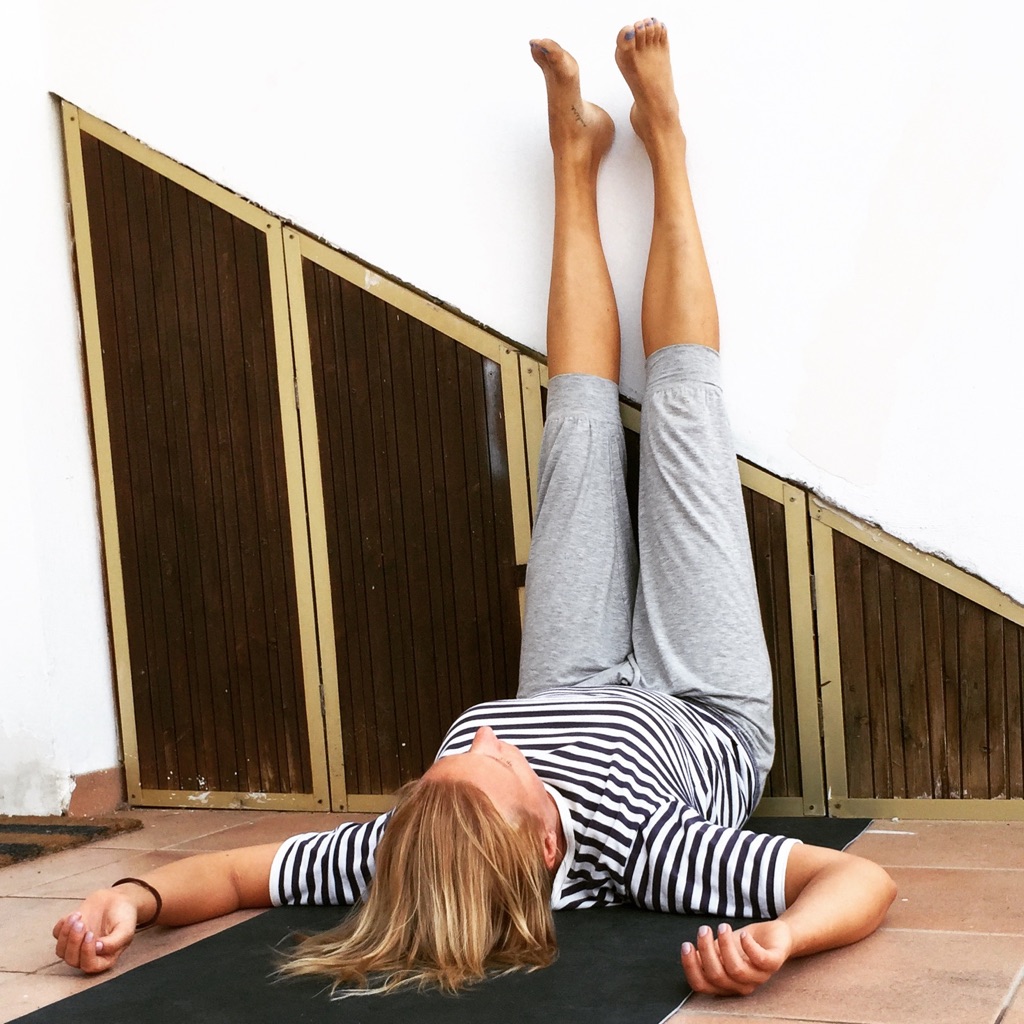
    …and it’s a yoga pose! Legs-up-the-Wall-Pose, or Viparita Karani, is an asana favoured by many and no wonder as it is said to help with many different ailments, such as:

    • Anxiety
    • Arthritis
    • Digestive problems
    • Headache
    • High and low blood pressure
    • Insomnia
    • Migraine
    • Mild depression
    • Respiratory ailments
    • Urinary disorders
    • Varicose veins
    • Menstrual cramps
    • Premenstrual syndrome
    • Menopause

    This pose is a restorative one, so in a yoga class you would find it usually right before the final relaxation. However it works just as well during a 10 break as a quick stress buster, or right before bed time. Practise with caution if you have neck or eye issues, always listening to your body first.

    You do not have to get your butt right into the wall to grab the benefits, you can also do this pose with the soles of you feet against the wall.

    img_3940

    Tässä vielä yksi jooga-asana jonka sanotaan auttavan sekä unen saamiseen että vähän kaikkeen muuhunkin, mm. ahdistukseen, reumaan, ruuansulatusvaivoihin, päänsärkyyn, korkeaan verenpaineeseen, migreeniin, virtsaamisongelmiin sekä vaihdevuosiin. Mulla ei ole aavistustakaan mikä tämän asennon nimi on suomeksi mutta tässä siis maataan selällään jalat seinää vasten. Jalat voi myös olla koukussa ja jalkapohjat seinää vasten jos ei halua pistää takamustaan suoraan seinään kiinni. Joogatunneilla tämän asennon löytää yleensä juuri ennen loppurentoutusta mutta tämän voi yhtä hyvin tehdä juuri ennen nukkumaan menoa tai jos on 10 minuutin pikarentoutusta vailla.

    Jos kärsit niskakivuista tai silmänpaineongelmista, harjoittele tätä asanaa varoen.

    img_3941

    Tallenna

  • 8 Tips for Better Sleep

    8 Tips for Better Sleep

    sleepcorrect

    Sleeping! One of my favourite things to do and I do it well. Unfortunately not everybody is as lucky as I am and lack of sleep or inability to fall asleep is a real issue for many. Talking to people I have realised that in addition to my natural sleeping abilities there have few things I have done all my life that mean I have a specific bedtime routine and do few things that might benefit others too so here we go.

    1. Have a look at your bedroom. Now, I know nothing about Feng Shui and the Marie Kondo book about tidying is still waiting to be read. However it seems common sense that your bedroom is a cozy and inviting space, with bed linen that is comfortable to you (I dream of bamboo sheets which seem to be impossible to find in Europe.) Personally I like to my bedroom quite minimal and keep it well aired even in the winter. Physiologically he body needs to cool down in order to fall asleep so keep the window open and an extra duvet or blanket nearby for extra warmth if needed.

    2. Check your pillow and mattress. You don’t need to fork out 2000 euros for a Tempura bed, just having a very good pillow can make a huge difference. I got mine from a specialised shop where I tested several whilst the shop lady kept on checking the curvature of my neck on the pillow: you want to have a natural, neutral curvature. I left with a brilliant one that did not cost that much more than your average IKEA pillow does. Also a good mattress cover can make a big difference so check yours out.

    3. Get rid of all the electronics in your bedroom! For me this is the most important point. Mobile phones and laptops in your bedroom do not do you any favours as the blue glow is proven to affect your sleep. Also it does not matter if they are on sleep mode, you are still aware they are there and tempted to grab them to check something ”essential.” Just keep them away! Get yourself an analogue alarm clock instead. They cost under a fiver (both in euros and pounds) and work just as well as they did before mobile phones were invented. If you tend to stress about the time ticking away, turn the face of the clock away from you.

    4. Start winding down 30-60 minutes before going to bed. Check you phone and computer one last time and put them away. Focus on your evening routine: Dog out, maybe some yoga or light streching, read few pages from a book, brush your teeth, clean your face, set up your clothes for the next morning… Keep things calm and relaxing and do not touch that phone

    img_3832
    In case somebody forgot what all alarm clocks used to look like.

    5. Do lists. When I still worked in an office I would write all the things I should do the next day in my notebook. This way I was sure I would not forget them and it also brought structure to my day, both morning and evening. It also meant that it was easier not to stress about work once I clocked off. The same idea can be applied to everything so if you have things at home you need to take care of at some point, just write them down and tick them off when you get to them. This really can help to clear your mind, destress and thus help with your sleep. If lists are not your thing, you can try going through any concern in your mind before bed time and then decide to put it aside.

    6. It’s kinda obvious but what you eat and drink at the evening can affect your sleep a lot. Nothing wrong having a big dinner party at times, even better if you do not have to wake up early the next day, but if you have issues with your sleep it might be worth while having a think what your evening meal/snack is like and if it needs modifications. Remember that some medication, soft drinks and chocolates can also contain coffeine and thus affect sleep.

    7. Exercise (but maybe not too vigorously.) I am sure I don’t have to say too much about the benefits of exercising, asana practise or otherwise. Some say that it is not wise to do anything too rigorous too close to sleep time but this can be invidual so if you enjoy your full Ashtanga practise in the evening and it suits you, go for it.

    8. Wake up mindfully. Because waking up to me is still part of your sleep pattern So, your analogue alarm clock rings. Get up, try not to snooze. Your phone, computer and TV are nowhere to be seen. Strech, yawn, see if the sun is up (it probably is not though if you live in the Northern Europe… Sorry!) and get some fresh air, even if it is just from the window. Give yourself 5-10 minutes to get your head around the new day, to drink some water and to take few good breaths. It does make a difference.

    Your turn now. Is there anything in the list you think might work for you to improve your sleep, or anything you would like to add/share?

    sleep-is-the-best-meditation

    Nukkuminen on yksi lempiasioitani ja olen siinä erittäin hyvä. Valitettavasti kaikki eivät ole kuitenkaan yhtä onnekkaita ja unettomuus ja unenpuute ovatkin isoja ongelmia monille. Keskustellessani asiasta ihmisten kanssa olen huomannut että minulla on aina ollut tietyt iltarutiinit joista voi olla apua muillekin.

    1. Tarkista makuuhuone. En tiedä yhtään mitään Feng Shuista ja Kon Mariekin odottaa vielä lukemistaan. Mielestäni on kuitenkin hyvin tärkeää että makuuhuone on tila joka viihtyisä ja kutsuu lepäämään ja jossa on mukavat vuodevaatteet (itse unelmoin bambu-lakanoista joita ei tunnu Euroopasta löytyvän mistään!) Itse pidän makuuhuoneeni minimalistisena ja hyvin tuuletettuna kesät talvet. Fysiologisesti kehonlämpö laskee nukahtaessa joten on parempi pitää huone viileämpänä ja käyttää tarvittaessa ylimääräistä peittoa.
    2. Tarkista käyttämäsi tyynyt ja patja. 2000 euron Tempura-vuode olisi tietenkin mukava mutta jo pelkästään hyvä tyyny voi tehdä valtavan eron. Ostin omani paikallisesta patja- ja tyynykaupasta jossa sain testailla erilaisia myyjän tarkastellessa että niskan kaari pysyi neutraalina. Tyyny ei maksanut sen enempää kuin IKEAsta saatavat. Myös petauspatja voi tehdä eron joten jos koko patjan uusiminen ei ole mahdollista voi sen päällisen uusiminenkin auttaa.

    3. Poista kaikki elektroniikka pois makuuhuoneesta! Heti! Makuuhuone on nukkumista varten, puhelinta ja läppäriä voi tuijottaa muuallakin. Laitteiden sininen valo todistettavasti vaikuttaa unen laatuun ja pelkästään tietoisuus että puhelin on vieressä (vaikka sitten nukkumistilassa) on häiritsevä ja kiusaus napata luuri käteen keskellä yötä (tai ensimmäiseksi aamulla) on suuri. Kännykän sijasta hanki yöpöydällesi analoginen herätyskello joka maksaa alle vitosen. Jos tapanasi on tuijottaa minuuttien etenemistä ja stressata aamun lähestymisestä, käännä kellotaulu toisinpäin.
    4. Valmistaudu nukkumaanmenoon 30-60 minuuttia etukäteen. Tarkista puhelin ja muut laitteet viimeisen kerran. Sen jälkeen voi keskittyä iltarutiineihin: Koira vielä kerran ulos, lyhyt jooga tai venyttely, kirjan tai lehden lukemista, iltapesut, seuraavan päivän vaatteiden valmiiksi laittaminen. Pidä asiat rentouttavina ja rauhallisena äläkä koske siihen puhelimeen!

    img_3833
    Iltajooga näyttää tältä…

    5. Tee lista asioista jotka pitää muistaa seuraavana päivänä. Toimistotöissä ollessani kirjoitin päivän päätteeksi aina listan asioista joita en ollut ehtinyt hoitaa ja/tai jotka pitäisi tehdä seuraavana päivänä (tai sitä seuraavana…) Näin varmistin että en unohtanut mitään tärkeää ja melkeinpä automaattisesti lakkasin miettimästä asioita liikaa kotona. Tätä samaa menetelmää (jota en todellakaan keksinyt itse) voi soveltaa myös muuhun elämään. Lista kotona voi olla kotibyrokratiaan liittyvää, asioita jotka painavat mieltä tai ”vain” tavoitteita tuleville päiville. Tämä auttaa jäsentämään ja selvittämään asioita ja voi auttaa niitä tulemasta uneen. Jos luetteloiden kirjoittaminen ei nappaa voi asiat yrittää visualisoida rauhassa istuen, silmät kiinni.

    6. Tämä on varmaan kaikkien tiedossa mutta se mitä illalla syö ja juo voi vaikuttaa uneen paljonkin joten jos illalla on aina vaikeuksia nukahtaa on syytä tarkastella mitä iltapäivän/illan aikana suuhun on pistänyt. Jotkut lääkkeet, virvoitusjuomat ja suklaat sisältävät esimerkiksi kofeiinia joten rutiinivälipalojenkin sisältämät aineet on hyvä käydä välillä lävitse.
    7. Urheile (kohtuudella.) Joskus saa lukea että liian energistä hikiliikuntaa ei pidä harrastaa liian lähellä nukkumaanmenoa koska se voi häiritä unta. Tämä voi kuitenkin olla yksilöllistä joten jos 10 kilometrin lenkki tai ashtanga-harjoitus tuntuu parhaalta illalla niin miksi muuttamaan itselle sopivaa rytmiä.

    8. Herää rauhassa. Minusta tämä kuuluu myös unen laatuun. Jos heti herättyään alkaa sinkoilemaan joka puolelle voi hyväkin uni ja sen tuomat edut nopeasti kadota. Herätyskellon (sen analogisen) soidessa voi venytellä jo sängyssä. Tarkista sää ikkunasta, hengitä hieman ulkoilmaa. Juo lasi vettä ja hoida tärkeimmät aamutoimet ennen lehtien lukemista ja puhelimen tarkastamista. Jo antamalla 5-10 minuuttia itselleen antaa herätä rauhassa ja rauhallisesti antaa koko päivälle ihan erilaisen tunteen.

     Onko listassa mitään jota aiot kokeilla? Mikä auttaa sinua rauhoittumaan illalla?

    img_3699
    …tai tältä.


  • What is Yoga?

    What is Yoga?

    I have been forcing kindly asking friends and family for some feedback on the blog. My cousin suggested I write about what yoga actually is and means, for those who see it as ”sitting on the floor in an uncomfortable position, being spiritual.” Which, of course, it should not be. So I took it upon myself to try and explain a bit what yoga is (or at least can be.) I do want to clarify the views are entirely mine and everybody is free to disagree with these – drop a comment below if you want

    1.  The word ”yoga”, in Sankrit (please do not stop reading yet! There will not be much Sanskrit!) means ”union” or ”connection.” In everyday terms we can interpret this as having a better awareness of ourselves in our lifes, be it by being more aware and in tune with our bodies and mind, or with our wider physical contect we live.

    2. Some say yoga is ”the science of being here and now.” Otherwise we know this as trying to focus on being in the present and not worrying about the past or future. These days this is also called as “mindfulness.”

    3. Yoga is also a journey. A journey to self-discovery, to learning patience, to (self-)acceptance. It is not a quick trip, it’s a ”process.” The good part is that doing yoga even once a week, or even 20 minutes at a time, will bring you benefits.

    4. In every day speak, when we say ”yoga” we usually refer to the physical practise, asana (or yoga poses if you preferer.) However yoga is more than just movement, you can check out the eight limbs here if you want to read more.

    5. There are many different types of yoga classes. Many focus only on the physical aspect and there no OM-ing or evident spirituality in sight. Some incorporate more philosophy, breathing practises and/or meditation.  If you are complitely new to the system try out a class that clearly says it is for beginners, or a hatha yoga class. These classes will be gentle, not too sweaty or uncomfortable, even if you have not moved in ages.

    6. You should not feel forced to do anything in a yoga class, even if you want to make an effort to the best of your abilities at that moment. We do not want is to get fixated in some end game or goal, but rather live and accept what is now. There is absolutely no need to be flexible in the body in any yoga class, but having a flexibility of the mind will help you.

    7. Yoga differs from your regular stretching with its emphasis to breath. Ultimately, we aim to move to the rhytm of our breath and getting to feel a mind-body connection. No need to worry too much about this either, even yoga instructors confuse our inhales and exhales from time to time. It’s ok, this teaches us the art of ”letting go” in its own way.

    8. Yoga is not a religion, it is a philosophy and a practise encompassing all aspects of life. You are not signing up to a cult by walking into a yoga class. Equally you do not need to be a vegetarian to do yoga. You are, however, better off not having a heavy meal right before a class, due to the twisting and bending that may take place – no different to any other exercise class.

    9. Some classes have chanting. Don’t fear it, just maybe try not to laugh. You absolutely do not have to join in. You are most likely to hear the mantra OM (repeated 3 times) and/or the saying ”namaste”, meaning “the light in me honours the light in you.”

    If this clarified some things about yoga, great. If not, ask. If still wondering, check out the post coming up early next week about the benefits of yoga.

    blogpost

    Tallenna

    Tallenna

    Tallenna

    Tallenna

  • Yoga books I like

    Yoga books I like

    I had a chat about yoga books with a friend yesterday and this old post of mine came to mindf. As nothing has changed since I first published this text, here you go again: some of my favourite yoga books.

    Yoga books are nothing new. The first systematic presentation of yoga in a written form, the Yoga Sutras by Patjanhali is said to dated circa 400 CE (I am aware there is debate around this date but I am not going to dwell any deeper into it), whilst another renowed yogic scripture, the Bhagavad Gita dates an estimated 500 BCE.

    There is a ton of yoga books around and it can be hard to pick just one or two. Here’s a list of some of my favourites. Some of these I read almost every day, some less so but they have all served a purpose of some sort in my yoga studies. If the list looks familiar it is because each one of the books is on the Amazon’s ”Top 15 or so Yoga books” list and many are teacher trainer reading staples. Hence expect nothing crazy original but if you are newer to yoga literature this might be helpful.

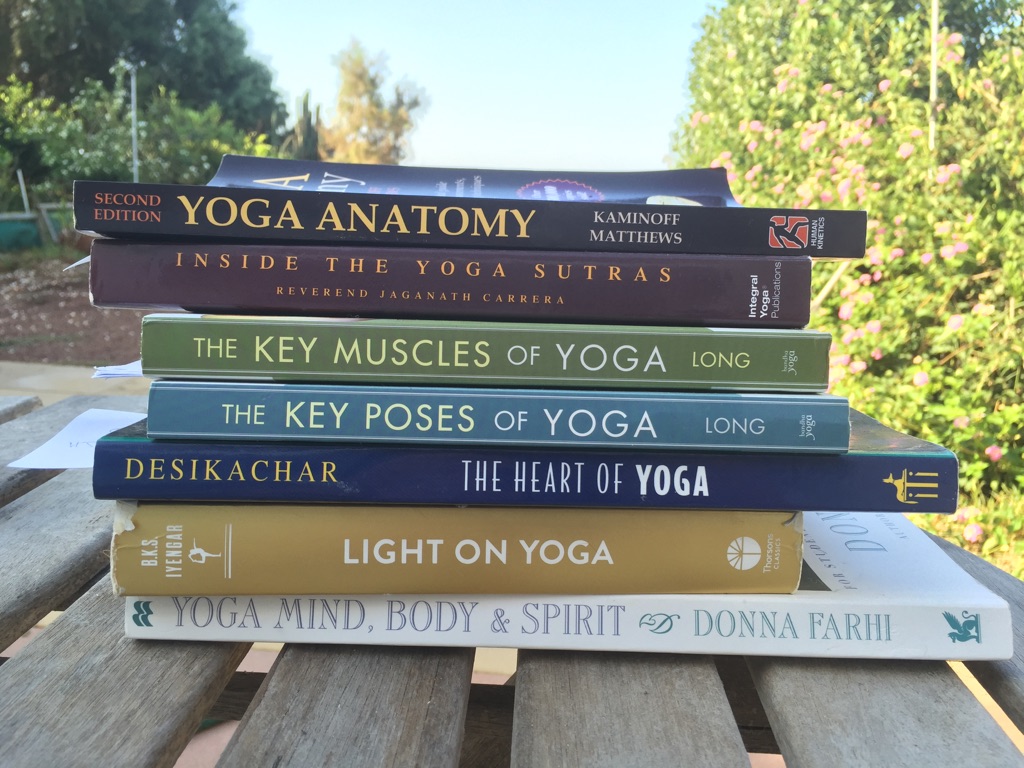
    A lot of people approach yoga through the physical practise. I would however encourage any student of yoga to have a look at what lies in the roots on the asana practise. A good place to start is the Yoga Sutras of Patanjali. These are the basic teachings of yoga are described in short verses called sutras, which are organised in four padas, or chapters. As reading a direct Sanskrit translation might seem a daunting task, there are luckily many text books offering an approachable commentary and interpretation of the sutras in a easy-to-digest form. The text book I have is authored by Reverend Jaganath Carrera and it is called ”Inside The Yoga Sutras.”

    img_3115

    Several books combine philosphy, breathing technique and asana practise in one. A classic is B.S.K Iyengar’s ”Light on Yoga – The Definitive Guide to Yoga Practise.” The books has fantastic black and white photo illustration and the descriptions on how to get into each pose are very detailed. On a complitely superficial level, the 2015 edition I have is also beautiful to look at. The only minus comes from it being a very heavy for a paperback so it is not the best travel read.

    Donna Farhi’s ”Yoga Mind, Body & Spirit – A Return to Wholeness” is another very complete book. In all honestly I found this one a bit hard going BUT it offers very wide margins for your own notes as you go along. The illustrations and photos are very clear and I like that the use of props, such as chairs, blankets and blocks, is incorporated to offer different types of modifications.

    My favourite book on this list is probably T.K.V. Desikachar’s ”The Heart of Yoga – Developing a Personal Practise.” Written in a conversational manner (in fact, part of the book is in an interview Q & A format) the book is a practical approach to various elements of yoga: asanas, breathing and meditation. It also has a chapter on the Yoga Sutra’s with Desikachar’s own translations and comments.

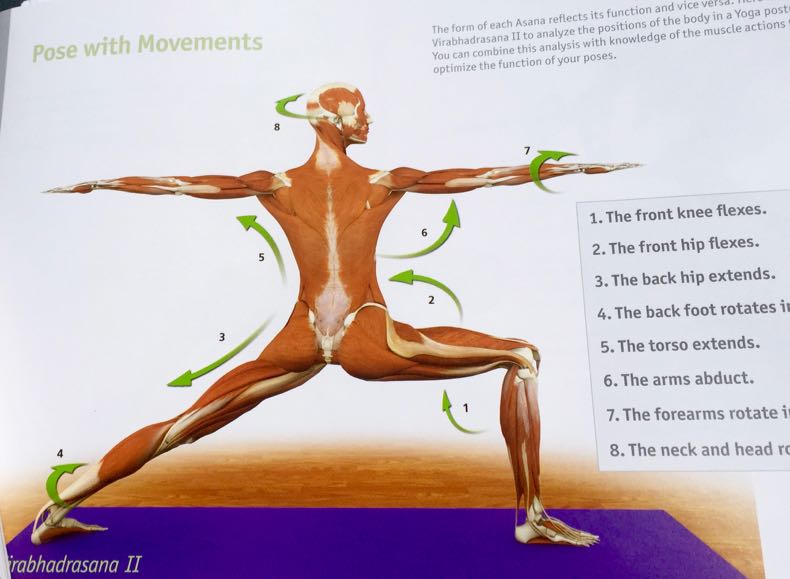
    There are of course plenty of books focusing solely on the anatomy side of yoga. Leslie Kaminoff & Amy Matthews’ ”Yoga Anatomy” (I have the second revised edition) is the one of the most recommended ones. In every page it offers a clear illustration of inside the asana (see the photo to get an idea), a classification, actions for joints and muscules, a word about the respiratory mechanism applicable to that pose and additional notes. A perfect go-to book when you want to check how your body works in a given asana, I use this book several times a week.

    img_3120

    I also have two books of Dr. Ray Long, ”The Key Muscles of Yoga” and ”The Key Poses of Yoga.” I must admit that I first got excited by these books due to the big illustrations that take up most of the pages. Anatomy can be difficult and the pictures make it more approachable! I find these books (unlike the ones listed before) are also usable during actual practise due to simple layout.

    What are the yoga related books you have read and would recommend?

    Tallenna

    Tallenna

    Tallenna