Category: Yoga Philosophy and Mindfulness

About The Yoga Sutras and other ponderings.

  • How to turn a bad day to a better one

    How to turn a bad day to a better one

    Bad days happen to all of us. Sometimes you just know the day is not going to be the best one straight after waking up. Sometimes a bad day creeps up on you slowly, starting with an innocent coffee spill, followed by signal failure in the tube and the realisation the keys were left at home… When things start going wrong it can feel like you are watching a car crash happening: there is nothing to do but to let day run its course and hope for the best.

    The good news is that it does not have to be like that. We have all the power to turn a day that has started badly to one that is, if not amazingly brilliant, a pretty good one. Here’s how.

    1. Acknowledge things are not going smoothly and make peace with it

    About a month ago I was few minutes late for a morning yoga class I was teaching. Not a big deal, being less than five minutes late, especially in Cyprus. Only this was few days after I had written a blog post how one should never be late for a yoga class. I was embarrassed and felt like a hypocrite. During the class I kept confusing my cues. Instead of shrugging it off, trusting that people were still following the class, I got annoyed and the rest of the class things continued to come out from my mouth sounding more or less strange: lefts became rights and so one. After the session, when somebody wanted to pay for a monthly pass, I realised I had left my purse home. At that point I let out a small “argh!” and the lady paying looked at me. “You are having not the best morning, are you? It’s ok, we all have those.”

    For some reason those words gave me real comfort. Yes, bad days do happen for everybody and guess what, people understand that. They are not going to judge me for small mistakes. So why on Earth was I getting so worked out over things that quite frankly were very, very minor? Why was I calling myself a hypocrite for being three minutes late when nobody else was doing that?

    And just like that, I made peace with the not so great day. I was not letting it to dictate my day. There is no great book of destiny that orders us to have x amount of s**t days a year, on specific dates on top of that. Instead, we can all do the following:

    2. Reflect on the triggers and keep things in perspective

    Things might not go great early on a given day because you are tired, or already overwhelmed by something that has happened earlier. When acknowledging and making peace with the not so smooth day so far, take a moment to check in with yourself. Ten deep breaths (I know, easier said that done but that’s why we practise yoga) by your desk, in the bus or even in the nearest toilet cubicle already help to calm the nervous system working on overdrive. Try to avoid catastrophising the events so far along the lines “This only happens to me” and “I might just give up and go home because the rest of the day is only going to be rubbish.” Trust me, there is no “bad day conspiracy” going on, aimed particularly at you. Instead, try to keep a positive (or at least a neutral) outlook and think what in particular has triggered you to react emotionally. Once you have identified them it is easier to find ideas that will help, if not to turn them around, at least keep them in perspective.

    3. Modify your plan respecting your resources

    So you are not feeling the best but need to get through the day. Have a look at your schedule and decide what are the things that have to be done, things what you can do and things that can wait. Is there a challenging one-to-one meeting coming up? Rescheduling is not great but as long as it is not what you are famous for in the office, maybe today is the day to do it. First draft of a report to be passed on to a colleague – you probably do not need to go it over with a comb, if it is the first draft nobody will care about few typos or less-than-perfect headlines. In short, treat yourself with compassion rather than punishing yourself for expecting excellence when you clearly are not up for it.

    4. Switch your “to-do” list to a “done” list

    Most of us have our lists (or ten) for things we must and want to get done during the day. Most of us also have things on those lists that we really are not too keen on, even on a good day.

    One thing I often do, bad day or not, is to change my “to-do” list to a “done” list. I write down every task I do, whether it figures in my notebook or not. Sometimes the things I get to mark down on the “done” list are the same that I have on the “to-do” list – if that is the case, great. Sometimes I end up with a list of things that are entirely different. The point is, the things I end up doing are always tasks that needed to be sorted sooner or later. And so what if your “done” list includes things like sending a postcard to your cousin who lives in another country, and stretching in front of three episodes of your favourite series on Netflix. Because at the end of the day your cousin will probably appreciate your postcard more than your colleagues would be impressed by your intellectual contribution to the company Intranet you had planned to do originally. And gentle stretching whilst unwinding in front of a good program is just as good as going to a two-hour power vinyasa class you really did not feel like.

    Celebrate the even small accomplishments with good consciousness. Your best today is good enough or did somebody tell you something else?

    Finally, remember that everything in this life is temporary and  tomorrow is another – and with all likelihood – a better day.

    What are your best tips for improving a day going not too well?
    Tallenna

    Tallenna

  • 7 Yoga-inspired Tips for Anxiety and Stress

    7 Yoga-inspired Tips for Anxiety and Stress

    This past week has been the Mental Health Awareness Week. However, mental health is obviously not an issue just for one week a year, just like a good mental health is more than just absence of a mental health problem.

    Stress and anxiety for instance are issues that touch all of us at least some point in our lives: school or university exams, professional demands and relationship challenges are unavoidable but luckily there are way s to ease their toll on us. It widely recognised through clinical studies that yoga can be an effective way to help us during tough times. Here’s how.

    1. The power of breath – pranayama – brings calm and relieves anxiety. There are various breathing exercises available and you can find few of them here. If you prefer keeping things simple, just focusing on lengthening inhales and exhales, whilst breathing through the nose, is a very effective way to bring stillness to the mind. You can try counting during inhales and exhales to help to keep the rhythm even, with the added bonus that when you count quietly in your mind, it is pretty hard to have other thoughts disturbing you.

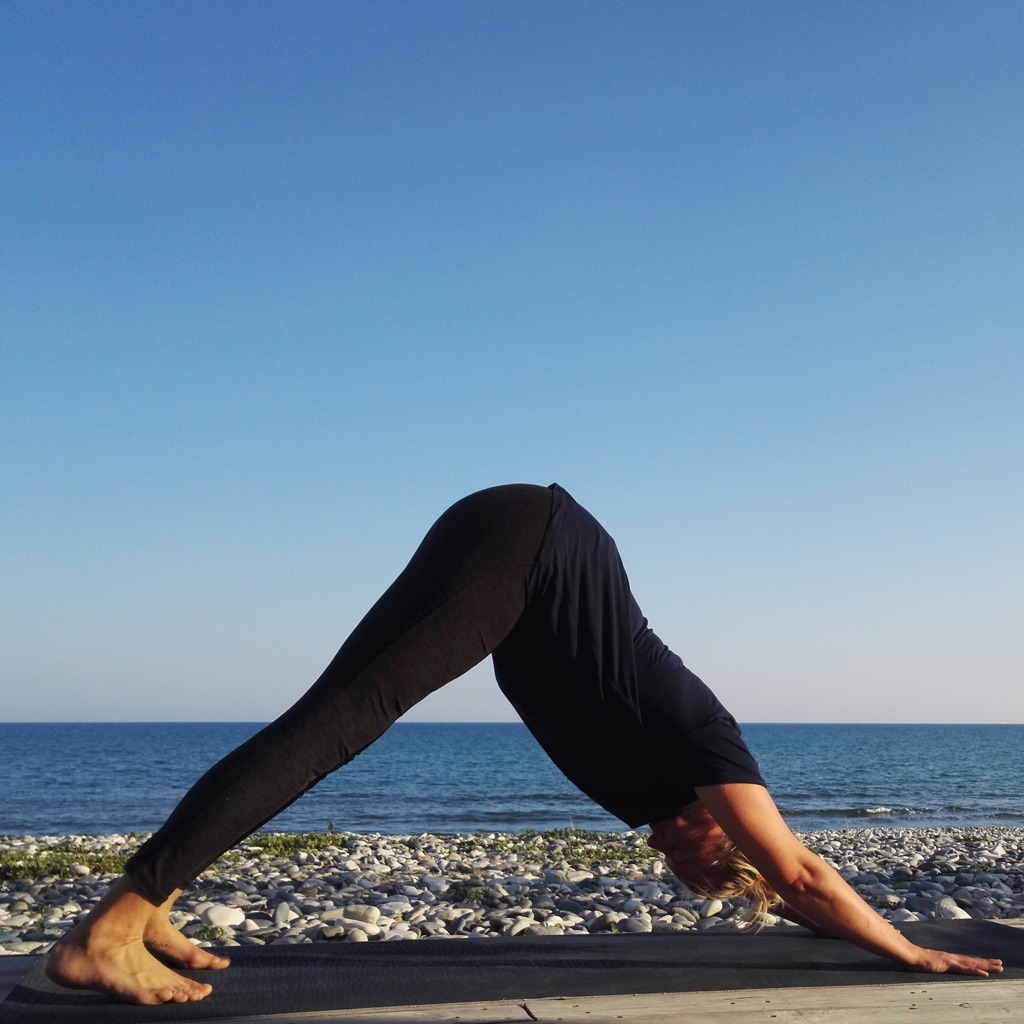
    2. Yoga postures – the asanas – relief physical tension and can help the mind to refocus. Some of the asanas that are especially recommended for relieving anxiety are hastapadasana (standing forward fold), adho mukha svanasana (downward facing dog), setubandasana (bridge pose) and of course, savasana (corpse pose.) Even a ten minute practise a day, done regularly, can have a huge positive impact.

    3. It is said that well planned is half done and preparation is the key. If you are reading this the night before a deadline you might find this annoying but take the lesson and next time plan ahead. Carving out the time to preparing in advance and making a plan will help manage both the situation at hand and our reactions, even if things end up not going to that plan (and do they ever?) If we are disciplined with our yoga practise, we can be disciplined with other aspects in our lives.

    4. Find an affirmation that works for you to start the day. For instance, making a conscious decision every day to act with best of our abilities means we are less likely to have regrets and more peace of mind.

    5. One of the reoccurring themes in yoga is that everything – absolutely everything – is temporary. Things will pass. It might not always feel like and it can be annoying to be reminded of this when the feeling is everything but. But things will pass.

    DeepYogaBreaths

    6. Meditation, with help of an app or without, does not need to take more than few moments. It is always helpful to check in with ourselves to inquire how we are REALLY feeling and why, even more so if we have a chance to remove ourselves temporarily from a taxing situation. Noticing what triggers our worries and concerns might take some time initially but will pay itself generously back once we learn to take preventative actions.

    7. Feeling like going all the way with a lifestyle change? Always best to introduce changes slowly in order to make them stick but if you are ready to go for it, check out my post about yamas and niyamas for some inspiration.

    To the beach

    Tallenna

    Tallenna

    Tallenna

    Tallenna

  • Abhyasa and Vairagya

    Abhyasa and Vairagya

    Practise and non-attachment can seem to be very contradictory terms as we usually associate practise with the expectation of some sort of results. Yet together these two form the principles that the whole yoga system as we know it today rests. You might have heard your yoga teacher to say the words ”just let everything go that does not serve you”. Maybe you even liked that phrase because it almost felt like a permission to let go and relax in a world that seems to be full of demands. Yet when we hear those words in a yoga class most of us do not think that they mean we are going to let our asana practise fall apart. If anything, in this context “letting go” can easily be understood as an invitation to focus only on the practise taking place and give it all our attention.

    dav
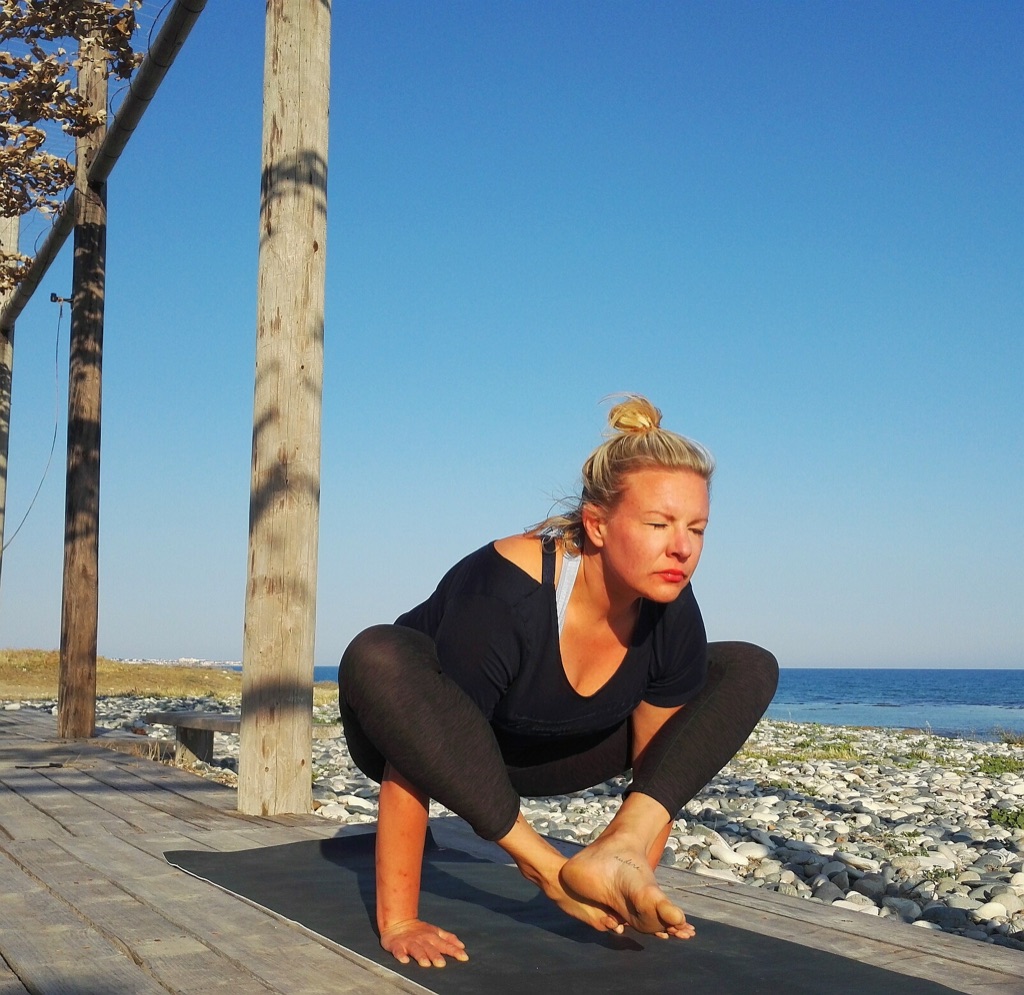
    Check out the focus on this Bhujapidasana…

    And that is the moment when the meaning of abhyasa and vairagya – practise and non-commitment – reveals its logic to us.

    To describe things as concisely as possible, abhyasa, as Patanjali explained them in his Yoga Sutras (Sutras 1.12 to 1.16), means to make consistent effort (i.e. practise), over time and even when do not feel like it (especially when we do not feel like it, some might say) to observe and follow thoughts, actions and general lifestyle choices that lead us towards a state of tranquillity. Why? Because this practise and the stilling of the mind it brings with it will help to reveal our true, “original” self, free from fears, stress, upsets and pain, all those things we so often feel our lives are filled with.

    By using the word ”effort”, this sutra reminds us that Yoga is not for the lazy. Nothing great was ever achieved without effort.

    – Reverend Jaganath Carrera

    Vairagya on the other hand can be understood as study or process of actively recognising, exploring and letting go of everything that stands in the way of finding inner peace and tranquillity. Put in other words, vairagya encourages us not to attach any significance on material wealth (clothes, cars, our latest phone…), non-material issues (situations that makes us agitated or angry, certain exam or career results, fancy yoga poses to be posted on Instagram) or anything else that may think of as important to us. Whilst we may fool ourselves to believe that obtaining more of wealth, recognition or whatever it is we crave for, it really just diverts us from finding inner peace and at the end is more likely to contribute to further unhappiness.

    Non-attachment is the cultivation of realistic, healthy relationships with objects and attainments based on understanding what the world can and cannot offer.

    – Reverend Jaganath Carrera

    It is of course hard to be conscious of the fact that we should not grow too attached of the outcome of our results, as after all this is very human. We might do well at work or with other projects, extremely well even and our efforts may even bring us material wealth or acknowledgement and we think we have the right to be proud of our hard work. And of course there is nothing wrong in those feelings. What we must be vary though is how we allow those attachments we have on desired results affect our mind and how we view ourselves in relation to our surroundings. Because equally, our efforts may not bring the success we wished for. How do we feel then? Do we get upset, do we feel our self-worth evaporating, do we feel we should have achieved more tangible results, feel more proud of our efforts?

    dav
    …which, regardless of the focus, can end up like this. 10 times in a row.

    In summary, abhyasa and vairagya remind us of the importance of consistent, daily and joyful practise, with a lifestyle and environment that support this, and how we must remain aware of our underlying motivations and expectations of this practise and aim to use it as a tool to experience peace that transcends external circumstance.

    And that requires constant, conscious effort. That’s why we call our yoga practise a practise in a first place.

    The blockquotes are from the sourcebook for Yoga Sutras I use – you can read more about the book here.

    Visibly a happy moment in practise.


    Tallenna

    Tallenna

    Tallenna

    Tallenna

    Tallenna

    Tallenna

    Tallenna

  • January Abstinence Yogi Style: The Niyamas

    January Abstinence Yogi Style: The Niyamas

    In the eight limb system of yoga outlined in the Yoga Sutras of Patanjali the the first limb, the yamas, are about our relationship with the outside. The second step, the niyamas, are more about the relationship we have with ourselves. You can view them as a form of a self-training to prepare mind, body and senses on the yogic path. They also offer great material for all of us to reflect upon as a type of lifestyle observances even if we are not necessarily aiming for enlightenment so lets have a closer look!

    Saucha

    Saucha refers to purity and purification (some also use the word hygiene) of both body and mind. The idea is that clean and uncluttered state, both physical and mental, is required to create the calm needed in attaining wisdom and spiritual liberation. Saucha does not however mean purity as in literal sterility. Orderliness and cleanliness are helpful but we should focus more on the bigger picture: the people we spend time with, how we entertain ourselves and of course the food and drink we consume. Saucha is one of the aspects behind the reason so many yogis are vegans.

    Sutra 2.40: “By purification, the body’s protective impulses are awakened, as well as a disinclination for detrimental contact with others.”

    Santosha

    Santosha means contentment and for explanation of it I first turned to a dictionary. There contentment is explained as follows: ”A state of happiness and satisfaction”, ”freedom from worry or restlessness” and ” peaceful satisfaction.” Sounds wonderful, right?

    The trouble is that our minds and Ego work the opposite way: it is very human to crave for something else, be it the ”perfect” yoga pose, career, relationships, success, stuff, more stuff… Yet contentment comes from accepting and being grateful of what we already have instead of running after something that we think – but do not know – will make us, well, more content.

    contentment

    Tapas

    Tapas has many translations, ranging from ascetism to self-discipline, effort, internal fire and ”purification through discipline.” It is the process of putting ourselves through something we do not necessarily want to do but we know is good for you. The idea is that through the effort – an inner fire pushing us – we also burn away impurities and strengthen ourselves. Tapas helps us to cultivate healthy habits and break away from unhealthy ones.

    For example, a daily work out or a yoga practise can be hard to maintain but we make ourselves to go through with it. After the exercise we feel better ourselves and may even be encouraged to have a healthier meal than usual to nourish ourselves.

    Svadhyaya

    Svadhyaya refers to self-study with the ultimate aim of getting in contact with divine nature. If this seems a bit over ambitious for now, no need to worry. Svadhyahya can be scaled down to more approachable levels by inquiring about ourselves: What are the things that push our buttons, good or bad? What are the patterns of behaviour we have and do they serve us well? How can we chance habits we wish not to keep?

    This type of self-observation, done with empathy and compassion, can then be combined with the study of spiritual texts of one’s choice (Yoga Sutras, Bible, pick your religion…) that are in the service of Svadhyaya. This helps to keep and give perspective and understand the universally shared feelings and questions that exist in the world, rather than making Svadhyaya all about the self, ”me.” With time this leads us towards a more stable and peaceful existence, both internally and externally.

    Sutra 2.44 “Through study comes communion with one’s chosen deity.”

    Ishvara Prandihana

    The big one, dedication of one’s practise to a higher power (whatever you choose to call yours.) In simple terms this means letting go of the ego and dedicating one’s practise, or the fruits of one’s labour, to something greater than us. The act of dedication in itself is a remainder of our connection to something higher and a sign of trusting that force to guide us towards the universal truth.

    And that’s the end of the short introduction to yamas and niyamas. There is obviously a lot more to read on the topic. For my own studies and as background for these articles I have used the following books and sites:

    img_20170120_182424.jpg

    Tallenna

    Tallenna

    Tallenna

  • January Abstinence Yogi Style: The Yamas

    January Abstinence Yogi Style: The Yamas

    Earlier I wrote a brief post about the eight limbs of yoga as described by Patanjali in his Yoga Sutras. Most students of yoga are familiar with three of them: breath (pranayama), posture (asana) and meditation. The remaining five are not often even mentioned in many (asana) classes and if we were to come across them somewhere they can understandably seem a bit hard to grasp.

    What is however offered in Patanjali’s writings is still very much relevant to this day. In short, he offers – not dictates – a guide for us to contemplate and follow to help us all on our way to a happier, more peaceful live. The first limb, the yamas, are about restraint, abstinences and self-regulation: a code of self-regulation. As it is January, this seems a very suitable topic so lets break the five yamas down.

    Ahimsa

    Ahimsa is the principle of non-violence, non-harming and non-injury and it is the highest of the yamas. Rather than referring simply to physical aspects of violence (or to say, non consumption of animal products), ahimsa also means letting go of hostile, aggressive or irritating thoughts as they prevents us from being at peace with ourselves. Included in this concept is also how we treat ourselves: do we speak to ourselves with the same kindness and respect than we speak to others? Ahimsa does not however tell us fall victim: we are all allowed to defend or protect ourselves, if this is to prevent larger harm from happening.

    Sutra 2.35: “As a Yogi becomes firmly grounded in non-injury (ahimsa), other people who come near will naturally lose any feelings of hostility (ahimsa pratishthayam tat vaira-tyagah.)”

    Satya

    Satya is the concept of truthfulness and honestly. The key to satya is to understand that it does not simply refer to what is our subjective truth. Instead it calls for an understanding for the larger truth takes into account in the big picture: opinions (e.g. gossip) are separate from the truth and it is important we learn to distinguish between the two.

     Satya also means that our thoughts, words and actions are in line: that we not only talk the talk, we also walk the walk. However, Satya is measured in relation to ahima, non-violence. It does not give us the permission to go around and say what we please to people in the name of ”but it is true” as this can be hurtful.

    Friends

    Asteya

    Asteya is what we also know as ”thou shalt not steal.” But as this is yoga, asteya does not simply refer to material things. Theft also exists in the form of taking others’ time (for instance, by being excessively late), draining their energy, ruining their happy mood or using their work ideas. Asteya invites us to reflect what and how we consume, well, everything: the idea is that all energy is interconnected and what you take from somebody else excessively always creates an imbalance.

    In a practical sense asteya can be seen in the principle of fair trade. Another example would be not paying back something that you should.

    Brahmacharya

    Brahmacharya is often translated as continence, but it does not mean celibacy is required to be a ”good yogi.” Widely speaking brahmacharya refers to being aware of the divine, and living in a way that is mindful of the energy we use. We all have experienced situations we have gotten disproportionally angry or agitated over something and ended up exhausted for it – not a good use of our energy. Another good example is how we use our effort during asana practise: are we practising mindfully and relaxed mind or focusing more on how we think our backbend should look? Which type of practise is more pleasurable?

    Sutra 2.38: “To one established in continence, vigor is gained.”

    Aparigraha

    Aparigraha refers to non-possessiveness, or non-greed. Simply put it means we should not accumulate stuff excessively or get attached to what we own. We are not the things we possess, nor do they define our personality or value.

    On a non-material level aparigraha means we should let go of old beliefs if they do not serve us anymore: For instance, how we behave with our friends or other relationships can change if the circumstances necessity a different attitude. Equally, we do not have to vote for the same party all our lives if a better option emerges. Our identities do not need to be fixed, and with the realisation of that comes freedom.

    This was should a quick introduction to yamas but how do they sound to you? Feel free to drop a comment to add, disagree, say you what to want to say – nothing better than a good discussion.

    img_1343

    Tallenna

  • Patience, Where Are Thou?

    Patience, Where Are Thou?

    “Patience: the capacity to accept or tolerate delay, difficulty, or annoyance without getting angry or upset.” 

    Patience can mean different things to us, and its definition can also vary depending on the situation. Usually patience has an underlying realisation that we want, need  – or lack – more self-control in situation we face. Here are few thoughts on how to map where we stand on this issue and how to work on it further.

    1. Patience as a skill to be learned. Some people are born more patient than others but we can all work on improving it. Unfortunately there are no short cuts and as with everything, progress might not be linear. The good thing is that our lives are usually not short of opportunities to practice and improve.
    2. Evaluate the current situation: It is important to understand what in your behaviour are reasonable and justified prompts to advance a situation (in a positive and constructive way) and what falls under the category of being impatient. Asking politely to speak to a manager for receiving bad service/unsatisfactory repair is usually entirely justified, demanding to see the ”one in charge” so loudly that the neighbours can hear it too, less so. Do a quick poll with those close to you to get some feedback in case you are unsure where you stand in this.
    3. Notice your triggers: Are you patient with others but get frustrated when you cannot pick up a new skill as fast as you liked? Or are you very accepting with yourself but slow traffic or screaming kids make you grit your teeth? Or are your triggers a combination of both? Start noticing what makes your blood pressure rise and see if there are any patterns that come to light.
    4. What is the worst that can happen? You are stuck in traffic, your kids/partner/friends take forever to get ready, your mail order has not yet arrived… All of these situations can most of us pretty frustrated. However, if these things are not regular occurrences, what IS the worst thing that could happen? You are not the only person who gets delayed because of traffic, and some people just need longer to get ready, for whatever reason. So what? If you however realize you have repeated situations of frustration, you have two options: Be proactive in seeking solutions or accept the situation as it is.
    5. Deep breaths: If you need, excuse yourself and walk away (or just walk away.) Find a calm corner, a fire escape or a toilet cubicle, close your eyes, relax your jaw and take deep breaths. Give yourself the time to calm down, and re-compose yourself. You are more than allowed to.
    6. Practice: Coming back to the first point, notice the moments you start becoming upset, agitated, even angry. Observe them, embrace them, try the things above. Over and over again. Try not focus on the end goal, whatever it may be for you. Instead, focus on the small things, stay mindful and enjoy the more peaceful situations that will follow.

    patience2

    Kärsivällisyyttä etsimässä…

    Kärsivällisyys voi tarkoittaa eri ihmisille eri asioita eri tilanteissa mutta usein takana on tietoisuus itsehillinnän hakemisesta, kehittämisen tarpeesta – tai sen puutteesta. Alla muutamia ajatuksia kuinka kartoittaa omaa kärsivällisyyttään ja miten sitä voi kehittää.

    Välikevennyksenä todettakoon että koitin löytää jutun kuvitukseksi suomalaista sananlaskua kärsivällisyydestä (englanniksi kun niitä löytyi pilvin pimein). Google kuitenkin sitkeästi ehdotti kärsimystä ja siihen liittyviä sanontoja. Mielestäni kyseessä ei ole kuitenkaan ihan sama asia vaikka läheltä voi joskus liipatakin. Saatte siis nyt tyytyä Roope-Setään.

    ankkaka%cc%88rsiva%cc%88llisyys

    1. Kärsivällisyys on taito jota voi opetella. Jotkut meistä syntyvät kärsivällisimpinä kuin toiset mutta kaikilla meillä on mahdollisuus opetella sitä. Valitettavasti tähän ei ole mitään ihmekonstia eikä se oppiminenkaan ole aina suoraviivaista. Positiivista kuitenkin on että elämässä ei yleensä tule pulaa mahdollisuuksista kehittää omaa kärsivällisyyttään.
    2. Tiedosta tämän hetkinen tilanne. Kärsivällisyys ei tarkoita kynnysmatoksi ryhtymistä ja aivan kaiken sietämistä. Joskus on ihan aiheellista ja tarpeenkin vaatia esimerkiksi parempaa/nopeampaa palvelua tms. Kuten monessa asiassa, tapa millä asiansa esittää on tärkeämpi kuin mikä itse asia on. Jos on vaikeaa itse määritellä omaa kärsivällisyyttään eri tilanteissa voit kysyä ystävien, kollegoiden ja vaikka lapsien mielipidettä asiasta.
    3. Mikä ärsyttää? Siedätkö toisten ihmisten erilaisia tapoja hyvinkin, mutta turhaudut itsesi kanssa? Vai oletko oma paras ystäväsi mutta hidas liikenne tai huutavat lapset saavat pinnasi heti kiristymään. Kiinnitä huomiota mitkä asiat ja/tai tilanteet saavat sinut kärsimättömäksi ja mihin pisteeseen asti. Onko tilanteiden välillä yhteneväisyyksiä? Mitä paremmin tunnet itsesi ja reaktiosi, sitä paremmin osaat ennakoida ja ohjata omaa käyttäytymistäsi.
    4. Kaatuuko maailma? Olet jumissa liikenteessä, lapset/partneri/ystävät tuntuvat hidastelevan, odottamasi asia ei saavukaan silloin kun oletit… Nämä kaikki tilanteet ovat tietenkin ärsyttäviä MUTTA. Mikä on pahinta mitä voi tapahtua vaikka asiat eivät menekään niin kuin odotit? Meistä kukaan ei istu ruuhkassa ensimmäistä tai viimeistä kertaa, ja joskus muut ihmiset ja asiat nyt vain ottavat aikansa ilman että siihen voi mitenkään vaikuttaa. Jos kuitenkin huomaat säännöllisesti löytäväsi itsesi samanlaisesta tilanteesta on vaihtoehtoja yleensä kaksi: Joko alat etsimään ratkaisuja tilanteeseen joka koettelee kärsivällisyyttäsi, tai hyväksi sen sellaisena kuin se on.
    5. Hengitä. Tiukan paikan tullen poistu tilanteesta ja kävele ensimmäiseen hiljaiseen paikkaan. Sulje silmäsi ja hengitä syvään. Anna itsellesi aikaa rauhoittua ja koota itsesi uudestaan.
    6. Kuten alussa totesin, joka päivältä yleensä löytyy tilanne jossa kärsivällisyyttä voi harjoitella. Kiinnitä huomiota tilanteisiin joissa olo alkaa tuntua levottomalta tai ärtyneeltä. Huomioi, hyväksy, yritä yllä mainittuja asioita. Aina ja uudestaan. Yritä olla keskittymättä tiettyyn lopputulokseen, keskitä sen sijaan ajatuksesi tähän hetkeen, omiin tuntemuksiin ja niiden hallintaan. Pikkuhiljaa voit huomata elämäsi muuttuvan hieman seesteisemmäksi.

    patiencechicken


  • Remember These // Muista nämä

    Remember These // Muista nämä

    In our lifes, we all have the right for the following:

    1. The right to be treated with respect
    2. The right to say “no” and not feel guilty
    3. The right to experience and express our feelings
    4. The right to take time to slow down and think
    5. The right to change our minds
    6. The right to ask what we want
    7. The right to do less than we are humanly capable of
    8. The right to ask for information
    9. The right to correct mistakes
    10. The right to feel good about ourselves

    img_4200

    Meillä kaikilla on tässä elämässä oikeus seuraaviin asioihin:

    1. Oikeus tulla kohdelluksi kunniottavasti
    2. Oikeus sanoa “ei” ja olla tuntematta siitä syyllisyyttä
    3. Oikeus kokea ja ilmaista tunteitamme
    4. Oikeus ottaa aikaa, hidastaa tahtia ja miettiä
    5. Oikeus muuttaa mieltämme
    6. Oikeus pyytää mitä haluamme
    7. Oikeus tehdä vähemmän kuin mihin inhimillisesti voisimme pystyä
    8. Oikeus pyytää tietoa
    9. Oikeus korjata virheitä
    10. Oikeus hyvänolon tunteeseen

    img_8807


  • 5 Ways to Practice Self-Care

    5 Ways to Practice Self-Care

    This post was first published in HappyGirlYoga. Lue suomalainen versio teksistä tästä.

    No matter how busy we are, there are several ways to practice self-care everyday., These are the moments we put ourselves first. It’s not necessarily about getting a mani-pedi ahead of a an event, or having time for a cup of coffee. In addition to taking care of our basic needs, we also need to decompress ,centre, and check in with ourselves to make happiness a priority.

    Even as healers and instructors, this is not always easy and we are all guilty of not practising what we preach.

    But do try (practise is the key here as well) because when we do, we will feel healthier, better and just lighter. And of course when we feel like this, we become much more mindful, attentive and more productive in everything we do.

    Here are some useful few tips and suggestions to incorporate into your daily routine for a more balanced, happier you:

    img_4359

    1. See The Humor In Every Situation-and Laugh!

    We all have those moments when it is hard to find anything even remotely funny and all we want to do is growl. For days like this, think about what amuses you, even if it means watching your favorite reruns of comedy TV shows or movies. Laughter makes our body release endorphins, the body’s ”feel good” chemicals could even help alleviate physical pain.

    There are plenty of funny, bizarre, curious or ironic things that happen around us everyday: It could be a toddler telling some recently learned ”truth” a little bit too loudly when queuing to pay for the groceries, or an unfortunate mispelling on a newpaper header or street sign. Cultivate your ability to see and appreciate the funny side of things as they come along. If laughing aloud is not an option, you can always have a little inward chuckle.

    2. Positive Affirmations

    Whilst some may dismiss reading proverbs about divine energy and making lemonade with lemons as silly, positive affirmations are a proven method of self-help. Not only do affirmations purify the thought process, they help us to restructure the brain by working on the subconcious mind. There are many ways to weave affirmation to your everyday life. You can memorize a simple, one-liner mantra to repeat in the car on your way to work. You can keep a positive phrase of your choice as your screensaver, or have a post-it inside the kitchen cupboard. However and wherever you choose to incorporate these positive affirmations into your daily life, make it immediately accessible to your daily routine.

    untitled-design

     3. Learn To Say No.

    Boundaries are not only about learning to say ”no.” It can be quite tricky as the road to self-neglect is usually paved with good intentions.

    Most people want to help others, be it sympathising with a colleague, lending some cash to a friend, or saying yes to extra volunteering hours ”for a few weeks” when we already feel there is not enough hours during the day. However, be always aware of the possibility that the colleague might become increasingly clingy, 100 euros lend can become 500, and those extra volunteer hours can take time away from your sleep.

    Of course most situation are temporary , but think twice before committing yourself to a responsibility and ask yourself if this act of kindness isn’t something that will cause havoc in your life..

    Also, be aware of the people who are naturally more persuasive and even willing to push us beyond what we are comfortable with. Remember that at the end of the day, we all need to own up to our actions and setting boundaries with a firm response could ultimately be the best situation for everyone involved.

    4. Get Rid of Toxic People

    Getting rid of toxic people in our lives could be a long-term process, especially if these people run in the same circles as you. Equally, you want to avoid burning bridges, if possible.

    First, some friendships are meant to be transitory: There is a time and a place for certain relationships to be formed. Rather than artificially trying to maintain a relationship that (especially if it feels complitely one-sided) does not serve any purpose, it is entirely ok to allow these friendships to fade at its own pace.

    It doesn’t necessarily mean these relationships cannot re-enter your life again. Situations and people could change, and who knows if one day the friendship could be re-ignited in the future?

    Then there are the people we’ve all encountered.: The permanently smug, condesending, energy-vampires, the ”life-as-competition” types, the backstabbers… and the list goes on. Of course it is fair to try and explain your feelings about the relationship and provide a million excuses for their behavior and attitude, but after some time if you find that not much is changing, don’t think twice about dropping these individuals from your life.

    Finally the hardest kind: The relationship you’re trying too hard to ”make it work.”

    It is entirely possible to deeply love and care for somebody but realise that things are not working out as they should, no matter how much effort both parties have given. A relationship can be hard, but it should not be draining. It might even take several attempts to clear yourself of this situation but it is important to honestly recognise what we feel deep down: If you feel as though a weight has been lifted from your shoulders at the thought of starting a fresh chapter without this relationship, you know you’ve done the right thing.

    img_4478
    Text from Eckhart Tolle’s “Practising the Power of Now”.

    5.  Practice Mindful Breathing

    Sometimes it may be necessary to take a break and head to the forest, hills, mountains, nearest park… hell, even a rooftop will do, if that is the only thing you have available! You do not have to sweat buckets, kick any walls, but taking deep slow breaths is a must. Close your eyes and take deep full-belly breaths. Doing so could make you feel more connected to your body and and eventually decrease the heart rate, which in turn has the effect of lowering the blood pressure, too.

    Just five minutes of taking a pause to turn your thoughts internally by focusing on the breath can work wonders to your health and reprogram your mind. You got this!

    Processed with VSCO with m5 preset

    Perhaps these are familiar tactics (well done in that case!) or you found a point or two that could be intergrated to your daily life.

     But now we want to hear from you! What other self-care tips do you practice?

  • What Yoga Mudra // Mikä Jooga Mudra?

    What Yoga Mudra // Mikä Jooga Mudra?

    Mudra is a Sanskrit word that means ”seal” or ”closure.” The idea is that different parts of our body and brain are connected and with our hands we can make gestures – yoga mudras – to direct the flow of energy within the body. Positioning the fingers in different mudras are a way to bring our body balance and help to stimulate a specific state of mind.

    Yoga Mudras are easily accessible and discreet to practise and they also feature in pregnancy yoga. Here are some common ones. You can do them together with your pranayama (breathing) practise or intergrate them to your asana practise as you please.

    Ganesh Mudra

    This is a yoga mudra that has the intention of removing obstacles that may rise on our path. You place your right palm facing your chest and the left hand palm facing outwards. Hook your fingers and with inhale pull your hands to different directions, releasing with your exhale. Take several breaths and repeats with the hands the opposite way.

    img_4443
    Yeah well, the thumb on the front hand should be pointing down towards the solar plexus but you do get the idea…

    Gyana Mudra

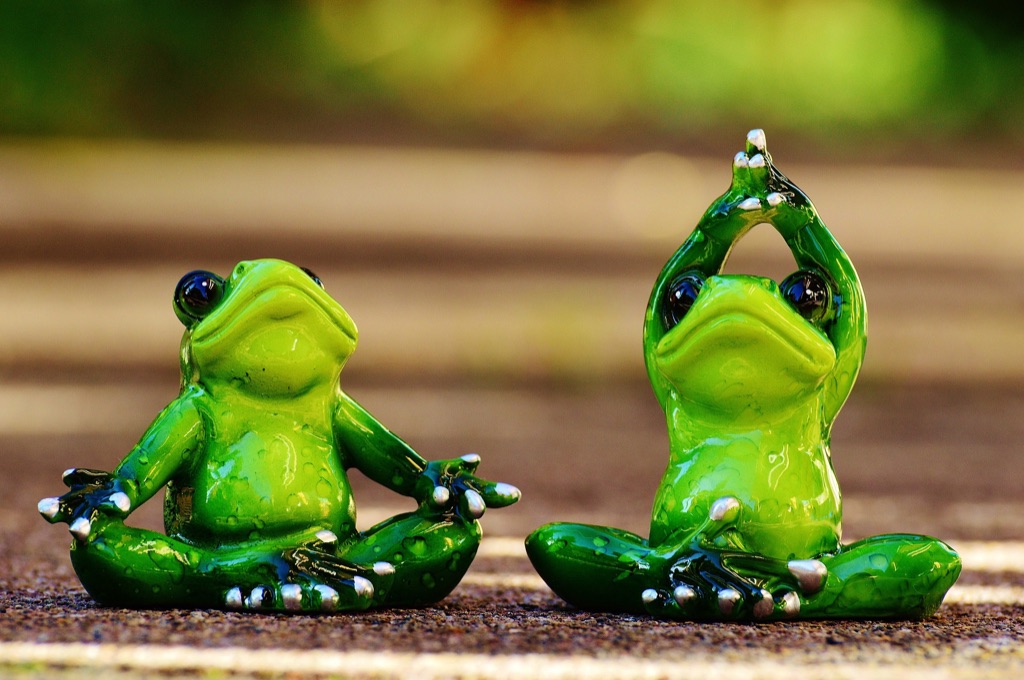
    Also called the gesture of knowledge, Gyana mudra (or chin mudra as it is also called) is said to increase concentration and to have calming benefits. You see Gyana mudra often practised during meditation: Connect the thumb and the index finger so they form a zero but do not press them together excessively. Keep the other fingers straight but relaxed. You can have your palms facing up, or if you feel the need for more grouding, you can have them facing down.

    frogs-1030278_1920
    Can you name the two mudras the frogs are practising?

    Anjali Mudra

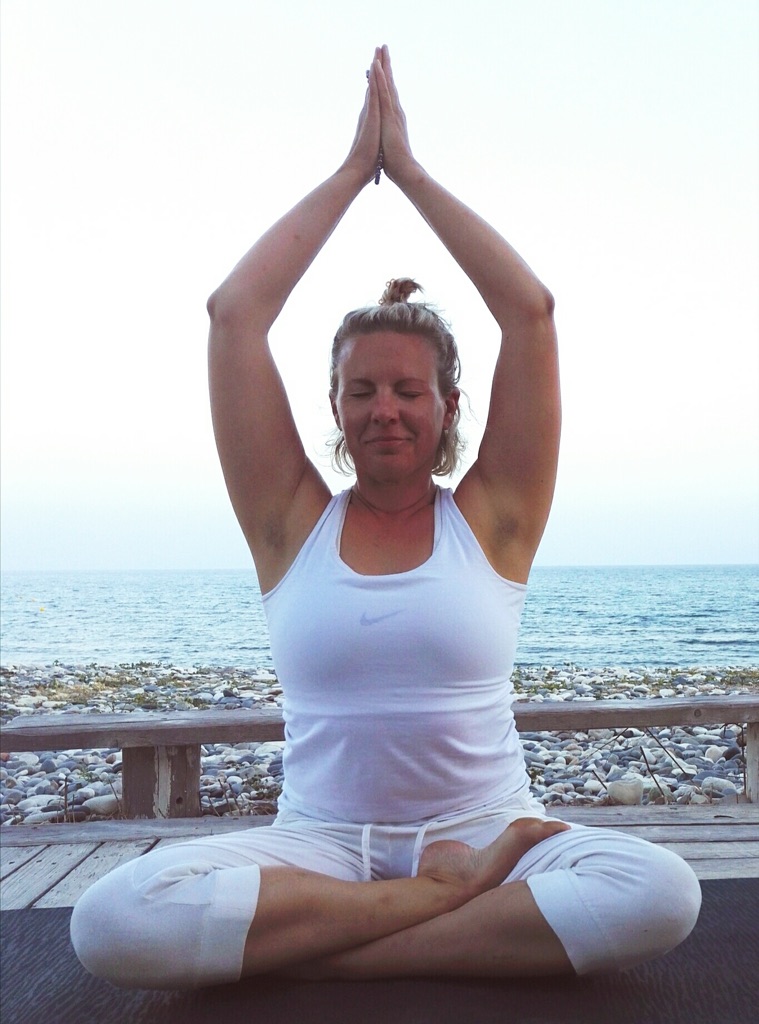
    Another easily recognised gesture is the Anjali mudra. In the West we often associate this mudra with prayer, but in Sanskrit ”anjali” means ”to offer” or ”to salute.” The greeting ”Namaste” (“the light in me salutes the light in you”) often accompanies this mudra. You perform Anjali mudra by placing your palms firmly against each other with your thumbs pressing into your sternum. You may also perform this mudra at third eye centre (between your eyebrows) or crown chakra (on top of your head.)

    You can read more about yoga mudras here.

    img_0395

    Mudra sana on sanskriittia ja tarkoittaa lukkoa tai sinettiä. Ideana on, että mudrat ohjaavat elimistössämme olevia energiavirtoja sinne, missä niitä milläkin hetkellä tarvitaan. Tämä auttaa tasapainottamaan elimistöämme. Koska suurin osa mudrista tehdään käsillä niiden harjoittaminen käy huomaamattomasti monessa eri ympäristössä. Voit yhdistää harjoitukseen hengityksen, pranayaman, tai ottaa mudrat osaksi asana-harjoitusta. Myös raskausajan joogassa näkee usein käytettävän jooga mudria vahvistamassa keskittymistä. Alla näet kolme yleistä mudraa.

    Ganesh Mudra

    Olen nähnyt tätä mudraa kutsuttavan suomeksi nimellä karhulukko. Sen tarkoituksena on poistaa tieltämme esteitä. Aseta oikea käsi rinnan eteen niin että kämmenpuoli on rintaa kohti ja vasen käsi taas niin että kämmen osoittaa ulospäin. Koukista sormenpäät ja ”lukitse” ne toisiina. Sisäänhengityksellä vedä käsiä toisistaan eroon, uloshengityksellä rentouta jännitys. Jatka tätä useamman hengityksen ajan, ja toista harjoitus vielä vaihtamalla kädet toisinpäin.

    img_4445

    Gyana Mudra

    Guana, Guan tai Chin mudra on varmasti kaikille tuttu erilaisista meditaatiota esittävistä kuvista vaikkei joogassa olisi koskaan käynytkään. Guan tarkoittaa viisautta ja suomeksi tätä asentoa kutsutaankin viisauden lukoksi. Mudran sanotaan lisäävän keskittymiskykyä ja rauhoittavan mieltä. Se muodostetaan yhdistämällä peukalo ja etusormen pää kevyesti toisiinsa niin, että ne muodostavat nollan. Muut sormet pidetään suorehkoina mutta rentoina. Kädet voivat olla kämmenpuoli ylöspäin tai alaspäin – jälkimmäisellä sanotaan olevan juurentava vaikutus.

    Young Woman Meditating on the Floor
    Peukalo ja etusormi nollana ja muut sormet, noh, ei nyt ihan suorina mutta sinnepäin. En usko että kenenkään harjoitus kaatuu tähän yksityiskohtaan.

    Anjali Mudra

    Tämä käsien asento yhdistetään länsimaissa usein rukoukseen mutta sanskritin kielellä ”anjali” tarkoittaa ”tarjoamista” tai ”tervehdystä.” Tätä mudraa käytetään usein joogatunnilla tervehtiessä joko alussa, tai tunnin lopussa ”Namaste”-sanonnan kanssa. Mudrassa kädet siis yhdistetään kämmenet vastakkain sydänkeskuksen edessä. Kädet voi pistää myös kolmannen silmän kohdalle kulmakarvojen väliin tai pään yläpuolelle.

    anjalimudrafrog

  • 4 Locks, 4 Keys

    4 Locks, 4 Keys

    Patanjali’s Yoga Sutra 1.33 offers us an useful – but not always easy to follow – advise on how to cultivate a calm and clear mind, even in challenging situation. Sounds good right? This Sutra is often referred as ”four locks and four keys” Sutra, as 4 locks and 4 keys comes – you guessed it – with four points, or actions to practise.

    There are various translations of the sutra, but roughly speaking it goes like this: ”By cultivating the attitudes of friendliness toward the happy, compassion for the unhappy, delight in the virtuous and neutrality toward the nonvirtous, our state of mind retains its undisturbed calmness.”

    These four attitudes can be applied to both toward others and just as importantly to ourselves. Here’s a litte bit more how Patanjali advises this happens: 

    Lock 1 is Happiness, to which the key is genuine friendliness and kindness towards those who are happy, without any envy or jealousy attached to it. Simple enough.

    Lock 2 is Unhappiness that should be responded with compassion and support, a sort of a feeling of welfare for others that comes from a place of caring. This also includes being kind to ourselves at the time of sorrow, rather than succumbing to thoughts along the lines of ”why did I not know better” . ”how did I end up disappointed again” or even ”I am an idiot and only myself to blame for this.” I mean, would you speak to an unhappy friend like this?

    Lock 3 refers to Virtues, traits such as patience, courage and benevolence. They are best met with happiness and goodwill. It is not easy to always have positive thoughts, especially when we are having a crap day ourselves. However, feelings of inadequacy or jealousy rarely have brought anything good to anybody so trying to keep things positive and even joyful ultimately serve us better.

    Lock 4 is about Nonvirtues, or even wickedness. The key is to confront these with equanimity or neutrality. It is important to note that this does not mean that we have to approve of bad behaviour: Neutrality here is used with the purpose of calming the mind and finding inner peace. From this perspective it is easier to understand why disregarding non-virtous actions (rather than the people who commit them – an awful person is an awful person) is a better option than getting angry and frustrated over something we cannot have any control over.

    img_4140
    I’m outta here. Not.My.Drama!

    Personally I find that Sutra 1.33 both makes sense and always gives something to think of, no matter how many times I study it. Depending of the day I find it a gift that keeps on giving, or a through mindf**k. This post is just a brief introductory glimpse. If you want to read more, I find the below sources helpful (and written in a normal language, no philosophy degree required): This YogaInternational article, Swami Jnaneshvara’s excellent website, and this blog post from Urban Yoga Garden. And of course a copy of the actual Sutra’s and explanations, available translated by several indiduals. The copy I use can be found here.